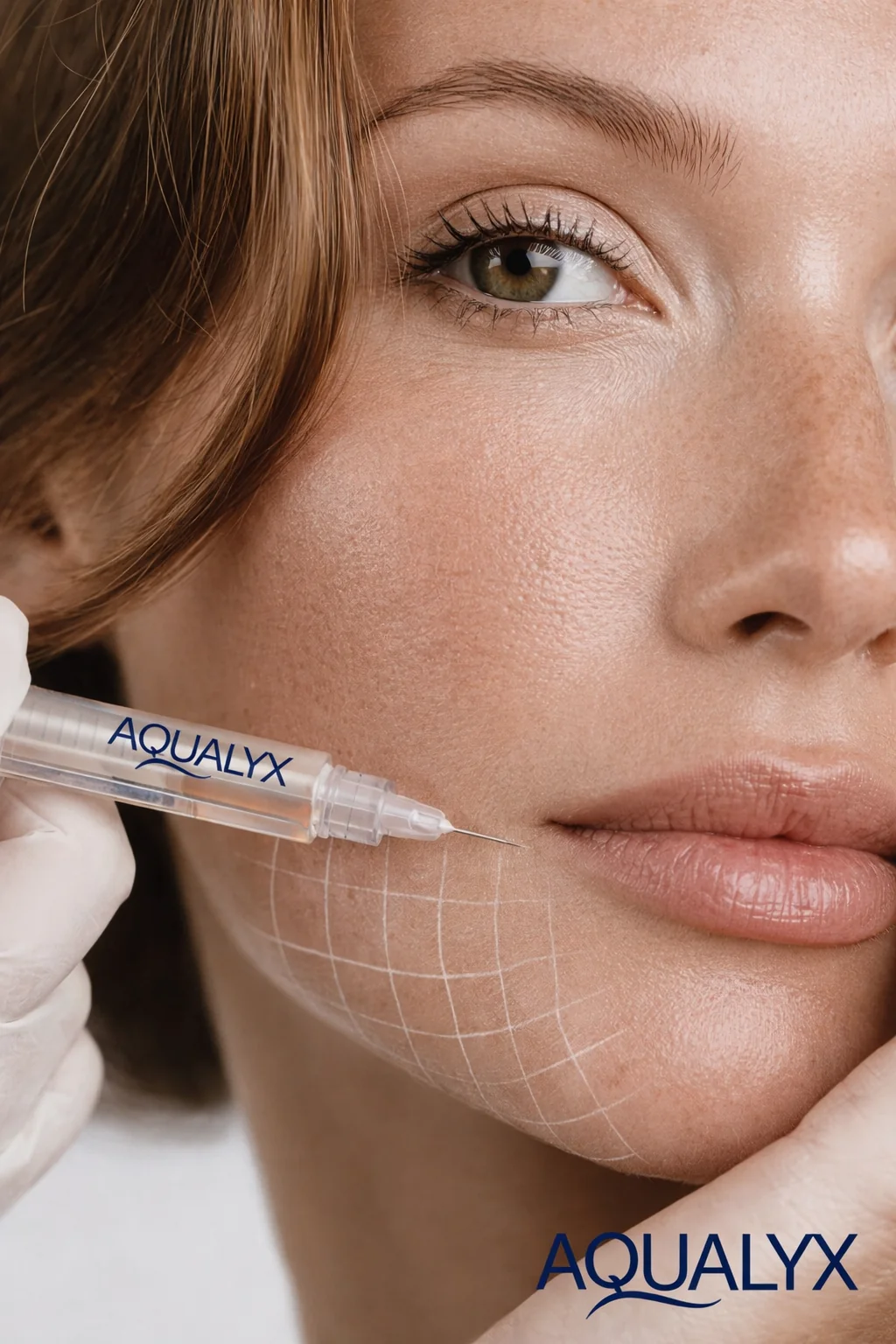
AestheFill (1 x 200mg Per Pack)
AestheFill
Dermal FillerPDLLA Collagen Biostimulator Dermal Filler
Certifications
- CE Certified injectable PDLLA collagen stimulator (AestheFill CE approval obtained 2021).
- Manufactured under ISO 13485 quality management system for medical devices.
- Complies with Korea Good Manufacturing Practice (K GMP) for medical device production.
- PDLLA polymer utilises components with US FDA GRAS (Generally Recognised As Safe) status for specific uses, as described in manufacturer materials.
- Clinical studies demonstrating safety and efficacy for improvement of facial wrinkles and volume loss.
- CE Certified injectable PDLLA collagen stimulator (AestheFill CE approval obtained 2021).
- Manufactured under ISO 13485 quality management system for medical devices.
- Complies with Korea Good Manufacturing Practice (K GMP) for medical device production.
- PDLLA polymer utilises components with US FDA GRAS (Generally Recognised As Safe) status for specific uses, as described in manufacturer materials.
- Clinical studies demonstrating safety and efficacy for improvement of facial wrinkles and volume loss.
PDLLA Collagen Biostimulator Dermal Filler
Description
AestheFill (1 x 200mg Per Pack) is an injectable collagen biostimulator based on PDLLA (poly-D,L-lactic acid), developed by REGEN Biotech in Korea. Supplied as a lyophilised powder, it is reconstituted before injection and works by stimulating the body’s own collagen production rather than simply occupying space like traditional hyaluronic acid fillers. Once injected, AestheFill particles gradually induce neocollagenesis in the deep dermis and subcutaneous tissue, restoring facial volume, softening wrinkles and folds, and improving skin texture and elasticity over time. The product is biocompatible, biodegradable, and long-lasting, with clinical studies demonstrating proven safety and effectiveness for facial rejuvenation and contouring. Its PDLLA particles maintain initial volume for a period while new collagen forms, delivering natural, progressive, and durable aesthetic results.
Bnefits
- Stimulates the body’s own collagen production (neocollagenesis) to restore lost volume and improve skin quality over time.
- Made of PDLLA (poly-D,L-lactic acid), a biocompatible and biodegradable polymer recognised and approved for medical use.
- Provides long-lasting correction of wrinkles, folds, and volume loss, with effects typically lasting 18–24 months depending on patient and treatment area.
- Improves skin elasticity, firmness, and thickness through deep tissue regeneration.
- Smooths facial wrinkles and folds such as nasolabial folds and marionette lines.
- Restores volume and contour in areas such as cheeks, temples, jawline, and facial oval.
- Gradual, natural-looking results that develop over weeks to months, avoiding an overfilled appearance.
- High-purity PDLLA particles with optimised size (approximately 20–50 μm) for effective phagocytosis and controlled collagen stimulation.
- Short reconstitution time and lower water requirement compared with some PLLA products, facilitating easier preparation.
- CE-certified collagen stimulator manufactured under ISO 13485 and Korea GMP standards.
Indications
- Correction of moderate to severe facial wrinkles and folds, including nasolabial folds.
- Restoration of volume in the midface, cheeks, and cheekbones.
- Improvement of facial contour and jawline definition.
- Volume restoration and tightening in areas such as temples and facial oval where age-related volume loss is present.
- General facial rejuvenation via collagen stimulation to enhance skin texture, elasticity, and firmness.
- Selected body or off-face indications for volume restoration and contouring when clinically appropriate, in accordance with local regulations and the manufacturer’s instructions for use.
Composition
- Poly-D,L-lactic acid (PDLLA) 200 mg per vial (lyophilised powder).
- Other excipients and stabilisers as specified in the manufacturer’s instructions for use (e.g. carboxymethyl cellulose and mannitol or equivalent carriers, depending on batch and region).
- To be reconstituted with sterile water for injection or saline according to the official preparation protocol before administration.
Formulation
- Lyophilised PDLLA microsphere powder in a single-use vial (total content 200 mg).
- Biocompatible, biodegradable, and biostimulatory polymer designed to induce controlled neocollagenesis.
- Microparticles with a typical size of approximately 20–50 μm, optimised for phagocytosis and sustained collagen stimulation.
- Once reconstituted, forms a suspension suitable for injection into deep dermis or subcutaneous tissue.
- Does not contain hyaluronic acid; acts as a collagen stimulator rather than a traditional volumising gel filler.
Packaging
- Box containing 1 x 200 mg vial of AestheFill lyophilised PDLLA powder.
- Vial intended to be reconstituted with an appropriate volume of sterile water for injection or saline according to the manufacturer’s protocol before use.
- Supplied as a sterile, single-use medical device in a sealed vial, with outer packaging labelled with product name, batch number, and expiry date.
- Instructions for use (IFU) and reconstitution guidelines supplied with the product or via official digital documentation.
- Needles and syringes are typically not included and must be sourced separately according to clinical preference.
Usage
- For professional use only; AestheFill must be administered by appropriately trained and licensed healthcare professionals experienced in facial injection and collagen biostimulators.
- Before treatment, take a thorough medical history and evaluate indications, contraindications, and patient expectations; obtain informed consent in accordance with local regulations.
- Reconstitute the 200 mg PDLLA powder in the vial using sterile water for injection or saline strictly following the manufacturer’s official reconstitution protocol (including diluent volume, mixing technique, and resting time).
- After reconstitution, gently agitate to ensure a homogeneous suspension and draw the required volume into suitable syringes using aseptic technique.
- Cleanse and disinfect the treatment area with an appropriate antiseptic solution prior to injection.
- Inject into the deep dermis or subcutaneous tissue, depending on the treatment area and desired effect, using appropriate needles or cannulas and established injection techniques.
- Use small aliquots and inject slowly with low, controlled pressure, carefully avoiding intravascular injection and adhering to safe injection practices.
- Massage treated areas gently after injection if recommended in the IFU to aid even distribution and contouring.
- Advise the patient on post-treatment care, which may include intermittent massage of treated areas (if recommended), avoidance of extreme temperatures, strenuous exercise, and alcohol for a short period, and monitoring for any adverse reactions.
- Schedule follow-up visits to assess results and determine whether additional treatment sessions are necessary, as optimal outcomes often involve one or more sessions spaced several weeks apart.
- Discard any unused reconstituted product after the recommended time; do not reuse leftover material or share between patients.
Contraindications
- Known hypersensitivity or allergy to polylactic acid or any component of the product.
- History of severe allergic reactions or anaphylaxis to injectable implants or similar products.
- Active skin infections, inflammation, or lesions (e.g. acne, herpes, dermatitis) at or near the proposed injection sites.
- Current systemic infection or uncontrolled systemic disease where elective injectable treatment may pose additional risk, as determined by the treating clinician.
- Autoimmune diseases or immune-compromising conditions where stimulation of a foreign-body reaction may be contraindicated, unless carefully assessed by a specialist.
- Bleeding disorders or current use of significant anticoagulant or antiplatelet therapy that cannot be safely managed, due to increased risk of bruising or haematoma.
- Pregnancy or breastfeeding, as safety has not been established in these populations.
- Patients under 18 years of age or below the minimum age permitted by local regulations for aesthetic injections.
- Injection into blood vessels or highly vascular structures; intravascular injection is strictly contraindicated.
- Use in areas with severely compromised tissue viability, infected or necrotic tissue, or over permanent implants, unless specifically evaluated and deemed appropriate by the practitioner.
Adverse Effects
- Common transient injection-site reactions such as redness, swelling, tenderness, pain, bruising, and induration.
- Temporary lumps, nodules, or papules at or near the injection site, particularly if the product is not evenly dispersed or if overcorrection occurs.
- Localised oedema and soreness in treated regions, usually resolving within days to weeks.
- Delayed-onset nodules or granulomatous reactions related to the biostimulatory mechanism, particularly if reconstitution or injection technique is suboptimal (rare but recognised with polylactic acid products).
- Asymmetry or irregular contouring if product placement or volume is uneven.
- Infection at the injection site if aseptic technique is not strictly followed.
- Rare but serious complications including vascular occlusion, tissue ischaemia, and necrosis if inadvertent intravascular injection or significant vascular compression occurs.
- Very rare risk of visual disturbance or blindness if injected inadvertently into vessels connected to the ophthalmic circulation in high-risk facial areas.
- Any persistent, severe, or unexpected adverse effect should be evaluated promptly and managed according to local clinical protocols, which may include medical treatment, injection of other agents, or referral to a specialist.
Storage Conditions
- Store in a cool, dry place at controlled room temperature according to the manufacturer’s recommendations (commonly between 2°C and 25°C).
- Protect from direct sunlight, excessive heat, and humidity.
- Do not freeze.
- Keep the vial in its original packaging until just before use to maintain sterility and protect from light.
- Do not use after the expiry date printed on the packaging.
- Do not use if the vial, seal, or packaging is damaged or previously opened.
- Keep out of reach of children and unauthorised persons.
Duration
Clinical effects typically last around 18\u201324 months, with long-lasting volume restoration and wrinkle improvement as newly formed collagen persists after the PDLLA particles are gradually metabolised.
Onset
Initial volumising and lifting effect is visible soon after injection from the suspension, while the main benefit develops gradually over several weeks to months as neocollagenesis occurs and new collagen is deposited.
| Price | Link |
|---|---|
| £160.00 | https://dermafillerltd.uk/product/aesthefill-1-x-200mg-per-pack/ |