AMI Eyes 2ml
AMI Eyes (Amieyes)
Injectable skin boosterPolynucleotide (PN/PDRN) under-eye tissue stimulator for mesotherapy
Certifications
- Polynucleotide (PN) ingredient approved by the Korean Ministry of Food and Drug Safety (MFDS) for human compatibility, as stated in manufacturer brochure
- Manufactured by Quiver Medic Inc., South Korea, a company with verified certificates listed on tradeKorea
- Marketed internationally as a professional Use injectable skin booster for aesthetic medicine
- Some distributors explicitly state that AMI Eyes is not CE Marked, while others reference CE certification for PN Based boosters; practitioners should verify current regulatory status in their jurisdiction before clinical use
- Polynucleotide (PN) ingredient approved by the Korean Ministry of Food and Drug Safety (MFDS) for human compatibility, as stated in manufacturer brochure
- Manufactured by Quiver Medic Inc., South Korea, a company with verified certificates listed on tradeKorea
- Marketed internationally as a professional Use injectable skin booster for aesthetic medicine
- Some distributors explicitly state that AMI Eyes is not CE Marked, while others reference CE certification for PN Based boosters; practitioners should verify current regulatory status in their jurisdiction before clinical use
Polynucleotide (PN/PDRN) under-eye tissue stimulator for mesotherapy
Description
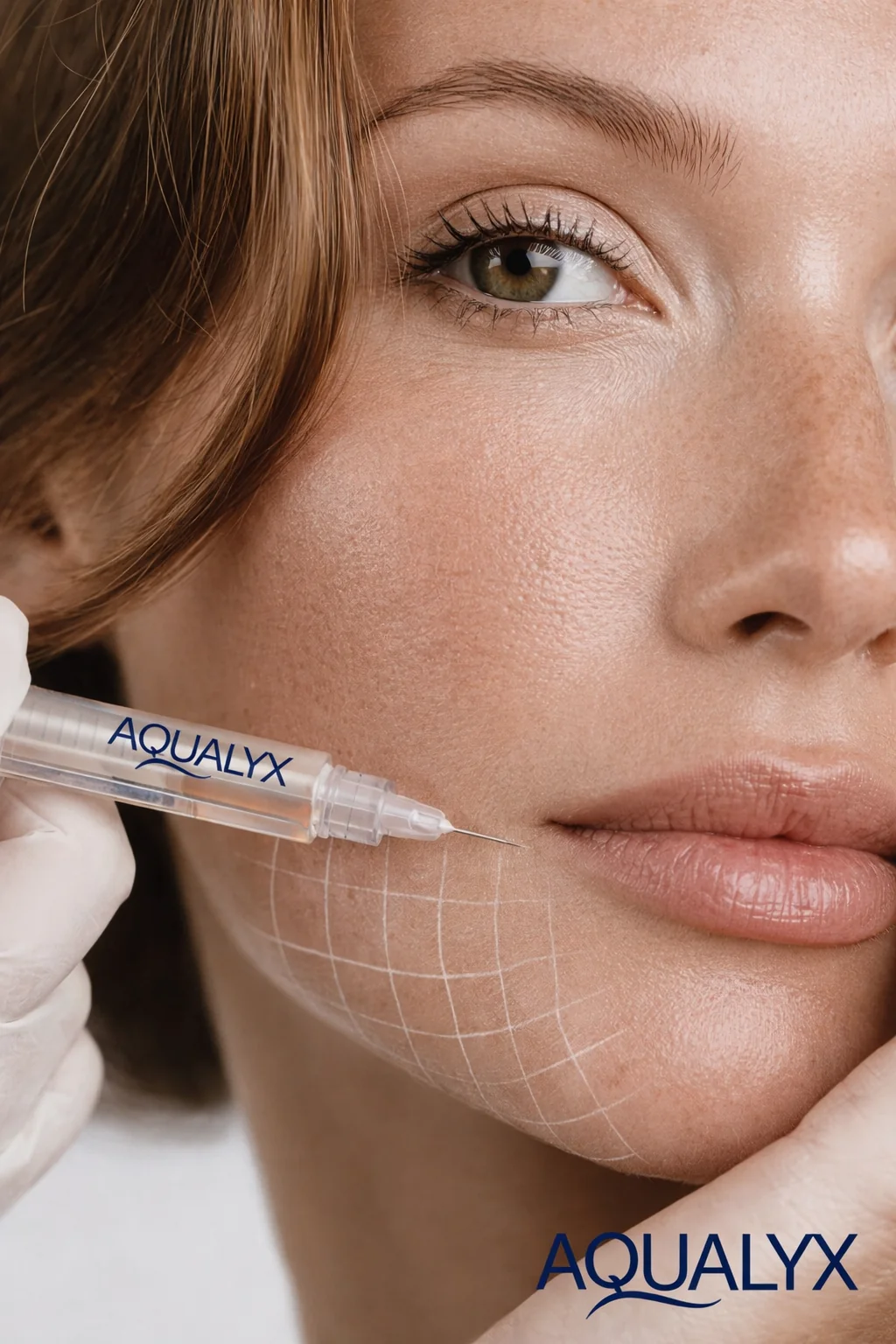
AMI Eyes 2ml (Amieyes) is an advanced under-eye tissue stimulator and injectable skin booster based on highly purified polynucleotides (PN) / polydeoxyribonucleotides (PDRN) derived from salmon DNA. Developed by Quiver Medic in South Korea, it is specifically designed for needle mesotherapy of the delicate eye area and tear trough, providing a subtle filling effect without causing lumps or lymphatic stagnation. The viscoelastic PN gel stimulates fibroblasts to produce collagen and elastin, improves microcirculation, and supports deep tissue regeneration. As a result, AMI Eyes helps reduce dark circles, fine lines, puffiness and signs of fatigue while enhancing skin elasticity, density, hydration and overall dermal quality in the periocular region and, when used in protocols, the whole face and other sensitive areas such as neck and hands.
Bnefits
- Targets the under-eye area and tear trough with a natural, non-filler tissue-stimulating effect
- Reduces dark circles and under-eye pigmentation by improving microcirculation and dermal quality
- Softens fine lines and wrinkles around the eyes and tear valley
- Improves skin elasticity, density and firmness in the periocular region
- Delivers deep, long-lasting hydration to thin, crepey skin
- Promotes cell regeneration and supports repair of damaged dermis from within
- Helps minimise puffiness and signs of fatigue while brightening tired-looking eyes
- Provides a filling and lifting effect without lumps, nodules or lymphatic stagnation when injected correctly
- PN/PDRN technology offers potent regenerative, antioxidant and skin-repairing properties
- Low concentration PN formula allows safe use in very sensitive areas such as under eyes, neck and hands
Indications
- Dark circles and pigmentation in the under-eye area
- Fine lines and wrinkles around the eyes and tear trough
- Under-eye puffiness and signs of fatigue
- Loss of skin elasticity and firmness in the periocular region
- Crepey, dehydrated or thinning under-eye skin
- Impaired dermal structure and texture around the eyes
- Mesotherapy of the whole face for global skin rejuvenation (per manufacturer brochure)
- Use in other sensitive areas such as neck and hands where mild, regenerative bio-stimulation is desired
- Supportive treatment to help improve appearance of scars and enlarged pores in appropriate indications
Composition
- Poly-nucleotide (PN) 1% (20 mg/mL) – total 40 mg polynucleotides in a 2 mL syringe
- Polynucleotides (PN) / polydeoxyribonucleotides (PDRN) derived from purified salmon milt DNA
- PN+, PN− (poly-nucleotide fractions as specified in manufacturer’s technical sheet)
- Sterile, pyrogen-free, viscoelastic aqueous gel for intradermal injection
- pH approximately 6.8–7.5 (physiological buffer system)
- Intended for intradermal / mesotherapy injection (not intravenous, not intra-arterial)
Formulation
- Premium PN-based (polynucleotide/PDRN) injectable tissue stimulator for under-eye skin
- Cross-linked polynucleotide technology providing enhanced regenerative and lifting properties (described in some distributor listings)
- Non-crosslinked viscoelastic PN gel structure optimised for safe periocular mesotherapy (per manufacturer brochure specifications)
- Biocompatible, biodegradable polymerised DNA fragments of salmon origin with high regenerative potential
- Non-volumising biostimulatory profile – acts through collagen/elastin stimulation, hydration and tissue repair rather than traditional filler bulk
- Designed for intradermal injection using mesotherapy techniques over the under-eye and face
Packaging
- 1 pre-filled syringe × 2 mL AMI Eyes PN gel per unit
- Syringe supplied in a branded AMI Eyes / Amieyes carton with internal blister or tray
- Outer packaging labelled with product name, volume (2 mL), concentration (1% PN, 20 mg/mL), batch/lot number, expiry date, storage conditions and manufacturer details
- Intended strictly for single-patient, single-use; any unused product must be discarded after the session
Usage
- AMI Eyes is for professional use only and must be administered by a trained doctor, nurse prescriber or licensed aesthetic practitioner experienced in periocular mesotherapy.
- Before treatment, obtain a full medical history, assess indications and rule out contraindications; obtain informed consent.
- Cleanse and disinfect the treatment area thoroughly using an appropriate antiseptic, avoiding direct contact with the ocular surface.
- Topical anaesthetic may be applied in line with clinic protocol and removed completely before injection.
- Under-eye protocol (per manufacturer brochure):
- - Use a 30G 13 mm needle or multi-needle / mesotherapy needle.
- - Mark approximately 6–10 injection points under each eye along the orbital rim/tear trough region, respecting anatomical safety zones.
- - Inject equal small aliquots of product to deliver around 1 mL per eye (2 mL total per session), placing slightly more product in darker or more hollow areas if clinically appropriate.
- Whole-face mesotherapy protocol (per manufacturer brochure):
- - Use a 33G needle or multi-needle / mesotherapy needle.
- - Inject micro-deposits of AMI Eyes evenly across the entire face to deliver a total of 2 mL in one session.
- - Techniques may include nappage, micro-bolus or serial puncture depending on practitioner preference.
- General technique guidance:
- - Inject intradermally or very superficially in the subdermis; avoid intravascular injection.
- - Aspirate in line with clinic policy and inject slowly with low pressure to minimise risk.
- - Gently smooth the area after injection if required, avoiding excessive massage or pressure around the eye.
- Typical treatment course:
- - Manufacturer protocol: 3 treatments spaced every 20–30 days.
- - Various clinic protocols may use 2–4 sessions at 2–3 week intervals, based on skin condition and patient response.
- Post-treatment care:
- - Advise patients to avoid makeup on treated areas for the rest of the day or as per clinic protocol.
- - Recommend avoiding saunas, sunbeds, intense heat, vigorous exercise and alcohol for 24–48 hours.
- - Instruct patients not to massage or manipulate treated areas unless specifically advised.
- - Inform patients that mild swelling, redness or bruising can occur and usually resolves within a few days.
- Dispose of used needles, syringes and consumables in approved sharps containers; do not reuse any remaining product.
Contraindications
- Known hypersensitivity or allergy to polynucleotides, salmon-derived products or any component of the formulation
- Active infection, inflammation, dermatitis or herpetic lesions in or near the intended treatment area
- Severe chronic inflammatory or autoimmune skin diseases affecting the periocular or facial region without specialist clearance
- History of severe anaphylactic reactions or multiple serious allergies (relative contraindication requiring careful risk–benefit assessment)
- Pregnancy and breastfeeding (use generally not recommended due to limited safety data)
- Uncontrolled systemic disease or coagulation disorders that increase the risk of bleeding or bruising at injection sites
- Use of anticoagulant or antiplatelet medications without appropriate medical evaluation (relative contraindication)
- Recent aggressive procedures (e.g., deep chemical peels, ablative lasers, surgery) in the treatment area without adequate healing interval
- Any condition or circumstance that, in the treating practitioner’s clinical judgement, makes injectable periocular mesotherapy unsafe
Adverse Effects
- Common transient injection-site reactions such as redness, swelling, tenderness, warmth or mild pain in the treated area
- Local bruising or haematoma formation at injection points, particularly in the highly vascular under-eye region
- Temporary papules, bumps or minor unevenness at injection sites, usually resolving as oedema settles or with light practitioner smoothing
- Mild itching, tightness or increased sensitivity around the eyes in the immediate post-treatment period
- Short-lived oedema or puffiness, especially in patients prone to fluid retention or with a history of under-eye swelling
- Infrequent inflammatory reactions or prolonged swelling; requires clinical assessment if persistent
- Risk of infection or abscess formation if aseptic technique is not strictly maintained
- Rare risk of granulomatous reaction or hypersensitivity to PN/PDRN components
- As with any injectable, very rare risk of intravascular injection or vascular compromise; practitioners must be trained to recognise and manage vascular events
- Any severe, unusual or persistent adverse effect should be promptly evaluated and managed by a medical professional according to local guidelines
Storage Conditions
- Store at room temperature as specified in the manufacturer brochure (typically around 2–25 °C), avoiding extremes of heat or cold.
- Do not freeze; freezing may damage the polynucleotide gel structure and compromise safety and efficacy.
- Keep in the original outer carton and blister until use to protect from light and contamination.
- Store in a dry place away from direct sunlight and sources of heat.
- Do not use after the expiry date printed on the packaging or if the syringe, blister or carton is damaged or opened.
- Maintain appropriate inventory rotation (e.g., first-expiry-first-out) in clinical settings.
Duration
Standard manufacturer protocol recommends 3 treatment sessions every 20\u201330 days. Many clinics perform 2\u20134 sessions at 2\u20133 week intervals, with visible improvements often lasting approximately 4\u20136 months, after which maintenance sessions may be performed according to individual skin condition and practitioner judgement.
Onset
Some patients notice brightening and hydration improvements shortly after the first session, with more pronounced reductions in dark circles, fine lines and puffiness developing progressively over the course of 2\u20133 treatments. Results commonly persist for around 4\u20136 months, depending on skin condition and lifestyle, before gradual regression and the need for maintenance.
| Price | Link |
|---|---|
| £21.00 | https://thecrystalpharmacy.co.uk/shop/product/?I=351 |
| Price | Link |
|---|---|
| £29.00 | https://dermafillerltd.uk/product/ami-eyes-2ml/ |
| Price | Link |
|---|---|
| £15.20 | https://aestheticsrxpharma.co.uk/shop/ami-eyes-1x2ml/ |
| Price | Link |
|---|---|
| £19.99 | https://www.lpgclinicswholesale.com/product/ami-eyes-1x2ml/ |
| Price | Link |
|---|---|
| £28.00 GBP | https://www.twofaceaesthetics.com/products/ami-eyes-2ml |
| Price | Link |
|---|---|
| £25.20 | https://aesthipharma.co.uk/ami-eyes-2ml |