Hexarelin (5mg x 10 Vials) & Mod GRF 1 29 (CJC1295 no DAC) (5mg x 10 Vials)
Derma Filler Ltd
Research peptide combinationGrowth hormone secretagogue and GHRH analogue peptide vials for laboratory research
Certifications
- Sold as a research chemical / laboratory reagent, typically labelled “for research use only, not for human consumption” by major peptide suppliers
- Not authorised as a medicinal product by the MHRA, EMA, FDA or other medicines regulators
- Use of growth Hormone Axis peptides in competitive sport may be prohibited under anti Doping regulations; laboratories and institutions are responsible for ensuring regulatory compliance in their jurisdiction
- Sold as a research chemical / laboratory reagent, typically labelled “for research use only, not for human consumption” by major peptide suppliers
- Not authorised as a medicinal product by the MHRA, EMA, FDA or other medicines regulators
- Use of growth Hormone Axis peptides in competitive sport may be prohibited under anti Doping regulations; laboratories and institutions are responsible for ensuring regulatory compliance in their jurisdiction
Growth hormone secretagogue and GHRH analogue peptide vials for laboratory research
Description
This product is a laboratory research bundle containing two separate lyophilised peptide preparations: Hexarelin 5 mg per vial (10 vials) and Mod GRF 1-29, also known as CJC-1295 no DAC, 5 mg per vial (10 vials). In total, the set provides 20 sterile, stoppered glass vials of freeze-dried peptide powder intended exclusively for in vitro and pre-clinical research on growth-hormone secretagogue pathways and growth-hormone-releasing hormone (GHRH) receptor signalling. Suppliers describe Hexarelin as a synthetic growth hormone-releasing peptide (GHRP) and Mod GRF 1-29 (CJC-1295 no DAC) as a short-acting GHRH analogue. The product is marketed strictly as a research reagent, typically labelled as not for human consumption, injection or veterinary use and not as an approved medicinal product.
Bnefits
- Provides two complementary research peptides, Hexarelin and Mod GRF 1-29 (CJC-1295 no DAC), in a single bundle for studies of the growth hormone axis
- Each peptide supplied in 5 mg lyophilised form, facilitating precise preparation of a range of experimental concentrations in the laboratory
- Total of 20 vials (10 Hexarelin, 10 Mod GRF 1-29) aids multi-arm or repeated experiments without frequent reordering
- Lyophilised (freeze-dried) powder format is suitable for extended storage stability under appropriate conditions
- Suppliers advertise high peptide purity (commonly ≥99% by HPLC) for research applications
- Both compounds are widely referenced in the scientific literature as tools for investigating growth-hormone secretagogue receptors and GHRH receptors
- Marketed specifically for research use only, helping to delineate non-clinical from clinical applications
Indications
- Intended use: in vitro and pre-clinical laboratory research on growth hormone secretagogue receptor (GHSR) signalling and growth hormone-releasing hormone (GHRH) receptor pathways
- Model development for studying growth hormone and IGF-1 regulation in cell systems and experimental animals under controlled ethical approval
- Mechanistic research into ghrelin-receptor and GHRH-receptor interactions and potential synergistic effects of combined secretagogue and GHRH-analog stimulation
- Pharmacology, receptor-binding and pathway-activation studies for educational and research purposes
- No approved human or veterinary medical indications; not licensed as a medicine or therapy
Composition
- Hexarelin: synthetic growth hormone-releasing peptide belonging to the GHRP / growth hormone secretagogue class; supplied as lyophilised peptide powder, 5 mg per sterile vial (exact amino-acid sequence and peptide purity specification typically provided in the supplier’s technical documentation)
- Mod GRF 1-29 (CJC-1295 no DAC): synthetic 29-amino-acid analogue of growth hormone-releasing hormone (GHRH), commonly referred to as CJC-1295 without DAC; supplied as lyophilised peptide powder, 5 mg per sterile vial
- Typical research peptide excipients (not specified on the seller’s site but commonly including mannitol or similar bulking agents) may be present to aid lyophilisation and stability
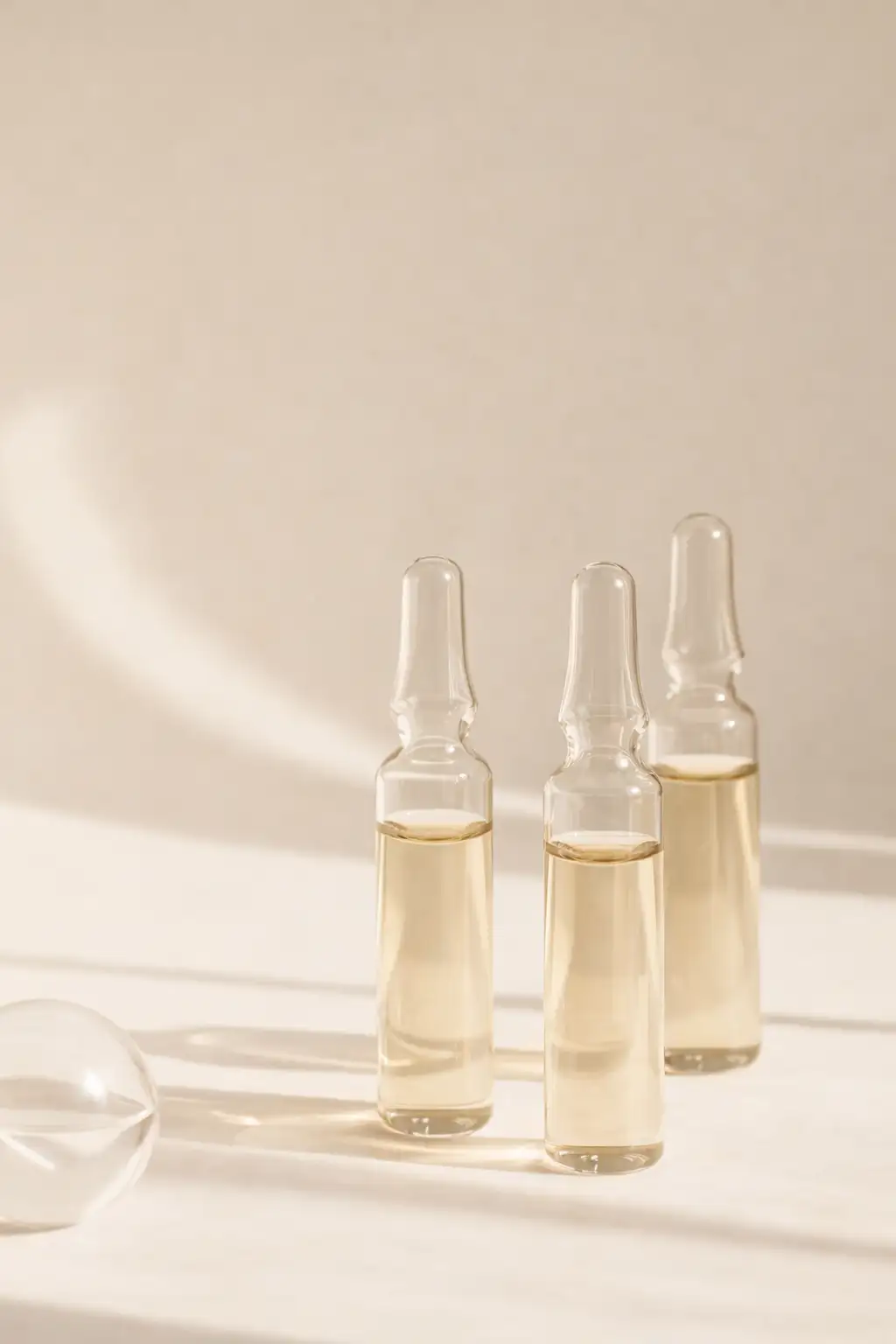
- Vials are sterile, crimp-sealed glass vials suitable for laboratory handling and reconstitution in appropriate research-grade diluents
Formulation
- Dosage form: lyophilised (freeze-dried) peptide powders in stoppered glass vials
- Strength: Hexarelin 5 mg per vial (10 vials) and Mod GRF 1-29 (CJC-1295 no DAC) 5 mg per vial (10 vials)
- Intended for reconstitution with a suitable sterile research diluent (e.g., bacteriostatic water or other buffer) in controlled laboratory settings only, following institutional SOPs
- Marketed by peptide vendors explicitly as research-use-only reagents and not as finished pharmaceutical products
Packaging
- Total of 20 individual glass vials in one bundle: 10 vials containing Hexarelin 5 mg and 10 vials containing Mod GRF 1-29 (CJC-1295 no DAC) 5 mg
- Vials supplied with crimped rubber stoppers and protective caps, typically grouped in secondary packaging (box or tray) for transit
- Outer packaging includes vendor branding, product identification and standard research-chemical labelling such as “for research use only, not for human consumption” where required
Usage
- For professional laboratory and research use only; not for human or veterinary use, injection, ingestion or any form of clinical administration
- Handle in accordance with institutional chemical and biological safety procedures, including appropriate personal protective equipment (PPE) and waste disposal protocols
- Reconstitution, dilution and experimental use should be performed only by trained personnel in controlled laboratory environments, following local SOPs and the supplier’s technical documentation where provided
- Do not use this product to diagnose, treat, cure or prevent any disease in humans or animals
- End users should comply with all applicable regulations and ethical guidelines governing the use of research peptides in their jurisdiction
Contraindications
- Contraindicated for any form of human or veterinary administration, including injection, ingestion, implantation or topical application
- Must not be used by individuals without appropriate laboratory training and access to suitable research facilities and safety equipment
- Use is inappropriate in any setting that would contravene local, national or international regulations on unlicensed medicinal products, doping agents or research chemicals
- Individuals or entities unable to comply with research-use-only conditions and safe-handling regulations should not purchase or possess this product
Adverse Effects
- No approved safety or tolerability profile in humans or animals, as the product is not authorised for clinical use
- Potential toxicology, off-target effects and long-term safety are incompletely characterised and remain topics of pre-clinical research
- Any accidental exposure (e.g., needle-stick, splash to mucous membranes or skin) should be managed according to institutional incident and occupational-health protocols, and may warrant medical evaluation
- Use outside regulated research settings could involve unknown and potentially serious risks
Storage Conditions
- Store lyophilised peptide vials in a cool, dry place protected from light; many peptide suppliers recommend refrigerated or frozen storage for optimal long-term stability
- Avoid exposure to high temperatures, moisture and direct sunlight during shipping and storage
- Maintain vials in their original secondary packaging until use to reduce risk of contamination or light exposure
- After any laboratory reconstitution, follow institutional guidelines and the supplier’s technical documentation for short-term storage, and dispose of any unused solution safely once experiments are complete
- Keep out of reach of unauthorised personnel and never store alongside medicinal products intended for human or veterinary use
Duration
Not applicable \u2013 this is a laboratory research reagent bundle and is not licensed or recommended for any treatment regimen or clinical use in humans or animals.
Onset
Not clinically characterised; any functional effects are the subject of controlled laboratory experiments only. No therapeutic onset-of-action profile is established or approved for human or veterinary use.