LENISNA 200mg/vial
LENISNA
Injectable biostimulator / soft tissue implantHybrid collagen biostimulator (PDLLA + hyaluronic acid) for volume restoration and contouring
Certifications
- Class III injectable implantable medical device with CE mark (CE 2764) for use within applicable European regulatory frameworks.
- Manufactured by VAIM Co., Ltd., a Korean medical aesthetics company specialising in biocompatible and biodegradable polymer Based tissue regeneration products.
- Described by European distributors as a certified Class III implantable medical device based on PDLLA + HA hybrid collagen stimulator technology.
- Biocompatible and biodegradable formulation designed in line with contemporary standards for long Term implantable soft tissue fillers and collagen stimulators.
- Subject to vigilance reporting; adverse effects in France are reported via vigilance@fillmed.com as noted by distributor France Health / FILLMED.
- To be used strictly in accordance with the device’s Instructions for Use and local medical device regulations.
- Class III injectable implantable medical device with CE mark (CE 2764) for use within applicable European regulatory frameworks.
- Manufactured by VAIM Co., Ltd., a Korean medical aesthetics company specialising in biocompatible and biodegradable polymer Based tissue regeneration products.
- Described by European distributors as a certified Class III implantable medical device based on PDLLA + HA hybrid collagen stimulator technology.
- Biocompatible and biodegradable formulation designed in line with contemporary standards for long Term implantable soft tissue fillers and collagen stimulators.
- Subject to vigilance reporting; adverse effects in France are reported via vigilance@fillmed.com as noted by distributor France Health / FILLMED.
- To be used strictly in accordance with the device’s Instructions for Use and local medical device regulations.
Hybrid collagen biostimulator (PDLLA + hyaluronic acid) for volume restoration and contouring
Description
LENISNA 200mg/vial is a next-generation injectable hybrid collagen biostimulator combining Poly-D,L-lactic acid (PDLLA) microparticles with hyaluronic acid (HA). Classified as a Class III implantable medical device (CE 2764), it is intended for intradermal and subcutaneous implantation to fill skin depressions, restore and increase soft tissue volume, and treat morphological asymmetries. Each vial contains 200 mg of actives (170 mg PDLLA and 30 mg non-crosslinked HA) with a PDLLA particle size of approximately 40–80 μm. LENISNA delivers an immediate volumizing effect from HA and long-term collagen stimulation from PDLLA, providing natural volume restoration, contouring and skin tightening with results that can last up to 18–24 months when used according to protocol by trained medical professionals.
Bnefits
- Hybrid PDLLA + HA technology combining immediate volumizing from HA with long-term collagen stimulation from PDLLA.
- Designed for intradermal, subcutaneous or supraperiosteal implantation to restore soft tissue volume and contour facial and body structures.
- Provides volume restoration and contouring effects that can last up to approximately 24 months.
- Improves skin firmness, elasticity and texture through sustained neocollagenesis and tissue remodelling.
- High tissue biocompatibility and strong collagen-stimulating profile, with PDLLA biosphere particles designed to reduce risk of nodules compared to older PLLA technologies.
- Suitable for treatment of deep wrinkles, scars, significant volume loss and laxity, offering a minimally invasive alternative to surgical lifting or implants.
- Supports natural face and body contouring with progressive, subtle results rather than abrupt overfilling.
- Part of a multilayer collagen induction approach together with JUVELOOK (for dermal layers), allowing tailored treatment by ageing stage and injection depth.
Indications
- Filling of skin depressions and restoration or increase of soft tissue volume.
- Reconstructive treatment of morphological asymmetries.
- Volume augmentation and contouring of the face and selected body areas.
- Natural face contouring (e.g. midface, temples, jawline, chin) in patients with volume loss and loss of definition.
- Natural body contouring (e.g. arms, buttocks, abdomen, other selected regions) according to practitioner protocol.
- Treatment of skin laxity, sagging and loss of firmness.
- Treatment of deep wrinkles and folds (e.g. nasolabial folds, marionette lines, deep static lines).
- Treatment of deep scars and significant tissue defects after thorough clinical assessment.
- Intended for adult patients and strictly for use by trained medical professionals in aesthetic and reconstructive indications.
Composition
- Poly-D,L-lactic acid (PDLLA) 170 mg per vial (biodegradable collagen-stimulating polymer).
- Non-crosslinked hyaluronic acid (HA) 30 mg per vial (immediate volumizing and hydrating effect).
- PDLLA particle size approximately 40–80 μm (biosphere-shaped microparticles).
- Additional excipients in the lyophilized or powder phase as per device technical file (not fully disclosed publicly).
- Reconstituted prior to use with sterile water for injection or saline; lidocaine may be added for patient comfort according to protocol.
Formulation
- Class III implantable injectable medical device based on PDLLA + non-crosslinked HA hybrid technology.
- Supplied as a lyophilized/powder implant combining 170 mg PDLLA and 30 mg HA (total 200 mg) per vial.
- Microporous PDLLA particles (approx. 40–80 μm) designed for gradual biodegradation and collagen stimulation.
- Reconstituted before injection with approximately 8 ml sterile water or saline, with optional addition of 1–2 ml lidocaine to improve injection comfort (according to commonly used protocols).
- Intended injection layer: primarily subcutaneous or supraperiosteal; can be used in deep dermis depending on indication and protocol.
- Biocompatible and biodegradable components that are gradually resorbed while stimulating new collagen formation.
Packaging
- Single vial containing 200 mg total actives (170 mg PDLLA + 30 mg HA).
- Sterile glass vial with rubber stopper and aluminium cap, supplied in a branded carton.
- Labelled as a Class III injectable medical device (CE 2764) with strict medical-use-only designation.
- Packaging carries product name, concentration, batch number, expiry date and CE mark with notified body number 2764.
- Accompanied by product leaflet detailing indications, preparation, injection technique, contraindications and safety information (available from manufacturer/distributor).
Usage
- For strict medical use only: LENISNA must be used exclusively by appropriately trained and qualified healthcare professionals familiar with injectable biostimulators and local regulations.
- Before treatment, take a detailed medical history, assess indications (volume loss, asymmetries, deep wrinkles, laxity, scars) and discuss expectations with the patient; obtain informed consent.
- Reconstitute the lyophilized contents of one vial with approximately 8 ml of sterile water for injection or normal saline, gently swirling (not vigorously shaking) to obtain a homogeneous suspension. According to many clinical protocols, 1–2 ml of lidocaine may be added to the reconstituted solution to enhance comfort.
- Allow adequate hydration time after reconstitution as per protocol so that PDLLA particles are evenly dispersed in the HA-containing solution.
- Thoroughly disinfect the treatment area using an appropriate antiseptic.
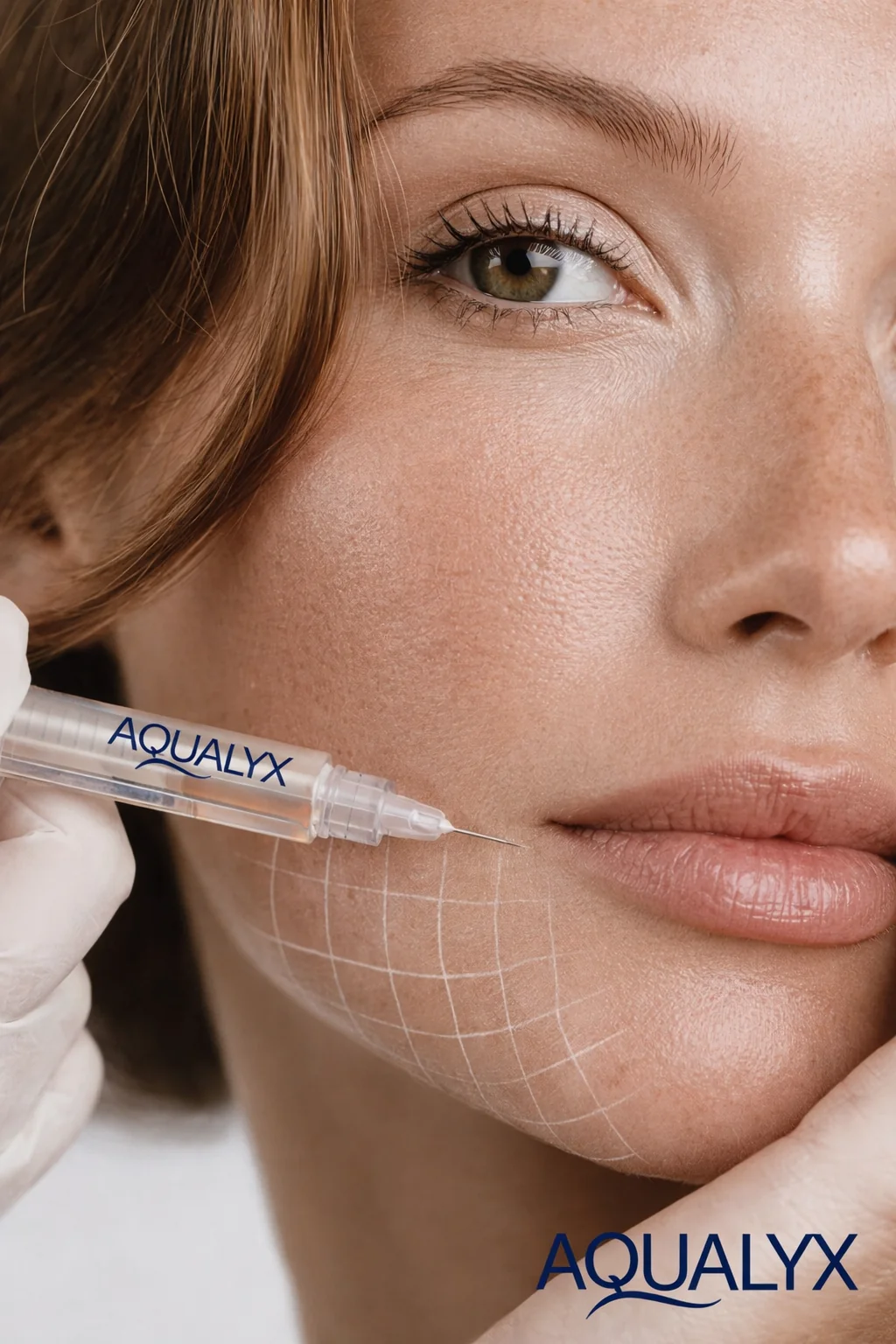
- Preferred technique is cannula-based injection; attach a suitable cannula (commonly 25G, 40–50 mm) or needle depending on indication and treatment area.
- Inject in the recommended tissue plane (deep subcutaneous or supraperiosteal; in some protocols deep dermis for specific indications) using linear threading, fanning or depot techniques, avoiding intravascular injection.
- Distribute the product evenly across the targeted area, taking care not to overcorrect. The goal is gradual collagen-induced improvement rather than immediate maximal volume.
- Gently mould the area if required, avoiding aggressive massage; follow manufacturer and training guidance regarding post-injection handling.
- Standard protocol from France-Health and other training sources recommends 3 sessions spaced approximately 8 weeks apart, with adaptation based on individual clinical response.
- Provide post-procedure advice, including avoidance of intense exercise, heat exposure (sauna, sunbeds), alcohol and facial/body massage over the treated area for several days, and instructions to report any unusual pain, nodules, discoloration or signs of infection promptly.
- Dispose of any remaining reconstituted product, vial, needles and cannulas as clinical waste; do not reuse or resterilize.
Contraindications
- Known hypersensitivity or allergy to any component of the device, including PDLLA, hyaluronic acid or excipients.
- History of severe allergic reactions or anaphylaxis to injectable implants or fillers.
- Active skin infection, inflammation, dermatitis or open wounds at or near the intended injection site.
- Autoimmune diseases, immunosuppression or uncontrolled systemic illness, unless the treating physician judges use to be appropriate after careful risk–benefit assessment.
- Known tendency to develop hypertrophic scars or keloids.
- Bleeding disorders or current significant anticoagulant / antiplatelet therapy without appropriate medical evaluation and management.
- Pregnancy and breastfeeding, due to a lack of adequate safety data.
- Use in patients under 18 years of age.
- Injection into areas with permanent fillers or where other biostimulators are present should be approached with caution and avoided unless the practitioner is experienced and deems it safe.
- Any contraindications specified in the official Instructions for Use (IFU) and local regulatory/clinical guidelines.
Adverse Effects
- Expected transient injection-site reactions such as redness (erythema), swelling, bruising, tenderness, pain, itching and mild induration.
- Temporary asymmetry, irregularity or nodularity that may occur as product integrates and collagen is stimulated.
- Formation of palpable nodules or granulomas, particularly if injected too superficially or if preparation/injection technique is suboptimal; these may require medical management.
- Local infection, abscess or delayed inflammatory reactions if aseptic technique is not strictly followed or if patients manipulate treated areas.
- Rare hypersensitivity or delayed immune-mediated reactions to PDLLA or HA.
- As with any injectable implant, inadvertent intravascular injection may lead to serious complications including tissue ischemia or necrosis; proper technique and knowledge of anatomy are essential.
- Other adverse events as described in the device IFU and emerging post-marketing safety data.
Storage Conditions
- Store in a clean, dry place at controlled room temperature as specified on the packaging (typically in the range of approximately 2–25 °C).
- Do not freeze and protect from excessive heat or direct sunlight.
- Keep vials in their original carton until use to protect from light and physical damage.
- Do not use after the expiry date indicated on the vial and outer packaging.
- Store out of the sight and reach of children and unauthorised persons.
- Use immediately after reconstitution and discard any unused reconstituted product; do not store partially used vials.
Duration
Clinical effects of volume restoration, contouring and skin quality improvement typically last around 18\u201324 months after the final session, depending on injection technique, treated area, patient metabolism, lifestyle and follow-up care.
Onset
An immediate volumizing and lifting effect is provided by the HA component after injection, while PDLLA microparticles progressively stimulate collagen production over weeks to months. Visible improvements in firmness, contour and skin texture develop gradually, with full effects commonly observed several weeks after the treatment course.
| Price | Link |
|---|---|
| EUR 280.00 | https://www.france-health.com/en/home/9922-lenisna-200mgvial.html |