Melanostatin DM 200mg (Topical)
Melanostatin DM
Cosmetic / research peptide active for skin tone regulation (not a licensed medicinal product)Synthetic hexapeptide skin-brightening and anti-pigmentation active
Certifications
- Melanostatin DM is not listed as an authorised active substance or finished medicinal product in the UK MHRA medicines database.
- There is no European Medicines Agency (EMA) European Public Assessment Report (EPAR) or centrally authorised medicinal product for Melanostatin DM; it is sold as a cosmetic / research peptide ingredient rather than as a medicine.
- Cosmetic Ingredient and chemical suppliers classify Melanostatin DM as a cosmetic Grade active or research chemical with associated Safety Data Sheets (SDS) and product specifications, indicating compliance with general chemical and cosmetic Ingredient handling standards rather than medicines regulation.
- Some manufacturers and distributors reference general quality certifications such as ISO 9001 for their production sites, but specific, product Level medicinal certifications (e.g. GMP for finished drug products, CE/UKCA medical device marking) are not indicated for Melanostatin DM.
- No MHRA Product Licence (PL) number, EMA marketing authorisation number or FDA drug approval number is associated with Melanostatin DM at the time of verification.
- Melanostatin DM is not listed as an authorised active substance or finished medicinal product in the UK MHRA medicines database.
- There is no European Medicines Agency (EMA) European Public Assessment Report (EPAR) or centrally authorised medicinal product for Melanostatin DM; it is sold as a cosmetic / research peptide ingredient rather than as a medicine.
- Cosmetic Ingredient and chemical suppliers classify Melanostatin DM as a cosmetic Grade active or research chemical with associated Safety Data Sheets (SDS) and product specifications, indicating compliance with general chemical and cosmetic Ingredient handling standards rather than medicines regulation.
- Some manufacturers and distributors reference general quality certifications such as ISO 9001 for their production sites, but specific, product Level medicinal certifications (e.g. GMP for finished drug products, CE/UKCA medical device marking) are not indicated for Melanostatin DM.
- No MHRA Product Licence (PL) number, EMA marketing authorisation number or FDA drug approval number is associated with Melanostatin DM at the time of verification.
Synthetic hexapeptide skin-brightening and anti-pigmentation active
Description
Melanostatin DM 200mg (Topical) is supplied by Dermal Skin LTD as a cosmetic / research peptide active described as an inhibitor of α-melanocyte-stimulating hormone (α-MSH), the principal hormone regulating melanin pigment production in melanocytes. By antagonising or inhibiting the effects of α-MSH at the melanocortin 1 receptor (MC1R), Melanostatin DM has been shown in laboratory experiments and cosmetic-ingredient literature to reduce melanogenesis, helping to lighten skin tone and even out skin coloration. It is discussed in cosmetic science sources as a synthetic hexapeptide (sequence His-D-Arg-Ala-Trp-D-Phe-Lys-NH2) with molecular formula C41H58N14O6 and CAS number 123689-72-5, developed as a more stable and potent analogue of endogenous melanostatin (an MSH-release-inhibiting factor). Ingredient suppliers position Melanostatin DM for use in advanced cosmetic formulations aimed at reducing the appearance of hyperpigmentation, age spots and uneven complexion, and for addressing photodamage-related discoloration. The 200 mg pack offered by Dermal Skin LTD appears as a lyophilised white peptide powder in a small vial intended for professional formulation work or experimental use; it is not a licensed medicinal product and is typically labelled for cosmetic laboratory / research applications only.
Bnefits
- Acts as an inhibitor of α-melanocyte-stimulating hormone (α-MSH), the key physiological stimulator of cutaneous melanogenesis, thereby helping to downregulate melanin production in laboratory models.
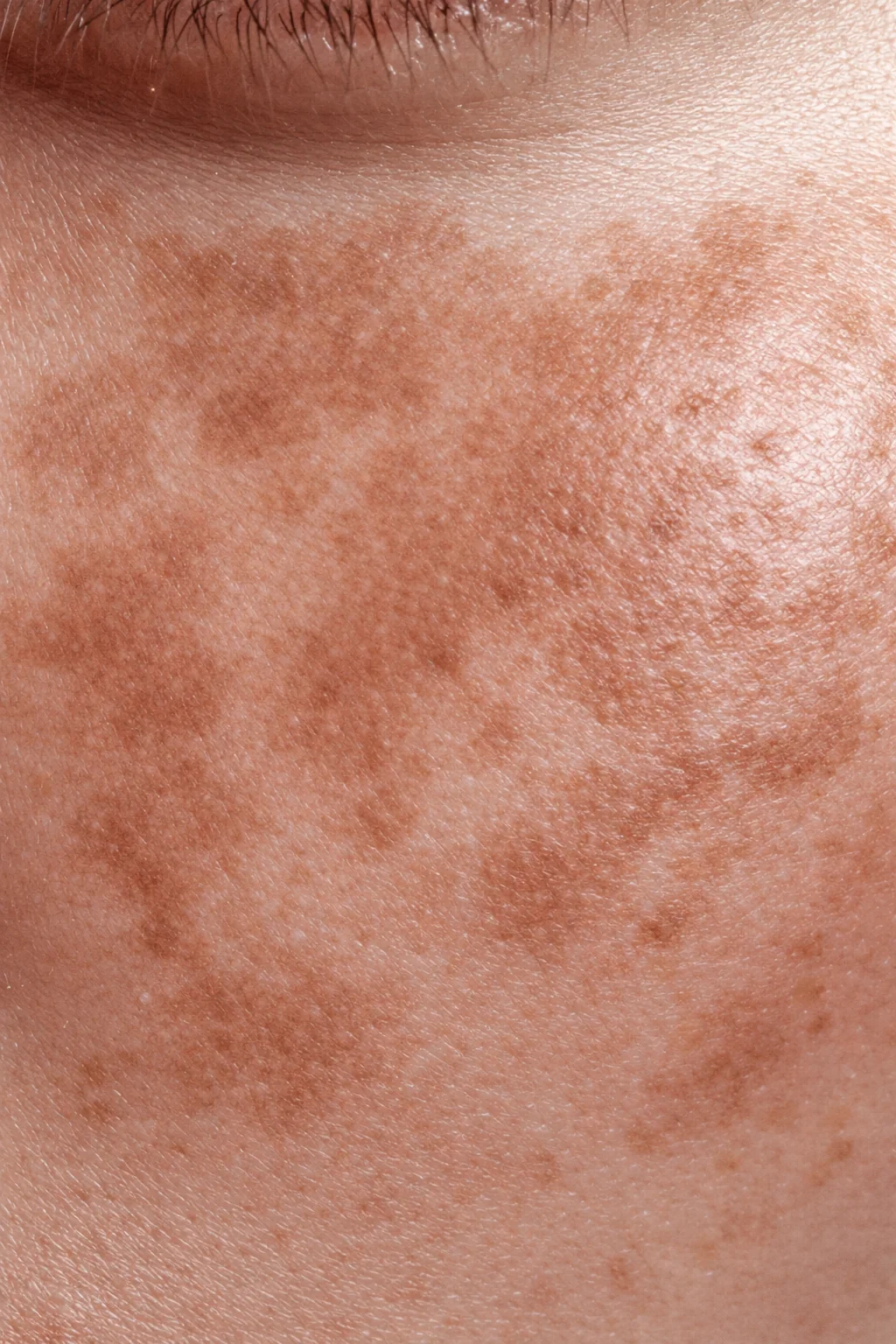
- Cosmetic-ingredient sources describe Melanostatin DM as a skin-whitening, lightening and anti-spot agent that can support a more even skin tone and reduce the appearance of hyperpigmented areas when used appropriately in formulations.
- May be useful in cosmetic research for addressing photodamage-related discoloration, such as sun-induced dark spots and uneven pigmentation patterns.
- Frequently incorporated into high-performance cosmetic formulations for brightening creams, serums and spot-correcting products targeting uneven skin tone.
- Synthetic hexapeptide structure (His-D-Arg-Ala-Trp-D-Phe-Lys-NH2) designed to mimic and extend the biological activity of melanostatin (melanotropin release-inhibiting factor), offering improved stability compared with short endogenous peptides.
- Suppliers report high purity (typically ≥95–99% by HPLC) and cosmetic-grade quality, making it suitable as an active ingredient for R&D and formulation in the cosmetic industry.
- Available as a lyophilised powder with good stated stability, facilitating formulation flexibility (e.g. incorporation into aqueous or hydro-alcoholic systems after suitable solubilisation by trained formulators).
- Marketed by peptide and cosmetic-ingredient companies as suitable for inclusion in products aimed at brightening overall complexion, reducing the look of pigmentation and supporting a more uniform skin appearance.
Indications
- Cosmetic / R&D indication: laboratory testing and cosmetic formulation work for skin tone regulation and hyperpigmentation-focused products (e.g. brightening serums, spot-correcting creams, tone-balancing skincare).
- Used in cosmetic ingredient catalogues as a skin-whitening, lightening and anti-spot agent acting at the level of melanogenesis by antagonising α-MSH signaling pathways.
- Experimental use in vitro and in cosmetic R&D to explore reduction of melanin synthesis and melanosome dispersion in melanocytes, aiming at visible reductions in dark spots and uneven pigmentation in finished cosmetic products.
- Suggested by ingredient suppliers as potentially useful in cosmetic approaches to photodamage (skin discoloration due to sun exposure) and other conditions where cosmetic reduction of melanin production or transfer is desired.
- Not indicated as a medicinal therapy; not authorised by medicines regulators for treatment of medical pigmentary disorders (e.g. melasma, vitiligo) or any systemic condition.
Composition
- Active peptide: Melanostatin DM, a synthetic hexapeptide.
- INCI / nomenclature: commonly referenced as Melanostatin DM and described in some cosmetic-ingredient literature as corresponding to Hexapeptide-2 in INCI nomenclature.
- CAS number: 123689-72-5 (for Melanostatin DM hexapeptide as listed in multiple supplier specifications).
- Amino acid sequence: His-D-Arg-Ala-Trp-D-Phe-Lys-NH2 (H-His-D-Arg-Ala-Trp-D-Phe-Lys-NH2).
- Molecular formula: C41H58N14O6.
- Molecular weight: approximately 842–843 g/mol, depending on the exact salt form reported in supplier documentation.
- Peptide class: synthetic analogue of melanotropin release-inhibiting factor (melanostatin); designed as an α-MSH antagonist for cosmetic use.
- Grade: cosmetic / research grade peptide active; typical supplier specifications indicate purity ≥95–99% by HPLC.
- Physical form (active): white to off-white lyophilised powder.
- No finished-topical excipient list is publicly provided for the 200 mg vial sold by Dermal Skin LTD; the product appears to be the neat peptide without declared formulation excipients, supplied for downstream formulation by professionals.
Formulation
- Form supplied by multiple peptide vendors: lyophilised (freeze-dried) peptide powder in vials or bottles, designated as cosmetic-grade or research-grade material for incorporation into topical formulations.
- The Dermal Skin LTD Melanostatin DM 200mg (Topical) listing shows a single vial presentation labelled as 200 mg, consistent with a bulk active ingredient rather than a ready-to-use finished cosmetic product.
- Suppliers describe Melanostatin DM as stable under recommended storage conditions and readily soluble in suitable cosmetic solvents/vehicles when handled by experienced formulators.
- Used as an active ingredient in advanced cosmetic formulations such as brightening creams, serums, spot correctors and skin-tone-evening products, often in combination with other depigmenting agents (e.g. vitamin C derivatives, niacinamide) as determined by cosmetic chemists.
- Designed for topical cosmetic application once formulated into finished products; not intended for injection, ingestion or any systemic administration.
- Most bulk-ingredient technical sheets frame Melanostatin DM as intended for laboratory research, industrial and cosmetic R&D use, explicitly stating that it is not supplied as a finished consumer cosmetic and not intended for direct clinical or medical use.
Packaging
- Dermal Skin LTD presents Melanostatin DM 200mg (Topical) in a small vial (likely glass) containing 200 mg of lyophilised peptide powder, with product labelling indicating the peptide name and quantity; detailed container material specifications are not publicly listed.
- Bulk-ingredient suppliers typically offer Melanostatin DM in small vials or bottles (e.g. 1 g, 5 g, 10 g or similar), sealed to protect from moisture and contamination, commonly with screw caps or crimp seals over rubber stoppers for lyophilised vials.
- Outer packaging for bulk ingredients generally consists of secondary cartons or protective materials suitable for temperature-controlled shipment; specific branding and artwork for the Dermal Skin LTD pack are not fully documented beyond the website image.
- No patient-facing leaflet or regulatory medicinal packaging (e.g. SmPC/PIL) is associated with Melanostatin DM, as it is marketed as a cosmetic / research ingredient rather than a licensed medicinal product.
- Label information from ingredient suppliers usually includes product name (Melanostatin DM), CAS number, batch/lot number, net weight, purity, storage instructions and manufacturer/supplier details.
Usage
- Melanostatin DM 200mg (Topical) sold by Dermal Skin LTD is an active cosmetic / research ingredient, not a finished consumer product; the retailer does not provide end-user dosing instructions or ready-to-use application guidance.
- Bulk suppliers describe Melanostatin DM as intended for use by qualified professionals in cosmetic formulation laboratories or research settings, where it is incorporated at appropriate concentrations into topical products such as creams and serums.
- Common technical documentation frames Melanostatin DM as for R&D, industrial and cosmetic-ingredient use only, with explicit statements that it is not intended for individual self-use or direct clinical application.
- Any specific inclusion level, vehicle choice, pH adjustment, and compatibility assessment are considered formulation decisions for cosmetic chemists and R&D professionals; such detailed usage parameters are not standardised or publicly harmonised across suppliers.
- Due to its status as an experimental / cosmetic peptide without medicinal authorisation, there are no regulator-approved Instructions for Use comparable to medicinal SmPC/PIL documents; handling should follow general laboratory safety practices and supplier SDS guidance.
- End-users are expected to rely on professional cosmetic-formulation expertise and comply with local cosmetic regulations when developing finished products containing Melanostatin DM.
Contraindications
- Not a medical product
Adverse Effects
- Not a medical product
Storage Conditions
- Bulk ingredient suppliers recommend storing Melanostatin DM as a lyophilised powder in a cool, dry, dark place, typically refrigerated (e.g. 2–8 °C) to maintain stability.
- Containers should be kept tightly closed to protect from moisture and air exposure; desiccants may be used within packaging as indicated by the supplier.
- Reconstituted solutions (if prepared for formulation or experimental use) are generally advised to be stored at low temperature and used within a limited period according to the supplier’s technical data and laboratory best practices.
- The Dermal Skin LTD webpage does not provide specific storage-condition text for the 200 mg vial; users are expected to follow general peptide storage guidance and any instructions provided on the product label or accompanying documentation.
- As with all laboratory/active ingredients, Melanostatin DM should be kept out of reach of children and handled by trained personnel using appropriate personal protective equipment in accordance with the Safety Data Sheet (SDS).
Duration
Not a medical product
Onset
Not publicly listed (no clinical, regulator-reviewed onset-of-effect data are published; available information relates to in vitro and cosmetic R&D outcomes rather than quantified therapeutic response times).
| Price | Link |
|---|---|
| £173.00 | https://dermafillerltd.uk/product/melanostatin-dm-200mg-topical/ |