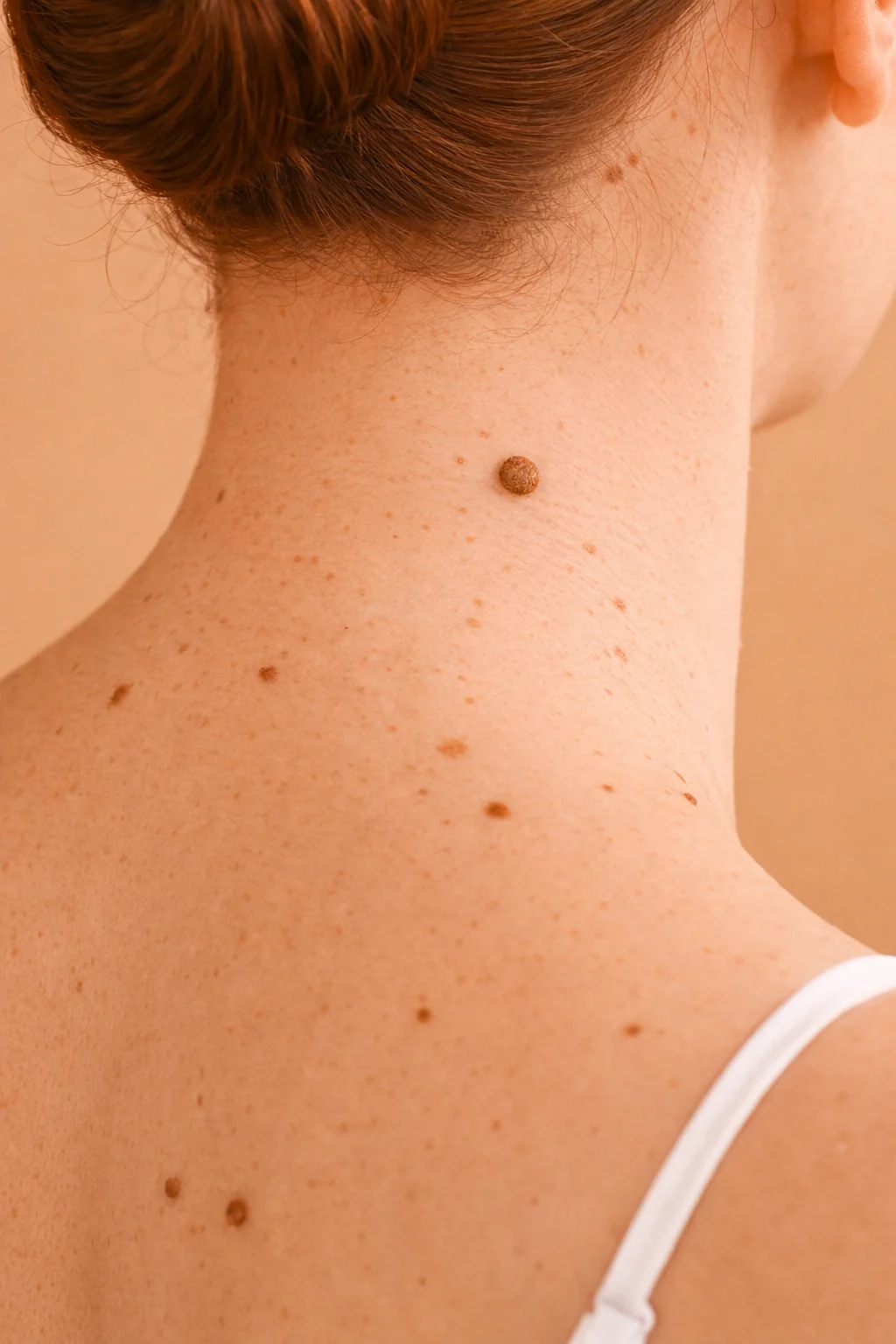
Moles
Moles Treatment
Moles Treatment Statistics and Key Information
- Patient Satisfaction Rate
- 95%
- Average Treatment Cost
- See provider pricing
- Number of Reviews
- 15203
- Treatment Downtime Duration
- Varies by treatment
- Number of Available Practitioners
- 432
Overview
When we say ‘moles’ in a skin context, we’re talking about those small, coloured bumps or spots made up of clustered pigment-producing cells (melanocytes) on your skin. They can be flat or raised, brown, tan, black, or even pink, and most appear in childhood or early adulthood. They aren’t contagious and usually don’t do much beyond sitting there, but because they’re collections of melanocytes, sometimes doctors watch them for changes that might hint at melanoma, a form of skin cancer.
Goals of Moles treatment
- Understanding and monitoring moles so any suspicious changes get picked up early.
- Removing a mole when it’s medically advised (eg for biopsy or cancer risk) to prevent issues.
- Removing one or more for cosmetic or comfort reasons when a person is bothered by its appearance or irritation.
- Minimising any discomfort, snagging on clothes, or psychological worries about a mole.
Treatment Options
- If a mole is purely cosmetic and benign, some clinics offer ‘mole reduction’ to make it smaller without full excision, but that’s different from full removal and histology.
- Cryotherapy can be used for some skin lesions (less common for deeper moles).
- There’s really no safe DIY option — home removal can lead to infection, scarring, and missed diagnoses.
Pros
- Most moles are harmless and don’t require intervention at all.
- Professional removal can give peace of mind and resolve cosmetic or irritative concerns.
- When necessary, removal and histology can rule out melanoma or other pathology.
Cons
- Any intervention can leave a scar or small mark.
- There’s cost associated with private procedures if it’s not medically urgent.
- If done poorly, there’s risk of infection or regrowth, and DIY removal is strongly discouraged.
- Not all moles are suitable for certain removal methods like lasers if a biopsy is needed.
Candidate & Preparation
Who is a Good Candidate
- Anyone with a suspicious mole that’s changing in shape, size or colour.
- People whose moles irritate them physically or make them self-conscious.
- Those whose GP or dermatologist advises removal for medical reasons.
- Not good for people considering at-home or unregulated removal — professional evaluation is safer.
Appointments & Safety
What Happens During Appointment
You’ll usually start with an assessment of the mole. If removal is appropriate, the clinician will clean and numb the area with local anaesthetic, then remove the mole by shaving or excision. The whole visit can be as short as 15–30 minutes, with possible stitches if full excision is done.
Pain Level
Most mole removals are done under local anaesthetic, so you usually feel only pressure or mild discomfort during the procedure and minimal pain afterwards.
Safety Considerations
- Professional mole removal should be done in a sterile setting by medical professionals to minimise infection or scarring.
- If the mole is suspicious of cancer, removal needs full excision and lab analysis rather than cosmetic methods.
- Avoid at-home techniques that carry high risk of wrong diagnosis and complications.
Cost & Access
Typical Prices
Private mole removal in the UK often ranges from around GBP 250 to 450 for a single mole, with additional fees for consultation (GBP 50 to 150) and histology/bio testing (GBP 50 to 150). Some specialist clinics, especially in London, quote overall single mole procedures from roughly GBP 775 up to GBP 930 or more when biopsy and histology are included.
Why Prices Vary
- Clinic location and overheads (central London tends to cost more).
- Type of removal (shave excision, surgical excision, laser and whether biopsy is done).
- Size, depth, and location of the mole itself.
- Experience and qualification of the dermatologist or surgeon.
Results & Maintenance
How Long Results Last
If a mole is completely removed, it generally doesn’t come back in that spot, though scarring varies by method. If removal is partial (eg some cosmetic reduction) there’s a chance pigment or bump can recur.
Maintenance Requirements
- Once removed, a mole doesn’t usually need ‘maintenance’, but follow-up to check healing and scarring is common.
- Keeping an eye on your skin generally is wise — new moles or changes should get reviewed again.
Regulation & Guidelines
Guidelines
There’s no NICE guideline exclusively about cosmetic mole removal, but NICE skin cancer guidance covers when suspicious moles should be assessed and removed medically. Devices used in removal (like surgical tools/lasers) are regulated and clinics must follow broader safety frameworks; the NHS will generally only remove moles that are medically justified under those guidelines.
What to Do If Something Goes Wrong
Regulation
Clinics offering mole removal should be CQC registered and adhere to safety and hygiene standards, and dermatologists operate under medical regulation. There isn’t a bespoke NICE guideline for cosmetic mole removal, but suspicious moles tie into NICE skin cancer guidance and benign lesions policy.
Complaints
If you’re unhappy with care, raise it with the clinic’s complaints process or report clinical safety concerns to the CQC or professional regulator like the General Medical Council if a doctor is involved.