Logo
HOMEFEATURESBLOGFAQS
BOOK DEMO
  1. Home
  2. Treatments
Ready To Get Started?

Join over 200+ clinics already growing with Consentz.

Logo

Contact Information

[UK] +44 (0) 208 050 3372

(US) +1 646 786 1949

contact@consentz.com

Consentz vs

  • Zenoti
  • AestheticsPro
  • Pabau
  • Aesthetic Record
  • Clinicsense
  • Nextech
  • Vagaro
  • GlowdayPRO
  • PatientNow
  • Mangomint
  • Boulevard

Features

  • Clinic Management
  • Patient Engagement
  • Photos and Records
  • Personalise
  • Analytics
  • Stock and Billing

Marketing

  • Marketing
  • Medical Templates
  • FAQs
  • Blog
  • Articles
  • Support
  • Terms & Conditions
  • Partners
  • Privacy Policy

Get the app

About the Directory

Find qualified healthcare and aesthetic practitioners in your area. Verified profiles, authentic reviews, and regulatory compliance.

Directory

  • Aesthetic Treatments
  • Top Aesthetic Practitioners
  • Top Aesthetic Clinics
  • Accredited Clinics
  • Top Clinics by Treatment & City
  • Top Practitioners by Treatment & City

Clinics by Accreditation

  • CQC Accredited Clinics
  • HIS Accredited Clinics
  • HIW Accredited Clinics
  • JCCP Accredited Clinics
  • RQIA Accredited Clinics
  • Save Face Accredited Clinics

For Practitioners

  • Join Directory
  • Update Profile
  • Verification Process
  • Support

Contact

  1. Home
  2. Treatments
  3. Laser Treatments
  4. Photodynamic Therapy (PDT)
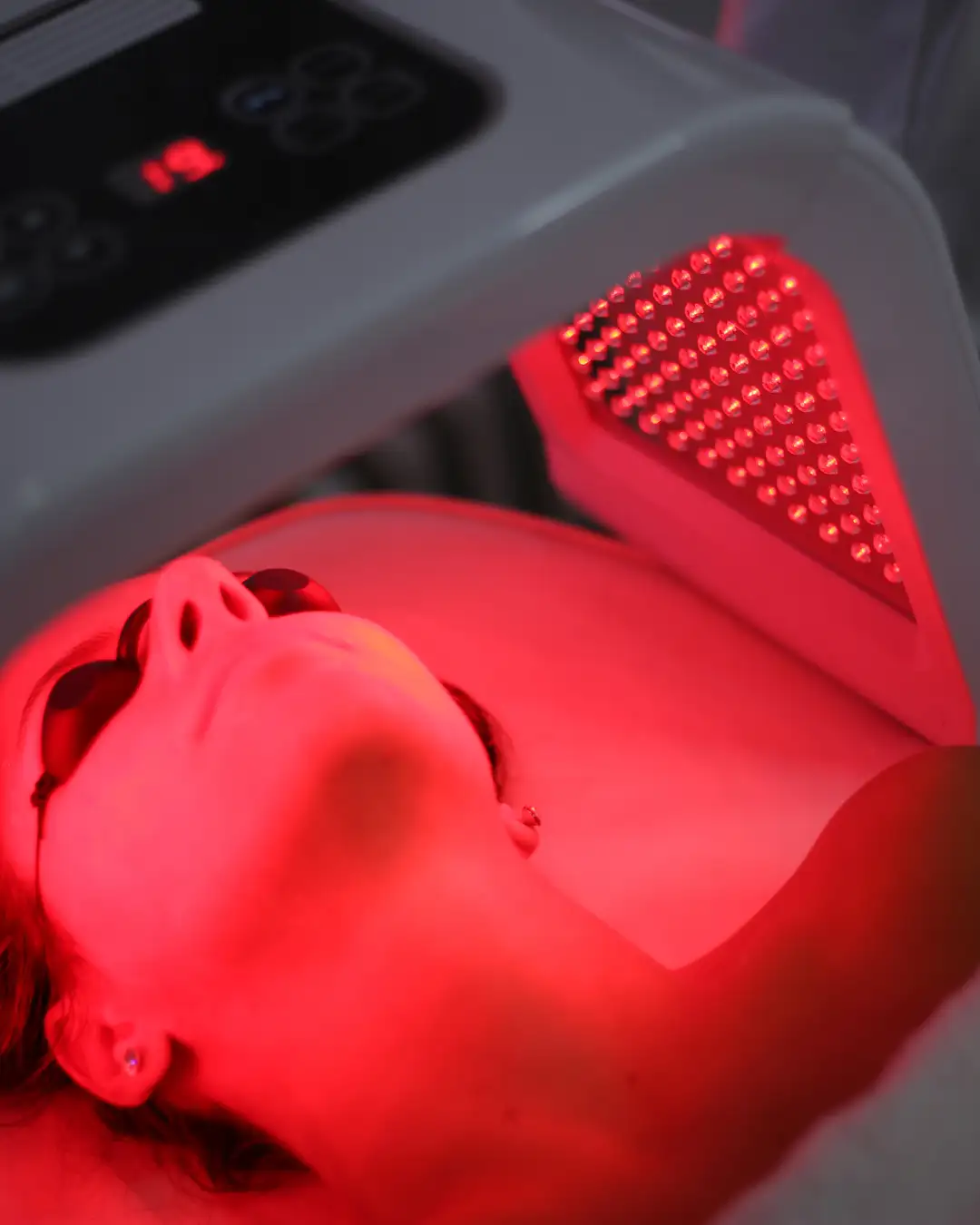
Photodynamic Therapy (PDT) treatment procedure - before and after results

Photodynamic Therapy (PDT)

GBP 850Average Cost
95%Satisfaction
42Practitioners
854Google Reviews
VariesDowntime
Photodynamic Therapy (PDT)

Photodynamic Therapy (PDT) Treatment

Photodynamic Therapy (PDT) Treatment Statistics and Key Information

Patient Satisfaction Rate
95%
Patient Satisfaction
Average Treatment Cost
GBP 850
Average Cost
Number of Reviews
854
Reviews
Treatment Downtime Duration
Varies
Downtime
Number of Available Practitioners
42
Practitioners

Overview

Photodynamic Therapy (PDT) is a **medical treatment** that combines a *light-sensitive medicine* with a specific light source to destroy abnormal cells. A photosensitising agent (often a cream like methyl aminolevulinate or 5-ALA) is applied to the target area. After a period of incubation to let the drug accumulate in abnormal cells, a light (artificial red light or even daylight) is applied. The light activates the medicine, producing a chemical reaction that creates reactive oxygen species that damage and kill those abnormal cells while sparing much of the healthy surrounding skin. The agent and the light are harmless on their own but work together to treat the lesion. PDT is mostly used on **areas accessible to light**, such as the skin.

Goals of Photodynamic Therapy (PDT) treatment

  • Destroy precancerous skin cells (actinic keratoses) to prevent progression to cancer.
  • Treat **non-melanoma skin cancers** like superficial basal cell carcinoma and Bowen’s disease when surgery might cause more cosmetic issues.
  • Reduce sun-damage over a broader area of skin (‘field cancerisation’) and improve cosmetic appearance of sun-damaged skin.
  • Minimise scarring compared with surgery while controlling abnormal cell growth.

Treatment Options

  • PDT is less invasive than **surgical excision** and often has better cosmetic results in delicate areas, but surgery may be more definitive for deeper lesions.
  • Compared with **cryotherapy**, PDT might be more expensive but treats broader ‘field’ sun damage and offers smoother cosmetic outcomes.
  • Other options like **topical chemotherapies** (5-FU, imiquimod) also treat superficial lesions but work differently and may have different side-effect profiles. PDT uses light activation to *selectively kill cells*.
  • Lasers and more invasive techniques can penetrate deeper but often need longer downtime and carry different risks.

Pros

  • It’s **minimally invasive** and often outpatient, so no general anaesthesia or big incisions.
  • Healthy cells are mostly unaffected because the photosensitiser concentrates in abnormal cells.
  • It tends to result in **better cosmetic outcomes** than surgery in sensitive areas (face/nose).
  • Treatment can often be repeated if needed, and there’s usually minimal scarring when done properly.

Cons

  • PDT only works for **superficial lesions** because light can’t penetrate deeply.
  • It may be **more expensive** than simpler options like cryotherapy for some precancerous patches.
  • Treatment can be **uncomfortable or painful** during light activation with sensations like burning or stinging.
  • Not suitable for all skin cancers or deep cancers; alternatives may be needed.

Candidate & Preparation

Who is a Good Candidate

  • Someone with **actinic keratoses** (pre-cancerous sun-damaged patches).
  • People with **superficial basal cell carcinoma** or **Bowen’s disease** where surgery may affect appearance.
  • Patients who want a tissue-sparing, less invasive option and are willing to follow sun-avoidance recommendations.
  • Not suitable for **deep skin cancers** or lesions that can’t be reached by light due to thickness or location.

Appointments & Safety

What Happens During Appointment

A typical session involves cleaning the area, removing scales/crusts, applying the photosensitising cream and covering it for 3 hours to let it absorb. Then the cream is removed and a bright light is applied for about 10–30 minutes depending on size of the area. Appointments often include a prep and light phase and can take several hours including incubation time.

Pain Level

Some people feel **burning, stinging or warmth** while the light is on or afterward, but clinicians often manage discomfort with cooling sprays, breaks or anaesthetic options.

Safety Considerations

  • PDT can cause **inflammation, redness and swelling** in the treated area — this is expected as part of the reaction.
  • Photosensitiser makes skin very sensitive to light for at least 24–48 hours, so strict sun avoidance and sunscreen are critical.
  • There’s a small risk of blistering, pigment changes, or scarring if aftercare isn’t followed.
  • Eye protection is used during the light phase to prevent damage.

Cost & Access

Typical Prices

Private PDT prices vary a lot. For example, one dermatology clinic lists guide prices from about **GBP 850 for up to 3 lesions** and **GBP 1,150 or more for larger field treatments** per session, with repeat sessions usually required for certain conditions.

Why Prices Vary

  • Size and number of sites being treated (more lesions often means more time and resources).
  • Clinic location and overheads (London/major centres often cost more).
  • Whether consultations, follow-ups, dressings and aftercare are included in the price.
  • Type of PDT (conventional lamp/light vs daylight PDT) and whether anaesthetic or advanced light systems are used.

Results & Maintenance

How Long Results Last

For a single actinic keratosis treatment, results may be long-lasting if the lesion is resolved, but sun protection and regular skin checks are still needed because new lesions can develop over time. For superficial skin cancers, repeat cycles may be recommended and follow-up monitoring is standard to check for recurrence.

Maintenance Requirements

  • For **actinic keratoses** and sun-damaged areas, multiple sessions are often used as one course, with possible retreatment if new lesions appear.
  • For superficial skin cancers, protocols often involve two treatments spaced about a week apart.
  • Regular skin checks are recommended to monitor for recurrence or new lesions rather than routine frequent PDT unless clinically indicated.

Regulation & Guidelines

Guidelines

There isn’t a single dedicated NICE guideline for all PDT use, but NICE has specifically assessed devices like Ambulight PDT for non-melanoma skin cancers. MHRA regulates the light devices and photosensitising medications used in PDT, and professional dermatology bodies provide clinical standards and evidence-based recommendations for how it should be used.

What to Do If Something Goes Wrong

Regulation

PDT is conducted under **medical governance** by dermatologists or oncologists and follows NHS and professional skin cancer treatment standards. Devices and medicines used are regulated by MHRA as medical devices and medications. NICE has assessed specific PDT equipment like Ambulight for use in the NHS.

Complaints

If something goes wrong, raise it with the clinic’s complaints process, your GP consultant or relevant professional regulator (e.g., General Medical Council) and local authority standards for safety.

Best Photodynamic Therapy (PDT) Clinics

Warwick Hospital Dermatology

Price on request

🥇 Best Overall
Imogens Laser Skin Clinic Hair Removal And Skin Specialists

Price on request

⭐ Most Reviewed
Dr Claudia Degiovanni Consultant Dermatologist

Price on request

💰 Best Value
Dr Anita Amin
Dr Anita Amin

Price on request

🏆 Premium Choice

Top Clinics for Photodynamic Therapy (PDT)

Cedars Dermatology

Profile
Cedars Dermatology
CQC

Skin care clinic

Rating
(7 reviews)
Location
London W1G 7AF, United Kingdom
Treatments offered
  • Acne
  • Moles
  • +23 more

Cedars Dermatology 1

Profile
Cedars Dermatology 1

Dermatologist

Rating
(0 reviews)
Location
London NW8 7JA, United Kingdom
Treatments offered
  • Moles
  • Skin Cancer
  • +11 more

Dermconsult Dermatology Clinic

Profile
Dermconsult Dermatology Clinic
CQC

Dermatologist

Rating
(8 reviews)
Location
London W1G 8QR, United Kingdom
Treatments offered
  • Acne
  • Moles
  • +25 more

Dr John Ashworth Consultant Dermatologist

Profile
Dr John Ashworth Consultant
CQC

Dermatologist

Rating
(106 reviews)
Location
Stockport SK7 1AB, United Kingdom
Treatments offered
  • Acne
  • Alopecia
  • +27 more

Dr Christopher Heaton

Profile
Dr Christopher Heaton
CQC

Dermatologist

Rating
(6 reviews)
Location
Southampton SO16 6UY, United Kingdom
Treatments offered
  • Acne
  • Scarring
  • +23 more

Addenbrookes Hospitaldermatology Plastic Surgery Clinic

Profile
Addenbrookes Hospitaldermatology Plastic Surgery

Skin care clinic

Rating
(4 reviews)
Location
Cambridge CB2 0SZ, United Kingdom
Treatments offered
  • Psoriasis
  • Skin Cancer
  • +17 more