The medspa industry is experiencing unprecedented growth in 2026, with the global market projected to reach $83.9 billion by 2033. Non-invasive treatments now account for 55% of all procedures, and with 70% of bookings influenced by online channels, there’s never been a better time to launch your medical spa.
Starting a medspa combines clinical expertise with entrepreneurial vision, offering aesthetic services that meet growing consumer demand for anti-aging, body contouring, and skin rejuvenation treatments.
This comprehensive guide walks you through every essential step to open a successful medspa business, from licensing requirements and startup costs to selecting the right management software that streamlines operations and drives patient growth.
How to Start a Medspa [10 Essential Steps]
1. Understand State Licensing and Legal Requirements
Before investing capital, research your state’s medical spa regulations thoroughly. Most states require a licensed physician (MD or DO) to serve as medical director, overseeing all clinical procedures. Some states like Alaska and Florida allow non-physicians to own medspas with proper medical supervision, while others mandate physician ownership.
Key licensing requirements include:
- Business license and EIN for tax purposes
- Medical director with valid state medical license
- Health department permits and facility licenses
- Professional liability insurance ($2,000-$5,000 annually)
- Staff certifications for nurses, aestheticians, and laser technicians
- HIPAA compliance protocols for patient data protection
Consult a healthcare attorney to ensure compliance with the Corporate Practice of Medicine doctrine, which varies significantly by state and can result in fines up to $100,000 or business closure if violated.
2. Develop Your Business Plan and Service Menu
Create a detailed business plan outlining your target market, competitive analysis, financial projections, and service offerings. Research local demographics to identify demand for specific treatments like Botox, dermal fillers, laser hair removal, body contouring, or skin resurfacing.
Popular medspa services in 2026:
- Facial injectables (Botox, dermal fillers) – 45% market share
- Laser treatments (hair removal, skin resurfacing)
- Body contouring (CoolSculpting, radiofrequency)
- Advanced skincare (microneedling, chemical peels)
- IV therapy and wellness treatments
- Regenerative therapies (PRP, exosome treatments)
Define whether you’ll operate as a boutique spa focusing on luxury experiences or an affordable clinic targeting volume. Single-location medspas generate average annual revenue of $1.98 million, with top-performing centers exceeding $2.8 million. Learn more about building a successful cosmetic medicine business and explore practical steps to setting up your practice.
3. Calculate Startup Costs and Secure Financing
Medspa startup costs typically range from $100,000 to $750,000 depending on location, size, and equipment. Budget for both one-time investments and 6-12 months of working capital to cover operating expenses before profitability.
Typical startup expenses:
- Real estate lease: $3,000-$7,000/month ($50,000-$100,000 annually)
- Interior buildout and furniture: $20,000-$100,000
- Medical equipment (lasers, injectors): $80,000-$300,000
- Initial inventory (products, supplies): $5,000-$10,000
- Medical director fees: $1,500-$5,000/month
- Licensing and permits: $500-$5,000
- Marketing and branding: $10,000-$30,000
- Technology and software: $200-$500/month
Urban locations command premium rents—Manhattan spaces can exceed $50,000 monthly—while suburban areas offer more affordable options. Consider leasing equipment initially to reduce upfront capital requirements.
4. Find and Hire a Qualified Medical Director
Your medical director is legally responsible for all clinical oversight. They must hold a valid MD or DO license in your operating state and have expertise in aesthetic medicine. Seven states allow advanced practice nurses to serve in this role with additional training.
Medical director responsibilities:
- Review and approve all treatment protocols
- Ensure compliance with state medical regulations
- Supervise non-physician practitioners
- Maintain quality control and patient safety standards
- Sign off on clinical documentation
Part-time medical directors typically work for $1,500-$5,000 monthly retainers. Clearly define their involvement level, on-site requirements, and compensation structure in a formal agreement reviewed by legal counsel.
5. Select Your Location and Design Your Space
Location directly impacts startup costs and revenue potential. Choose areas with high disposable income, strong aesthetic culture, and limited competition. Shopping centers, medical office buildings, and upscale retail districts offer excellent visibility and foot traffic.
Space requirements:
- Reception and waiting area
- 3-5 treatment rooms (minimum 100-150 sq ft each)
- Consultation office
- Product retail display area
- Staff break room and storage
- HIPAA-compliant records storage
Design an inviting atmosphere that balances clinical professionalism with spa-like relaxation. Budget $20,000-$100,000 for buildout, including soundproofing, medical-grade lighting, plumbing for treatment areas, and luxury finishes that justify premium pricing.
6. Purchase Equipment and Establish Vendor Relationships
Invest in FDA-approved, high-quality equipment that aligns with your service menu. Research vendors thoroughly, checking certifications, warranties, and customer reviews. Consider leasing options to preserve cash flow while accessing the latest technology.
Essential equipment purchases:
- Laser systems for hair removal and skin treatments ($50,000-$150,000)
- Injection supplies and refrigerated storage
- Facial treatment equipment (microdermabrasion, LED therapy)
- Body contouring devices (varies by technology)
- Medical-grade skincare products and retail inventory
- Sterilization equipment and medical supplies
- Treatment beds and furniture
Establish relationships with reputable pharmaceutical suppliers for injectables and maintain proper storage protocols. Keep 3 months of inventory for consumable supplies to prevent treatment disruptions.
7. Implement Comprehensive Medspa Management Software
Modern medspas require robust technology to compete effectively. Practice management software streamlines scheduling, patient records, billing, marketing, and compliance—eliminating administrative burden and improving patient experience. Understanding the difference between EMR vs EHR systems is crucial when selecting your clinic software.
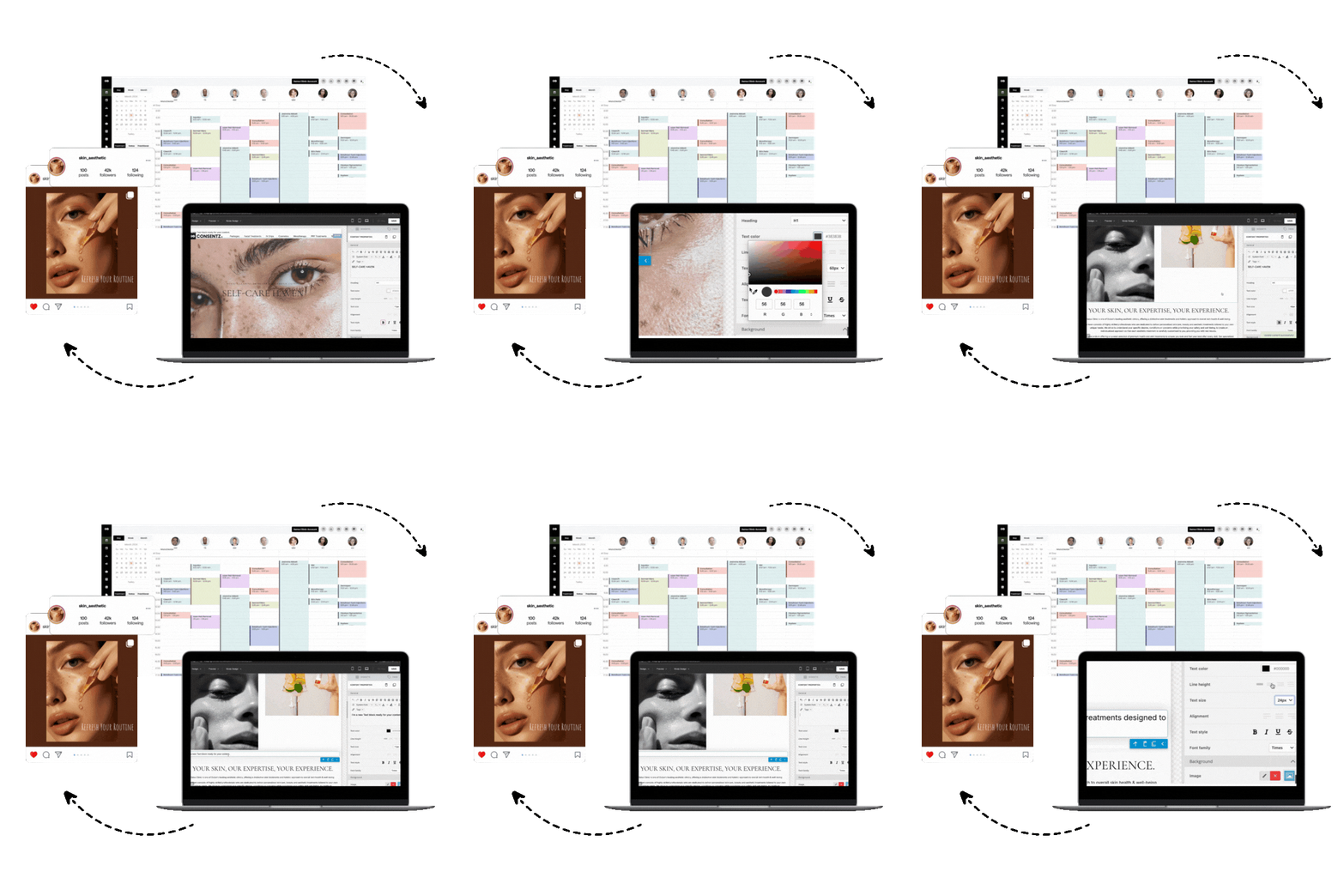
Consentz medspa software provides an all-in-one solution specifically designed for aesthetic clinics. Developed by an aesthetic doctor with the clinician-patient relationship at its core, Consentz delivers:
Core features for operational excellence:
- Online booking system integrated with your website and social media
- HIPAA-compliant electronic medical records and consent forms
- Automated appointment reminders to reduce no-shows
- Point-of-sale payment processing (in-person and online)
- Inventory management for products and supplies
- Clinic appointment management systems for staff scheduling
- SEO-optimized website to attract new patients
Marketing automation tools:
- Email campaign builder customized for aesthetic practices
- Facebook and Google ads module for patient acquisition
- Automated follow-up sequences for treatment plans
- Patient education resources and engagement tools
Since 2012, Consentz has powered elite aesthetic practices with ISO 27001:2013 accreditation and AWS 256-bit encryption security. The platform includes both a practitioner-focused Medical App for iPad use during consultations and a Control Centre accessible from any browser for business management. With membership programs driving 85% of medspa loyalty and 70% of bookings originating online, having comprehensive software from day one positions your business for sustainable growth. Explore patient management software solutions to understand how integrated systems transform clinic operations.
8. Build Your Team and Establish Training Protocols
Hire licensed professionals who align with your brand values and deliver exceptional patient care. Staff requirements vary by state regulations and service offerings.
Core team members:
- Nurse practitioners or physician assistants (for medical procedures) – learn about becoming an aesthetic nurse practitioner
- Licensed aestheticians (for skincare treatments)
- Laser technicians (with proper certifications)
- Front desk/patient coordinator (for scheduling and customer service)
- Marketing specialist (can be outsourced initially)
Verify all staff licenses, certifications, and continuing education requirements. Implement comprehensive training on equipment operation, safety protocols, patient communication, and your brand standards. Create detailed treatment protocols reviewed by your medical director to ensure consistency and compliance.
9. Develop Marketing Strategy and Build Online Presence
With digital platforms influencing 70% of medspa bookings, your online presence is critical for attracting patients. Implement a multi-channel marketing approach that showcases your expertise and results. Discover effective aesthetic clinic marketing strategies and SEO tactics for aesthetic clinics to maximize visibility.
Essential marketing components:
- Professional website with online booking (Consentz includes SEO-optimized site builder)
- Google Business Profile optimization for local SEO
- Instagram and Facebook presence with before/after photos
- Google Ads and Facebook advertising targeting local demographics
- Email marketing campaigns for existing patient retention
- Membership programs offering discounted treatment packages
- Referral incentive programs
- Patient reviews and testimonials
Budget $10,000-$30,000 initially for branding, website development, and marketing launch. Ongoing marketing should represent 5-10% of revenue. Track ROI on all campaigns and adjust strategies based on patient acquisition costs and lifetime value. Learn proven strategies to grow your aesthetic practice and improve patient conversion rates.
10. Launch With Soft Opening and Grand Opening Events
Plan a phased launch to refine operations before full-scale marketing. Start with a soft opening offering treatments to friends, family, and select local influencers. Gather feedback, train staff on real-world scenarios, and optimize workflows.
Grand opening checklist:
- Schedule 4-6 weeks after soft opening
- Offer limited-time promotional packages
- Host VIP preview event for local influencers and media
- Launch paid advertising campaigns
- Activate email marketing to waitlist
- Ensure all systems tested (booking, payments, EMR)
- Train staff on customer service protocols
- Prepare for increased appointment volume
Membership programs are particularly effective at launch—85% of medspas now offer memberships that create predictable revenue and increase patient loyalty. Use Consentz’s automated marketing tools to nurture leads and convert consultations into treatment packages.
Conclusion
Starting a medspa in 2026 offers a tremendous opportunity in a rapidly growing industry projected to reach $83.9 billion by 2033. Success requires thorough planning, regulatory compliance, strategic location selection, quality equipment, skilled staff, and robust technology infrastructure. Initial investments typically range from $100,000-$750,000, but top-performing medspas generate $2.8 million or more annually with profit margins of 20-40%.
The key differentiators for successful medspas are exceptional patient experience, results-driven treatments, and operational efficiency. Comprehensive management software like Consentz eliminates administrative burden, automates marketing, ensures HIPAA compliance, and provides the tools to build lasting patient relationships. By following this guide and leveraging proven systems, you’ll position your medspa for sustainable growth in an industry where demand continues to outpace supply.
Ready to streamline your medspa operations and drive patient growth? Visit Consentz.com to discover how comprehensive clinic management software can transform your aesthetic practice from day one.
Frequently Asked Questions
1) How much does it cost to start a medspa in 2026?
Medspa startup costs range from $100,000 to $750,000+ depending on location, size, and equipment. Key expenses include real estate ($50,000-$100,000 annually), medical equipment ($80,000-$300,000), interior buildout ($20,000-$100,000), medical director fees ($18,000-$60,000/year), and initial inventory. Budget an additional 6-12 months of operating capital covering rent, payroll, utilities, and marketing before reaching profitability.
2) Do I need to be a doctor to open a medspa?
Requirements vary by state. Most states require either physician ownership or a medical director (licensed MD/DO) to oversee clinical operations. Some states like Alaska, Florida, and Vermont allow non-physicians to own medspas with proper physician supervision. Seven states permit advanced practice nurses to serve as medical directors with additional training. Always consult a healthcare attorney familiar with your state’s Corporate Practice of Medicine regulations before structuring ownership.
3) What licenses are required to operate a medspa?
Essential licenses include a business license, EIN, medical director’s physician license, health department facility permit, staff professional licenses (RN, NP, aesthetician, laser technician), professional liability insurance, and compliance with HIPAA regulations. Specific requirements vary significantly by state—some require facility registration with the medical board, others mandate specific staff-to-patient ratios for certain procedures. Budget $500-$5,000 for initial licensing fees, plus ongoing renewal costs. Understanding how to open a clinic without being a doctor clarifies ownership structures and regulatory requirements.
4) How long does it take to open a medspa?
Plan 6-12 months from initial planning to grand opening. Timeline includes business planning and financing (1-2 months), securing location and lease negotiation (1-2 months), buildout and renovation (2-4 months), equipment procurement and installation (1-2 months), hiring and training staff (1-2 months), and obtaining licenses/permits (2-3 months, often concurrent). Soft opening to test operations should occur 4-6 weeks before grand opening.
5) What are the most profitable medspa treatments?
Facial injectables (Botox, dermal fillers) generate the highest margins and represent 45% of medspa procedures. Other profitable treatments include laser hair removal (high volume, recurring clients), body contouring (premium pricing), skin resurfacing treatments, and membership programs that create predictable monthly revenue. Non-invasive procedures account for 55% of all medspa services in 2026, driven by consumer preference for minimal downtime and natural results.
6) How do I market a new medspa effectively?
Focus on digital marketing since 70% of medspa bookings are influenced by online channels. Essential strategies include SEO-optimized website with online booking (Consentz provides this), Google Business Profile optimization, Instagram/Facebook presence with before-after photos, targeted Google and Facebook ads, email marketing campaigns, and patient referral programs. Membership packages increase retention—85% of medspas now offer subscriptions. Budget 5-10% of revenue for ongoing marketing and track patient acquisition costs closely.
7) What software do I need to run a medspa?
Comprehensive medspa management software is essential for efficiency and compliance. Critical features include online booking, HIPAA-compliant EMR, automated appointment reminders, payment processing, inventory management, marketing automation, and reporting analytics. Consentz provides an all-in-one solution specifically designed for aesthetic clinics, including SEO-optimized website, Facebook/Google ads module, email campaigns, and patient engagement tools—eliminating the need for multiple disconnected systems. Compare top clinic EHR software solutions and explore clinic operations software platforms to find the right fit.
8) How profitable is a medspa business?
Medspas typically achieve 20-40% profit margins, with top performers exceeding these benchmarks. Average single-location revenue is $1.98 million annually, while top-performing centers generate $2.8 million+. Profitability depends on location, service mix, pricing strategy, overhead costs, and patient retention. Membership programs (offered by 85% of medspas) create predictable revenue and improve margins. Practices leveraging technology for automation and patient engagement typically outperform competitors.
9) Can I start a medspa from home?
Generally no. Health department regulations require commercial space meeting specific safety, sanitation, and accessibility standards. Medical procedures require proper ventilation, medical-grade plumbing, waste disposal systems, and emergency equipment. Zoning laws typically prohibit medical facilities in residential areas. Home-based operations risk serious legal and liability issues. Focus on finding affordable commercial space—smaller suburban locations can start under $3,000/month rent.
10) What’s the biggest challenge in starting a medspa?
Navigating complex state-specific regulations while managing high startup costs presents the greatest challenge. Each state has unique requirements for ownership, medical director involvement, staff credentials, and procedure delegation. Securing adequate financing and maintaining sufficient cash reserves until profitability requires careful planning. Other challenges include hiring qualified staff in competitive markets, building patient trust as a new provider, and standing out in increasingly saturated markets. Comprehensive software like Consentz helps overcome operational challenges through automation and patient relationship management.