Your aesthetic clinic’s marketing budget increased 40% last year, yet patient acquisition costs have never been higher. You’re not alone. Industry benchmarks from 2024 show the average cost per booked consultation for injectable services has climbed to $180-$320 across major metropolitan markets, up from $120-$210 just three years ago.
The challenge intensifies with Google’s AI Overviews now appearing in 68% of healthcare-related searches, fundamentally changing how potential patients discover and evaluate aesthetic providers. Traditional SEO tactics that worked brilliantly in 2022 are delivering diminishing returns, while practices that adapt to AI-driven search and optimize their complete patient journey are seeing 3-4x returns on marketing spend.
This guide delivers the strategic framework aesthetic clinic owners and medical directors need right now: advanced tactics for local dominance, conversion optimization that reduces patient acquisition costs by 30-50%, and content strategies designed specifically for AI Overviews optimization. Every recommendation is actionable, measurable, and built for immediate implementation.
Understanding the Modern Aesthetic Patient Journey
The Three Critical Touchpoints Before Booking
Today’s aesthetic patient requires an average of 11 touchpoints before scheduling their first treatment, with 84% of that research happening invisibly before they ever contact your clinic. The modern patient journey breaks into three distinct phases:
Awareness Stage (Days 1-14): Potential patients are researching procedures through Google searches, Instagram exploration, and TikTok content. They’re asking questions like “what causes under-eye hollowing” or “alternatives to surgical facelifts.” At this stage, they’re evaluating whether they’re a candidate for any treatment, not choosing between providers.
Consideration Stage (Days 15-45): Now actively comparing clinics, patients scrutinize Google reviews, study before-and-after galleries, and evaluate injector credentials. A medical spa marketing analysis from Q4 2024 revealed that 73% of patients who reach this stage compare pricing across 3-5 competitors before making contact.
Decision Stage (Days 46-60): The final phase where booking friction becomes critical. Patients who’ve decided on both the treatment and their top-choice provider often abandon at this stage due to complicated scheduling processes, unclear pricing structures, or failure to answer specific questions through readily available content.
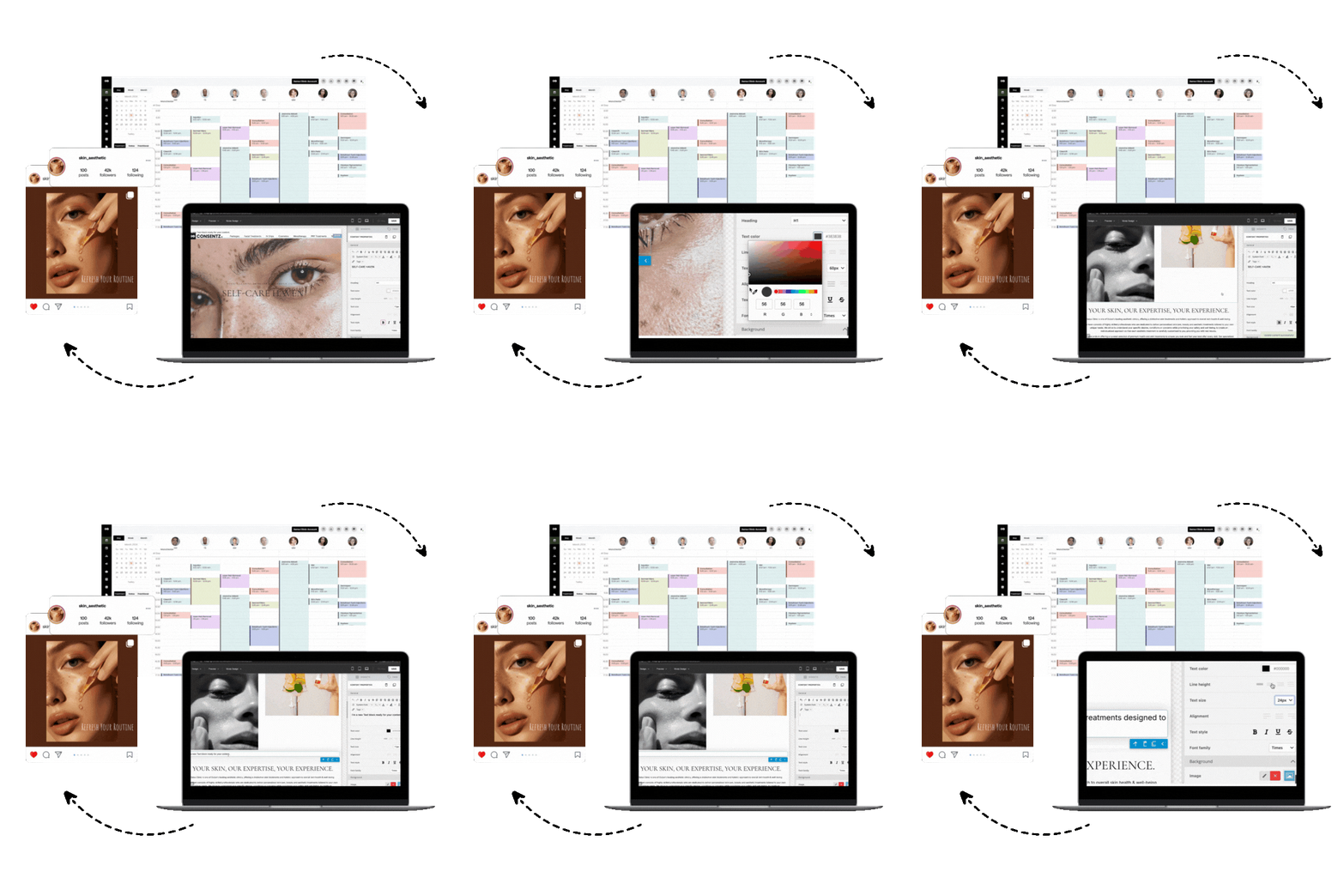
Bookings, consent forms, patient records, payments, marketing — Consentz is the aesthetic clinic software that puts it all in one place so you can focus on your patients, not paperwork.
Where Traditional Aesthetic Clinic Marketing Fails
Most aesthetic practices concentrate 80% of marketing spend on awareness-stage tactics—social media ads, broad SEO, and brand awareness campaigns. This creates a leaky funnel where you’re constantly pouring new leads into the top while losing qualified prospects at consideration and decision stages.
The medspa patient funnel requires balanced investment across all three phases. High-performing clinics allocate approximately 40% to awareness, 35% to consideration-stage optimization, and 25% to conversion tactics. This distribution typically reduces overall cost per acquisition by 35-40% within 90 days of implementation.
Local SEO and AI Overviews Optimization for Aesthetic Clinics
Dominating Google Business Profile Beyond the Basics
Your Google Business Profile (GBP) is the single highest-ROI asset for local SEO for aesthetic clinics, yet most practices treat it as a set-it-and-forget-it directory listing. Advanced GBP optimization requires systematic weekly maintenance:
Strategic Review Generation: Implement a systematic review request sequence triggered 48 hours post-appointment when patient satisfaction peaks. Top-performing practices achieve 40-60% review response rates using this timing combined with personalized SMS requests that include the patient’s provider’s name.
Service-Specific Posts (Weekly): Create weekly GBP posts targeting specific services with local modifiers. Instead of generic updates, publish content like “Cheek Filler Results: What [Your City] Patients Should Expect” with before-after images, treatment details, and pricing transparency. These posts receive 8x higher click-through rates than generic promotional content.
Q&A Section Control: Proactively populate your GBP Q&A section with the 15-20 questions potential patients actually ask. One Florida medspa increased call volume by 47% within 30 days by answering questions about financing options, pain levels, and downtime expectations directly in their GBP profile.
Preparing for AI Overviews: The New Search Reality
Google’s AI Overviews now synthesize information from multiple sources to answer queries directly in search results. For aesthetic clinic marketing, this means your content must be structured for extraction and citation by AI systems.
Entity-Based Content Structure: AI systems prioritize content that clearly establishes expertise around specific entities. Structure service pages with explicit entity declarations: “Dr. [Name], board-certified dermatologist with 12 years specializing in advanced injectable techniques.” Include credentials, procedure volumes, and specific training certifications.
Conversational Long-Tail Targeting: AI Overviews favor content answering natural language questions. Create content specifically targeting queries like “how long does Botox last in your forehead” or “what’s better for marionette lines, filler or threads?” These conversational keywords have 60% less competition while appearing in 3x more AI Overview results.
Structured Data Implementation: Implement MedicalOrganization and MedicalProcedure schema markup on every relevant page. Clinics with complete schema implementation appear in AI Overview citations 4.3x more frequently than those without structured data, according to early 2025 search studies.
Hyperlocal Content That Captures Bottom-of-Funnel Searches
Create location-specific content that intercepts patients in the final research stages. Instead of broad “Botox in [City]” pages, develop content targeting micro-neighborhoods and specific use cases:
- “Botox for Professionals: Lunchtime Treatments Near [Business District]”
- “Wedding Prep Timeline: Injectable Schedule for [Your City] Brides”
- “Men’s Aesthetic Treatments: Discreet Services in [Neighborhood]”
This hyperlocal approach attracts patients with immediate intent while reducing competition for heavily saturated generic terms.
Conversion Rate Optimization: Turning Browsers into Bookers
Service Menu and Pricing Psychology
Aesthetic service pages convert at dramatically different rates based on how information is structured. Industry conversion data shows optimized service pages convert at 8-12% while poorly structured pages languish at 1-3%.
Transparent Pricing Framework: The pricing transparency debate is settled—displaying starting prices or price ranges increases conversion rates by 35-40% across aesthetic services. Structure pricing as “Injectable treatments from $XXX” with clear explanations of what influences final cost (units needed, treatment areas, provider expertise level).
Treatment Bundling Strategy: Present strategic package options that increase average transaction value while simplifying decision-making. A Nevada clinic increased average first-visit revenue by 68% by introducing three clear packages: “Natural Enhancement” (conservative approach), “Visible Transformation” (moderate), and “Complete Rejuvenation” (comprehensive).
Objection-Prevention Content: Address every possible objection before patients form them. Include sections on pain management, downtime expectations, financing options, and what makes your providers qualified—all above the fold. This preemptive transparency reduces phone consultations by 40% while increasing qualified booking requests.
Booking Process Friction Elimination
Every additional click or required field in your booking process costs you conversions. Audit your patient acquisition flow ruthlessly:
Calendar Integration: Implement real-time calendar availability that shows open appointments without requiring form submission first. This single change increased conversion rates by 52% for a Georgia medspa that previously used request-only forms.
Mobile-First Booking: With 71% of aesthetic treatment research happening on mobile devices, your booking process must be optimized for thumb-scrolling. Reduce form fields to absolute essentials (name, phone, service interest), saving detailed intake for confirmation emails.
Speed-to-Lead Protocol: Contact inquiry leads within 5 minutes. Data across aesthetic practices consistently shows response time is the highest predictor of conversion—leads contacted within 5 minutes convert at 9x the rate of those contacted after 30 minutes. Implement automated SMS acknowledgment followed by rapid human follow-up.
Landing Page Strategy for Paid Campaigns
Generic homepage traffic from paid ads converts at 2-3%. Dedicated, optimized landing pages convert at 12-18%. The difference lies in message match and singular focus:
Campaign-Specific Landing Pages: Create unique landing pages for each paid campaign that mirror ad copy exactly. If your Facebook ad promotes “Summer Body Confidence: $500 Off CoolSculpting,” your landing page headline should repeat that exact offer, not generic clinic branding.
Social Proof Placement: Position reviews and before-after galleries strategically throughout the page, not relegated to a single section. Include testimonials addressing specific objections at the points where visitors typically hesitate (near pricing information, above the booking CTA).
High-Value Content Strategy for Patient Acquisition
Educational Content That Builds Authority
Content marketing for aesthetic clinics must go beyond treatment descriptions to establish genuine expertise that influences patient decisions throughout their research journey.
Comparative Treatment Guides: Develop comprehensive comparison content that helps patients understand their options: “Dermal Fillers vs. PDO Threads for Lower Face Sagging: Making the Right Choice.” These guides attract consideration-stage patients and position your practice as an unbiased educational resource.
Provider-Authored Expertise Content: Publish content under your physicians’ and nurse practitioners’ bylines that demonstrates clinical judgment: “Why I Sometimes Recommend Against Filler: A Medical Perspective on Patient Safety.” This thought leadership content builds trust that translates directly to patient preference when booking.
Results Timeline Content: Create detailed “what to expect” content for each major service that sets realistic expectations: “Your Botox Timeline: Day-by-Day Results and Side Effects (With Photos).” These pieces capture bottom-of-funnel searches while reducing post-treatment anxiety and complaint calls.
Video Content for AI and Social Platforms
Video content serves dual purposes in modern aesthetic clinic marketing—it performs exceptionally in both AI Overview features and social media algorithms.
Educational Short-Form Video: Create 30-90 second educational clips answering single questions: “Does lip filler hurt?” or “How long does Botox take to work?” These videos appear in AI Overview video carousels while performing well on Instagram Reels and TikTok. A Michigan clinic generated 340 consultation requests in Q1 2025 from a library of just 40 educational short-form videos.
Treatment Walkthrough Content: Film comprehensive treatment walkthroughs showing the complete patient experience from consultation through results. This transparency reduces booking anxiety and increases conversion rates among viewers by 45-50%.
Seasonal Campaign Planning
Strategic aesthetic clinic marketing follows predictable seasonal demand patterns. Plan content and promotional campaigns around these cycles:
Q1 (January-March): New Year motivation drives high interest in body contouring, skin rejuvenation, and “new you” transformations. Focus injectable marketing strategy on combination treatments and new patient specials.
Q2 (April-June): Wedding and summer preparation dominate. Create content around “wedding prep timelines” and “beach body confidence” while promoting treatments with minimal downtime.
Q3 (July-September): Back-to-school and return to routine. Target working professionals with “refresh your look” messaging and promote maintenance programs.
Q4 (October-December): Holiday party preparation and end-of-year FSA/HSA spending. Emphasize time-sensitive promotions and gift certificate programs.
Healthcare Marketing Automation: Scaling Without Sacrificing Personalization
The Technology Stack That Multiplies Results
Manual marketing management becomes impossible as your practice grows beyond 200 monthly consultations. The most successful aesthetic clinics leverage healthcare-specific marketing platforms that automate patient engagement while maintaining HIPAA compliance and personalization.
Integrated Patient Communication Systems: Modern healthcare marketing software consolidates review management, appointment reminders, patient education, and promotional campaigns into unified platforms. This integration eliminates the inefficiency of managing multiple disconnected tools while providing complete visibility into patient interaction history.
Compliance-First Automation: Generic marketing automation tools create serious compliance risks for healthcare practices. HIPAA-compliant platforms like Consentz are specifically designed for medical practices, ensuring all patient communications, data storage, and consent management meet regulatory requirements. This compliance protection is non-negotiable—a single HIPAA violation can result in penalties ranging from $100 to $50,000 per violation.
Reputation Management at Scale: Systematic review generation requires automation to be effective. Healthcare marketing platforms automate review request timing, follow-up sequences, and multi-platform distribution while allowing providers to monitor and respond from centralized dashboards. Practices using dedicated reputation management tools average 4-6x more reviews than those relying on manual requests.
Converting More Leads With Intelligent Follow-Up
The gap between inquiry and booking is where most aesthetic practices lose revenue. Healthcare marketing automation bridges this gap through systematic, intelligent follow-up that feels personal while operating automatically.
Multi-Channel Nurture Sequences: Implement automated sequences that contact leads through multiple channels—email, SMS, and phone—based on their preferred communication method and response patterns. A California medspa increased consultation show-rates by 63% by implementing automated SMS reminders 48 hours and 2 hours before scheduled appointments.
Behavioral Trigger Campaigns: Set up campaigns triggered by specific patient actions: website visitors who view pricing pages receive targeted information about financing options, patients who abandon booking forms receive personalized follow-up within 15 minutes, and consultation attendees who don’t book receive educational content addressing common objections.
Treatment Reminder and Upsell Automation: Automate communications based on treatment schedules—Botox patients receive re-booking reminders at 3 months, filler patients at 9-12 months, and all patients receive seasonally relevant treatment suggestions based on their history. This automation typically generates 20-30% of monthly revenue from existing patients with minimal staff involvement.
Data Centralization for Better Decision-Making
Disconnected systems create blind spots that cost clinics thousands in wasted marketing spend. Centralized healthcare marketing platforms provide the visibility needed to optimize budget allocation and identify highest-value opportunities.
Source Tracking and ROI Visibility: Track every patient from first touchpoint through lifetime value. Know exactly which marketing channels, campaigns, and even individual ads produce profitable patients versus those generating tire-kickers. This granular attribution enables confident budget reallocation toward highest-performing channels.
Performance Dashboard That Drive Action: Real-time dashboards showing key metrics—cost per consultation, consultation-to-booking rate, average transaction value, and patient lifetime value by acquisition source—enable data-driven decisions. Platforms designed for healthcare practices include industry benchmarks so you can compare your performance against similar clinics in your market.
Budget Allocation and Attribution Mastery
The Strategic Marketing Budget Framework
Aesthetic practices typically allocate 8-15% of gross revenue to marketing, but distribution of that budget matters more than total spend. High-performing clinics follow this framework:
40% – Patient Acquisition: Google Ads (local service ads and search campaigns), Meta advertising (Facebook/Instagram), and new patient promotions. Focus on services with highest profit margins—typically injectables and body contouring.
25% – Retention and Referrals: Email marketing sequences, loyalty programs, referral incentives, and remarketing campaigns targeting previous patients. Existing patient marketing costs 5-7x less than new patient acquisition while generating similar revenue.
20% – Content and SEO: Website optimization, blog content production, video creation, and technical SEO implementation. This channel builds compounding value over time.
15% – Technology and Tools: CRM systems, scheduling software, review management platforms, and attribution tracking. These tools multiply the effectiveness of all other spending. Investing in comprehensive healthcare marketing software typically reduces overall marketing costs by 15-25% while improving results through better automation, compliance, and data visibility.
Multi-Touch Attribution for Aesthetic Marketing
Single-touch attribution models (last-click or first-click) dramatically misrepresent marketing performance in aesthetic practices where patient journeys span weeks or months across multiple channels.
Implement Multi-Touch Tracking: Use UTM parameters consistently across all campaigns and integrate analytics with your practice management system. Healthcare marketing platforms with built-in attribution tracking eliminate the technical complexity of connecting these systems manually while providing more accurate patient journey visibility.
Channel-Specific Metrics: Evaluate each channel by its appropriate metric. Google Ads should be measured by cost per booked appointment, not clicks. Social media content should be evaluated by engagement rate and reach, not immediate conversions. Email campaigns should be tracked by revenue per recipient, not open rates alone.
Patient Lifetime Value (LTV) Focus: Calculate average patient LTV—typically $2,800-$4,500 for aesthetic practices—and evaluate acquisition costs against this number, not single-treatment revenue. A $300 cost per acquisition is excellent if that patient generates $3,500 over 24 months.
Advanced Tactics for Competitive Markets
Influencer and Ambassador Partnerships
Strategic influencer partnerships deliver 4-6x ROI when structured correctly. Avoid the common mistake of one-off sponsored posts in favor of authentic, results-based partnerships.
Micro-Influencer Strategy: Partner with local influencers (5,000-50,000 followers) who match your ideal patient demographic. Offer complimentary treatments in exchange for documenting their complete experience—consultation, treatment, results, and follow-up.
Patient Ambassador Programs: Formalize relationships with highly satisfied patients who naturally promote your practice. Offer referral incentives, exclusive access to new treatments, and special pricing in exchange for authentic social sharing and testimonials. Track ambassador program performance through dedicated referral codes or links to measure ROI accurately.
Strategic Partnerships and Cross-Promotions
Build referral relationships with complementary businesses serving your target demographic:
- Luxury salons and spas (non-competing aesthetic services)
- Wedding planners and bridal boutiques
- Fitness studios and wellness centers
- Luxury retail and hospitality venues
Create formal cross-promotion agreements where both businesses benefit from qualified referrals. Use automated systems to track partnership referrals and ensure appropriate recognition or compensation for referring partners.
Email Segmentation and Lifecycle Marketing
Generic email blasts achieve 1-2% click-through rates. Properly segmented campaigns achieve 8-12% while generating significant incremental revenue.
Behavioral Segmentation: Segment your database by treatment history, last visit date, and engagement level. Send targeted campaigns promoting relevant services: filler patients receive lip filler content, body contouring patients get CoolSculpting updates, dormant patients receive reactivation offers.
Automated Lifecycle Sequences: Implement automated email sequences triggered by patient actions: welcome series for new patients, pre-appointment preparation sequences, post-treatment care instructions, and re-booking reminders at optimal intervals for each treatment type. Healthcare marketing automation platforms enable sophisticated segmentation and triggering based on treatment data from your practice management system without requiring manual list management.
Conclusion: Your 90-Day Implementation Roadmap
Effective aesthetic clinic marketing in 2026 requires strategic integration of local search dominance, conversion rate optimization for medspas, and content designed for both human patients and AI systems. The practices winning in competitive markets are those that optimize the complete patient journey while leveraging technology to scale personalization and maintain compliance.
Start with these immediate priorities:
Week 1-2: Audit and optimize your Google Business Profile, implement review generation systems, and ensure all service pages include transparent pricing frameworks. Evaluate your current marketing technology stack for gaps in automation, compliance, or attribution capabilities.
Week 3-4: Create 10 conversational long-tail content pieces targeting bottom-of-funnel searches and optimize your booking process to eliminate friction. Set up automated lead follow-up sequences to capture more consultations from existing inquiry volume.
Week 5-8: Develop your video content library with educational short-form clips and treatment walkthroughs optimized for AI Overviews and social platforms. Implement behavioral trigger campaigns for key patient actions like consultation attendance and treatment completion.
Week 9-12: Implement comprehensive multi-touch attribution tracking, segment your patient database by treatment history and engagement, and launch targeted automated campaigns to existing patients. Review performance dashboards to identify highest-ROI channels and reallocate budget accordingly.
The aesthetic medicine market continues expanding—projected to reach $19.8 billion by 2027—but your share of that growth depends on marketing execution, not just market size. Clinics that implement these strategies systematically reduce patient acquisition costs by 30-50% while increasing conversion rates and patient lifetime value.
Ready to transform your aesthetic clinic marketing results? Modern healthcare marketing requires the right combination of strategy and technology. If you’re managing patient communications, review requests, and campaign tracking across multiple disconnected platforms, you’re losing revenue to inefficiency while creating compliance vulnerabilities. Explore how specialized healthcare marketing software can centralize your patient engagement, automate revenue-generating touchpoints, and provide the attribution data needed to optimize your marketing investment. Learn more about HIPAA-compliant marketing automation built specifically for aesthetic practices at Consentz Healthcare Marketing Software.
The practices dominating their markets in 2026 aren’t outspending competitors—they’re out-strategizing them with better systems, clearer data, and more sophisticated automation. Your 90-day transformation starts with the right foundation: proven strategies executed through platforms designed specifically for healthcare marketing’s unique requirements.