In the fast paced world of healthcare, especially in specialized fields like medical aesthetics, the quality of your clinical documentation can define your practice. This is not just about ticking boxes for compliance. It is the foundation of excellent patient care, accurate billing, and solid medico legal protection. Still, many clinics are bogged down by inefficient paperwork, fragmented systems, and the constant worry of costly errors. This administrative burden drains time and contributes to clinician burnout. In fact, many physicians identify excessive documentation as a leading cause of burnout. This is where clinical documentation improvement software comes in. In essence, **clinical documentation improvement software** is a specialized tool that actively helps healthcare providers create more accurate, complete, and compliant patient records, transforming a tedious necessity into a powerful tool for growth and patient satisfaction.
What is Clinical Documentation Improvement (CDI) Software?
Clinical Documentation Improvement (CDI) software is a specialized tool that actively helps healthcare providers create better patient records. The primary goal is to achieve clinical documentation integrity, meaning the records are accurate, complete, specific, and compliant. Unlike a generic Electronic Health Record (EHR), this type of software is an active partner in the documentation process (for a quick refresher see the EMR vs. EHR difference). It guides clinicians to capture the necessary details for each encounter, ensuring that the final record fully reflects the patient’s condition, the treatment provided, and the justification for billing.
In a specialty like aesthetics, this means having a system built for your specific needs, from recording batch numbers for injectables to capturing perfectly aligned before and after photos. The goal is to make documentation a seamless part of the patient visit, not an administrative chore to be dealt with after hours.
How CDI Works in a Clinic Setting
Modern **clinical documentation improvement software** operates on a simple principle: make it easy to do the right thing. Instead of relying on memory or paper forms, clinicians use a streamlined digital interface, often on an iPad or tablet. This represents a human in the loop CDI approach, where technology provides suggestions and safeguards, but the clinical professional always has final control.
The process typically looks like this:
- Structured Intake: Patients can fill out digital forms before their appointment, with the data flowing directly into their record. If you’re evaluating options for forms and check in, see the top patient intake software for cosmetic clinics.
- Guided Notes: During the consultation, the clinician uses pre built templates specific to the treatment, like neurotoxin injections or laser therapy. These templates prompt for critical information, ensuring nothing is missed.
- Integrated Media: High quality photos and videos are captured directly within the app, with tools to ensure consistency and clear labeling.
- Digital Consent: Patients review and sign consent forms on the device, with the signed document automatically saved to their file with a timestamp.
- Automated Coding: The detailed documentation supports accurate medical coding, which in turn leads to fewer claim denials and a healthier revenue cycle.
This digital workflow replaces stacks of paper, reduces the risk of manual errors, and creates a comprehensive, unalterable record of the patient journey.
The Limitations of Traditional CDI
Before modern software, the limitation of traditional CDI was its reactive nature. It often involved manual, retrospective reviews of paper charts, happening days or weeks after a patient visit. This process was slow, labor intensive, and inefficient. It created a delay between service delivery and billing and made it difficult to query a clinician whose memory of the specific encounter had already faded. Real time **clinical documentation improvement software** solves this by ensuring documentation is right the first time.
Benefits and Outcomes You Should Expect
Implementing a robust **clinical documentation improvement software** platform delivers tangible results for your patients, your team, and your bottom line.
- Improved Patient Safety: Clear, complete, and legible records reduce the risk of miscommunication. Software helps mitigate common clinical documentation error types such as incorrect patient information, omissions, unclear abbreviations, and transcription errors.
- Enhanced Revenue Cycle: Accurate documentation is the bedrock of financial health. Detailed notes justify the services provided, leading to fewer denials and optimized payments. Some hospitals that implemented CDI programs earned at least $1.5 million more in healthcare revenue and claims reimbursement.
- Reduced Medico Legal Risk: A complete, time stamped, and unalterable record is your best defense in the event of a dispute. Strong CDI practices provide a clear audit trail of informed consent and the care provided. For a deeper dive into building defensible notes, see why your clinic’s records must be bulletproof.
- Increased Efficiency: By streamlining workflows, CDI software gives clinicians more time to focus on patients. Physicians often spend a large part of their average clinic day on EHR and desk work. A good system dramatically cuts this administrative time. Pairing CDI with clinic appointment management systems can also reduce no shows and idle time.
Key Features to Look for in CDI Software
Not all **clinical documentation improvement software** is created equal, especially for a specialized field like medical aesthetics. Here are the essential features to look for:
- Aesthetics Specific Templates: Your software should come with pre built, customizable templates for the treatments you offer most, from microneedling to dermal fillers.
- Advanced Photo Management: Look for tools that allow for high resolution photo capture, side by side comparisons, and ghosting features to perfectly align before and after images.
- Integrated Consent Management: The ability to customize, sign, and securely store digital consent forms is non negotiable. It strengthens the informed consent process and eliminates lost paperwork.
- Secure Cloud Based Platform: Your patient data must be protected. Choose a provider that uses enterprise grade hosting (like AWS) with strong encryption and a clear commitment to security and compliance standards like ISO 27001.
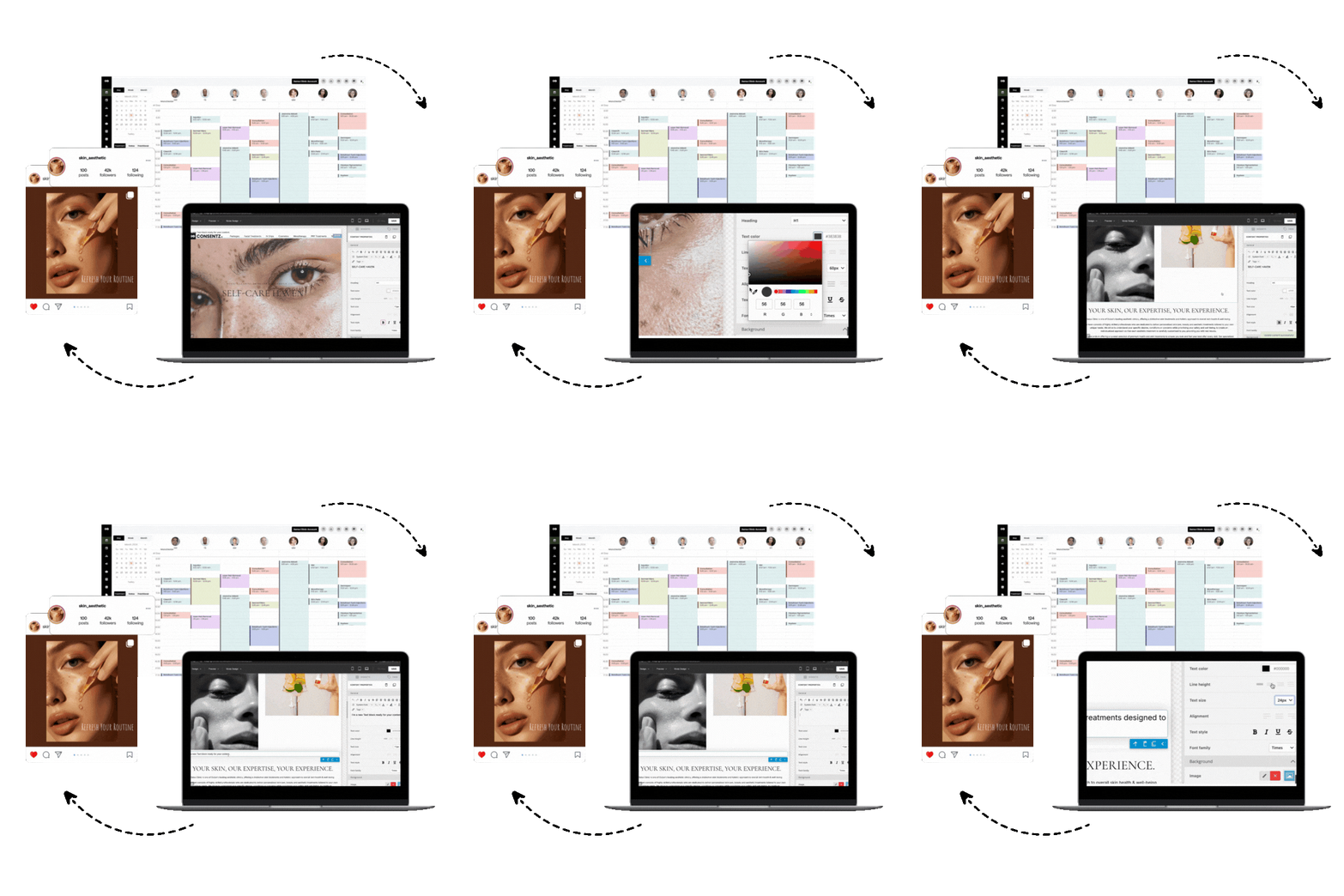
- Mobile and Tablet First Design: In aesthetics, care happens chairside, not at a desk. A native iPad or tablet app is crucial for a smooth, interactive patient experience. To see how an intuitive, all in one platform works, explore the features of Consentz.
- Integrated Clinical Decision Support: Advanced systems provide prompts and alerts based on the documentation, helping to ensure best practices are followed and potential issues are flagged in real time.
- Analytics and Reporting: The best CDI software doesn’t just store data; it helps you understand it. Look for built in dashboards that track key performance indicators (KPIs), patient retention, and financial metrics. For practical ways to turn those insights into demand, explore aesthetic clinic marketing strategies to grow your clinic.
Common Challenges and How to Mitigate Them
Adopting new **clinical documentation improvement software** can come with challenges. Being aware of them can help you make a smoother transition.
- Poor User Adoption: If the software is clunky or difficult to use, your team won’t embrace it.
- Mitigation: Choose software designed with clinician input, ideally by practitioners from your own field. Prioritize systems with a clean, intuitive interface.
- Data Migration Headaches: Moving years of patient records from paper or an old system can feel daunting.
- Mitigation: Ask potential vendors about their onboarding process. Do they offer support for data migration? A strong partner will guide you through this step.
- Lack of Integration: A CDI system that doesn’t connect to your payment processing or accounting software creates more work, not less.
- Mitigation: Look for a platform with built in integrations for key tools like Stripe for payments and Xero for accounting and review our clinic billing software guide for how integrations reduce denials.
CDI Best Practices for Modern Clinics
Implementing software is only the first step. To truly succeed, embrace these CDI best practices:
- Provide Ongoing Training: Regular training ensures the team uses the software’s full capabilities and stays updated on documentation standards.
- Foster Clinician Engagement: Involve your clinical team in the selection and template customization process. When they see the software as a tool that helps them, adoption soars.
- Establish Clear Standards: Create and maintain clear documentation guidelines for all common procedures to ensure consistency across all practitioners.
- Perform Regular Audits: Use the software’s reporting features to periodically review records for completeness and accuracy, identifying areas for improvement.
- Leverage Analytics: Regularly review KPIs related to documentation, billing, and patient outcomes to make data driven decisions for your practice.
The Growing Role of AI in CDI
Artificial intelligence is reshaping clinical documentation. An AI scribe for CDI can listen to a patient consultation and automatically draft clinical notes, which the provider then reviews and confirms. This drastically reduces manual data entry. Similarly, an AI coding partner for CDI can analyze the completed note and suggest the most accurate medical codes, ensuring compliance and maximizing reimbursement. These tools are becoming increasingly integrated into advanced CDI platforms, promising even greater efficiency and accuracy in the near future.
Market Snapshot and Evaluating CDI Software
The move toward better documentation is a major trend in healthcare. The global clinical documentation improvement market was valued at around USD 4.88 billion in 2024 and is projected to reach USD 10.44 billion by 2034. This growth is driven by the increasing adoption of electronic health records and the shift toward value based care. For clinic owners, this means investing in purpose built **clinical documentation improvement software** is no longer a luxury, it’s a strategic necessity.
Choosing the right software is a critical decision. Follow these steps to find the perfect fit:
- Define Your Core Needs: Are you a solo practitioner or a multi location clinic? What are your must have features (e.g., inventory tracking, integrated marketing)? Make a list.
- Shortlist Niche Specialists: Focus on vendors that specialize in medical aesthetics. Their software will already be tailored to your unique workflows.
- Schedule Live Demos: Never buy software without seeing it in action. A live demo allows you to ask specific questions. Booking a demo is a crucial step, something you can do with platforms like Consentz.
- Verify Security and Compliance: Ask direct questions about data security, encryption, and server locations. If you operate in the U.S., confirm their HIPAA compliance posture.
- Check Third Party Reviews: Look at reviews on sites like Capterra and Software Advice to see what real users are saying about the product and customer support.
Top 5 Clinical Documentation Improvement Software
While many aesthetics clinics benefit from all in one platforms, the broader CDI market is dominated by enterprise level systems, often born from the complex needs of hospitals. The inpatient CDI process, which involves reviewing records during a hospital stay, requires robust tools. CDI software for hospital admission is critical for ensuring proper reimbursement for complex cases.
The following five vendors represent the top of this enterprise market, offering powerful, often AI driven, platforms. While they may be more than a small clinic needs, they showcase the powerful capabilities driving the industry. If you’re also comparing broader record systems, check our top clinic EHR software for 2025.
1. Solventum
Solventum’s 360 Encompass reads clinical encounters with AI and NLP, surfaces what matters, and nudges clinicians in workflow so documentation is right the first time. Built primarily for cloud delivery, it suits hospital HIM and CDI teams and larger ambulatory groups.
Why teams pick it
- Real time clinical indicators and configurable CAPD prompts keep notes specific.
- End to end electronic query management auto builds evidence and tracks responses.
- AI driven suggestions support outpatient and pro fee coding decisions.
- Comprehensive audit trail captures every CDI and coder action.
Pricing & deployment
Quote based; cloud or on prem options with BAA support and deep EHR integrations.
What users say
Strong, cohesive CDI to coding workflows; occasional reports of reactive support and reporting gaps.
2. Iodine Software
Iodine delivers an AI first, cloud CDI platform that integrates with major EMRs to prioritize reviews, suggest compliant queries, and accelerate provider responses. It’s a fit for hospital HIM, revenue integrity, and large ambulatory groups.
Why teams pick it
- Compliant query templates with guideline backed, pre populated suggestions.
- Mobile and in EMR query handling with denial prevention workflows.
- Built in ICD 10 and PCS references plus an ambulatory HCC utility.
- Full audit trail per query and real time operational dashboards.
Pricing & deployment
Enterprise SaaS with HIPAA posture and native integrations for leading EMRs.
What users say
Praised for clear ROI and ease of use; some teams want deeper reporting flexibility.
3. 3M
3M’s long standing CDI technology blends AI and NLP with computer assisted coding to prioritize reviews, surface query opportunities, and speed clean claim generation. It suits large hospitals and multi site ambulatory networks that need robust analytics.
Why teams pick it
- NLP worklists highlight gaps and propose physician nudges in context.
- Electronic query and denial management from creation through closure.
- AI assisted CAC suggests ICD and CPT and DRG groupings.
- EHR connected history provides an auditable CDI trail.
Pricing & deployment
Enterprise level pricing; on prem or cloud, HIPAA compliant, integrates with major EHRs.
What users say
Valued for integrated CAC and CDI; some report reporting blind spots and occasional upgrade hiccups.
4. Dolbey
Dolbey’s Fusion CDI zeroes in on gaps with AI driven alerts, prioritizes reviews, and streamlines query creation so teams can move from chart to claim without friction. It’s well suited to hospital HIM and multi site ambulatory networks.
Why teams pick it
- Smart alerts act like just in time prompts for reviewers and providers.
- Built in query tracking accelerates provider responses and closure.
- Light CAC support boosts outpatient clinic coding efficiency.
- Integrated auditing assures end to end CDI and coding traceability.
Pricing & deployment
Enterprise pricing; HIPAA aligned security with integrations for Epic, Cerner, and more.
What users say
Frequently praised for responsive support and ROI; may feel heavyweight for small clinics.
5. Optum
Optum’s CDI platforms apply AI and NLP to comb charts, flag specificity gaps, and coordinate provider queries, bringing denial prevention into daily workflows. They’re a strong match for hospital CDI programs and larger ambulatory groups.
Why teams pick it
- AI driven worklists and evidence sheets prioritize high impact reviews.
- Mobile queries and denial workflows keep clinicians engaged and responsive.
- Deep ICD 10 and CPT terminology and coding support.
- Native audit trails; consent and photo management typically handled via the EHR.
Pricing & deployment
Enterprise quoted, HIPAA compliant; integrates with major EHR, PM, and billing systems.
What users say
Significant ROI and strong AI capabilities; implementations can demand enterprise level effort.
Implementation and Change Management
A successful launch goes beyond just installing the software. It requires a thoughtful approach to change management.
- Phase 1: Planning and Setup: Work with your chosen provider to configure the system to your clinic’s needs. This includes customizing treatment templates, consent forms, and user permissions.
- Phase 2: Team Training: Ensure every member of your staff, from front desk to lead practitioner, receives thorough training. A good software partner will provide resources like an online academy or live support.
- Phase 3: Go Live and Ongoing Support: Choose a launch day and have your provider’s support team on standby to help with any initial questions. A successful implementation is the beginning of a long term partnership.
Conclusion
Switching from paper records or a generic EHR to a specialized **clinical documentation improvement software** is one of the most impactful investments an aesthetics practice can make. It strengthens compliance, reduces legal risk, and improves financial performance. Most importantly, it frees your team from the burden of administrative tasks, allowing them to focus on what truly matters: delivering exceptional patient care and building lasting relationships.
Ready to transform your practice and eliminate paperwork? Discover how Consentz can help you build better patient relationships and grow your clinic.
Frequently Asked Questions (FAQ)
What is the main goal of clinical documentation improvement?
The main goal is to ensure patient records are accurate, complete, and compliant. This supports high quality patient care, ensures correct billing and reimbursement, and minimizes medico legal risks for the practice.
How does CDI software help with medical billing?
CDI software helps clinicians create detailed records that accurately reflect the complexity and specifics of a patient’s treatment. This comprehensive documentation provides the necessary justification for medical codes, leading to fewer claim denials and more accurate reimbursement.
Is clinical documentation improvement software difficult to learn?
Modern **clinical documentation improvement software**, especially systems designed for a specific niche like aesthetics, is built to be intuitive. Platforms that use a familiar interface, such as an iPad app, and offer comprehensive training can be learned quickly by the entire clinic staff.
Can this software be used on an iPad at the patient’s chairside?
Yes, the best CDI software for aesthetics is designed with a mobile first approach. Using an iPad at the chairside allows for real time data entry, photo capture, and digital consent signing. For region specific considerations, review aesthetic clinic software in the USA.
What is the difference between an EHR and a CDI system?
While a basic Electronic Health Record (EHR) is a digital version of a paper chart, a CDI system is more advanced. It actively guides clinicians during the documentation process with templates, prompts, and specialized tools to improve the quality of the record as it’s being created.
How does good clinical documentation reduce legal risks?
Good documentation creates a clear, time stamped, and unalterable record of the entire patient encounter. This includes detailed notes, signed consent forms, and before and after photos, which serve as powerful evidence of the care provided and the informed consent process.