Med spas walk a fine line between luxury wellness and regulated healthcare. The moment you perform Botox, fillers, laser treatments, or any procedure under a licensed physician, patient privacy laws kick in – and HIPAA is at the top of that list. This guide covers exactly what your med spa needs to do to stay compliant and avoid costly penalties.
What Are the HIPAA Requirements for a Med Spa?
If your med spa collects patient health histories, performs treatments under a licensed physician, or stores medical records, you’re legally required to comply with HIPAA – the Health Insurance Portability and Accountability Act. Violations can lead to fines ranging from $141 to over $2 million per year, plus serious reputational damage.
Here’s a straightforward breakdown of what HIPAA requires from your med spa and how to stay compliant. If you’re still in the planning stage, start with understanding what license you need to open a medical spa.
Does HIPAA Apply to Your Med Spa?
Yes – if you operate under a licensed physician, perform medical treatments like Botox, fillers, or laser procedures, or store any protected health information (PHI). The only exception is purely cosmetic spas offering non-medical services like facials or massages that don’t maintain medical records. If you run an injectables practice, check out this guide on whether Botox and filler clinics need to be HIPAA compliant.
PHI in a med spa includes patient names, medical histories, treatment records, before-and-after photos, consent forms, billing details, and appointment schedules. General pricing or anonymized aftercare instructions are not considered PHI.
The 4 HIPAA Rules Every Med Spa Must Follow
1. The Privacy Rule
This rule governs how you use and disclose patient information. You must provide every patient with a Notice of Privacy Practices, obtain written consent before sharing PHI, and follow the “minimum necessary” standard – staff should only access the data they need for their specific role. Patients also have the right to access, correct, and receive copies of their records.
2. The Security Rule
This rule protects electronic PHI (ePHI) through three types of safeguards:
- Administrative: Designate a HIPAA compliance officer, conduct risk assessments, train all staff, and document your policies.
- Physical: Secure treatment rooms, restrict access to record storage areas, use locks and surveillance, and position screens away from patient view.
- Technical: Encrypt all ePHI, enforce unique logins with multi-factor authentication, maintain audit logs, and run regular backups.
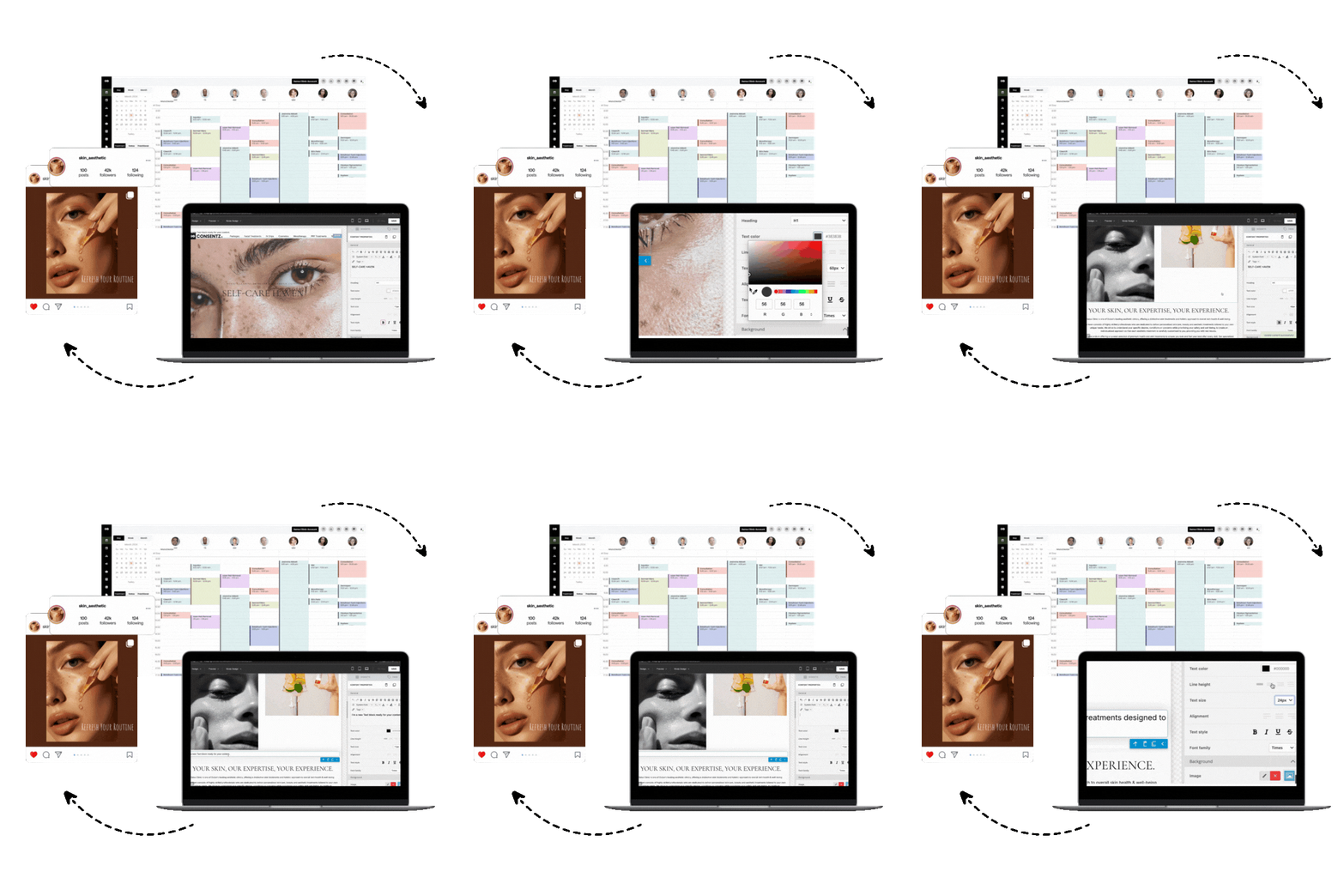
Using a purpose-built HIPAA-compliant medical spa software like Consentz handles much of this automatically. It offers encrypted data storage on AWS, role-based access controls, audit trails, and secure digital consent forms, so your team can focus on patient care instead of compliance paperwork.
3. The Breach Notification Rule
If unsecured PHI is breached, you must notify affected patients within 60 days. Breaches affecting 500+ individuals also require notification to HHS and local media. You’re required to document all breaches and retain those records for six years.
4. Business Associate Agreements (BAAs)
Any third-party vendor that touches your patient data – EMR software, billing companies, IT providers – needs a signed BAA. This contract ensures they’re legally responsible for protecting PHI. Verify their compliance annually. When evaluating patient intake software, always confirm BAA availability before signing.
Social Media: The Biggest HIPAA Risk for Med Spas
Social media is a top marketing channel for med spas – and the most common source of accidental HIPAA violations. Never confirm a patient’s treatment publicly, even if they tag you. Always get explicit written consent before posting before-and-after photos. Avoid giving medical advice in DMs or comments. Create a formal social media policy and train every team member on it.
What Happens If You Don’t Comply?
HIPAA penalties follow a four-tier structure based on culpability:
| Tier | Culpability | Fine per Violation | Annual Cap |
|---|---|---|---|
| 1 | Unknowing | $141 – $36,054 | $25,000 |
| 2 | Reasonable cause | $1,424 – $71,162 | $100,000 |
| 3 | Willful neglect (corrected) | $14,232 – $71,162 | $250,000 |
| 4 | Willful neglect (not corrected) | $71,162 | $2,134,831 |
Willful violations can also trigger criminal penalties with fines up to $250,000 and up to 10 years imprisonment. OCR is increasingly targeting smaller practices – in 2024 alone, 22 enforcement actions resulted in nearly $12.8 million in penalties.
Quick HIPAA Compliance Checklist for Med Spas
- Conduct an annual risk assessment to identify PHI vulnerabilities.
- Document written policies and procedures for every HIPAA requirement.
- Train all staff before they interact with patients. Use a platform with built-in compliance tracking.
- Execute BAAs with every vendor that handles PHI.
- Encrypt all ePHI, enforce unique logins, and enable multi-factor authentication.
- Secure physical spaces: locks, restricted areas, shredding bins, and private treatment rooms.
- Use HIPAA-compliant med spa software with encrypted storage and audit trails.
- Create and test a breach response plan.
- Retain all compliance documentation for a minimum of six years.
- Review and update your program annually.
Consentz simplifies HIPAA compliance for med spas by combining encrypted patient records, digital consent forms, role-based access controls, and automated audit trails in one platform – built specifically for aesthetic practices. Try Consentz and see how it takes the stress out of compliance.
Frequently Asked Questions
1) Do all med spas need to follow HIPAA?
Only med spas that operate as covered entities – meaning they perform medical treatments, store PHI, or operate under a licensed physician. Purely cosmetic spas that don’t collect medical data may not be required, but adopting HIPAA standards is still recommended for liability protection.
What are the most common HIPAA violations in med spas?
Posting patient photos on social media without written consent, failing to conduct a security risk assessment, not having BAAs with vendors, and inadequate staff training are the most frequent violations. Learn more about choosing the right medical spa software to prevent these issues.
How much are HIPAA fines for med spas?
Civil penalties range from $141 per violation (unknowing) up to $71,162 per violation (willful neglect), with annual caps from $25,000 to over $2.1 million. Criminal violations can result in up to $250,000 in fines and 10 years imprisonment.
4) Can I post before-and-after photos on social media?
Yes, but only with explicit written consent from the patient that specifies how the images will be used. Blurring the face alone is not sufficient. Always maintain signed authorization forms in your records.
5) How long must med spas retain patient records?
HIPAA requires compliance documentation to be retained for at least six years. Actual medical record retention is governed by state law and typically ranges from 3-10 years, with longer requirements for minors. Always check your state’s specific rules.
6) What software helps med spas stay HIPAA compliant?
Look for clinic management software with encrypted data storage, role-based access controls, digital consent forms, and audit trails. Consentz is purpose-built for aesthetic practices and offers all of these features, plus automated compliance tracking and secure patient communication.