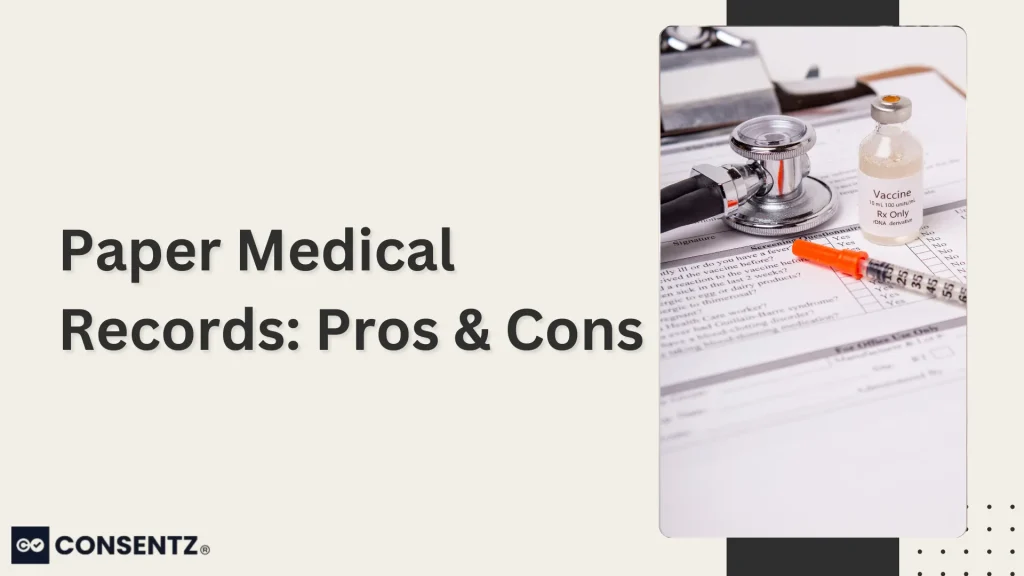
Paper medical records have been the backbone of healthcare documentation for decades, serving as the traditional method of storing patient information in physical format.
In an era where digital transformation is reshaping healthcare delivery, understanding paper-based record systems remains essential for medical professionals, administrators, and patients alike.
This comprehensive guide explores what paper medical records are, their components, advantages, disadvantages, and the critical transition process to electronic systems. Whether you’re a small clinic considering modernization or simply seeking to understand traditional healthcare documentation, this resource provides clear, actionable insights into paper medical records and their evolving role in modern healthcare.
What is Paper Medical Records?
Paper medical records are physical documents that contain a patient’s complete medical history, treatment information, and healthcare data stored in hard copy format. These traditional records include handwritten or typed notes, test results, prescriptions, and other health-related documentation maintained in file folders or binders.
Key Components of Paper Medical Records
Paper-based medical records typically contain:
- Patient demographics – Name, address, date of birth, insurance information
- Medical history – Past illnesses, surgeries, allergies, family history
- Clinical notes – Doctor’s observations, diagnoses, treatment plans
- Laboratory results – Blood tests, imaging reports, pathology findings
- Medication records – Prescriptions, dosage information, pharmacy notes
- Consent forms – Treatment authorizations, HIPAA agreements
Bookings, consent forms, patient records, payments, marketing — Consentz is the aesthetic clinic software that puts it all in one place so you can focus on your patients, not paperwork.
How Paper Medical Records Work?
Healthcare providers manually document patient information during visits. These records are filed alphabetically or numerically in secure storage areas within medical facilities. Staff retrieve physical charts when patients return for appointments, adding new information with each visit.
Pros of Paper Medical Records
Paper medical records offer practical advantages that make them valuable in certain healthcare settings. Here are the key benefits of using traditional paper-based documentation systems:
- No technology required – Paper records work without computers, internet, software, or electricity, making them accessible anytime and ideal for rural clinics or areas with poor infrastructure.
- Lower initial costs – Starting with paper requires only filing cabinets and folders instead of expensive EHR software, servers, and IT infrastructure, with no ongoing subscription fees or system upgrades.
- Simple and intuitive – Healthcare providers can quickly write notes, sketch diagrams, or document observations without navigating complex software interfaces, requiring minimal staff training.
- Always accessible during outages – Power failures, system crashes, or network problems don’t prevent access to patient information, ensuring uninterrupted care delivery.
- Better patient interaction – Doctors maintain eye contact and personal connection with patients instead of staring at computer screens during examinations.
- Legal validity established – Physical signatures and handwritten notes have well-recognized legal standing in courts and regulatory compliance situations.
- Difficult to alter undetected – Changes to paper records leave visible evidence like crossed-out text or different ink, making unauthorized modifications easier to identify.
- No cybersecurity risks – Paper records cannot be hacked, protecting patient data from data breaches, ransomware attacks, and online security threats.
- Physical security control – Medical facilities have direct oversight through locked storage and sign-out procedures, knowing exactly who accesses files.
- Complete customization – Providers can create personalized forms, add sketches, attach physical items, or annotate freely without software limitations or predetermined templates.
- No vendor dependence – Practices maintain full control without relying on software companies that might change pricing, discontinue products, or require costly migrations.
- Immediate implementation – Medical facilities can start using paper records instantly without installation periods, system configuration, or staff retraining.
- Practical for small practices – Solo practitioners or low-volume clinics can efficiently manage paper files without overwhelming storage needs or technology investments.
- Reliable backup option – Paper serves as an effective secondary system when electronic records become temporarily unavailable due to technical issues.
Paper medical records remain relevant for temporary clinics, mobile health units, disaster relief operations, and facilities where digital systems aren’t practical or cost-effective.
Cons of Paper Medical Records
Paper medical records have significant drawbacks that limit efficiency and create challenges in modern healthcare delivery. Here are the key disadvantages of using traditional paper-based documentation systems:
- Massive storage requirements – Physical records consume extensive office space, requiring dedicated rooms, filing cabinets, or off-site warehouses that become increasingly costly as patient volumes grow.
- Risk of permanent loss – Fire, flooding, natural disasters, theft, or simple misplacement can destroy irreplaceable medical records with no recovery options.
- Physical deterioration – Paper degrades over time through wear, tear, fading ink, water damage, or pest infestation, making older records difficult or impossible to read.
- Limited accessibility – Only one person can view a paper chart at a time, creating bottlenecks when multiple providers need simultaneous access to patient information.
- Time-consuming retrieval – Staff must physically locate, pull, and refile charts, wasting valuable time that could be spent on patient care, especially with archived records.
- Difficult information sharing – Transferring records between providers requires copying, faxing, or mailing documents, causing delays in care coordination and increasing costs.
- No remote access – Healthcare providers cannot review patient records from home, other facilities, or during emergencies without physical access to the filing location.
- Handwriting legibility issues – Illegible handwriting leads to medication errors, misinterpretations, and potentially dangerous mistakes in patient treatment.
- Inefficient searching – Finding specific information within thick patient charts requires manual page-by-page review rather than instant keyword searches.
- Duplication of information – Patients visiting multiple providers must repeatedly provide the same medical history, leading to redundant paperwork and wasted appointment time.
- Compliance challenges – Meeting regulatory requirements like HIPAA involves cumbersome manual processes for tracking access, ensuring security, and maintaining audit trails.
- Higher long-term costs – Ongoing expenses for storage space, filing supplies, staff time for filing and retrieval, and physical maintenance add up significantly over years.
- Environmental impact – Paper records consume trees, require energy for production and transportation, and generate waste when disposed of improperly.
- No automatic backups – Creating duplicate copies requires manual photocopying, and most facilities lack comprehensive backup systems for disaster recovery.
- Limited analytics capability – Extracting data for quality improvement, research, or population health analysis requires manual chart review rather than automated reporting.
- Vulnerable to unauthorized access – Physical records can be stolen, copied, or viewed without proper authorization, with limited ability to track who accessed what information.
- Workflow inefficiencies – Clinical staff spend excessive time on administrative tasks like filing, copying, and locating charts instead of direct patient care activities.
- Difficult version control – Multiple providers writing in the same chart simultaneously or out of sequence can create confusion about the chronological order of events.
- No decision support – Paper systems cannot provide automated alerts for drug interactions, allergies, preventive care reminders, or clinical guidelines at the point of care.
- Scalability limitations – As practices grow, managing increasing volumes of paper records becomes exponentially more difficult and expensive without proportional benefits.
Paper medical records create bottlenecks in modern healthcare delivery, hinder care coordination between providers, and fail to support data-driven quality improvement efforts that benefit patient outcomes.
Transitioning from Paper to Electronic Medical Records
Moving from paper to electronic medical records (EMR) is a critical modernization step that improves healthcare efficiency, but requires careful planning and execution. Here’s a straightforward guide to managing this important transition:
Planning Phase
- Assess your current system – Evaluate existing paper record volumes, storage locations, and identify which records need digitization versus archival storage.
- Choose the right EMR software – Research systems that fit your practice size, specialty, and budget. Platforms like consentz.com offer integrated clinic management software with built-in EMR creation capabilities, managing appointments, patient records, and documentation in one unified system.
- Develop a transition timeline – Create a realistic 6-18 month implementation schedule, breaking the process into manageable phases.
- Allocate sufficient budget – Plan for software costs, hardware, scanning equipment, staff training, and temporary productivity losses.
Implementation Phase
- Train your staff thoroughly – Provide comprehensive training sessions before go-live, with ongoing support and refresher courses.
- Start with new patients – Begin creating electronic records for new patients while gradually digitizing existing paper charts.
- Scan essential documents first – Prioritize active patient records, recent visit notes, current medications, and critical test results.
- Maintain hybrid system temporarily – Run paper and electronic systems simultaneously for 3-6 months during adaptation.
Technical Setup
- Establish data entry protocols – Create standardized procedures for entering information, naming conventions, and quality control checks.
- Ensure HIPAA compliance – Implement encrypted data storage, user authentication, access controls, and audit trails.
- Test thoroughly before launch – Conduct pilot testing, identify technical issues, and make necessary adjustments.
- Create backup systems – Establish automatic daily backups, off-site data storage, and disaster recovery plans.
Ongoing Management
- Plan for downtime management – Develop contingency plans for system outages and emergency access protocols.
- Monitor productivity metrics – Track patient check-in times, documentation completion rates, and appointment throughput.
- Address staff resistance – Provide extra support, highlight benefits, and celebrate small wins throughout the process.
- Optimize workflows continuously – Regularly review and refine processes based on staff feedback.
- Establish retention policies – Determine how long to keep original paper records after scanning per legal requirements.
- Ensure patient communication – Inform patients about the transition and explain benefits like online portal access.
The transition from paper to electronic medical records typically takes 12-18 months for complete implementation, but the long-term benefits in efficiency, accessibility, and patient care quality make the investment worthwhile for modern healthcare practices.
Also Read: EMR vs Paper Medical Records: Pros, Cons & Comparison [2026]
Future of Paper Medical Records
The healthcare industry continues transitioning toward digital documentation, but paper records remain relevant in certain contexts—rural clinics, backup systems, and regions with limited technology access. Many facilities maintain hybrid systems, gradually digitizing older paper records while using electronic systems for new documentation.
Conclusion
The healthcare industry is moving rapidly toward digital documentation, making the transition from paper to electronic medical records essential for modern practices. While paper records still serve specific purposes in rural clinics, emergency situations, and resource-limited settings, electronic systems offer superior efficiency, accessibility, and patient care quality.
For clinics ready to modernize, platforms like consentz provide integrated solutions that simplify the digitization process with comprehensive EMR creation and clinic management capabilities. Though the transition requires careful planning and investment, the long-term benefits in productivity, data security, and patient outcomes make it a necessary evolution for competitive healthcare delivery.
The future is digital, and practices that embrace this change thoughtfully will be best positioned to deliver high-quality, efficient healthcare in the years ahead.
Frequently Asked Questions About Paper Medical Records
Q: What are paper medical records?
Paper medical records are physical documents containing a patient’s complete medical history, treatment information, diagnoses, test results, and healthcare data stored in hard copy format like folders or binders.
Q: Do paper medical records meet HIPAA compliance?
Paper records can meet HIPAA requirements through proper physical security measures like locked storage, access logs, and secure disposal procedures, though compliance tracking is more challenging than with electronic systems.
Q: Are handwritten notes in paper records legally valid?
Yes, handwritten notes with physical signatures have well-established legal validity in courts and regulatory compliance, provided they’re legible, dated, and properly maintained.
Q: How long does it take to transition from paper to electronic records?
Complete transition typically takes 12-18 months, including planning, software selection, staff training, scanning existing records, and running hybrid systems before full digital implementation.
Q: What software can help transition from paper to electronic records?
Various EMR and clinic management platforms facilitate this transition. Solutions like consentz.com offer integrated systems that manage appointments, create electronic medical records, and streamline the entire digitization process.
Q: Can I request my paper medical records?
Yes, patients have the legal right to request copies of their medical records. Healthcare providers must provide copies within a reasonable timeframe, though fees may apply for copying and mailing.
Q: What happens to paper records during a disaster?
Paper records are highly vulnerable to destruction from fire, flooding, or natural disasters with no recovery options unless duplicate copies exist. This risk makes electronic backup systems crucial for business continuity.
Q: How do healthcare providers share paper medical records?
Sharing requires physically copying, faxing, or mailing documents to other providers, which is time-consuming, costly, and can delay patient care compared to instant electronic transmission.
Q: What’s the cost difference between paper and electronic medical records?
Paper records have lower initial costs but higher long-term expenses for storage, filing supplies, and staff time. Electronic systems require significant upfront investment but reduce ongoing operational costs and improve efficiency.
Q: How secure are paper medical records?
Paper records offer physical security through locked storage but are vulnerable to theft, fire, flooding, and unauthorized viewing. They cannot be hacked but tracking who accessed them is more difficult than with electronic systems.
Q: Can paper medical records be converted to electronic format?
Yes, paper records can be digitized through scanning and data entry processes. This transition typically involves prioritizing active patient records first and gradually converting archived documents over 12-18 months.
Q: What are the biggest disadvantages of paper medical records?
Major drawbacks include massive storage requirements, risk of permanent loss or damage, limited accessibility, time-consuming retrieval, difficulty sharing information between providers, and no remote access capabilities.
Q: What are the main advantages of paper medical records?
Paper records require no technology, have lower initial costs, work during power outages, are simple to use, provide better patient interaction, and have established legal validity without cybersecurity risks.
Q: How long must paper medical records be kept?
Retention requirements vary by state and country, but most jurisdictions require medical records to be kept for 5-10 years for adults and longer for minors. Some records may need permanent retention depending on local regulations.
Q: Are paper medical records still used today?
Yes, many healthcare facilities still use paper records, particularly small clinics, rural healthcare centers, and practices in regions with limited technology infrastructure. Some facilities also maintain hybrid systems using both paper and electronic records.