So, you’re a skilled nurse with a passion for aesthetics and an entrepreneurial spirit. The idea of launching your own medical spa is exciting, and it’s an achievable goal with the right approach. Opening a medical spa as a nurse involves five key steps: ensuring you meet all legal and licensing requirements in your state, developing a comprehensive business plan and legal structure, securing adequate funding and insurance, setting up your physical operations, and implementing a strong marketing strategy to attract clients. While the path can seem complicated, this guide breaks down exactly how to navigate each phase, from understanding physician supervision laws to building a profitable practice.
The Legal and Professional Foundation
Before you even think about picking out decor, you need to build a solid legal and professional foundation. This is the most critical phase, as it ensures your business is compliant and sustainable from day one.
Eligibility and Nursing License Requirements
First things first, what are the eligibility requirements? Generally, you must be at least a Registered Nurse (RN) with an active, unencumbered license in the state where you plan to operate. For specifics, see what license do you need to open a medical spa. This license is non negotiable; it confirms you have the foundational medical training necessary for patient care.
Your license level, whether you are an RN or an Advanced Practice Registered Nurse (APRN), directly impacts your scope of practice. An RN’s ability to perform treatments is often more limited than that of a Nurse Practitioner (NP).
The Power of an Advanced Practice License
Holding an advanced practice license, such as a Nurse Practitioner (NP), can significantly expand your possibilities. NPs have additional education and training, which allows them to diagnose conditions, prescribe medications (like Botox and other injectables), and perform advanced procedures, often without direct physician oversight.
This autonomy is a game changer. In a growing number of states, NPs have Full Practice Authority, meaning they don’t need a supervising physician to practice. As of 2025, 34 U.S. states and Washington, D.C., grant NPs this level of independence, reflecting a major trend toward greater autonomy for advanced practice nurses. If you are an NP in one of these states, your journey of how to open a medical spa as a nurse can be much more direct.
State Regulations and Physician Supervision
State medical regulations will be your rulebook. Each state has its own laws about who can own a medical practice and the required level of physician involvement. Many states follow the “corporate practice of medicine” doctrine, which dictates that only licensed physicians can own a medical clinic.
In these states, a nurse must partner with a physician who serves as the owner or medical director, overseeing all clinical services. Review medical director responsibilities to understand the oversight required. In states with more lenient rules, particularly those with full practice authority for NPs, a nurse practitioner might be able to own and operate a med spa independently. It is crucial to research your state’s specific laws.
Specialized Training and Certification
Your nursing degree is the starting point, not the finish line. To be successful and safe, you need specialized training in aesthetic procedures. Many nurses pursue certifications to become a Certified Aesthetic Nurse or Certified Nurse Injector, which involve hands on training for services like neurotoxin injections, dermal fillers, chemical peels, and laser treatments.
While not always legally required, these certifications prove your competency and build client trust. For certain treatments like laser hair removal, some states do mandate specific credentials, such as those from the National Council on Laser Certification (NCLC). The aesthetics field is always evolving, so ongoing education is key to offering the latest and safest treatments.
Building Your Business Entity
Once you’ve sorted out the professional requirements, it’s time to build the business itself. This involves creating a strategic plan and a legal structure to protect you and your assets.
Developing Your Business Plan
A formal business plan is your roadmap to success. This document outlines your med spa’s goals, services, target market, pricing, and financial projections. Don’t skip this step. Research shows that entrepreneurs who write a business plan are 152% more likely to actually start their business. Furthermore, businesses with a plan tend to grow about 30% faster than those without clear strategies. Your plan is also essential for securing funding, as about 7 out of 10 venture capitalists say they won’t invest in a business without one.
Choosing a Business Structure
You’ll need to select a legal structure for your company. Common options include a sole proprietorship, a partnership, or a Limited Liability Company (LLC). Many nurse entrepreneurs choose an LLC because it protects their personal assets (like your home and savings) from business debts and lawsuits.
In some states, medical practices must be formed as a Professional Corporation (PC), which can only be owned by licensed medical providers. This is another area where state law dictates your options.
The MSO and PC Ownership Model
If you live in a state where a non physician cannot own a medical practice, the Management Services Organization (MSO) and Professional Corporation (PC) model is a popular solution. Here’s how it works:
- The Professional Corporation (PC) is the medical practice itself, owned by a licensed physician. The PC employs the clinical providers and is responsible for all medical decisions.
- The Management Services Organization (MSO) is a separate company owned by you, the nurse. The MSO handles all non clinical functions, including marketing, staffing, billing, and facility management.
This structure allows you to run the business side of the med spa while a physician maintains legal ownership of the medical services, ensuring compliance.
Getting an EIN and Registering for Taxes
An Employer Identification Number (EIN) is a federal tax ID for your business, like a social security number for your company. You will need an EIN to open a business bank account and to hire employees. You can apply for one for free on the IRS website. You’ll also need to register with your state and local tax agencies for things like sales tax if you plan to sell retail products.
Setting Up a Business Bank Account
Always keep your business and personal finances separate. Opening a dedicated business bank account is essential for protecting your personal assets, especially if you have an LLC. Mixing funds, known as commingling, can “pierce the corporate veil,” putting your personal wealth at risk in a lawsuit. A separate account also simplifies bookkeeping and makes tax time much easier.
Securing and Protecting Your Practice
With your business structure in place, the next step is to secure the funding and insurance needed to launch and operate safely.
Financing and Funding Your Dream
Starting a medical spa requires significant capital. Costs can range from $100,000 to over $500,000, depending on your location, size, and the equipment you purchase. See a detailed breakdown in how much does it cost to open a med spa.
Be realistic about your budget and secure enough working capital to cover your first 6 to 12 months of operations. If your state requires a physician partner, here’s how much to pay a medical director for a med spa. Undercapitalization is a primary reason for failure; in fact, 38% of startups that fail do so because they run out of cash.
Essential Insurance Coverage
Insurance is your financial safety net. The most critical policy is professional liability insurance, also known as malpractice insurance. This covers you if a patient claims they were injured by a treatment. Med spa claims often involve issues like burns from lasers or adverse reactions to injections, and a single lawsuit without insurance could be financially devastating.
You will also need:
- General liability insurance for slip and fall accidents.
- Property insurance to protect your expensive equipment from fire or theft.
- Workers’ compensation insurance if you have employees.
Regulatory Compliance and Inspections
Regulatory compliance means following all the rules set by health authorities. This includes maintaining proper licenses, adhering to sanitation standards, and keeping accurate patient records. Choosing HIPAA-compliant medical spa software can strengthen data security and documentation. Expect periodic inspections from your local department of health. Failing to comply can result in heavy fines, license suspension, or even the closure of your med spa. Staying organized and prepared is key to passing any inspection with flying colors.
Setting Up Your Operations
Now for the exciting part: bringing your med spa to life. This phase is all about creating a physical space, buying equipment, and building a team.
Location and Facility Selection
Your location is a major part of your marketing. Look for a visible, easily accessible space with plenty of parking. Leasing is often a good choice for startups as it requires less upfront capital than buying. The facility’s layout and ambiance should reflect your brand, whether it’s clean and clinical or warm and luxurious. Make sure the space is zoned for medical or business use before signing a lease.
Purchasing Equipment and Supplies
Equipment will be one of your biggest expenses. A single aesthetic laser can cost anywhere from $40,000 to $80,000. Overall, you might invest between $80,000 and $250,000 in devices. You’ll also need to budget for consumable supplies like injectables, skincare products, needles, and gloves. A new med spa might spend between $5,000 and $10,000 on the first three months of these supplies alone. Always buy from reputable suppliers to ensure product authenticity and safety.
Hiring Qualified Staff
Your team is your greatest asset. Key roles include aesthetic nurse injectors, licensed estheticians, and front desk staff. Hiring skilled professionals is crucial, as their expertise will define your clients’ experience and results. A small med spa with fewer than five employees might have a monthly payroll of $8,000 to $12,000. Beyond credentials, look for staff with excellent soft skills who can build trust and rapport with patients.
Operations Setup and Software
Smooth daily operations depend on efficient systems for scheduling, patient intake, documentation, and billing. For help evaluating tools, see our medical scheduling software buyer’s guide. Juggling these tasks with paper or mismatched software can lead to chaos and costly errors. This is where an all in one clinic management platform becomes essential.
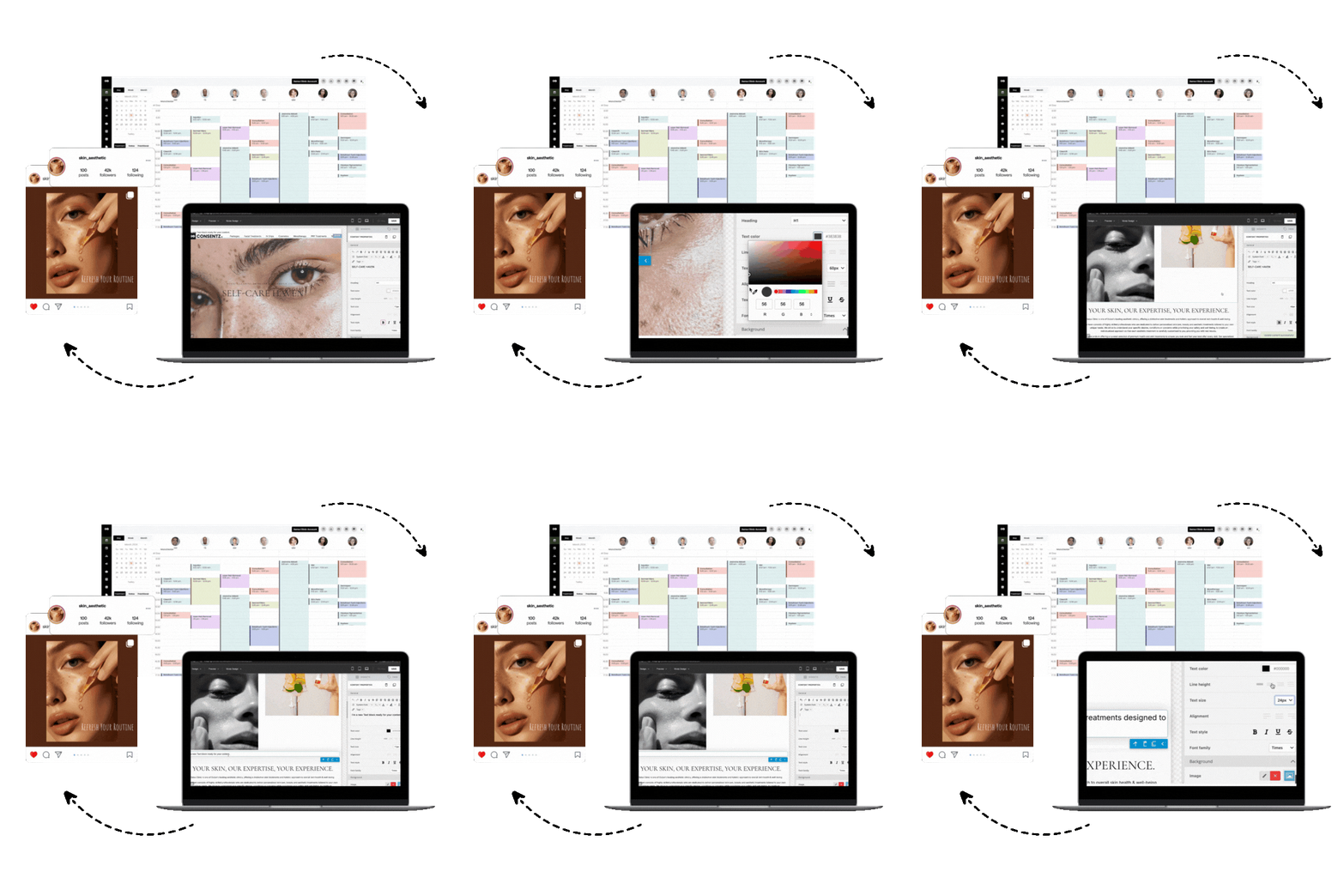
Modern software can automate appointment reminders, manage electronic health records, process payments, and track inventory from a single interface. A system purpose built for aesthetics, like Consentz, can streamline your entire workflow, from digital consent forms on an iPad to detailed financial reporting. This frees up your time to focus on what matters most: your patients.
Growth and Profitability
With your med spa open, the focus shifts to attracting clients and growing your revenue. A smart strategy for marketing and pricing will set you up for long term success. To benchmark performance, see are med spas profitable?
Marketing and Branding
Your brand is your med spa’s identity. It’s your logo, your colors, and the feeling clients get when they walk through your door. A strong online presence is a must. Today, over 80% of patients check online reviews before choosing a provider for a cosmetic procedure. For practical tactics, explore these medical spa marketing ideas to boost bookings.
- Website and SEO: Create a professional website with before and after photos and easy online booking.
- Social Media: Use platforms like Instagram and Facebook to showcase your work and engage with potential clients.
- Loyalty Programs: Memberships and loyalty programs are incredibly effective. Clients enrolled in these programs visit 2.5 times more frequently than non members.
Many clinic management systems have built in marketing tools to help you with these efforts. For example, a platform like Consentz can help you automate email campaigns and manage your client relationships to encourage repeat business.
Developing a Pricing Strategy
Your pricing should cover your costs, reflect your value, and be competitive within your local market. Research what other med spas in your area charge. Consider offering service packages or memberships to encourage client loyalty and create a predictable revenue stream. More than half of all med spas now offer some form of membership plan because it’s a proven strategy for improving client retention.
Frequently Asked Questions About How to Open a Medical Spa as a Nurse
1. Can an RN open a medical spa without a doctor?
In most states, an RN cannot own a medical spa independently due to “corporate practice of medicine” laws. However, you can partner with a physician or use the MSO/PC ownership model to legally operate the business side of the practice. Nurse practitioners in full practice authority states may have the ability to own one independently.
2. What is the most important first step?
The most important first step is researching your state’s specific laws and regulations regarding medical spa ownership, physician supervision, and scope of practice for nurses. This legal groundwork is essential before you make any financial investments.
3. How much does it cost to start a med spa?
Startup costs typically range from $100,000 to $500,000 or more. This covers expenses like rent, equipment purchases, insurance, licensing, and initial marketing and payroll.
4. What are the most profitable med spa treatments?
Injectables like Botox and dermal fillers, along with laser treatments such as hair removal and skin rejuvenation, are consistently among the most popular and profitable services offered in a medical spa.
5. Do I need special certification to perform Botox injections?
While your nursing license is the base requirement, you should complete comprehensive hands on certification courses specifically for neurotoxins and dermal fillers. This ensures you are proficient in the latest safety protocols and injection techniques.
6. What is an MSO model in simple terms?
The MSO (Management Services Organization) model allows a nurse to own and manage the non clinical aspects of a med spa (like marketing, billing, and operations), while a physician owned company (the PC) legally provides the medical services. It’s a legal workaround in states that restrict non physician ownership.
Your Path to Success
Learning how to open a medical spa as a nurse is a journey that requires careful planning, legal diligence, and a passion for patient care. By understanding the requirements, building a solid business plan, and leveraging the right tools, you can turn your vision into a thriving practice.
As you grow, managing everything from appointments to inventory can become overwhelming. Investing in a comprehensive management solution like Consentz can help you coordinate every aspect of your business in one place, giving you the freedom to focus on delivering exceptional results for your clients. With the right preparation, you are well on your way to a rewarding career as a med spa owner.