Medical scheduling software coordinates appointments, resources, and patient communication in one place. In 2026, clinics expect online booking, smart reminders, and real time availability tied to medical records and billing. This guide breaks down how medical scheduling software works, what to look for, and how to implement it. It also frames the Top 10 list that follows.
How medical scheduling software works at a glance
Medical scheduling software connects your public booking options with your internal diary, then automates the housekeeping around each visit.
Patients book online or through staff, then get instant confirmations and reminders by SMS or email
Staff see one calendar across clinicians, rooms, and equipment with drag and drop changes and waitlist fills
The schedule links to clinical records, photos, consent, inventory, and point of sale so visits flow into documentation and billing
Reports roll up daily metrics like cancellations, rebook rates, and revenue
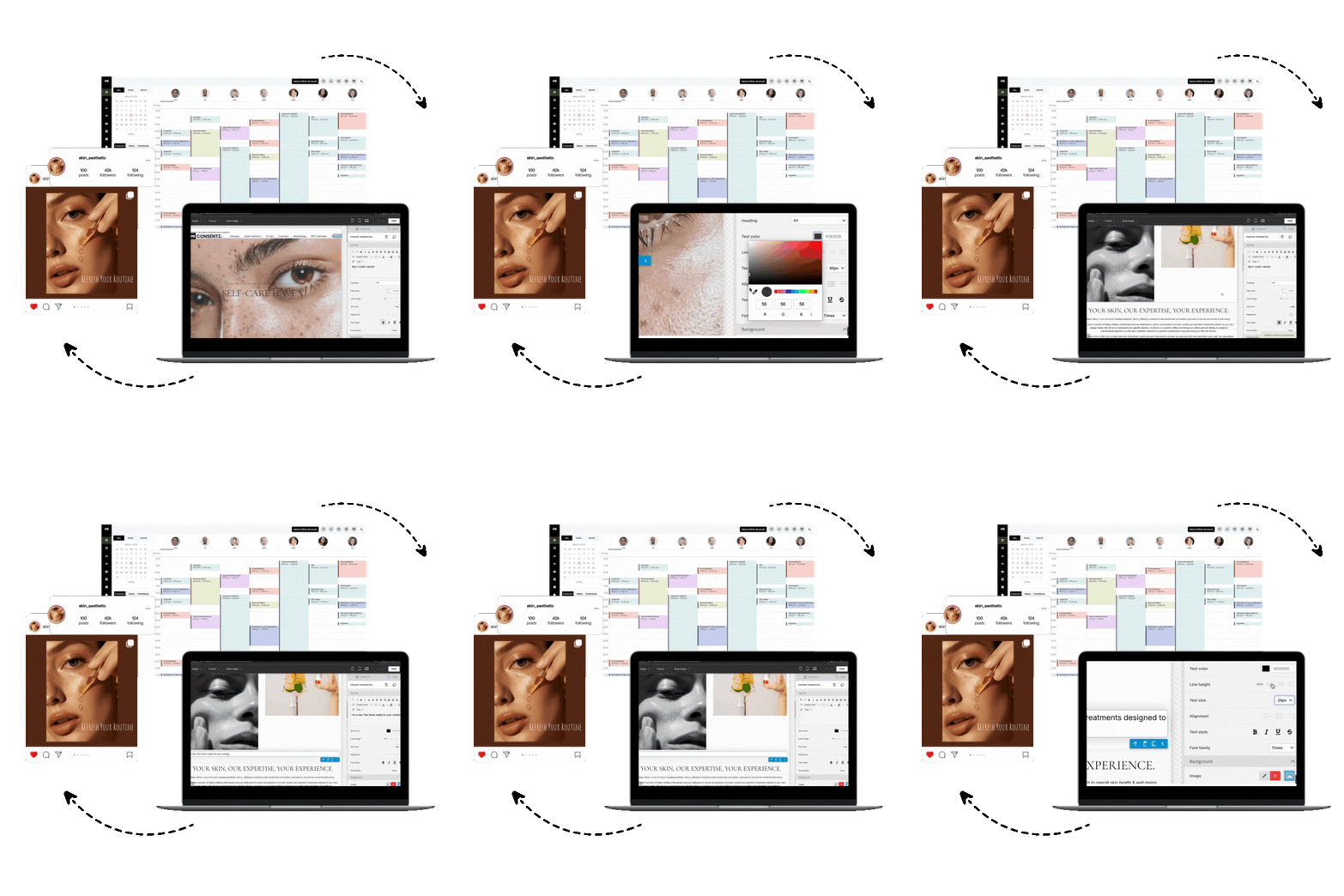
Example in practice, Consentz runs two connected surfaces, a web Control Centre for operations, analytics, marketing, and stock, and an iPad Medical App for chairside records, photos, signatures, and billing initiation. Data is hosted on AWS with encryption in transit and at rest using SSL and AES 256, and the company references ISO 27001, 2013. The iPad app requires an active subscription and supports iPadOS 12 plus, macOS 11 plus on Apple Silicon, and visionOS. You can explore the platform here, Consentz.
Key benefits for practices
Fewer no shows, automated reminders and waitlists help backfill cancellations
Higher patient satisfaction, clear confirmations, directions, and pre visit questionnaires remove surprises
Faster front desk, one calendar for every resource beats phone and paper
Better documentation, the appointment becomes the anchor for photos, consent, and notes
Cleaner billing and stock control, visits translate into invoices, prepayments, and item usage
Insight for growth, real time analytics highlight retention and spend per patient
Clinical teams that take many before and after photos feel the gains most. With Consentz as an example, photo ghosting helps align shots and there is a private flag for sensitive images. That speeds up documentation tied to the appointment record. See how this looks in context, Consentz.
Primary problems this software should solve
Missed or late arrivals because reminders are weak or not personalized
Double bookings from fragmented calendars across rooms and clinicians
Slow follow up on leads and recalls after initial interest
Gaps between scheduling, consent, and billing that create errors or compliance risks
Stockouts or expired products because usage is not reconciled to visits
If your current diary cannot show clinician specific durations or link to treatment plans, medical scheduling software is the upgrade path.
Emerging Trends in Medical Scheduling for 2026
The landscape of medical scheduling is constantly evolving. For 2026, several key trends are shaping how clinics manage appointments and interact with patients. Automation and intelligence are at the forefront. AI powered tools, like chatbots for appointment booking, are becoming more common, offering patients 24/7 access to scheduling without requiring staff intervention. This enhances patient convenience and frees up your front desk. Another major trend is the overwhelming preference for cloud based deployment, which offers flexibility, scalability, and easier access from any device, a must have for modern, mobile friendly clinics.
Features to look for, buying checklist
Multi resource calendar, clinicians, rooms, and equipment on one view, ideally with color coded time slots and customizable appointment statuses for at a glance clarity.
Online self booking with custom rules, new patient slots, deposit logic, waitlist, and potential chatbot integration for your website.
Recurring appointment scheduling to easily book follow ups or courses of treatment.
Reminders and confirmations by SMS and email with two way replies.
Physician and staff management to handle individual schedules, roles, and system permissions.
Intake and consent, editable consent libraries, digital signatures, audit trail.
Clinical photography, markup tools and image alignment, plus secure sharing.
Treatment plans and pre set notes that reduce typing and standardize care.
Inventory control tied to visits, batch traceability for controlled items like botulinum toxin.
Billing and POS, courses of treatment, bundles, prepayments, and refunds.
Marketing automation, email and SMS drips, review requests, lead pipelines.
Reporting and targets, KPIs for retention, spend, and A or R.
Access controls and audit logs for every action around the schedule.
Verifiable examples from Consentz include Stripe for payments, Xero for accounting, and Twilio for SMS messaging. Handpoint POS is integrated through a partner build that supports in clinic terminals and online or offline scenarios. Records cannot be deleted once archived, which helps protect against tampering claims during audits.
Compliance and security essentials
Medical scheduling software must protect patient data and preserve auditability.
Hosting and encryption, look for AWS or similar, plus SSL in transit and AES 256 at rest.
Certifications and posture, ISO 27001, 2013 is referenced by some vendors like Consentz.
HIPAA readiness for US clinics, confirm whether a Business Associate Agreement is available and signed.
Role based access, PINs and permissions by job role.
Immutable records policy, archived records that cannot be deleted reduce medico legal risk.
Photo privacy controls and consent versioning.
If you operate in the UK, you may also need evidence readiness for inspections such as CQC. For US deployments, always verify BAA availability directly with the vendor.
How to choose, buying criteria and use case scenarios
Start with workflow fit, then evaluate integrations and growth features.
Deployment options, most modern systems are cloud based (SaaS), offering remote access and automatic updates. Some legacy systems may offer on premise deployment, which requires you to manage your own servers and security. For nearly all clinics, cloud is the superior choice for flexibility and reduced IT burden.
Solo practitioner or nurse led clinic, prioritize easy setup, iPad centric charting, online booking, and simple billing.
Multi clinician, multi room practice, prioritize resource scheduling, access controls, batch inventory tracking, and analytics.
Aesthetics heavy photography, prioritize image tools, ghosting alignment, and secure sharing.
Growth focused medspa, prioritize marketing automation, review requests, and a CRM style pipeline.
Accounting maturity, look for Xero or your preferred ledger integration, plus clear month end reports.
Proof points you can verify with Consentz, founded in 2012, the company claims over 200 clinics using the platform and provides UK and US phone numbers for support. The Apple listing shows SmartMatter LLC as the seller with continuous updates, version 3.0.28 on August 6, 2025, and subscription required to use the app.
Pricing and ROI overview
Most medical scheduling software uses a subscription model. Official price cards are often hidden behind a demo request. Directory listings for Consentz show a starting price around 79 pounds per month although the official website has no public price list. Seats, modules, and locations influence the final subscription cost. ROI typically comes from three sources.
Fewer missed visits, reminders and deposits raise show rates
Faster workflows, less admin time per appointment
Better lifetime value, automated reactivation and reviews lift retention and referrals
If marketing and inventory control replace separate tools, count those savings too. To discuss fit and get current pricing, go to Consentz.
Implementation playbook
A practical rollout plan keeps momentum without overwhelming the team.
Week 1, define services, durations, and rooms, import patients, set permissions, connect payments and accounting.
Week 2, configure online booking rules, deposits, and reminders, publish booking links on your website and Instagram bio.
Week 3, load consent libraries and treatment templates, build pre set notes, train on photos and signature capture.
Week 4, turn on marketing automations, review request flows, and simple drip sequences.
Weeks 5 to 8, tighten inventory tracking and batch control, review the dashboard weekly, refine templates and timing.
If you prefer help, ask the vendor about Academy style resources and included setup. Consentz includes an Academy within the Control Centre with how to content and business explanations.
Top 10 Medical Scheduling Software of 2026
Building on the trends outlined above, this section spotlights the scheduling platforms shaping day to day access, throughput, and no show reduction in 2026. We’ve grouped these solutions together because they pair robust self scheduling and automation with interoperability, patient engagement, and operational analytics, capabilities practices consistently cite as must haves this year. Use this list to quickly compare where each contender stands on ease of use, integration depth, and scalability across different practice sizes and specialties.
1. Consentz
Consentz pairs an iPad Medical App for chairside care with a web Control Centre for front office orchestration, built specifically for aesthetics clinics and medspas. It earns its 2026 spot by keeping diaries full: self booking, automated reminders, clinician specific waitlists, and resource aware calendars reduce no shows and speed backfills. Security runs on AWS with encryption and ISO 27001, and a HIPAA BAA is available on request.
Workflow highlights
Patient self booking from your website or social profiles.
Automated SMS/email reminders with configurable timing.
Clinician specific waitlist that auto notifies to backfill cancellations.
Unified calendar across clinicians, rooms, and equipment, with optional overbooking.
Digital intake questionnaires and treatment specific e consents.
Integrated deposits and checkout, photo rich charting, and scheduling analytics.
iPad first workflows: photo capture, markup, and preset treatment notes.
Strengths
Utilization driven scheduling (self booking, reminders, waitlist, resource aware diaries).
Aesthetics first documentation with photo capture/markup and consent libraries.
Solid security posture (AWS, encryption, ISO 27001) with HIPAA BAA on request.
Trade offs
iPad centric experience; no public Android app.
Limited enterprise EHR interoperability; verify interfaces if needed.
Pricing and fit
Quote based with demos and trial options. Best for: solo aesthetics, boutique cosmetic clinics, and growing multi location medspas.
2. Luma Health (Patient Scheduling+)
Luma Health’s Patient Scheduling+ brings EHR integrated self scheduling and smart rescheduling to clinics, medspas, and health systems. It stands out in 2026 for rapidly backfilling cancellations and cutting no shows via automated outreach and bidirectional write back. HIPAA with a BAA and backed by HITRUST, SOC 2, and ISO 27001, it integrates with Epic, Oracle Health, MEDITECH, NextGen, and eClinicalWorks.
Workflow highlights
Self booking via web, SMS, or widget that honors EHR rules.
Automated reminders; confirms/cancels/reschedules write back to the EHR.
Smart waitlist surfaces best matches and auto offers new openings.
Two way sync; multi location, rooms, and equipment across sites.
Digital intake/e consent; insurance card photos; specialty templates.
Eligibility checks and LumaPay for balances; telehealth links and dashboards.
Reporting on utilization and no shows; supports treatment plans and photos.
Strengths
Deep integrations with Epic, Oracle Health, MEDITECH, NextGen.
HIPAA with BAA; HITRUST, SOC 2 Type II, ISO 27001.
Proven no show reduction with automated outreach and waitlist fills.
Trade offs
Capabilities vary by EHR APIs; rooms/resources may need services.
Add on fees for modules like LumaPay and analytics.
Configuration and training require upfront effort.
Pricing and fit
Contact Luma for a tailored quote. Best for: multi location practices, health systems, FQHCs, and high volume access centers.
3. Phreesia
Phreesia is a healthcare native access and scheduling platform that keeps provider calendars full across medical groups and health systems. It ranks in 2026 for rules based self scheduling, rapid backfills via Appointment Accelerator, and automated reminders that curb no shows. With a HIPAA BAA, HITRUST/SOC 2 security, and bidirectional EHR/PM connectivity, scheduling stays accurate across locations and telehealth.
Workflow highlights
24/7 self booking and appointment requests with tailored forms.
SMS/email/voice reminders; confirm, cancel, or reschedule from messages.
Appointment Accelerator texts eligible patients to fill openings.
Enterprise Appointments Hub for telehealth and on site coordination.
Two way EHR/PM sync via HL7/FHIR (including Epic write back).
Mobile/iPad check in: consents, screeners, insurance, payments.
Analytics for no shows, gaps, rebooks; optional VoiceAI booking.
Strengths
HIPAA BAA and enterprise grade security (HITRUST/SOC 2).
Appointment Accelerator measurably reduces no shows.
Deep EHR/PM connectivity with eligibility, intake, and payments.
Trade offs
Modular, quote based pricing can add costs.
Write back behavior may vary by system.
Enterprise breadth requires structured implementation and training.
Pricing and fit
Contact vendor for tailored packages; pilots may be available. Best for: multi location groups, high volume intake clinics, and centralized access teams.
4. CERTIFY Health
CERTIFY Health powers self service scheduling and access for multi location groups and health systems. It ranks in 2026 on the strength of real time self booking, automation driven waitlists that backfill cancellations quickly, and deep EHR/PM synchronization. HIPAA with a BAA plus HITRUST r2, SOC 2, and PCI DSS give clinics confidence as they streamline front desk workflows and reduce no shows.
Workflow highlights
Real time self booking portal with specialty guardrails and instant confirmations.
Automated SMS/email/voice reminders to cut no shows and late cancels.
ASAP List waitlist automation offers newly opened times to standby patients.
Two way sync with rooms, equipment, providers, and locations in a central view.
Digital intake, eConsent, ID/insurance OCR, eligibility, and deposits.
Utilization and no show analytics; HL7/FHIR with Epic and Cerner.
Strengths
HIPAA with BAA; HITRUST, SOC 2, PCI DSS certifications.
Robust waitlist and real time self booking fill calendars fast.
Deep EHR/PM integrations and strong intake/payments.
Trade offs
Quote based pricing; advanced analytics may be tiered.
Broad module set adds a learning curve and integration planning.
Pricing and fit
Quote based across Essentials, Growth, and Premier. Best for: multi location groups, urgent care, and high volume outpatient clinics.
5. Experian
Experian Health’s Patient Schedule is an enterprise grade, always on scheduling platform for health systems and access centers. It earns a 2026 ranking for lifting show rates and accelerating time to appointment through guided self service, call center tooling, and IVR/SMS/email reminders. Reported results include faster scheduling and higher show rates, backed by HIPAA/BAA, SOC 2, and deep Epic level integrations.
Workflow highlights
24/7 self booking governed by provider, visit type, and availability rules.
Call center guided scheduling that shortens training and reduces errors.
Automated IVR/SMS/email reminders and text to schedule campaigns.
Real time EHR/PM write back (including Epic) for source of truth calendars.
Multi location/provider/resource routing to maximize network capacity.
Pre visit intake, eligibility, estimates, and payments via adjacent tools.
Strengths
Proven, multi channel scheduling that boosts show rates and access.
Deep EHR fit with real time write back and adjacent revenue tools.
Trade offs
Best suited to complex enterprises; scope may exceed small clinics.
Requires integration workstreams and change management for rollout.
Pricing and fit
Pricing is not public; contact Experian Health. Best for: multi location health systems, large groups, and high volume access centers.
6. PracticeQ
PracticeQ (from the IntakeQ team) blends scheduling, intake, and PM for clinics and medspas. HIPAA compliant with a signed BAA, it keeps schedules full via a polished booking widget, client portal, automated reminders, and EasyFill waitlist backfills. Integrated payments and links to athenahealth and RevolutionEHR make it a practical 2026 scheduler with telehealth and claims options.
Workflow highlights
Self booking and portal with widget, packages, prepayment, and family bookings.
SMS/email/voice reminders and confirmations reduce no shows.
EasyFill waitlist auto offers open slots; first come auto fill optional.
Two way Google and Outlook sync to avoid double booking.
Multi location, room, and equipment constraints for accurate availability.
Intake packets, e consents, photo/file uploads, insurance cards, superbills.
Integrated payments (PracticeQ Payments, Stripe, Square), telehealth, analytics.
Strengths
HIPAA with BAA; unified intake, payments, claims, telehealth.
EasyFill waitlist and reminders recover late cancellations.
Resource controls with Google/Outlook sync for clarity.
Trade offs
Some features are add ons; card/ACH processing fees apply.
Google Calendar write back is limited; deeper EHR needs may require integrations.
Pricing and fit
Public pricing: Starter $54.90; Pro $79.90 per practitioner; 14 day trial. Best for: solo to multi location medspas and high volume intake clinics.
7. NextGen Healthcare
NextGen Healthcare combines enterprise EHR/PM with rules based self scheduling and automated outreach powered by Luma, writing directly to NextGen Enterprise. It makes the 2026 list for reducing no shows, accelerating backfills, and preserving schedule accuracy. New this year, the Navigator AI phone agent books from inbound calls. HIPAA with BAA, integrated payments, and telehealth complete an end to end scheduling stack.
Workflow highlights
Self booking via web/text with real time PM write back.
Actionable reminders with confirm/cancel/reschedule and auto rebooking.
Smart waitlist auto offers earlier slots to reduce delays.
Multi location scheduling across providers, rooms, and equipment.
Digital intake, consents, demographics, eligibility, and insurance verification.
Integrated payments (card on file, eCheck, Auto Collect) and secure telehealth links.
Strengths
Deep EHR/PM integration; robust waitlist and reminders for fast backfills.
HIPAA with BAA; integrated payments and reconciliation.
Trade offs
Many capabilities require Luma add ons, impacting licensing costs.
Best results demand precise templates/routing; setup can be intensive.
Pricing and fit
Contact vendor; modular add ons via sales. Best for: multi location outpatient groups, FQHCs, and larger specialty practices.
8. RXNT
RXNT is a cloud EHR/PM suite with an integrated scheduler for ambulatory clinics and multi location practices. It earns a 2026 nod for patient self scheduling, website enrollment, automated reminders, eligibility checks, and up front payments that curb no shows and speed backfills. HIPAA compliance with a BAA and expanding TEFCA interoperability support trust within an all in one ecosystem.
Workflow highlights
Patient self booking via portal or embedded website flows.
Automated SMS/email/phone reminders and confirmations.
Smart waitlist fills cancellations by provider/location/service.
Two way sync (Google/ICS, Outlook); flexible calendar views.
Rooms/resources and group visits; reserve treatment spaces.
Intake/e consents; eligibility checks; copay and payment capture.
Telehealth visit types with links; dashboards for utilization/no shows.
Strengths
HIPAA with BAA; embedded self scheduling and mobile friendly intake.
Multi location and resource controls; integrated eligibility and payments.
Practical scheduling analytics for operations.
Trade offs
Annual contracts and add on fees; EPCS token cost.
Calendar links rely on Google/ICS/Outlook rather than deep write back.
Smaller marketplace and limited native marketing tools.
Pricing and fit
Public pricing starts at $118/month; EPCS tokens add $85/year. Best for: multi location ambulatory clinics, urgent care, behavioral health, and medspas.
9. AdvancedMD
AdvancedMD unifies PM/EHR, engagement, and payments so multi location practices can run scheduling end to end. It ranks in 2026 for blending 24/7 self scheduling, actionable reminders, waitlist automation, and pre visit eligibility to keep calendars full and backfills fast. HIPAA with a BAA, built in telehealth, and solid multi site tools round out a capable scheduler.
Workflow highlights
Patient self booking via portal with controlled visit types and slots.
SMS/email/voice reminders with confirm/cancel links and easy reschedule.
Smart waitlist auto fills openings with staff prioritization rules.
Real time eEligibility days before visits to prevent denials.
Multi location, rooms, and equipment scheduling with mobile access.
Digital intake, consents, photo/ID/insurance capture, and co pays.
Utilization and no show analytics plus rooming status signals.
Strengths
Unified PM+EHR+engagement+payments with robust automation.
HIPAA with BAA; built in telehealth and pre visit eligibility checks.
Strong multi location support and actionable analytics.
Trade offs
Add on modules can increase costs over time.
Broad configuration introduces a learning curve.
Deeper marketing or external calendar sync may require integrations.
Pricing and fit
Published bundles range from $299 to $999 per provider monthly; RCM options available. Best for: multi provider, multi location clinics and hybrid medspas.
10. DrChrono
DrChrono is a mobile first EHR/PM with built in scheduling, the OnPatient portal, and an embeddable booking widget to route self booked visits directly onto provider calendars. It ranks in 2026 because reminders, telehealth, and iPad intake/consent lower no shows and accelerate backfills. HIPAA with a BAA and integrated payments keep operations streamlined for clinics and medspas.
Workflow highlights
Patient self booking via OnPatient portal and embeddable widget.
Automated email/SMS/phone reminders with status updates.
Waitlist/standby via marketplace partners to fill cancellations.
One way calendar sync to Google, Apple, and Outlook for visibility.
Multi location, providers, rooms; availability search and overlap control.
iPad check in/consents; photo and insurance card capture to chart.
Eligibility checks; card on file and text to pay; “Video Visits.”
Reporting on utilization, no shows, and rebook rates.
Strengths
EHR native scheduling with portal self booking and integrated telehealth.
HIPAA with BAA; mobile apps and photo capture suit aesthetics workflows.
Trade offs
One way calendar sync; external events don’t write back.
No native waitlist; partner add ons and metered SMS may add costs.
Pricing and fit
Quote based plans with a 30 day trial; usage fees may apply. Best for: mobile centric small/midsize clinics, multi location medspas, and dermatology.
Conclusion
Medical scheduling software is now the command center for patient experience and clinic efficiency. It unifies booking, reminders, documentation, inventory, and billing in a single flow. When you compare options, validate security, auditability, and resource scheduling depth. Then look for imaging, consent, marketing, and analytics that fit your services. If you want an iPad first experience built for aesthetics with AWS hosting, encryption, ISO 27001 referenced, and integrations like Stripe, Xero, and Twilio, consider a closer look at Consentz. Ready to see it in action, start at Consentz.
FAQs
What is medical scheduling software and how is it different from a general calendar?
Medical scheduling software is purpose built for healthcare. It supports online booking rules, reminders, multi resource scheduling, and links appointments to consent, clinical notes, photos, inventory, and billing. A general calendar does not handle medical workflows or compliance.
Can medical scheduling software handle deposits and no show protection?
Yes. Look for configurable deposits, card on file, and automated reminder schedules. These tools reduce missed visits and protect revenue.
How does medical scheduling software connect to payments and accounting?
Many platforms integrate with payment gateways and accounting systems. For example, Consentz integrates with Stripe for payments and Xero for accounting, so invoices and receipts flow from the schedule.
Is HIPAA supported for US clinics?
Some vendors indicate HIPAA readiness. Always confirm whether the vendor will sign a Business Associate Agreement and how data is encrypted and audited before you deploy.
What is the difference between cloud based and on premise software?
Cloud based software is hosted by the vendor and accessed via the internet, which means no server maintenance for you and access from anywhere. On premise software is installed on your local servers, giving you direct control but requiring significant IT management and upfront cost. Most modern clinics choose cloud based solutions.
We rely heavily on before and after photos. What should we look for?
Choose medical scheduling software with robust photo tools, drawing and markup features, and alignment aids like ghosting. Ensure there is a private flag for sensitive images and a clear audit trail tied to the appointment.
Can inventory be linked to appointments for controlled products?
Yes. Advanced platforms track usage by batch and lot so every administration links to a visit, which is essential for products like botulinum toxin.
How quickly can a small clinic go live?
With a focused plan, many solo or small teams go live in two to four weeks. Start with services, booking rules, reminders, and payment setup, then layer consent, templates, and marketing over the next month.