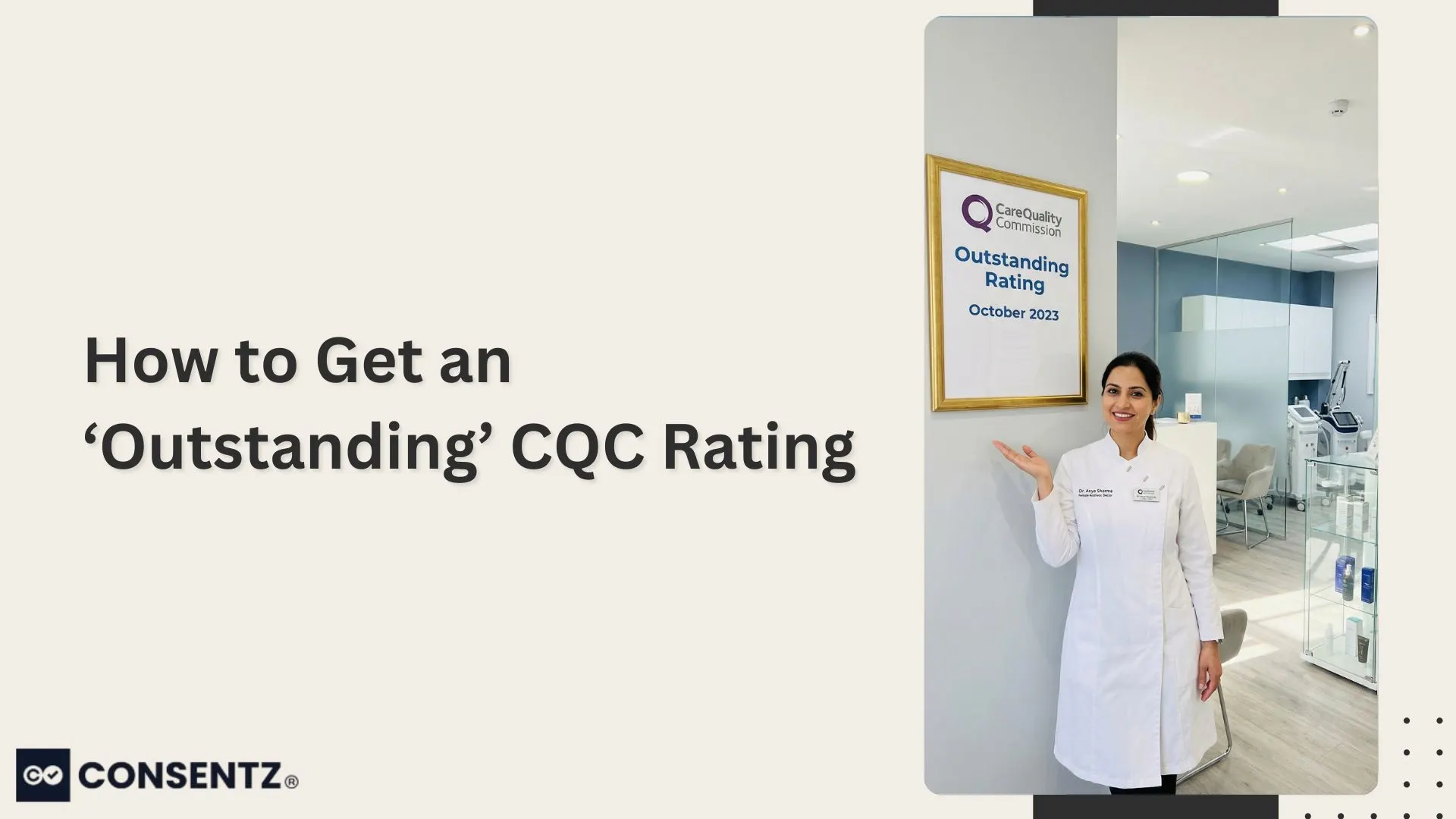
A CQC inspection can be a stressful experience for any aesthetic clinic owner in the UK. Whether you’re running a small boutique practice in London or a multi-room clinic in Manchester, the pressure to demonstrate compliance with Care Quality Commission standards is significant. However, with the right CQC inspection checklist and proper preparation, you can approach your inspection with confidence and demonstrate your commitment to providing safe, effective, and high-quality care.
This comprehensive CQC inspection checklist will guide you through the key areas that CQC inspectors will assess, helping you to prepare for a successful inspection and achieve the rating your clinic deserves. We’ve structured this guide around the CQC’s own framework and included practical tips drawn from real inspection experiences across the UK aesthetic sector.
Understanding the CQC Inspection Checklist: The Five Key Domains
The CQC assesses services against five key questions, known as the five key domains. This CQC inspection checklist is structured around these domains to ensure you’re fully prepared:
- Are they safe?
- Are they effective?
- Are they caring?
- Are they responsive to people’s needs?
- Are they well-led?
Each section of this checklist provides you with a clear framework for your inspection preparation, ensuring nothing is overlooked.

Safe
The ‘Safe’ domain examines whether your clinic protects patients from avoidable harm and abuse. Inspectors will look for robust systems that minimise risks whilst maintaining high-quality care. This is often where clinics lose points, so pay particular attention to these areas.
Safeguarding
- [ ] Do you have a clear safeguarding policy and procedure in place?
- [ ] Are all staff trained in safeguarding, and do they know how to report concerns?
- [ ] Do you have a designated safeguarding lead?
What inspectors look for: Evidence that staff understand their safeguarding responsibilities and know how to recognise and report concerns about adults and children at risk. Your policy should reference local safeguarding boards and include contact details for raising concerns.
Infection Prevention and Control
- [ ] Do you have an up-to-date infection control policy?
- [ ] Are all staff trained in infection control?
- [ ] Is the clinic clean and well-maintained?
- [ ] Do you have appropriate arrangements for the disposal of clinical waste?
What inspectors look for: Visible cleanliness, proper hand hygiene facilities, appropriate personal protective equipment (PPE), and evidence of regular cleaning schedules. Ensure clinical waste is segregated correctly and collected by a licensed contractor.

Medicines Management
- [ ] Do you have a clear policy for the management of medicines?
- [ ] Are medicines stored securely and at the correct temperature?
- [ ] Are all staff who handle medicines trained and competent to do so?
What inspectors look for: Secure storage (locked cabinets/fridges), temperature monitoring logs, stock rotation systems, and clear audit trails. For prescription-only medicines (POMs), ensure you have appropriate prescriber oversight and Patient Group Directions (PGDs) where applicable.
Effective
The ‘Effective’ domain assesses whether your care, treatment, and support achieve good outcomes and are based on the best available evidence. This section focuses on clinical quality and staff competence.
Evidence-Based Practice
- [ ] Do you follow national guidance and best practice?
- [ ] Do you have a system for monitoring the effectiveness of your treatments?
- [ ] Do you participate in clinical audits?
What inspectors look for: Evidence that you follow guidance from bodies like NICE, the British Association of Aesthetic Plastic Surgeons (BAAPS), or the British Association of Cosmetic Nurses (BACN). Regular clinical audits demonstrate you’re monitoring outcomes and identifying areas for improvement.
Staff Training and Competence
- [ ] Do all staff have the right qualifications, skills, and experience for their roles?
- [ ] Do you have a system for appraising staff and identifying their training needs?
- [ ] Do you provide ongoing training and professional development for your staff?
What inspectors look for: Up-to-date professional registration (NMC, GMC, etc.), evidence of CPD (Continuing Professional Development), competency assessments for specific procedures, and annual appraisals. Ensure you have appropriate indemnity insurance for all practitioners.

Consent
- [ ] Do you have a clear policy for obtaining and recording consent?
- [ ] Do you ensure that patients have the information they need to make an informed decision?
- [ ] Do you respect patients’ right to refuse treatment?
What inspectors look for: Written consent forms for all procedures, evidence of cooling-off periods for cosmetic procedures, and documentation showing patients received comprehensive information about risks, benefits, and alternatives. Under the Montgomery ruling, consent must be truly informed.
Caring
The ‘Caring’ domain evaluates whether your staff involve and treat patients with compassion, kindness, dignity, and respect. This is where the human element of your service shines through.
Person-Centred Care
- [ ] Do you involve patients in decisions about their care and treatment?
- [ ] Do you treat patients with dignity and respect?
- [ ] Do you provide patients with the information they need in a way they can understand?
What inspectors look for: Patient testimonials, observational evidence of respectful interactions, and systems that empower patients to make informed choices. Consider how you accommodate different communication needs, languages, or learning disabilities.
Patient Feedback
- [ ] Do you have a system for collecting and responding to patient feedback?
- [ ] Do you use patient feedback to improve your services?
- [ ] Do you have a clear complaints procedure?
What inspectors look for: Evidence of regular patient satisfaction surveys, online reviews management, and a visible complaints procedure. More importantly, demonstrate how you’ve acted on feedback to improve services. This shows you value patient voices.

Responsive
The ‘Responsive’ domain examines how well your services meet people’s needs and whether you respond appropriately to complaints and concerns.
Access to Services
- [ ] Are your services accessible to people with disabilities?
- [ ] Do you have a system for managing appointments and waiting times?
- [ ] Do you provide information about your services in a variety of formats?
What inspectors look for: Evidence of disability access (ramps, accessible toilets, hearing loops), reasonable adjustments for patients with additional needs, and information available in different formats (large print, digital, etc.). Consider how you accommodate patients with mobility issues or sensory impairments.
Meeting People’s Needs
- [ ] Do you assess patients’ needs and preferences?
- [ ] Do you provide a range of treatments to meet the needs of your patients?
- [ ] Do you have a system for referring patients to other services if you cannot meet their needs?
What inspectors look for: Comprehensive initial consultations that identify individual needs, clear protocols for when treatments aren’t suitable, and established referral pathways to other services (such as GPs or specialist services) when needed.
Well-Led
The ‘Well-Led’ domain assesses the leadership, management, and governance of your clinic. Strong leadership creates a culture where high-quality, person-centred care can flourish.
Governance
- [ ] Do you have a clear governance framework in place?
- [ ] Do you have a system for managing risks and learning from incidents?
- [ ] Do you have a clear vision and strategy for your service?
What inspectors look for: A risk register, incident reporting systems, and evidence that you learn from mistakes. Your governance framework should include regular audits, policy reviews, and quality improvement initiatives. Demonstrating a clear vision and strategy shows forward-thinking leadership.
Leadership
- [ ] Do you have a registered manager in place?
- [ ] Do you have a clear leadership structure?
- [ ] Do you have a culture of continuous improvement?
What inspectors look for: Clear roles and responsibilities, evidence of staff engagement and morale, and a culture where staff feel supported to raise concerns. Regular team meetings, staff surveys, and visible leadership all demonstrate good management. Your registered manager should be actively involved in day-to-day operations.

How Consentz Can Help You Master Your CQC Inspection Checklist
Preparing for a CQC inspection can be a daunting task, but you don’t have to do it alone. Working through your CQC inspection checklist becomes significantly easier with the right tools and support. The Consentz CQC Compliance Module is designed to help you prepare for your inspection with confidence. Our platform provides:
- A centralized evidence repository: Store all your compliance documentation in one place, making it easy to access during your inspection. Every item on your CQC inspection checklist can be documented and tracked systematically.
- Automated reminders: Set reminders for key compliance tasks, such as policy reviews and staff training, ensuring you never miss a critical deadline on your inspection checklist.
- Inspection-ready reports: Generate reports that demonstrate your compliance with the CQC’s fundamental standards, turning your checklist into evidence of excellence.
Tips for Using Your CQC Inspection Checklist Effectively
Getting the most from your CQC inspection checklist requires more than simply ticking boxes. Here are some practical tips to help you prepare thoroughly:
Start Early
Don’t wait until you receive your inspection notice. Use this checklist as part of your ongoing quality assurance processes. Regular self-assessments help you identify gaps before they become problems.
Assign Responsibilities
Delegate different sections of the checklist to relevant team members. Your practice manager might oversee governance, whilst your lead practitioner handles clinical protocols. This ensures everyone is invested in maintaining standards.
Gather Evidence
For each checklist item, collect supporting documentation. Policies, training records, audit results, and patient feedback all demonstrate your compliance. Store these in an organised, easily accessible system.
Review Regularly
Schedule monthly or quarterly reviews of your checklist. Regulations and best practices evolve, and your clinic should too. Regular reviews help you stay ahead of changes and maintain continuous improvement.
Mock Inspections
Consider conducting internal mock inspections using this checklist. Ask a colleague or external consultant to assess your clinic as an inspector would. This identifies blind spots you might have missed.
Conclusion: Your Path to CQC Inspection Success
This comprehensive CQC inspection checklist provides you with a structured approach to preparing for your upcoming inspection. By systematically working through each domain and ensuring every item is addressed, you can approach your CQC inspection with confidence and peace of mind.
Remember, a thorough CQC inspection checklist is more than just a tick-box exercise – it’s a framework for delivering consistently high-quality care. Use this checklist regularly to maintain compliance, identify areas for improvement, and demonstrate your commitment to patient safety and excellence.
The key to CQC success lies in embedding quality and safety into your daily operations. When compliance becomes part of your clinic culture rather than an inspection-driven activity, you’ll not only pass inspections but deliver better outcomes for your patients.
Don’t just prepare for your CQC inspection – ace it. The Consentz CQC Compliance Module helps you gather evidence and stay inspection-ready, every day.
Frequently Asked Questions About CQC Inspections
1) How often does the CQC inspect aesthetic clinics?
The frequency of CQC inspections varies depending on your previous rating and any concerns raised. Typically, clinics rated ‘Good’ or ‘Outstanding’ are inspected every 2-3 years, whilst those rated ‘Requires Improvement’ or ‘Inadequate’ may face more frequent inspections. The CQC also conducts responsive inspections if it receives concerns about a service.
2) How much notice will I receive before a CQC inspection?
Most routine inspections are announced, with clinics receiving at least 2 weeks’ notice. However, the CQC can carry out unannounced inspections if they have specific concerns about the safety or quality of care. This is why maintaining daily compliance using a CQC inspection checklist is essential.
3) What happens if my clinic fails a CQC inspection?
If your clinic receives a ‘Requires Improvement’ or ‘Inadequate’ rating, the CQC will identify specific areas needing attention and may issue requirement notices. You’ll need to submit an action plan showing how you’ll address these issues. The CQC will then conduct a follow-up inspection to verify improvements. Serious failures can result in enforcement action, including suspension or cancellation of your registration.
4) Who should be present during a CQC inspection?
Your registered manager must be available throughout the inspection. Inspectors will want to speak with various staff members, including practitioners, nurses, and administrative staff. It’s helpful to have your clinical lead and someone responsible for governance available as well. Ensure staff know their roles and can confidently discuss policies and procedures.
5) Can I use digital systems for CQC compliance?
Absolutely. Digital compliance systems are increasingly common and often preferred by inspectors. Electronic systems can make it easier to demonstrate compliance, track training, manage documents, and generate reports. Ensure any digital system you use is secure, regularly backed up, and that staff are trained to use it effectively.
6) How long does a CQC inspection take?
For a typical aesthetic clinic, an inspection usually takes 1-2 days. Smaller clinics might be inspected in a single day, whilst larger services with multiple treatment rooms and staff may require longer. Inspectors will tour your premises, review documentation, interview staff, and may speak with patients.
7) What can I do if I disagree with my CQC rating?
You have the right to submit factual accuracy comments within 10 working days of receiving your draft report. This allows you to correct any factual errors. If you remain dissatisfied after the final report is published, you can request a review or appeal certain decisions. However, appeals are only successful if there were procedural errors or the decision was unreasonable.
8) What happens after a CQC inspection?
After the inspection, you’ll receive a draft report highlighting findings and proposed ratings. You can submit factual accuracy comments before the final report is published on the CQC website, typically within 6-8 weeks of the inspection. Your rating will be public, and you’re required to display it prominently at your clinic and on your website.
9) Do CQC inspectors check patient records?
Yes, inspectors routinely review patient records to assess the quality of care. They look for evidence of proper consent, risk assessments, treatment plans, and appropriate record-keeping. Ensure your records are comprehensive, legible, and demonstrate patient-centred care. Patient confidentiality is maintained throughout the inspection process.
References
Care Quality Commission. (n.d.). The five key questions we ask. Retrieved from https://www.cqc.org.uk/about-us/how-we-do-our-job/the-5-key-questions-we-ask