When aesthetic clinic owners think about CQC compliance, stock management is often overlooked. Yet poor inventory control has resulted in requirement notices and downgraded ratings when expired or improperly stored products are discovered during inspections. Understanding CQC stock management requirements is fundamental to patient safety and demonstrating clinical governance.
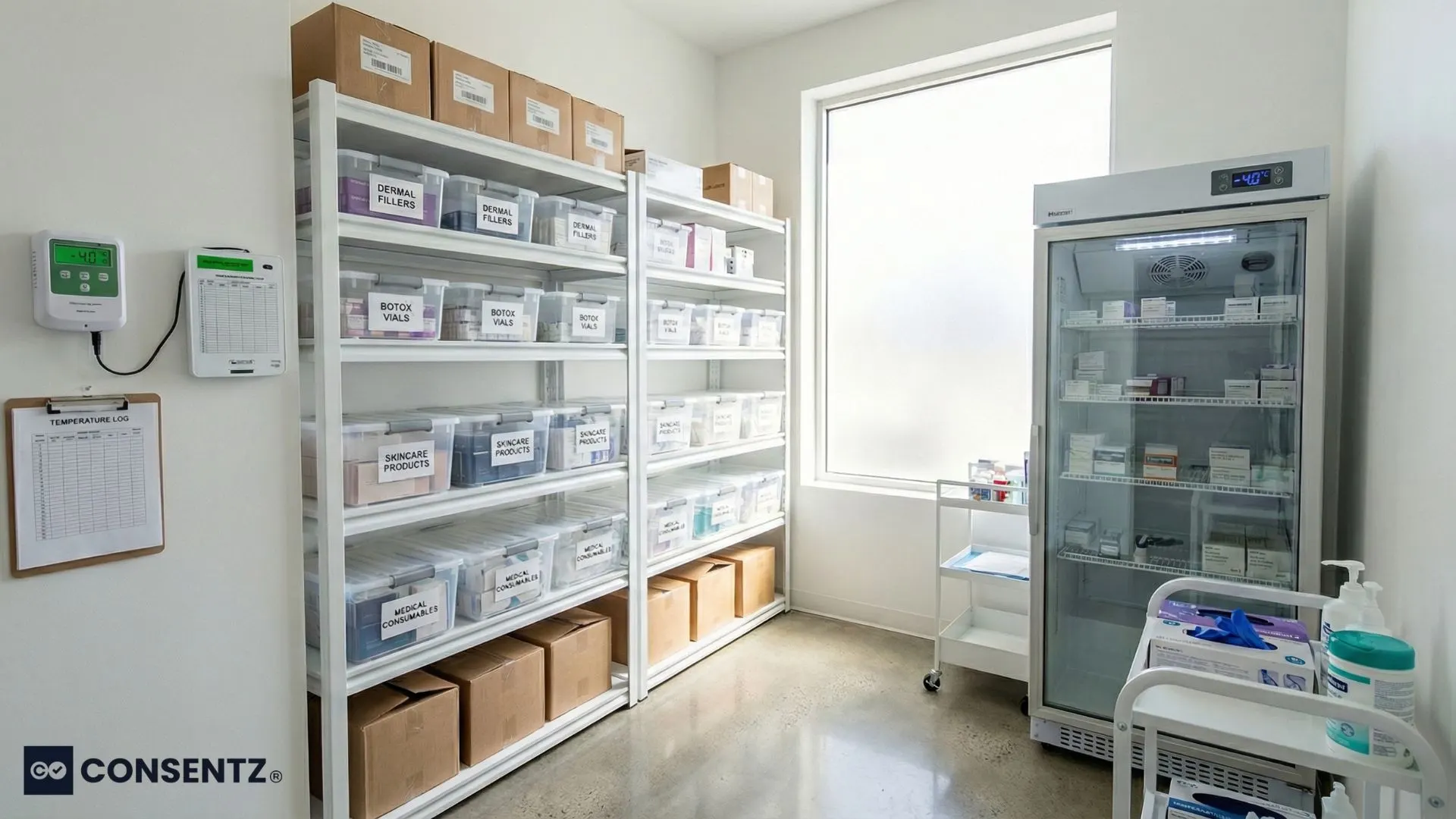
Why Stock Management Matters for CQC Compliance
CQC stock management directly impacts three key CQC domains:
Safe: Using expired products or improperly stored medicines puts patients at risk. Botulinum toxin stored at incorrect temperatures loses potency. Dermal fillers past expiry carry increased infection risk. These are real patient safety issues CQC inspectors actively look for.
Effective: Treatment outcomes depend on product quality. Temperature-compromised fillers won’t provide expected results. Botox stored incorrectly loses units of activity. When treatments fail due to product quality issues, patients lose trust.
Well-led: Systematic stock management demonstrates clinical governance and professional operation. Inspectors view stock management as a window into the overall clinic organization. Chaotic stock rooms signal poor overall management.
Six Critical CQC Stock Management Requirements
1. Product Traceability
You must trace every product from supplier to patient, creating an audit trail for product recalls.
What to record:
- Supplier details, product name, manufacturer
- Batch number and expiry date
- Date received and who checked it in
- Date used and which patient received it
- The practitioner who administered the product
Why this matters: When manufacturers issue recalls (several times yearly in aesthetics), you need to identify immediately which patients received affected batches. Without traceability, you can’t contact patients who may need monitoring. This is particularly critical for regulated procedures like thread lifts where product safety is paramount.
Common failure: Recording batch numbers on treatment notes but not linking them to stock records, making it impossible to trace products backwards.
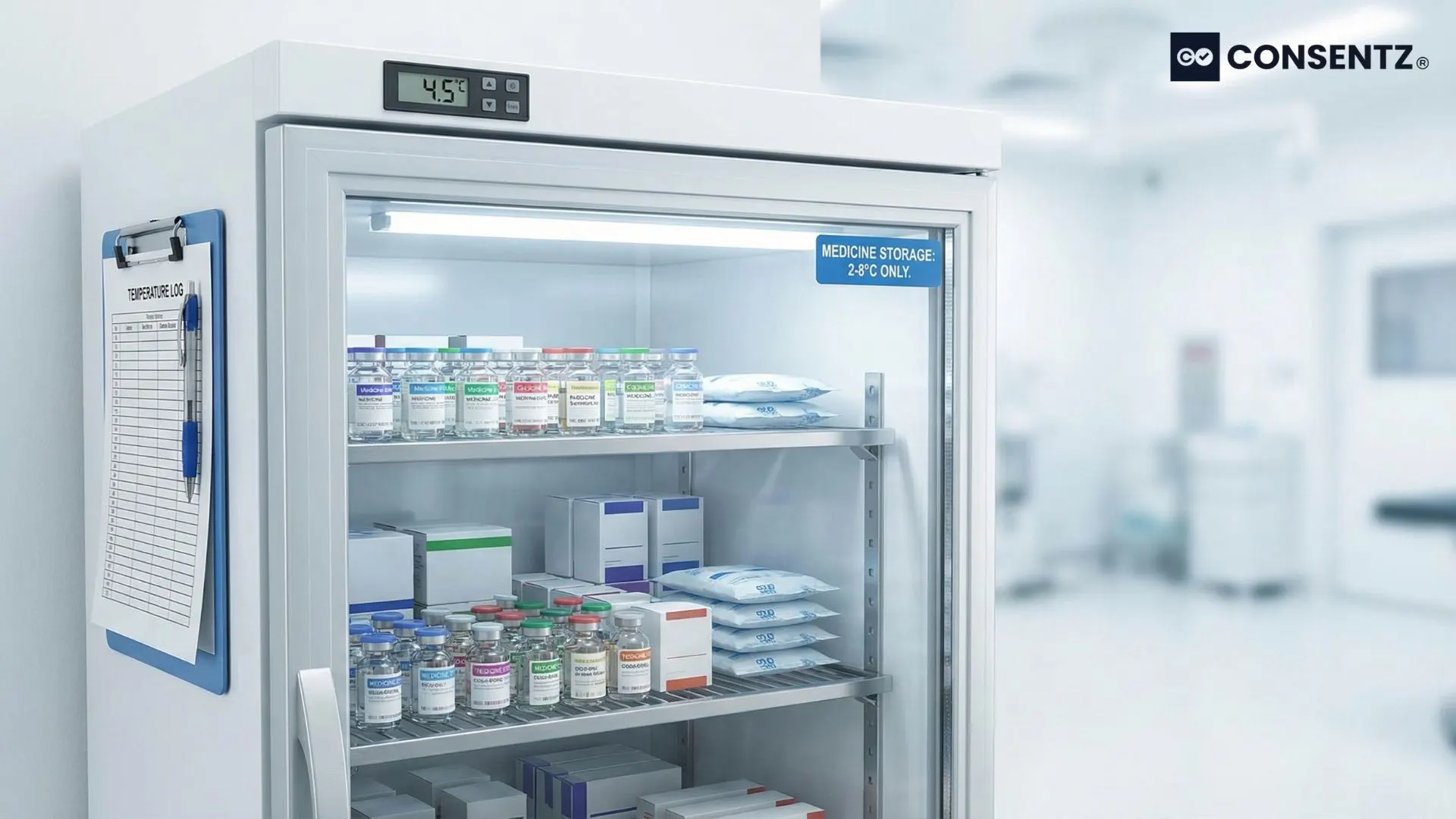
2. Temperature Control and Monitoring
Products requiring refrigeration must be stored within manufacturer-specified ranges with documented monitoring.
Essential controls:
- Medical-grade refrigerators (not domestic units)
- Dedicated medicine fridges (not shared with food)
- Daily temperature logging with action plans for excursions
- Min/max thermometers with calibration certificates
Critical products: Botulinum toxin (2-8°C), some dermal fillers, prescription medications, and local anesthetics.
What inspectors check: Temperature logs for the past 3-6 months, looking for consistent recording and appropriate responses to temperature excursions.
3. Expiry Date Management
Systematic processes prevent the use of expired products and ensure stock rotation.
Required systems:
- Monthly stock checks recording expiry dates
- Alerts for products approaching expiry (3-6 months before)
- Clear procedures for removing expired stock
- Documentation of expired stock disposal
- Stock rotation ensuring oldest products are used first
Inspector scrutiny: CQC inspectors randomly check products in stock rooms and fridges. Finding one expired product triggers a detailed investigation of your entire system.
4. Secure Storage
Medicines must be stored securely to prevent theft, tampering, or unauthorized access.
Security requirements:
- Lockable medicine cabinets or storage areas
- Restricted access (only authorized staff have keys/codes)
- Prescription-only medicines in locked storage
- Access logs showing who accessed medicines when
- Regular stock reconciliation to identify discrepancies
What requires secure storage: All prescription-only medicines, botulinum toxin, injectable local anesthetics, and high-value products at theft risk.
5. Ordering and Stock Levels
Maintain appropriate stock levels, balancing patient needs against wastage from expiring products.
Effective ordering:
- Minimum/maximum stock levels based on usage patterns
- Reorder points triggered before stock runs low
- Consider product shelf life in ordering quantities
- Review usage patterns quarterly to optimize ordering
6. Supplier Verification
Source products from reputable suppliers and maintain documentation proving authenticity.
Requirements:
- Use MHRA-licensed suppliers for medicines
- Verify supplier credentials before first order
- Keep copies of product certificates of authenticity
- Have protocols for verifying suspect products
Why this matters: Counterfeit Botox and dermal fillers circulate in the UK. Using counterfeit products creates serious patient safety risks and potential CQC enforcement action.
Common Stock Management Failures
No Batch Number Recording: Cannot manage product recalls effectively. Most common finding during CQC inspections.
Inadequate Temperature Monitoring: Missing log entries or no documented response to temperature excursions.
Expired Products Found: Particularly emergency drugs or frequently-used items raise serious questions about competence.
Poor Organization: Chaotic stock storage, where you can’t quickly locate products, suggests poor overall management.
No Supplier Documentation: Missing evidence of supplier verification or product certificates raises concerns about authenticity.
Medicines Management Extra Requirements
If you stock prescription-only medicines (Botox, prescription skincare, local anesthetics), additional requirements apply:
- Designated person responsible for medicines management
- Comprehensive medicines management policy
- Staff training in medicines handling
- Patient Group Directions (PGDs) for administration
- Regular medicines audits
Proper medicines management works hand-in-hand with robust consent processes to ensure patient safety and regulatory compliance.
Emergency Equipment Requirements
Emergency equipment must be managed with the same rigor as treatment products:
- Anaphylaxis kit with in-date adrenaline
- Monthly checks minimum
- Documented check completion
- Staff training in emergency equipment use
Inspector focus: CQC inspectors always check emergency equipment. Expired adrenaline is a serious finding.
How Consentz Simplifies CQC Stock Management
Managing CQC stock management manually is time-consuming and error-prone. The Consentz CQC Compliance Module automates your entire stock management process:
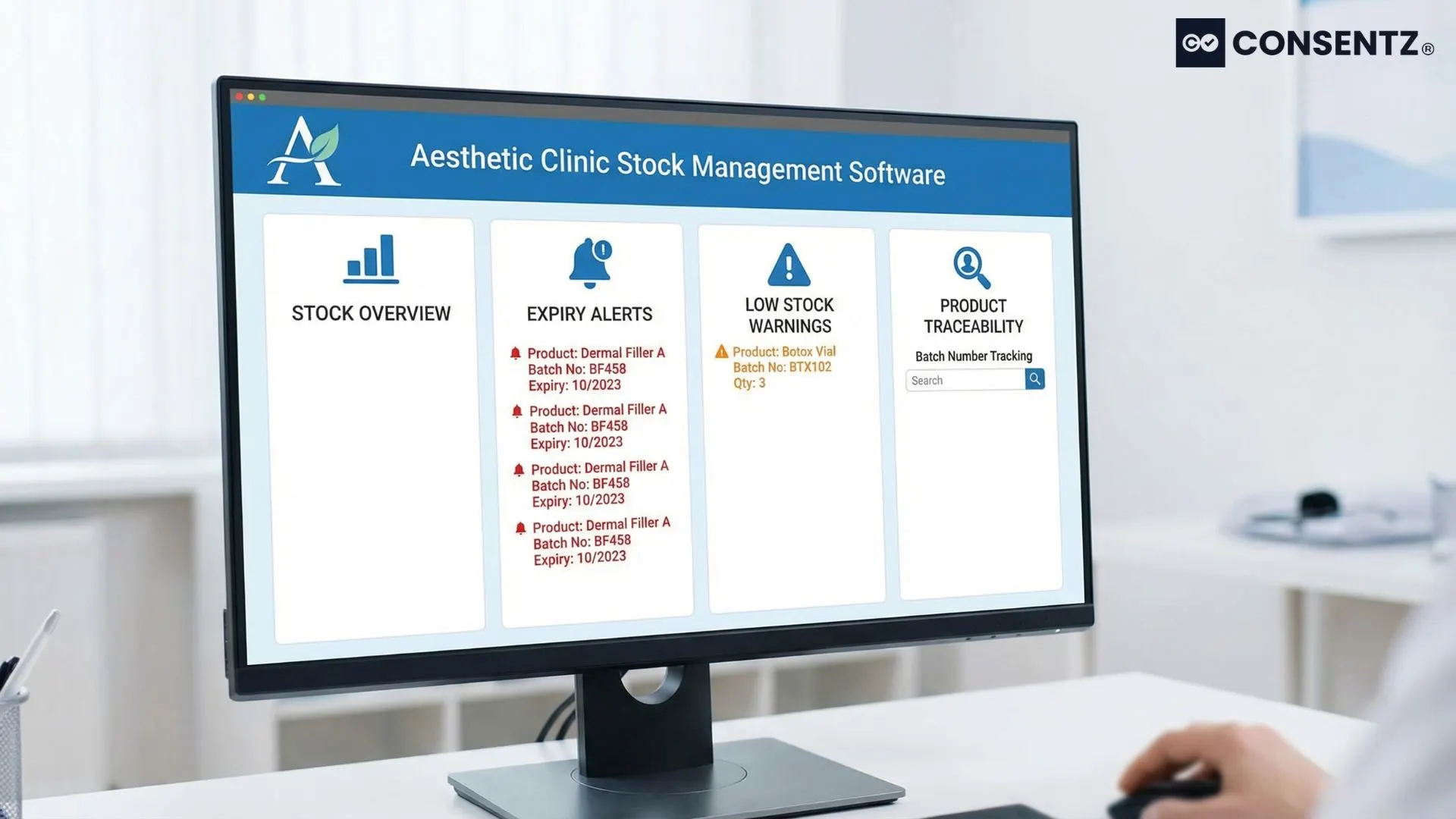
Automated Product Traceability: Link batch numbers to patient records instantly. When recalls occur, identify affected patients in seconds and generate recall reports automatically.
Smart Expiry Alerts: Receive automatic notifications 3-6 months before products expire. View everything expiring within 30/60/90 days and prevent costly wastage.
Temperature Monitoring: Record daily checks digitally with automated alerts for out-of-range readings. Track complete temperature history and flag monitoring gaps.
Inspection-Ready Reports: Generate comprehensive stock management reports for CQC inspections in minutes, showing complete traceability, temperature logs, and expiry tracking.
Supplier Management: Store supplier licenses, certificates of authenticity, and MHRA verification in one secure location.
Real Results: “Before Consentz, managing stock across three locations was chaos. Now everything’s automated. Our last CQC inspection, the inspector specifically praised our stock management systems.” — Dr. Emma Thompson, Birmingham Aesthetics Group
Implementation Steps
Audit current practices: Check for expired products, verify temperature monitoring, review recording methods, and identify gaps.
Establish core systems: Implement daily temperature logs, create stock records, establish batch number recording, and set up expiry tracking.
Organize storage: Reorganize stock rooms, ensure medical-grade refrigerators, and implement secure storage for prescription medicines.
Train your team: Ensure staff understand recording procedures, temperature monitoring, and product tracing.
Create routine checks: Schedule monthly stock checks and quarterly deep inventory reviews.
Conclusion
Excellent CQC stock management signals overall clinic quality. When inspectors see meticulous stock control, organized storage, and complete traceability, they infer that you apply the same attention to detail across all clinical areas. Conversely, poor stock management raises red flags about overall governance.
View CQC stock management not as an administrative burden but as an essential patient safety infrastructure protecting patients from receiving expired, improperly stored, or counterfeit products while protecting your clinic from regulatory action. If you’re preparing for CQC registration, robust stock management systems demonstrate the clinical governance inspectors expect.
Stop losing hours to manual stock tracking. The Consentz CQC Compliance Module transforms stock management from a compliance headache into an automated system that saves time, prevents wastage, and keeps you inspection-ready every day. Join hundreds of UK aesthetic clinics using Consentz to streamline CQC compliance.
Frequently Asked Questions About CQC Stock Management
1) Do I need to record batch numbers for non-prescription products like skincare?
While not legally required for non-prescription skincare, recording batch numbers for all products used on patients is best practice. If a product causes unexpected reactions across multiple patients, batch tracking helps identify if a faulty batch is responsible.
2) How long should I keep stock records after products are used?
Maintain stock records for a minimum of 3 years, though 5-7 years is safer given potential delayed adverse reactions or legal claims. Product traceability may be needed years after treatment if patients develop complications or manufacturers issue delayed recalls.
3) What should I do if I discover expired products during a stock check?
Remove expired products immediately and segregate them in clearly labeled “expired” storage. Document what you found, investigate how they weren’t caught earlier, implement corrective actions, and dispose of them according to proper procedures. This demonstrates that you identify and correct issues proactively.
4) Can I use domestic refrigerators for storing medicines in my clinic?
No, use medical-grade refrigerators specifically designed for medicine storage. Domestic fridges have less stable temperatures. CQC inspectors expect medical-grade fridges for prescription medicines.
How do I handle temperature excursions outside the safe range?
Document immediately, including temperature reading, when discovered, and duration. Contact manufacturers for guidance on whether affected products remain usable. Most products that exceeded the temperature range must be discarded. Investigate why the excursion occurred and implement preventive measures.
References
Care Quality Commission. (n.d.). Regulation 12: Safe care and treatment. Retrieved from https://www.cqc.org.uk/guidance-providers/regulations-enforcement/regulation-12-safe-care-treatment
Care Quality Commission. (n.d.). Regulation 15: Premises and equipment. Retrieved from https://www.cqc.org.uk/guidance-providers/regulations-enforcement/regulation-15-premises-and-equipment