Thread lifts have become one of the fastest-growing treatments in aesthetic medicine, offering patients a minimally invasive alternative to surgical facelifts. However, this popularity has brought increased regulatory scrutiny. If you’re offering or considering thread lifts, understanding CQC compliance for thread lifts is not optional—it’s a legal requirement that protects both your patients and your practice.
Are Thread Lifts a Regulated Activity?
Yes. The CQC confirmed in December 2018 that all types of thread lifting are regulated activities requiring full CQC registration. This decision applies to every thread lift procedure performed by healthcare professionals, regardless of the thread type or technique used.
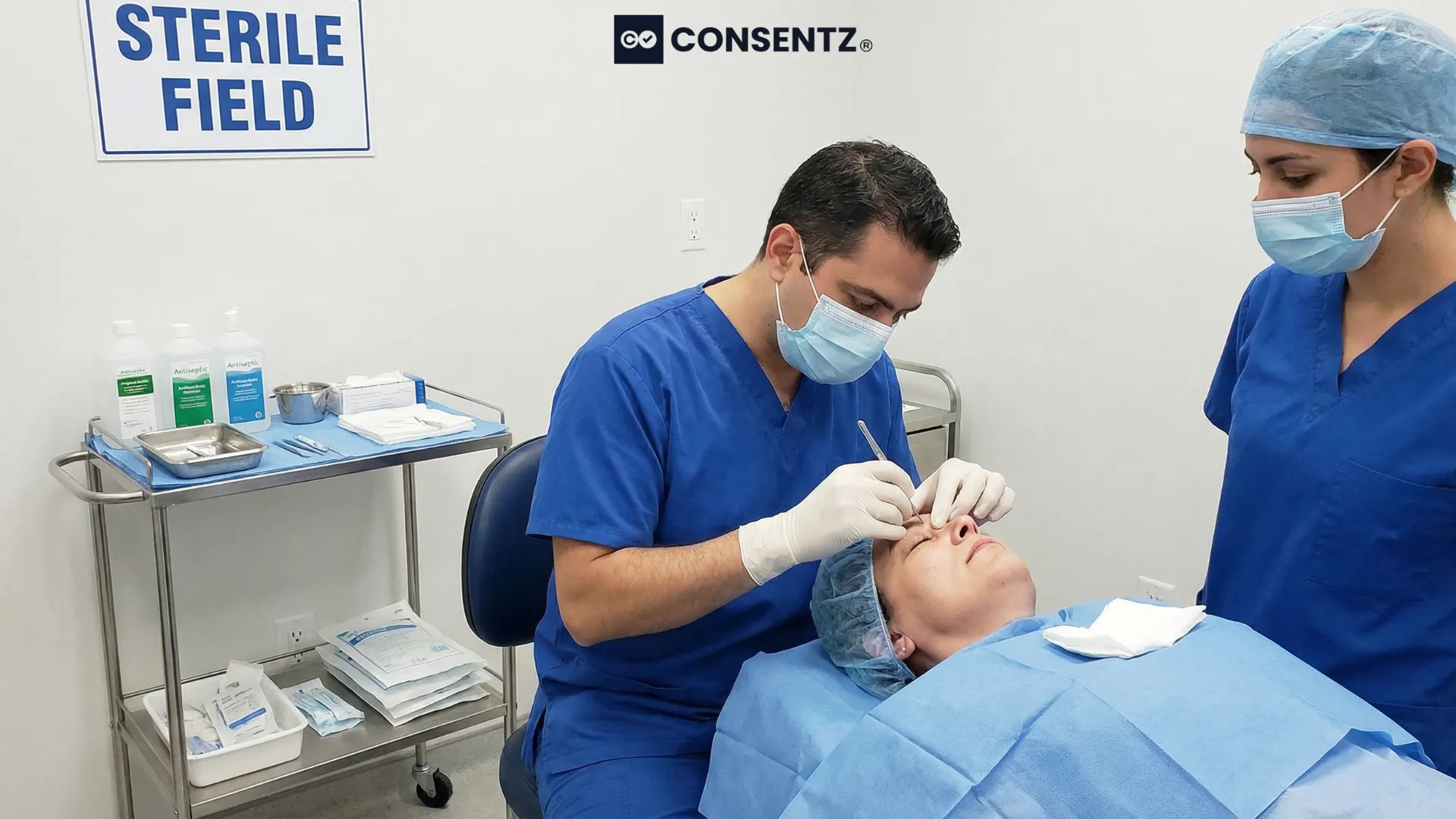
Why thread lifts require registration: The procedure involves inserting instruments (cannulas or needles) beneath the skin to place threads in subcutaneous tissue. The CQC classifies this as a surgical procedure because the threads themselves function as surgical instruments, repositioning tissue and creating deliberate therapeutic wounds that heal in an elevated position.
This applies to all thread types:
- PDO (polydioxanone) threads, both smooth and barbed
- PLLA (poly-L-lactic acid) threads like Silhouette Soft
- PCL (polycaprolactone) threads
- Any cogged, barbed, or lifting threads, regardless of material
Critical point: Registration is required even for registered healthcare professionals (doctors, nurses, dentists). Your professional registration (GMC, NMC, GDC) does not exempt you from CQC registration for thread lifts. Many practitioners have been caught operating without proper registration, resulting in fines exceeding £40,000 and immediate cessation of services.
Key CQC Requirements for Thread Lifts
Meeting CQC compliance for thread lifts requires systematic attention to five critical areas:
1. CQC Registration
You must register with the CQC before offering thread lifts. The registration process involves:
Application requirements:
- Complete provider and location registration forms
- Designate a Registered Manager (usually the clinic owner or clinical lead)
- Appoint a Nominated Individual if registering as a company
- Submit comprehensive policies covering all Fundamental Standards
- Pay application fee (varies by service type) plus annual fees
Registration scope: Specify “surgical procedures” as your regulated activity. Your Statement of Purpose must explicitly mention thread lifting as a service you provide. Attempting to offer thread lifts without this specific registration is illegal.
Timeline: Allow 3-6 months for the registration process. You cannot legally perform thread lifts until you receive your certificate, even if you’ve submitted your application.
2. Staff Training and Competence
The CQC expects rigorous proof that practitioners performing thread lifts are trained, competent, and continuously developing their skills.
Minimum training requirements:
- Completion of recognized thread lift training from reputable providers (BACN, JCCP-accredited courses, manufacturer-certified training)
- Minimum 6-12 hours of hands-on training with supervised practice
- Understanding of facial anatomy, particularly danger zones and vascular structures
- Emergency management training including vascular occlusion protocols
- Regular CPD to maintain competence
Competency documentation you need:
- Training certificates from all courses attended
- Competency assessments performed by qualified assessors
- Portfolio of cases demonstrating progressive skill development
- Evidence of ongoing CPD (conferences, workshops, case reviews)
- Proof of emergency management skills (anaphylaxis, vascular occlusion)
Common compliance failures: Practitioners who attended a one-day course two years ago without subsequent training or competency assessment. The CQC expects continuous professional development and regular skill validation, not one-off certification.
3. Informed Consent and Cooling-Off Periods
Thread lift consent is heavily scrutinized during CQC inspections because procedures carry specific risks that patients must understand.
Consent process requirements:
- Provide detailed written information about thread lifts before consultation
- Discuss specific risks including infection, asymmetry, thread visibility, migration, extrusion, nerve injury, and vascular complications
- Explain the procedure technique, expected outcomes, and realistic limitations
- Document alternatives considered (surgical facelift, dermal fillers, skin tightening devices)
- Implement mandatory cooling-off period (minimum 24-48 hours between consultation and treatment)
- Obtain written consent with treatment-specific risk documentation
- Ensure patients understand threads are absorbable and results temporary
What inspectors check: Your consent forms must be specific to thread lifts, not generic cosmetic procedure forms. They’ll verify you discuss realistic outcomes (modest lifting, not facelift-equivalent results) and that patients understand the procedure involves placing foreign material under their skin.
Montgomery ruling compliance: Following the landmark legal case, you must discuss all material risks a reasonable person would want to know, not just risks you consider significant. For thread lifts, this includes discussing thread palpability, potential for extrusion, and the fact that results vary significantly between patients.
4. Infection Prevention and Control
Thread lifts penetrate skin and introduce foreign material, creating infection risk that requires rigorous control measures.
Essential infection control protocols:
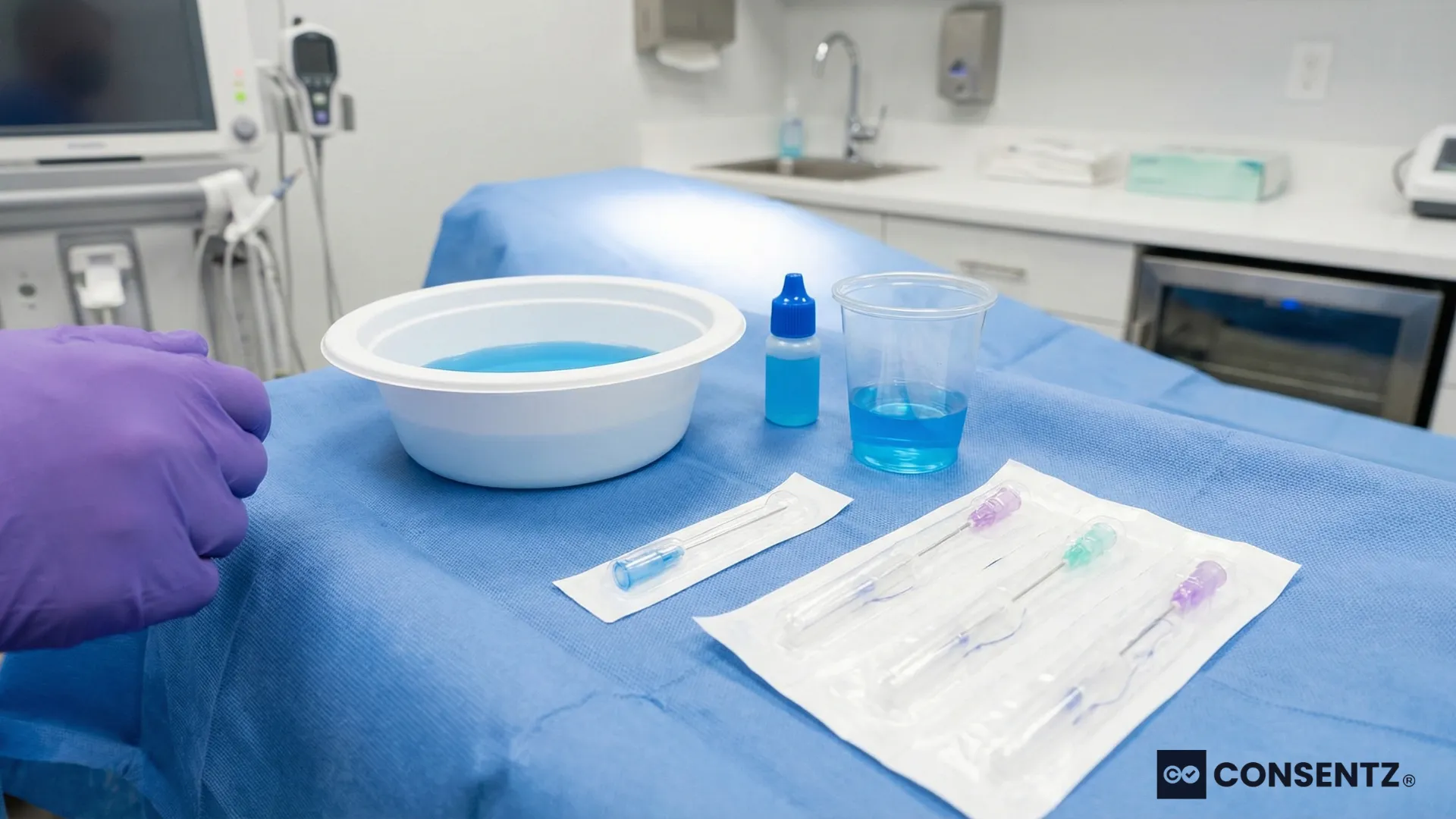
- Full aseptic technique for all procedures (sterile drapes, sterile gloves, sterile instruments)
- Proper skin preparation with appropriate antiseptic (chlorhexidine or iodine-based)
- Single-use threads and needles/cannulas (never reuse or resterilize)
- Clean, dedicated treatment room with wipeable surfaces
- Hand hygiene protocols before and after each patient
- Clinical waste disposal via licensed contractor
- Environmental cleaning schedules with documented completion
Equipment and supplies:
- Sterile thread packaging checked for integrity and expiry
- Sterile procedure packs or individual sterile items
- Sharps disposal containers in treatment rooms
- PPE readily available (gloves, aprons, face protection)
- Emergency equipment including anaphylaxis kit
Documentation requirements: Maintain cleaning schedules, waste collection certificates, equipment maintenance logs, and staff training records in infection control. Inspectors will check these during site visits.
5. Adverse Event Reporting and Learning
The CQC expects systematic approaches to incident management, not reactive responses when problems occur.
Required systems:
- Clear incident reporting policy accessible to all staff
- Incident reporting forms or digital reporting system
- Investigation process for all adverse events
- Root cause analysis for serious incidents
- Action plans to prevent recurrence
- Staff training on incident reporting
- Duty of Candour compliance (informing patients when things go wrong)
Thread lift-specific incidents to track:
- Infections requiring antibiotic treatment
- Thread extrusion or migration
- Asymmetry requiring corrective treatment
- Nerve injury or prolonged numbness
- Vascular complications
- Unsatisfactory results leading to early removal
- Patient dissatisfaction or complaints
Learning from incidents: The CQC doesn’t expect perfection—they expect learning. When complications occur, demonstrate you’ve investigated thoroughly, communicated openly with the patient, and implemented changes to reduce future risk.
Common CQC Compliance Mistakes with Thread Lifts
Operating Without Registration
The most serious mistake is offering thread lifts without CQC registration. Some practitioners incorrectly believe their professional registration (NMC, GMC) covers them, or that threads are “non-surgical” and therefore unregulated. This misunderstanding can result in prosecution, unlimited fines, and immediate practice closure.
Inadequate Training Documentation
Attending a manufacturer’s one-day course isn’t sufficient evidence of competence. The CQC expects comprehensive training documentation, supervised practice records, competency assessments, and ongoing CPD. Many practitioners fail inspections because they can’t demonstrate maintained competence.
Generic Consent Forms
Using the same consent form for thread lifts as you use for dermal fillers or Botox fails CQC requirements. Thread lifts require procedure-specific consent forms that address unique risks like thread extrusion, palpability, and the surgical nature of the treatment.
No Cooling-Off Period
Performing thread lifts on the same day as the initial consultation violates CQC guidance on cosmetic procedures. Patients must have time to consider the decision without pressure, typically 24-48 hours minimum.
Poor Incident Documentation
Recording complications in patient notes but not in a formal incident reporting system means you can’t demonstrate learning or trend analysis. The CQC expects systematic incident management that identifies patterns and drives improvement.
Benefits of CQC Registration for Thread Lifts
While CQC compliance for thread lifts requires significant effort, registration provides substantial business and clinical advantages:
Patient Trust and Credibility: CQC registration signals professionalism and safety. Patients increasingly research providers before booking, and your CQC rating appears in Google searches. Registration demonstrates you meet the same standards as hospital-based surgical services.
Legal Protection: Operating with proper registration protects you from prosecution and unlimited fines. It also provides stronger defense in malpractice claims by proving you operated within regulatory frameworks.
Premium Pricing: Registered clinics justify higher prices through demonstrated quality and safety. Patients pay more for regulated services because they perceive lower risk.
Professional Development: The registration process forces implementation of robust clinical governance that genuinely improves patient outcomes. Many practitioners report becoming better clinicians through meeting CQC standards.
Competitive Advantage: As enforcement increases, unregistered providers will face closure. Early registration positions you advantageously as the market consolidates toward regulated practitioners.
Insurance Benefits: Medical indemnity insurers offer better terms to CQC-registered providers because robust governance reduces claims risk.

Frequently Asked Questions About CQC Compliance for Thread Lifts
Do I need CQC registration if I only occasionally perform thread lifts?
Yes, CQC registration is required regardless of procedure volume. Whether you perform one thread lift monthly or twenty weekly, you must register before offering the treatment. The CQC doesn’t provide exemptions for low-volume providers. Many practitioners have been prosecuted for offering thread lifts “occasionally” without registration.
Can I perform thread lifts at patients’ homes without CQC registration?
No, you need CQC registration for each location where you regularly provide thread lifts, including patients’ homes if you consistently treat patients there. Mobile practitioners must register their base location at minimum and potentially each treatment location depending on frequency. Operating as a mobile provider doesn’t exempt you from registration requirements.
What happens if I’m caught offering thread lifts without CQC registration?
Operating without registration is a criminal offense under the Health and Social Care Act 2008. Consequences include unlimited fines (cases have resulted in £40,000+ penalties), prosecution in magistrates or Crown court, immediate cessation of all regulated activities, difficulty obtaining future registration, professional body sanctions (GMC, NMC may investigate), and reputational damage. Patients may also pursue compensation more easily against unregistered providers.
How do I prove competence in thread lifts to the CQC?
Demonstrate competence through comprehensive training certificates from recognized providers, competency assessments by qualified assessors, portfolio of cases showing progressive skill development, evidence of ongoing CPD specific to thread techniques, manufacturer training certificates, and proof of emergency management skills. The CQC expects you to maintain competence through regular practice and continuous learning, not rely on historical one-time training.
Are there different requirements for PDO threads versus Silhouette Soft or other thread types?
No, all thread types (PDO, PLLA, PCL, barbed, smooth, lifting, or volumizing) fall under the same CQC registration requirements. The regulatory classification is based on the procedure (inserting threads under the skin), not the specific product used. Your registration must cover all thread lifting regardless of brand or material composition.
How Consentz Simplifies CQC Compliance for Thread Lifts
Managing CQC compliance for thread lifts alongside running a busy aesthetic practice creates significant administrative burden. Consentz streamlines the process with purpose-built tools for regulated treatments.
Thread Lift-Specific Consent Forms: Our template library includes comprehensive consent forms specifically for thread lifts, covering all material risks, realistic outcome expectations, and cooling-off period documentation. Customize with your clinic details and treatment protocols while ensuring CQC compliance.
Staff Competency Tracking: Monitor training completion, competency assessments, and CPD requirements for each practitioner performing thread lifts. Automated alerts notify you 60 days before certifications expire, ensuring continuous compliance.
Adverse Event Management: Report and track thread lift complications through our incident management system. Document investigations, corrective actions, and learning outcomes to demonstrate continuous improvement to CQC inspectors.
Inspection-Ready Evidence: Generate comprehensive reports showing staff training compliance, incident trends, consent process adherence, and safety protocols. When inspectors ask for evidence, provide professional documentation instantly rather than scrambling through files.
Regulatory Updates: Our compliance team monitors CQC guidance changes affecting thread lifts and updates templates accordingly. Stay current without monitoring regulatory publications yourself.
Taking Action on Thread Lift Compliance
If you’re currently offering thread lifts without proper CQC registration, stop immediately and begin the registration process. Continuing to operate unregistered creates escalating legal risk and potential patient harm.
If you’re planning to add thread lifts to your service menu, complete CQC registration before marketing or booking patients. The 3-6 month registration timeline means planning ahead rather than reacting to patient demand.
If you’re already registered but haven’t reviewed your compliance recently, conduct a self-audit using the requirements outlined in this guide. Identify gaps in training documentation, consent processes, or incident reporting and address them proactively.
CQC compliance for thread lifts isn’t bureaucratic obstruction—it’s a framework ensuring patient safety in a procedure that carries genuine risks. The practitioners who succeed long-term are those who embrace regulation as a foundation for clinical excellence rather than viewing it as a barrier to overcome.
Don’t let CQC compliance hold you back from offering popular treatments like thread lifts. The Consentz CQC Compliance Module provides thread lift-specific tools, consent forms, and competency tracking to keep you compliant and inspection-ready.
References
Care Quality Commission. (2025, April 28). Choosing cosmetic surgery. Retrieved from https://www.cqc.org.uk/care-services/help-choosing-care/choosing-cosmetic-surgery
The PMFA Journal. (2018). When does a non-surgical procedure fall within the scope of CQC registration? Retrieved from https://www.thepmfajournal.com/features/post/when-does-a-non-surgical-procedure-fall-within-the-scope-of-cqc-registration-an-update-on-cogged-pdo-thread-lifts
Care Quality Commission. (n.d.). Registration: Cosmetic surgery services. Retrieved from https://www.cqc.org.uk/guidance-providers/registration