Dermatology practices in the USA face a unique challenge: managing complex patient data while staying compliant with HIPAA and insurance regulations. Meanwhile, your team is buried in paperwork. Insurance claims take weeks to process. Before/after photos are scattered across outdated folders. And let’s be honest—that’s time you could spend actually treating patients.
Here’s the reality: the right dermatology clinic software can cut your admin time by 60% and reduce billing errors by 40%. Practices switching to integrated systems report freeing up 10+ hours weekly just from streamlined scheduling and claim processing.
This guide reviews 10 leading dermatology practice management software solutions specifically designed for USA clinics. We’ll focus on real features dermatologists actually use—not marketing buzzwords. Whether you run a 3-provider startup or a 50-provider network, you’ll find practical insights to guide your decision.
The Best Dermatology Clinic Software Solutions in USA
1. Consentz
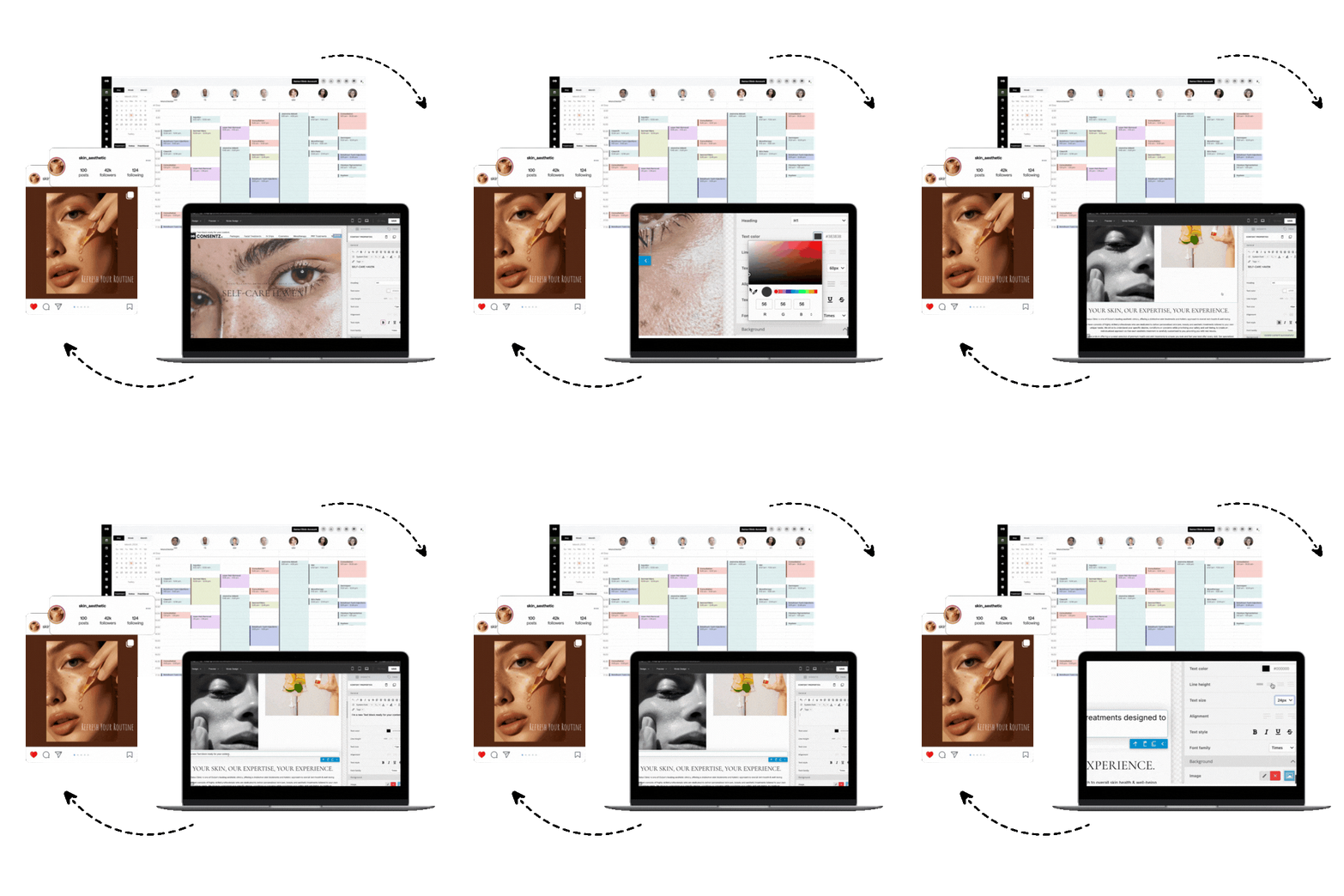
Consentz is the consent and patient engagement platform that dermatologists didn’t know they needed—until they started using it. It’s the critical missing piece in most dermatology clinic software ecosystems.
Here’s the reality: dermatology practices handle complex informed consent requirements. Whether it’s Mohs surgery, laser treatments, injectables, or cosmetic procedures, you need documented, legally defensible patient consent. Consentz handles this elegantly. Patients complete consent forms digitally on any device. Your team stores signed documentation securely. You reduce liability risk while improving patient experience.
What makes Consentz essential for dermatologists? It integrates consent workflows directly into your clinic operations. Before/after photography consent is automatic. Procedure-specific forms are pre-built for common dermatology treatments. Your staff spends less time managing paperwork, and your practice has airtight documentation for regulatory compliance.
Key Features:
- Digital consent forms tailored to dermatology procedures
- Integrated photo release and before/after consent protocols
- Mobile-friendly patient signing experience
- Secure documentation with audit trails
- Automatic reminders for consent renewal
- HIPAA-compliant with encrypted storage
- Integration with major dermatology EHR platforms
- Templates for laser, Mohs, injectables, and cosmetic procedures
Bookings, consent forms, patient records, payments, marketing — Consentz is the aesthetic clinic software that puts it all in one place so you can focus on your patients, not paperwork.
2. Spring Health EHR
Spring Health EHR was built from scratch by dermatologists for dermatologists. If EHR for dermatologists is your priority, this is worth serious consideration.
It handles everything from detailed skin condition classification to procedure documentation that actually makes sense in dermatology. No wasted fields. No confusing layouts designed for general practitioners. Every screen is optimized for how dermatologists actually work.
Key Features:
- Dermatology-specific templates (acne, rosacea, psoriasis, melanoma surveillance)
- Advanced photo management with measurement tools and overlay comparisons
- Procedure coding assistance specific to dermatology CPT codes
- Patient portal with secure photo upload capability
- Integration with major labs for pathology results
- Customizable treatment protocols by provider
3. Athenahealth
athenahealth is the heavyweight option for practices wanting an all-in-one platform. Practices with 15+ providers often gravitate here because it scales beautifully across multiple locations.
Think of athenahealth as the “big machine” of dermatology EMR solutions. It handles everything—scheduling, billing, EHR, patient communication, and revenue cycle management—in one interconnected system. Your data lives in the cloud. Everything syncs instantly across devices.
Key Features:
- Sophisticated appointment scheduling with smart waitlist management
- Comprehensive EHR with specialty-specific customization
- Real-time insurance claim status tracking
- Patient engagement tools (text reminders, secure messaging, online booking)
- Advanced reporting and practice analytics
- Integration with 1000+ third-party applications
4. Medspa Pro
Medspa Pro specializes in what many dermatology platforms ignore: the aesthetics side. If your practice does significant medical spa software or cosmetic dermatology work, this is the gap-filler.
Medspa Pro excels at tracking aesthetic treatments, managing product inventory, and documenting cosmetic outcomes. It’s perfect for dermatologists whose revenue heavily depends on injectables, lasers, and skincare products.
Key Features:
- Product inventory management with lot tracking and expiration alerts
- Treatment plan creation with before/after photo documentation
- Client package management (prepaid treatment bundles)
- Appointment reminders and follow-up protocols
- Integration with popular aesthetics software (Allergan rewards programs)
- ROI calculator for individual treatments and packages
5. eClinicalWorks
eClinicalWorks powers thousands of practices nationwide. It’s an enterprise electronic health records solution that practices choosing serious scalability turn to.
This platform doesn’t just store patient data—it actively helps you manage it. Built-in clinical decision support, customizable dashboards, and workflow automation make it powerful for larger practices managing complex patient populations.
Key Features:
- Highly customizable templates and forms specific to dermatology specialties
- Advanced EHR with problem-based charting
- Real-time schedule coordination across multiple locations
- Predictive analytics for patient no-shows and retention
- Integrated lab ordering and result tracking
- Population health reporting tools
6. Medidata
If your practice participates in clinical trials or has a strong research component, Medidata deserves attention.
Medidata integrates dermatology clinic management with clinical research protocols. Your team can manage patient care and research enrollment simultaneously without duplicate charting.
Key Features:
- Trial protocol documentation and tracking
- Adverse event reporting integrated into regular EHR
- Patient consent and enrollment workflow
- Regulatory compliance documentation
- Data export capabilities for research analysis
- Integration with study-specific databases
7. NextGen Healthcare
NextGen Healthcare works well for dermatology-dominant practices that also handle some general medicine or are part of larger health systems.
This platform strikes a balance: it’s flexible enough for diverse specialties yet specialized enough for dermatology-specific workflows. Your team gets choice in how much customization you need.
Key Features:
- Flexible appointment scheduling with specialty-specific protocols
- Dermatology module within broader medical platform
- Claims management with specialty-based billing optimization
- Patient engagement portal with secure messaging
- Customizable reports and practice analytics
- Integration with hospital EMR systems if applicable
8. Derm Works
Derm Works focuses specifically on what dermatology practices need: intelligent scheduling and patient management.
Don’t let the “small tool” assumption fool you. Derm Works is powerful for practices wanting skin clinic scheduling software without bloat. It handles appointments, patient reminders, and provider coordination beautifully.
Key Features:
- Smart scheduling that optimizes provider efficiency and patient wait times
- Automated patient reminders via SMS and email
- Color-coded appointment types (surgery, cosmetic, consultation)
- Provider availability management across multiple locations
- Patient history access at scheduling time
- Integration hooks for connecting to your EHR
9. SimplePractice EHR
SimplePractice EHR is gaining serious traction with younger dermatologists and newly established practices.
It’s modern, intuitive, and uncluttered. SimplePractice doesn’t burden you with features you’ll never use. Instead, it excels at core dermatology patient management workflows that matter daily.
Key Features:
- Minimalist, modern interface designed for speed
- Patient portal with online scheduling and digital forms
- Appointment reminders and patient communication
- Photo documentation with timeline views
- HIPAA-compliant and SOC 2 certified
- Integrations with most popular practice tools
- Reasonable pricing with transparent, per-provider model
10. Allscripts
Allscripts rounds out our list as the platform for health systems and large specialty practices integrating with broader clinical networks.
Allscripts is enterprise-class HIPAA-compliant dermatology software trusted by major hospital systems nationwide. If your practice operates within or partners with larger healthcare organizations, this maintains seamless integration.
Key Features:
- Enterprise EHR with dermatology specialization
- Interoperability with hospital systems and external providers
- Advanced clinical documentation with AI-assisted coding
- Population health and preventive care management
- Comprehensive reporting and quality metrics
- HL7 and FHIR standards compliance
How to Choose the Right Dermatology Clinic Software
Selection depends on 5 key factors:
1. Practice Size and Growth Plans Solo to 5-provider practices thrive on platforms like Kareo or SimplePractice. Larger groups (20+) often need athenahealth or eClinicalWorks. Consider your 3-year growth plan.
2. Budget Reality Small practices start at $100-150 per provider monthly. Mid-size practices budget $250-400. Enterprise systems cost $400-600+. Factor in implementation costs ($5,000-30,000 depending on complexity).
3. Dermatology-Specific Needs Ask yourself: Do we need medical spa features (Medspa Pro)? Clinical trial integration (Medidata)? Multi-location coordination (athenahealth)? General-purpose software won’t handle specialized dermatology workflows well.
4. Integration Requirements Does your practice use specific labs, insurance platforms, or existing systems? Verify integration availability before committing.
5. Support Quality Call references. Ask about response times. Dermatology-specific support matters. A 2-hour response on a claims issue impacts your cash flow.
Frequently Asked Questions About Dermatology Clinic Software
Q: What’s the difference between EHR and practice management software?
A: Think of EHR (electronic health records) as your clinical filing system. It stores patient notes, diagnoses, and treatment history. Practice management handles the business side: scheduling, billing, insurance claims, and revenue tracking. Consent management (like Consentz) is a third critical layer—it handles patient authorization and regulatory documentation. Many modern platforms bundle EHR and practice management, but specialized consent platforms add an extra layer of protection for dermatology-specific compliance needs.
Q: Do I really need HIPAA-compliant software? Isn’t that overkill?
A: No—it’s required by federal law. HIPAA compliance is non-negotiable. Every software on this list meets compliance standards. Using non-compliant software exposes your practice to fines up to $1.5 million per year. Not worth the risk.
Q: How long does dermatology clinic software implementation actually take?
A: Typically 4-12 weeks, depending on complexity. Small practices using Kareo or SimplePractice often go live in 4-6 weeks. Larger implementations (athenahealth, eClinicalWorks) take 8-12 weeks. Factor in staff training and data migration time. Plan for temporary workflow disruption during transition.
Q: Can dermatology software integrate with my current systems?
A: Most modern platforms offer integrations, but verify before purchasing. Ask about lab connections, insurance verification APIs, and electronic referral networks. If you use specialized equipment with proprietary software, check compatibility explicitly. Integration gaps create manual workarounds that defeat the efficiency purpose.
Q: What’s the typical cost of dermatology clinic software for a 10-provider practice?
A: Budget $2,500-4,000 monthly for software licensing ($250-400 per provider). Add implementation costs ($15,000-25,000). Annual total: $45,000-65,000. Compare that to staff hours wasted on admin work—most practices recoup investment within 18 months through efficiency gains and reduced billing errors.
Q: Do we need extensive staff training?
A: Yes, but it varies. SimplePractice and Derm Works require minimal training (4-8 hours). Enterprise systems like athenahealth or eClinicalWorks need more (20-40 hours across your team). Budget training time in your implementation plan. Good vendors provide hands-on support, not just documentation.
Q: Is cloud-based or on-premise software better for dermatology practices?
A: Cloud-based is nearly always better now. Cloud systems offer automatic backups, remote access (critical post-pandemic), automatic updates, and better security. On-premise requires IT staff and expensive infrastructure. The only reason for on-premise? Extreme data sensitivity concerns. Most dermatology practices choose cloud.
Q: How do I migrate patient data from my old system without losing anything?
A: This is where implementation partners earn their money. Request data migration as part of your contract. Reputable vendors map your old data structure to the new system. Expect the process to take 2-4 weeks. Verify completeness by spot-checking records. Have a parallel run period where you use both systems simultaneously to catch issues.