Picture this: A potential patient walks into your waiting room, anxious about their first visit. They glance at the reception desk and spot a professionally designed brochure that immediately puts them at ease, answering their questions before they even ask. That’s the power of a well-crafted medical brochure—and it all starts with choosing the right template.
In today’s competitive healthcare landscape, first impressions matter more than ever. Whether you’re running a bustling aesthetic clinic in London, a dental practice in Sydney, or a wellness center in Toronto, your medical brochure serves as a silent ambassador for your brand. But creating one from scratch? That’s time you don’t have when you’re focused on patient care.
This comprehensive guide will walk you through everything you need to know about medical brochure templates—from selecting the perfect design to implementing best practices that convert curious readers into loyal patients.
What Is a Medical Brochure Template?
A medical brochure template is a pre-designed layout specifically created for healthcare professionals to communicate important information about their services, treatments, or medical conditions. Think of it as a blueprint that saves you hours of design work while ensuring your marketing materials maintain a professional, trustworthy appearance.
Unlike generic brochure templates, medical brochure templates are purpose-built with healthcare in mind. They incorporate design elements that resonate with patients, use appropriate medical imagery, and provide structured layouts for complex medical information. The best templates strike a delicate balance between aesthetic appeal and clear information delivery—because in healthcare, clarity can literally save lives.
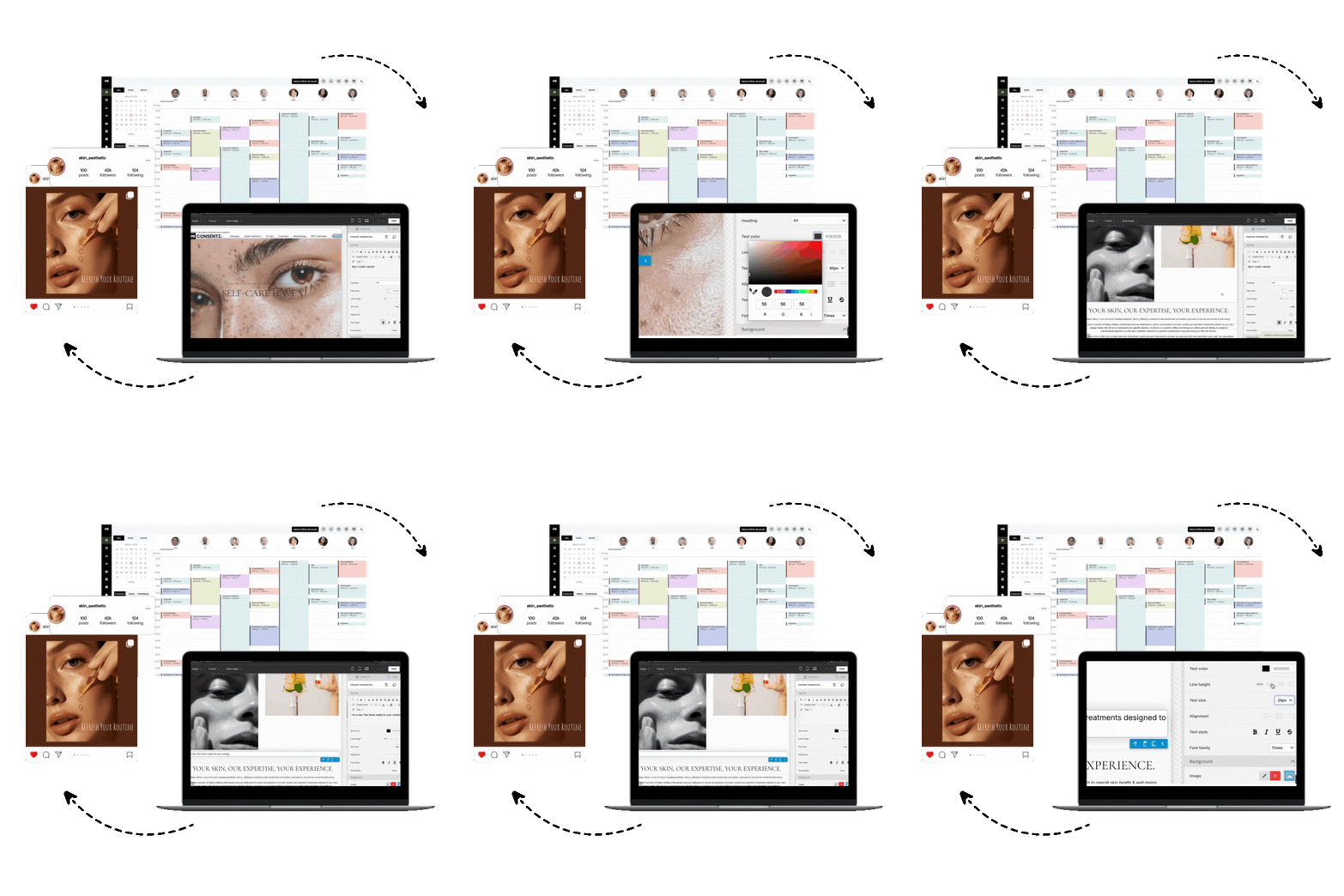
Here’s the Consentz templates—sign up to access templates: https://v3.consentz.com/admin/registration/template
Why Medical Brochures Still Matter in the Digital Age
You might wonder: “Why invest in printed brochures when everything’s going digital?” The answer lies in patient behavior and trust-building.
Recent studies show that 95.5% of healthcare providers read or skim printed medical brochures when received, and remarkably, 93.2% of those who received educational brochures passed knowledge quizzes compared to just 57.6% who didn’t receive them. These numbers reveal an undeniable truth—tangible marketing materials create lasting impressions in healthcare settings.
Medical brochures serve multiple critical functions in your practice. They educate patients about complex procedures in digestible formats, reduce the burden on your reception staff by answering frequently asked questions, build credibility through professional presentation, and provide take-home resources that patients can review at their own pace. Perhaps most importantly, they maintain HIPAA compliance while communicating sensitive health information—something that’s particularly crucial for practices in the United States, Canada, and other privacy-conscious markets.
Bookings, consent forms, patient records, payments, marketing — Consentz is the aesthetic clinic software that puts it all in one place so you can focus on your patients, not paperwork.
Types of Medical Brochure Templates
Trifold Brochures
The classic trifold design remains the most popular choice for medical practices, and for good reason. These templates offer six panels of information in a compact, pocket-friendly format that’s perfect for waiting rooms. Use trifold brochures when introducing your practice to new patients, explaining common procedures or treatments, providing disease prevention information, or outlining insurance and payment options.
Bifold Brochures
When you need more space for detailed explanations, bifold brochures (also called half-fold) are your best option. These four-panel designs work exceptionally well for advertising specific services like cosmetic procedures, detailing new treatment plans or medications, creating event programs for health seminars, or providing comprehensive service overviews.
The additional real estate allows for larger images and more detailed copy, making bifold templates ideal for aesthetic medicine practices where visual storytelling matters.
Z-Fold Brochures
Z-fold templates offer a creative alternative that unfolds like an accordion, creating a progressive information journey. This format excels at step-by-step process explanations, patient journey mapping from consultation to recovery, treatment timeline visualizations, and before-and-after showcases for aesthetic procedures.
Multi-Page Booklet Templates
For comprehensive guides or annual reports, multi-page booklet templates (8-16 pages) provide the canvas for in-depth content. These work beautifully for complete service catalogs, patient handbooks, wellness program guides, and facility brochures showcasing your entire practice.
Here’s the Consentz templates—sign up to access templates: https://v3.consentz.com/admin/registration/template
Essential Elements of Effective Medical Brochure Templates
Clear Hierarchy and Organization
Your brochure template should guide readers through information effortlessly. Use descriptive headings and subheadings that allow quick scanning, incorporate adequate white space to prevent overwhelming readers, create logical information flow from introduction to call-to-action, and implement color-blocking to separate different content sections.
Remember: patients often seek specific information under stress or anxiety. Your template should make finding answers intuitive, not frustrating.
Professional Medical Imagery
Stock photos of generic doctors in white coats won’t cut it anymore. Modern medical brochure templates should accommodate high-quality images that depict actual medical conditions or equipment when appropriate, showcase your real staff and facilities to build trust, include before-and-after photos for aesthetic procedures (with proper consent), and use infographics to simplify complex medical concepts.
Visual elements aren’t just decorative—they’re educational tools that can significantly improve patient understanding and retention of information.
Consistent Branding Elements
Your brochure should be unmistakably yours. Effective templates allow easy integration of your clinic’s color palette and logo, maintain consistent typography that matches your brand guidelines, incorporate your unique brand voice in text placeholders, and display your contact information prominently on multiple panels.
For healthcare practices using comprehensive clinic management software, maintaining brand consistency across all patient touchpoints—from digital forms to printed materials—creates a cohesive professional image that builds patient confidence.
Compelling Calls-to-Action
Every medical brochure needs a clear next step. Your template should include designated spaces for specific actions like booking an appointment online or by phone, visiting your website for more information, downloading patient forms before their visit, or following your practice on social media for health tips.
Make these CTAs prominent but not pushy—healthcare marketing requires a delicate touch that respects patient autonomy while guiding them toward beneficial actions.
Choosing the Right Template for Your Medical Practice
Consider Your Specialty
Different medical specialties have different needs. Dental practices might prioritize bright, welcoming designs with smile imagery. Aesthetic medicine clinics often need sophisticated, luxury-oriented templates that convey premium services. Mental health practitioners typically prefer calming colors and softer imagery. General practitioners benefit from versatile templates that work across multiple conditions.
Your template choice should immediately signal to patients what kind of care they can expect from your practice.
Understand Your Target Audience
The perfect template for a pediatric clinic (bright, playful, parent-focused) looks vastly different from one designed for a geriatric practice (larger fonts, simpler layouts, traditional imagery). Consider factors like patient age demographics, cultural sensitivities in diverse markets like Toronto, Sydney, or London, health literacy levels of your typical patient, and whether you’re targeting new patients or providing resources for existing ones.
Evaluate Customization Options
The best medical brochure templates offer flexibility without requiring design expertise. Look for templates that allow easy text editing without reformatting issues, simple color scheme adjustments to match your brand, drag-and-drop image replacement, and compatibility with common design software or online editors.
Templates that lock you into rigid designs will frustrate more than help, especially when you need to update information about services or staff.
Design Best Practices for Medical Brochures
Typography That Builds Trust
Font selection might seem trivial, but it profoundly impacts patient perception. Stick with clean, professional fonts like Helvetica, Arial, or Garamond for body text. Maintain a minimum 10-12pt font size (consider 14pt for senior-focused materials). Use bold or colored text sparingly for emphasis on critical information. Ensure sufficient contrast between text and background for easy reading.
Remember: if patients struggle to read your brochure, they won’t trust you with their health.
Color Psychology in Healthcare Marketing
Colors evoke emotional responses that can influence patient decisions. Blue conveys trust, professionalism, and cleanliness—the most common choice for medical practices. Green suggests health, growth, and natural wellness—ideal for holistic and integrative medicine. White emphasizes sterility, simplicity, and modern care. Purple can indicate luxury and premium services for aesthetic practices. Warm colors (orange, yellow) used as accents can add approachability without undermining professionalism.
Avoid overwhelming color schemes. Your template should use a primary color, a secondary color for accents, and plenty of white space to let content breathe.
Content Organization Strategies
Even the most beautiful template fails if content is poorly organized. Follow these principles: start with the most important information on the front panel, use the inside panels for detailed explanations and service descriptions, include patient testimonials or success stories to build credibility, dedicate the back panel to clear contact information and directions, and always include a clear call-to-action that tells readers what to do next.
For aesthetic clinic software users, integrating your brochure content with your digital patient journey creates a seamless experience from first contact to booking.
Creating Brochures That Convert Patients
Write for Your Patients, Not for Colleagues
Medical jargon alienates patients. Your brochure template should facilitate plain language communication. Instead of “We provide comprehensive dermatological interventions for acne vulgaris,” write “We offer effective treatments to clear up acne and improve your skin’s appearance.” Replace technical terms with patient-friendly alternatives, explain any necessary medical terms in simple language, use active voice (“We treat” not “Treatment is provided”), and focus on patient benefits rather than procedure details.
Include Social Proof
Patient testimonials and success stories dramatically improve brochure effectiveness. Your template should allocate space for brief patient quotes highlighting specific outcomes, before-and-after images (with proper consent and privacy protection), statistics demonstrating treatment success rates, and credentials and certifications that establish expertise.
For practices in regulated markets like the UK and Ireland, ensure all claims comply with advertising standards for healthcare providers.
Address Patient Concerns Proactively
Anticipate questions and fears your target patients commonly express. Pain management approaches for procedures, recovery time and aftercare requirements, cost transparency and payment options, and safety protocols and qualifications should all find space in your brochure template.
By addressing concerns before patients ask, you position yourself as understanding and trustworthy—qualities that drive appointment bookings.
Accessing Professional Medical Brochure Templates
Here’s the Consentz templates—sign up to access templates: https://v3.consentz.com/admin/registration/template
Consentz offers industry-specific brochure templates designed by aesthetic doctors who understand exactly what healthcare professionals need. These templates integrate seamlessly with your clinic’s overall patient management system, ensuring brand consistency across all patient touchpoints—from initial inquiry through treatment and follow-up care.
Practical Tips for Implementing Your Template
Customization Without Overwhelm
You’ve selected the perfect template—now what? Start by gathering all necessary content (text, images, contact details) before opening the template. Replace placeholder text systematically, one section at a time. Upload high-resolution images (minimum 300 DPI for print). Adjust colors to match your exact brand specifications using your brand style guide. Proofread obsessively—errors undermine credibility in healthcare settings.
For multi-location practices common in markets like Australia and Canada, create a master template with customizable location-specific sections for efficiency.
Print vs. Digital Considerations
Modern brochure templates should work across both mediums. For print brochures, ensure CMYK color mode (not RGB) for accurate printing, include bleed areas if your design extends to page edges, use high-resolution images (300 DPI minimum), and select appropriate paper stock (heavier weight conveys quality).
For digital brochures (PDF downloads or online flipbooks), optimize file size for quick loading while maintaining image quality, ensure all links are functional and trackable, use RGB color mode for screen display, and consider interactive elements like clickable appointment booking buttons.
Distribution Strategies That Work
Creating a beautiful brochure is only half the battle—getting it into patient hands matters equally. Place brochures prominently in your reception area and exam rooms, include them in new patient welcome packets, distribute through healthcare marketing software for automated campaigns, partner with complementary healthcare providers for cross-promotion, and mail to targeted neighborhoods or patient demographics.
Track which distribution methods yield the best patient response rates and adjust accordingly.
Common Mistakes to Avoid
Information Overload
Cramming every possible detail into your brochure overwhelms readers and defeats its purpose. Your template should encourage concision—highlight key points with supporting details available on your website, use bullet points and short paragraphs for scannability, and include QR codes linking to comprehensive online resources.
Remember: brochures should intrigue and inform, not exhaust and confuse.
Neglecting Mobile-First Design Principles
Even printed brochures need to consider how patients consume information. Many will photograph your brochure with their smartphones to review later. Ensure text remains readable when photographed on mobile devices, use high-contrast elements that photograph well, include easily scannable QR codes for quick digital access, and design layouts that look good when viewed on small screens.
Forgetting Compliance Requirements
Healthcare marketing faces strict regulations that vary by country. For UK and Ireland practitioners, ensure compliance with Advertising Standards Authority (ASA) healthcare guidelines and avoid unsubstantiated treatment claims. US-based practices must maintain HIPAA compliance in any patient information or testimonials and include required disclaimers for prescription medications or devices. Canadian healthcare providers should follow provincial medical board advertising regulations. Australian practices must adhere to AHPRA advertising guidelines for health services.
Working with specialized clinic software that includes compliant consent forms and documentation can help ensure your brochures align with your overall compliance strategy.
Measuring Brochure Effectiveness
Trackable Elements to Include
Your brochure template should facilitate measurement. Include unique phone numbers or extensions to track call sources, custom URLs or landing pages specific to the brochure campaign, QR codes that log scan rates and user behavior, and promotional codes patients can mention when booking.
Digital distribution through email marketing software provides detailed analytics on open rates, click-through rates, and conversion tracking.
Key Performance Indicators
How do you know if your brochure is working? Monitor new patient acquisition rates during and after distribution, website traffic increases from brochure-specific URLs, appointment booking rates from brochure calls-to-action, and patient feedback during consultations about how they learned about your practice.
Compare these metrics against your investment in design and printing to calculate ROI.
Future Trends in Medical Brochure Design
Interactive Digital Elements
Modern brochure templates increasingly incorporate technology bridges. QR codes linking to video testimonials or virtual facility tours, augmented reality features that overlay 3D anatomy or procedure visualizations, and NFC chips in premium printed brochures that trigger smartphone content are becoming more common.
These innovations create memorable experiences while providing deeper information than static brochures allow.
Sustainability Considerations
Healthcare practices increasingly prioritize environmental responsibility. Template choices should consider eco-friendly paper stocks from sustainable sources, soy-based or vegetable inks instead of petroleum-based options, digital-first strategies with print as a complement, and recyclable materials and finishes.
Patients—especially younger demographics in urban centers like London, Toronto, and Melbourne—appreciate practices that demonstrate environmental consciousness.
Personalization at Scale
Advanced practices are leveraging technology to create personalized brochures efficiently. Variable data printing allows names, specific conditions, or treatment recommendations to appear in otherwise templated brochures. Integration with clinic management systems enables automated brochure generation based on patient intake information. Dynamic content that adjusts based on patient demographics or medical history creates more relevant experiences.
This personalization dramatically improves engagement rates while maintaining the efficiency of templates.
Conclusion
Medical brochure templates aren’t just time-savers—they’re strategic marketing tools that can transform how patients perceive and engage with your practice. The right template, customized thoughtfully and distributed strategically, becomes a powerful patient acquisition and education resource that works around the clock.
Whether you’re an established practice in Manchester looking to refresh your materials or a new clinic in Vancouver building your patient base from scratch, investing in professional medical brochure templates pays dividends in patient trust, staff efficiency, and practice growth.
The healthcare landscape grows more competitive daily. Your brochure might be the difference between a patient choosing your practice or your competitor’s. Make it count.
Ready to elevate your clinic’s marketing materials? Access professional, healthcare-specific templates designed by doctors who understand your challenges:
Frequently Asked Questions
Q: What’s the ideal size for a medical brochure?
A: The most common size is 8.5″ x 11″ (letter size) folded into thirds for a trifold brochure, which creates a compact 3.67″ x 8.5″ finished piece that fits standard brochure holders and pockets. Bifold brochures typically use 8.5″ x 11″ folded in half. For international markets, A4 size (210 x 297mm) is standard in the UK, Ireland, and Australia. Always confirm dimensions with your printer before finalizing your design.
Q: How often should I update my medical brochure?
A: Review your brochures every 6-12 months and update when you add new services or treatments, staff changes occur (especially doctors or key practitioners), contact information changes (phone, address, website), pricing or insurance policies are modified, or regulations change that affect claims or disclaimers. Even if content remains current, refreshing design every 2-3 years prevents your materials from looking dated.
Q: Can I use stock photos in medical brochures, or do I need custom photography?
A: Both work, but each has advantages. Stock photos are cost-effective, immediately available, and professionally shot, but they can look generic and may appear in competitors’ materials. Custom photography is unique to your practice, builds authenticity and trust, showcases your actual staff and facilities, but requires higher upfront investment. Many successful practices use a hybrid approach: stock images for general medical concepts and custom photos for team, facility, and specific procedure imagery. Always ensure you have proper licensing for any images used.
Q: What information is legally required in medical brochures?
A: Legal requirements vary by location, but commonly include your practice name and registered business details, physical address and contact information, professional credentials and licensing numbers, and disclaimers for any treatment claims or outcomes. In the US, HIPAA compliance for any patient information or testimonials is mandatory. UK practices must follow ASA guidelines for healthcare advertising. Australia requires AHPRA compliance for health service advertising. Canadian practices must adhere to provincial medical board regulations. Always consult with legal counsel familiar with healthcare advertising in your specific jurisdiction.
Q: How many brochures should I print initially?
A: Start conservatively to avoid waste while testing effectiveness. For a small practice (1-2 providers), begin with 500-1,000 brochures. Medium practices (3-5 providers) might order 1,000-2,500. Large practices or multi-location clinics could start with 2,500-5,000. Monitor depletion rates over 3-6 months, then adjust. Digital printing allows smaller, more frequent print runs with updated information, while offset printing becomes cost-effective at higher volumes (typically 2,500+). Consider your distribution strategy—waiting room placement requires fewer copies than a direct mail campaign.
Q: Should I create different brochures for different services or one comprehensive brochure?
A: This depends on your practice model. General overview brochures work well for multi-specialty practices to introduce all services, new patient welcome materials, and waiting room education. Service-specific brochures are better for detailed procedure explanations, targeted marketing campaigns, specialized treatments that need significant education (like aesthetic procedures), and when different patient demographics require tailored messaging. Many successful practices use both: a general practice brochure plus service-specific pieces for major offerings. This allows targeted distribution while maintaining flexibility.
Q: How do I make my medical brochure stand out from competitors?
A: Differentiation comes from professional design that reflects your unique brand personality, patient testimonials and success stories (with proper consent), clear communication of your unique value proposition or specialized expertise, high-quality photography (especially custom images of your actual practice), specific outcome data or success rates where appropriate, and addressing patient concerns proactively with empathetic language. Most importantly, ensure every design element—from color choice to language—reflects how you want patients to perceive your practice. Cookie-cutter templates rarely differentiate; thoughtful customization does.
Q: Can medical brochures work for digital marketing, or are they only for print?
A: Medical brochures excel in both formats. Digital applications include PDF downloads from your website for patient pre-education, email attachments in automated marketing campaigns, flipbook formats with interactive elements embedded on your site, social media content (breaking brochure content into posts or stories), and patient portal resources accessible after booking. Digital brochures offer advantages like easy updating, zero printing costs, trackable engagement metrics, and searchable content. Many practices create templates that work seamlessly in both print and digital formats, maximizing their investment while reaching patients across channels.
Q: What’s the typical cost range for professional medical brochure templates?
A: Template costs vary widely based on source and customization level. Free templates from platforms like Canva offer basic designs with limited customization. Premium template marketplaces (Creative Market, Envato) range from $10-50 for single templates. Professional healthcare-specific template subscriptions like Consentz provide comprehensive, compliant templates as part of broader clinic management solutions. Custom design from healthcare marketing agencies typically costs $500-2,500+ depending on complexity and revisions. Consider total cost of ownership: inexpensive templates may require expensive designer hours for customization, while premium healthcare-specific templates often include compliance features and faster implementation that save money long-term.
Q: How do I ensure my brochure is accessible to patients with disabilities?
A: Accessibility should be a priority in healthcare marketing. Use high-contrast color combinations (minimum 4.5:1 ratio) for text readability, include large font options (14-16pt) for vision-impaired patients, avoid information conveyed by color alone (use icons or text labels), ensure any QR codes or interactive elements work with screen readers, provide braille versions for critical information if your patient population includes blind individuals, and offer the same information in multiple formats (print, digital, large print, audio). Digital versions should meet WCAG 2.1 Level AA standards. Accessible design isn’t just good ethics—it expands your patient reach and demonstrates inclusive care values that build trust across all patient populations.