Finding the right dermatology EHR software is one of the most critical decisions for a modern aesthetics or medical dermatology practice. Unlike other medical specialties, dermatology is uniquely visual, procedural, and fast paced. Generic electronic health record systems often fail to keep up, creating workflow friction and administrative headaches. The right platform, however, can transform your practice by streamlining patient care, ensuring compliance, and driving growth. This guide breaks down the essential features to look for and helps you navigate the selection process.
The Unique Workflow of a Dermatology Practice
Dermatology clinics operate at a high volume. Practitioners need to document visual information rapidly, manage consent for dozens of different procedures, and track consumables with precision. A typical workflow involves high resolution photography, detailed annotations on anatomical diagrams, and quick access to patient history, all within a short appointment window.
A generic EHR might offer basic note taking, but it rarely includes the specialized tools a dermatology practice needs. This is why a purpose built dermatology EHR software isn’t a luxury, it’s a necessity for efficiency and providing a high standard of care.
Why a Specialty Dermatology EHR Beats a General System
A general EHR is a jack of all trades and a master of none. For a dermatologist or aesthetic clinician, this means struggling with cumbersome workarounds.
- Photo Management: General systems lack features like ghosting for precise before and after photo alignment or the ability to draw directly on images.
- Consent Forms: They don’t come with a library of customizable consent forms for specific treatments like neurotoxins, fillers, or laser procedures.
- Inventory Control: Tracking units of botulinum toxin or the expiration dates of fillers is a core need that generic software simply isn’t designed for.
- Marketing and Sales: Aesthetics practices are businesses that need tools for lead nurturing and patient retention, which are absent in most clinical only EHRs.
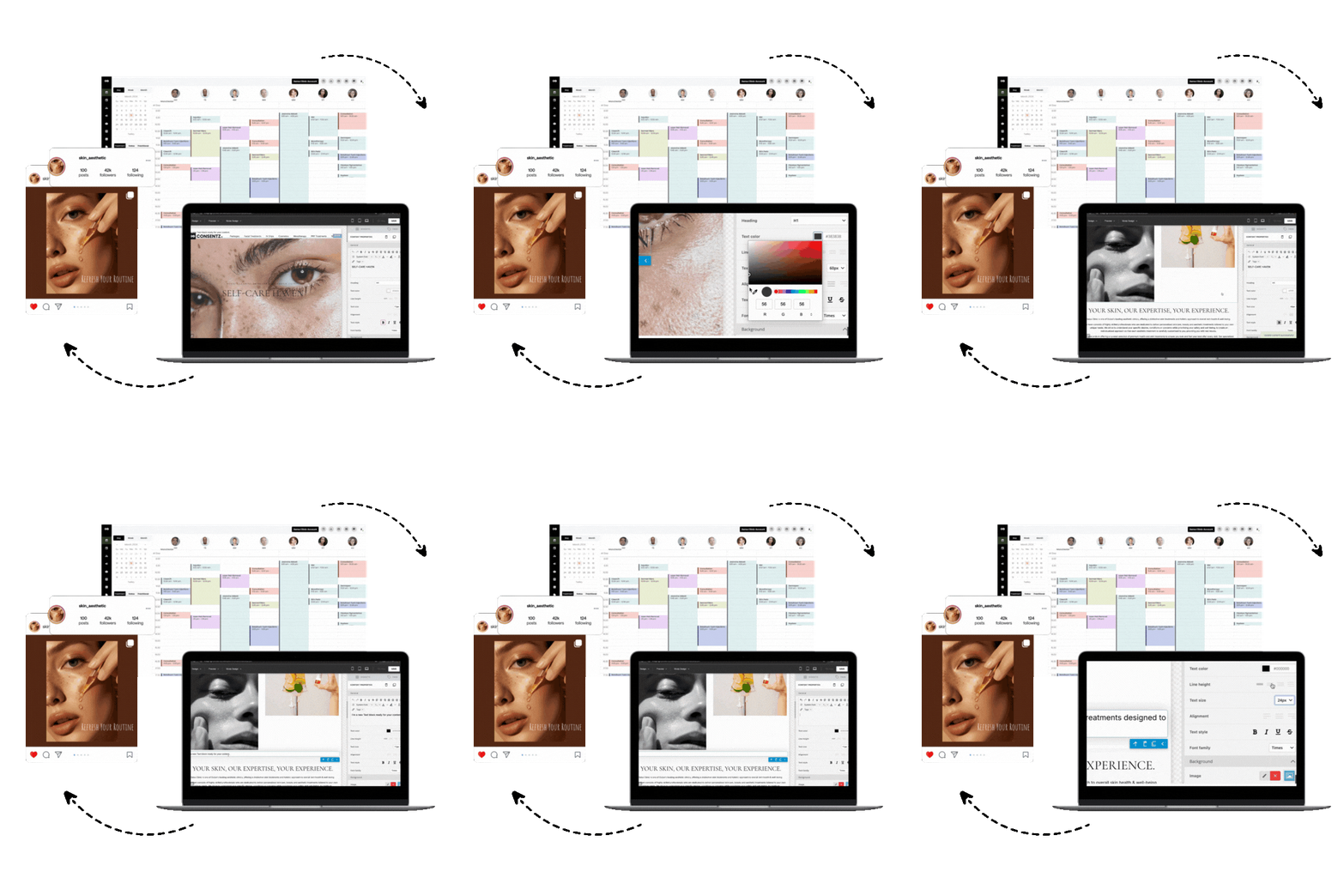
A specialized dermatology EHR software is designed from the ground up by clinicians who understand these unique challenges. Platforms like Consentz are built around the daily realities of an aesthetics practice, integrating every function from the chairside consultation to back office management.
Must Have Features for Dermatology EHRs
When evaluating your options, look for a platform that includes these critical features. A robust dermatology EHR software should feel like a natural extension of your practice.
Intuitive iPad and Mobile Interface
Clinicians are rarely tethered to a desk. The ability to document, show photos, and get signatures on an iPad right at the chairside is a game changer. This improves the patient experience and ensures all data is captured in real time, reducing errors.
Advanced Photography and Visual Charting
Look for more than just a simple photo upload. Essential photography tools include:
- Ghosting: Overlaying a transparent “before” image to perfectly align the “after” shot.
- Markup and Drawing Tools: The ability to annotate directly on photos or body maps.
- Timestamps and Audit Trails: Securely logged photo metadata to protect against medico legal challenges.
- Private Photo Flags: The option to mark sensitive images for restricted viewing.
Integrated Consent and Patient Forms
A strong dermatology EHR software provides a comprehensive library of editable consent forms. The system should allow patients to review and sign documents digitally on an iPad, with the signed form automatically saved to their record. This eliminates paper, ensures compliance, and creates an unalterable audit trail.
Closed Loop Biopsy and Pathology Tracking
For practices performing medical dermatology, managing biopsies is a critical workflow. A top tier EHR must provide a closed loop system for tracking specimens from collection to diagnosis. This includes generating lab requisition forms, integrating with pathology labs to receive results electronically, and matching those results back to the specific lesion on the patient’s body map. This ensures no result is ever missed, streamlines patient communication, and creates a secure record for follow up care.
Aesthetics Centered Billing and Inventory
Your software must handle the specific financial workflows of a dermatology or aesthetics practice. This means managing prepaid packages or courses of treatment, creating product bundles, and tracking inventory with alerts for low stock. For practices using products like botulinum toxin, batch number and usage tracking is a critical feature for both safety and compliance.
Built In Marketing and Lead Management
Modern clinics need to attract and retain patients. An integrated CRM and marketing automation module helps you nurture leads from platforms like Facebook and Google, send automated email and SMS campaigns, and request patient reviews. This eliminates the need for separate, disconnected marketing tools and provides a clear view of your business growth. If you are looking to grow your practice, tools like these are indispensable.
The Next Generation of Dermatology EHRs: AI and Automation
The most forward thinking platforms are now embedding Artificial Intelligence to reduce administrative burdens and enhance patient care. These features are quickly moving from novelties to necessities for efficient, modern practices.
AI Copilot for Clinical Efficiency
An AI copilot or “scribe” can listen to the patient consultation and automatically generate a structured clinical note in real time. This technology uses natural language processing to transcribe the conversation and organize the details into a SOAP note, drastically reducing the time clinicians spend on documentation. Studies have shown AI scribes can cut charting time significantly, reduce physician burnout, and allow for more focused, face to face interaction with patients.
Generative AI for Practice Growth
Generative AI extends beyond clinical notes to help with practice operations and patient communication. These tools can help draft personalized patient education materials, create marketing emails, or manage online reviews. For patient engagement, AI powered chatbots can answer common questions 24/7, help schedule appointments, and provide information on treatments, improving the patient experience without adding to staff workload.
Interoperability, Compliance, and Reporting
Your dermatology EHR software must be a secure and connected hub. From a compliance standpoint, ensure the platform adheres to standards like HIPAA in the US and GDPR in the UK. Look for providers that use enterprise grade hosting on platforms like AWS and hold security certifications like ISO 27001:2013.
The system should also integrate with other key business tools. Seamless connections to payment processors like Stripe and accounting software like Xero save hours of administrative work. Finally, robust reporting is key. Your software should provide real time dashboards on key performance indicators (KPIs) like patient retention, revenue per visit, and practitioner productivity.
Deployment, Usability, and Cost Factors
Most modern dermatology EHR software is delivered as a cloud based Software as a Service (SaaS) subscription. This model avoids large upfront costs and ensures you always have the latest version of the software.
Pricing is typically on a per user, per month basis. While some companies hide their pricing, you should expect to pay a monthly subscription fee. Always prioritize usability. A system that is clunky or difficult to navigate will hurt adoption and efficiency. The best way to assess this is by taking advantage of a free trial or a guided demo.
Top 3 Dermatology EHR Software
Now that we’ve covered the essential features to look for in a dermatology EHR, let’s dive into the top contenders in the market. For a broader comparison across specialties, see our top clinic EHR software. The following three systems (EMA Dermatology, EZDERM, and Nextech) consistently receive high praise from dermatologists for their specialty-specific features and robust capabilities. By examining what makes each of these platforms a leader, you can gain a clearer understanding of which might be the best fit for your practice’s unique needs.
1. EMA Dermatology
EMA Dermatology meets image‑centric, consent‑intense dermatology head‑on. Built cloud‑first and iPad‑first, it suits solo cosmetic studios up through high‑volume, multi‑site groups that need speed at the point of care. Its native mobile experience, 3D body mapping, and photo management are the standout ingredients for modern aesthetic workflows.
Clinical workflow, images, and documentation
Notes move as fast as your exam: adaptive learning remembers your habits, protocols pre‑load common visits, and suggested codes reduce friction. Capture photos directly into the chart, place findings with a 3D anatomical atlas, and annotate with precision. Built‑in e‑prescribing, lab interfaces, and robust e‑consent with a clear audit trail keep everything tight, and all of it travels with you on iPad and mobile.
Business operations: scheduling, RCM, and inventory
Multi‑location scheduling, automated reminders, and eligibility checks sit inside an integrated PM that pushes clean charges to billing and payments. Optional RCM services manage claims and collections. Inventory goes beyond counts to true traceability. Retail and injectable lots decrement automatically at the point of care.
Patient engagement, compliance, and proof
Patients self‑serve through a portal and mobile app for booking, messaging, and payments. HIPAA compliance is table stakes; the real story is time back.
Vendor-reported: many clients see a 50-75% reduction in charting time.
2. EZDERM
EZDERM is purpose‑built for dermatology and runs where many clinicians already live: on iPad and Mac. It’s a cloud suite that scales from boutique practices to multi‑location groups, with a 3D Body Map, point‑of‑care photography, and procedure‑specific digital consents anchoring image‑heavy cosmetic care.
Clinical workflow, images, and documentation
Over 1,000 specialty templates jump‑start charting, while the 3D map drives location‑specific coding. Capture and mark up photos on‑device, prescribe via Surescripts (EPCS optional), and lean on a dedicated Mohs module when needed. Consents tie directly to treatment plans, and the Apple‑native experience stays seamless across iPad, iPhone, and Mac.
Business operations: scheduling, RCM, and inventory
An advanced scheduler supports online booking, automated reminders, and even QR‑code check‑in. Integrated PM brings billing, claims, and payments together (powered by Square) with optional RCM for end‑to‑end support. Inventory tracks cosmetic products and injectable lot numbers, linking documentation to checkout for airtight traceability.
Patient engagement, compliance, and proof
The patient portal enables digital intake, secure messaging, and record access. Compliance is covered with ONC 2015 Edition certification.
Case studies report shorter payment cycles and faster, more consistent documentation.
3. Nextech
Nextech’s all‑in‑one EHR and PM is tuned for dermatology and aesthetics from single‑location medspas to complex, multi‑site groups. Deployed in the cloud with native iPad apps, it shines in consultative cosmetic care where images, consents, and speed must coexist.
Clinical workflow, images, and documentation
Derm‑specific templates and single‑page charting keep visits tight. “Smart Stamping” with 3D models accelerates documentation, while integrated photography enables direct capture, side‑by‑side comparisons, and markup via RxPhoto and TouchMD. Add e‑prescribing with EPCS, embedded telemedicine, lab integrations, and audited e‑consents accessible across mobile devices.
Business operations: scheduling, RCM, and inventory
Drag‑and‑drop, multi‑location scheduling feeds charges straight to billing through Nextech Payments, with optional RCM for denial management and collections. Real‑time analytics dashboards surface KPIs, and a built‑in POS plus inventory controls cover retail products and injectable stock without spreadsheets.
Patient engagement, compliance, and proof
MyPatientVisit portal supports booking, messaging, and payments. The platform is HIPAA compliant and ONC certified, with marketing automations to drive recalls and packages.
Recognition: Best in KLAS winner for 2024 and 2025, reflecting strong client satisfaction in aesthetics and dermatology.
How to Evaluate: A Short Demo Script
When you book a demo for a dermatology EHR software, have a clear list of what you need to see.
- The Patient Journey: Ask them to walk you through a new patient consultation, from booking the appointment to taking photos, signing consent, making a payment, and receiving a follow up message.
- Chairside Workflow: Hand them an iPad (or have them share their screen) and ask them to chart a common procedure, like a neurotoxin injection, demonstrating how they add notes, use templates, and manage photos.
- Administrative Tasks: Have them show you how to run an end of day financial report, check inventory levels for a specific product, and build a simple email campaign to reactivate past patients.
- Customization: Ask how you can edit a consent form, add a new treatment to your menu, or customize preset note templates.
Implementation and Change Management
Switching to a new dermatology EHR software is a significant project. A good software partner will provide a clear implementation plan. This process typically involves migrating your existing patient data, setting up your customized templates and forms, and training your entire staff.
Look for a provider that offers comprehensive support and training resources. Some platforms, like Consentz, even build an “Academy” directly into their control center, providing on demand help and business guidance to ensure your team feels confident and your practice gets the full value of the system.
Conclusion: Key Takeaways and Next Steps
Choosing the right dermatology EHR software is foundational to your practice’s success. Don’t settle for a generic system that forces you into inefficient workarounds. Prioritize a platform designed specifically for the visual, procedural, and commercial needs of dermatology and medical aesthetics. Look for a system that combines a seamless iPad interface for clinicians with powerful back office tools for managers. By focusing on features like advanced photography, integrated consent, and built in marketing, you can improve clinical outcomes, strengthen compliance, and build a more profitable practice.
Ready to see how an all in one platform can transform your clinic? Explore a system designed by an aesthetic doctor for aesthetic practices at https://www.consentz.com.
Frequently Asked Questions
What is dermatology EHR software?
Dermatology EHR software is a specialized electronic health record system designed for the unique workflows of dermatology and medical aesthetics practices. It includes features not found in generic EHRs, such as advanced photo management for before and afters, customizable consent forms for cosmetic procedures, and integrated inventory tracking for products like fillers and neurotoxins.
Is dermatology EHR software HIPAA compliant?
Yes, any reputable dermatology EHR software intended for use in the United States must be HIPAA compliant. This involves technical safeguards like data encryption, secure cloud hosting (often on platforms like AWS), and administrative policies to protect patient health information. Always verify that the vendor will sign a Business Associate Agreement (BAA).
How much does dermatology EHR software cost?
Most dermatology EHR software is sold as a monthly subscription (SaaS). The cost can vary widely based on the number of practitioners, the number of locations, and the specific features included in your plan. Prices can range from under a hundred dollars per month for a solo practitioner to several hundred for a multi clinician practice.
Can I use an iPad with my dermatology EHR?
Absolutely. The best and most modern dermatology EHR software platforms are designed with an iPad first approach for clinical work. This allows practitioners to chart, take photos, and capture digital signatures directly at the chairside, making the process more efficient and interactive for the patient.
What is the difference between an EHR and a Practice Management system?
An EHR (Electronic Health Record) is focused on clinical patient data, like notes, photos, and treatment plans. Practice Management (PM) software handles the business side, including scheduling, billing, and reporting. The leading dermatology platforms today combine both EHR and PM functions into a single, integrated system to run the entire practice.