IGF 1 DES 1mg
IGF-1
Research Peptides & BiochemicalsInsulin-like growth factor analog research peptide
Certifications
- Marketed as a research Use Only (RUO) peptide with no medicinal product authorisation from the UK MHRA, EMA, FDA, or other major regulatory agencies.
- Not classified as a medical device and therefore not CE Marked or UKCA Marked for clinical diagnostic use.
- Use in research laboratories is subject to general chemical safety, occupational health, and ethical regulations applicable in the relevant jurisdiction.
- Marketed as a research Use Only (RUO) peptide with no medicinal product authorisation from the UK MHRA, EMA, FDA, or other major regulatory agencies.
- Not classified as a medical device and therefore not CE Marked or UKCA Marked for clinical diagnostic use.
- Use in research laboratories is subject to general chemical safety, occupational health, and ethical regulations applicable in the relevant jurisdiction.
Insulin-like growth factor analog research peptide
Description
IGF-1 DES 1mg is a research-grade peptide corresponding to a truncated splice variant of human insulin-like growth factor-1 (IGF-1). Compared with full-length IGF-1 (70 amino acids), IGF-1 DES lacks the first three N-terminal amino acids and consists of a 67-amino-acid sequence, which alters its receptor interactions and bioavailability. This analogue shows reduced affinity for IGF binding proteins and consequently greater local bioactivity in experimental systems, where it has been reported to stimulate pronounced hypertrophy and hyperplasia in multiple cell types. The natural (1–3)IGF-1/IGF-1 DES variant has been detected in tissues such as brain, breast milk, and uterine tissue, where it may participate in local growth and differentiation signalling. Preclinical and in-vitro research has explored IGF-1 and IGF-1 DES–like fragments in models of inflammatory bowel disease (IBD), autism spectrum disorder (ASD) and other neurological conditions, largely due to their roles in maintaining synaptic connectivity, supporting neuronal survival, and promoting repair of muscle and connective tissue. This product is supplied as a 1mg lyophilised peptide for laboratory research use only and is not approved as a medicine, supplement, or cosmetic treatment.
Bnefits
- Truncated splice-variant analogue of IGF-1 that lacks the first three N-terminal amino acids, resulting in distinct receptor interactions and high local bioactivity in experimental systems.
- Demonstrates higher functional potency than native IGF-1 in many in-vitro models due to reduced binding to IGF binding proteins and increased effective bioavailability at target tissues.
- Promotes hypertrophy and hyperplasia of various cell lines in preclinical models, making it useful for studying cell growth, differentiation, and tissue repair pathways.
- Relevant to research into skeletal muscle and connective-tissue repair, including investigations of satellite cell activation, collagen synthesis, and matrix remodelling.
- Used in neuroscience research to explore the role of IGF-1 signalling in synaptic maintenance, neuroprotection, and plasticity in the central nervous system.
- Enables mechanistic studies on insulin-like growth factor signalling in conditions such as inflammatory bowel disease, autism spectrum disorders, and broader neurodevelopmental or neurodegenerative diseases.
- Provided as a defined 1mg lyophilised peptide, allowing researchers to design controlled in-vitro or in-vivo experiments under appropriate institutional and regulatory oversight.
- Sold strictly as a research-use-only (RUO) reagent, not as a drug or cosmetic, helping to delineate laboratory investigation from unregulated human use.
Indications
- Intended solely for laboratory research use (e.g., in-vitro cell culture experiments, ex-vivo tissue studies, and ethically approved in-vivo animal models).
- Investigation of IGF-1 receptor signalling, downstream pathways (such as PI3K/Akt/mTOR), and their roles in cell growth, survival, and differentiation.
- Experimental models of skeletal muscle hypertrophy, muscle regeneration, and connective-tissue repair.
- Preclinical research into mechanisms of synaptic plasticity, neuroprotection, and CNS development where IGF-1 signalling is implicated.
- Exploratory studies into the potential roles of IGF-1–related pathways in inflammatory bowel disease, autism spectrum disorder, and other neurodevelopmental or neurodegenerative conditions.
- Method development, assay validation, and mechanistic studies in academic, biotechnology, or pharmaceutical research settings under appropriate governance.
Composition
- Active component: IGF-1 DES (des(1-3) insulin-like growth factor-1), a 67-amino-acid peptide analogue of human IGF-1 lacking the first three N-terminal amino acids.
- Typical molecular identity corresponds to human IGF-1 with N-terminal truncation (1–3)IGF-1; exact sequence and analytical specifications are defined by the underlying peptide manufacturer.
- Supplied as lyophilised (freeze-dried) peptide powder at a nominal content of 1mg per vial.
- No excipients, stabilisers, or diluents are specified on the distributor listing; reconstitution medium and concentration are determined by the research laboratory according to its own protocols.
- Classified and marketed as a research-use-only peptide, not formulated as a medicinal product or cosmetic preparation.
Formulation
- Presentation: lyophilised peptide powder in a sealed research vial.
- Content: 1mg of IGF-1 DES (des(1-3) IGF-1) per vial, nominal.
- Intended reconstitution: by the end user in a controlled laboratory environment using suitable sterile diluent or buffer according to institutional protocols for peptide handling.
- Not formulated with excipients, preservatives, or vehicles for human administration; not supplied with dosing or administration instructions for clinical use.
- Non-sterile or research-sterile status, packaging format, and analytical purity (often ≥98–99% by HPLC) are defined by the original peptide manufacturer and may be listed in their technical documentation rather than on the reseller site.
Packaging
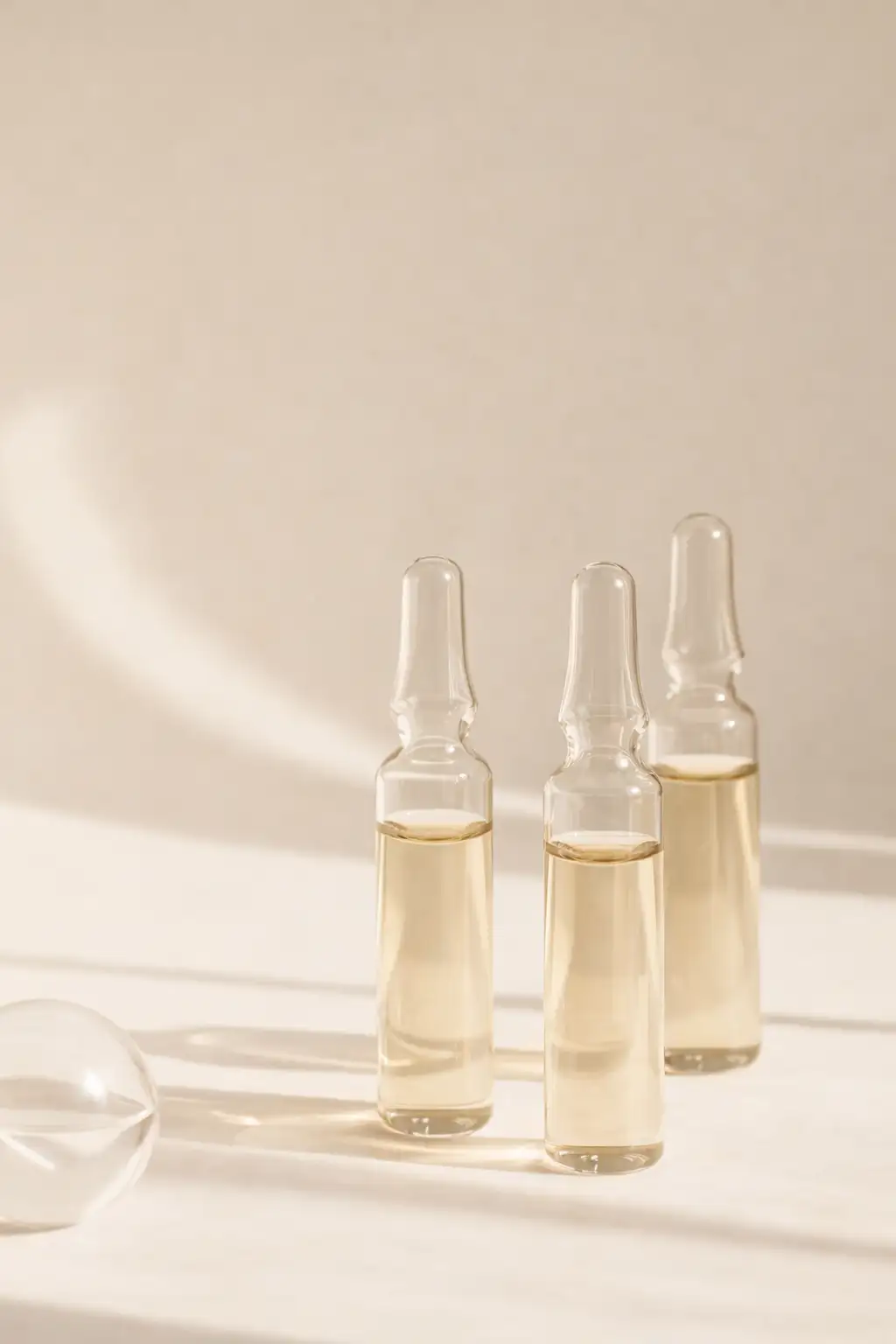
- Primary packaging: sealed vial containing 1mg lyophilised IGF-1 DES peptide.
- The vial is typically made of glass with a rubber stopper and crimp or screw cap, as is standard for research peptides (exact configuration may vary by manufacturer).
- Vials are shipped in secondary protective packaging (e.g., blister, foam, or carton) to protect against mechanical damage and temperature excursions during transit.
- Outer packaging from Derma Filler Ltd includes standard shipping labelling and may indicate that the contents are research chemicals not for human consumption.
- No patient-facing leaflet, dosing instructions, or regulatory approval claims are provided, consistent with research-use-only status.
Usage
- For laboratory research use only; not for human or veterinary use, not for diagnostic procedures in humans or animals, and not for use as a food, cosmetic, or household product.
- Handling and reconstitution must be performed by trained laboratory personnel in an appropriate research facility, following the organisation’s chemical safety, biosafety, and peptide-handling protocols.
- If reconstitution is required, use sterile technique and an appropriate solvent or buffer; record batch, concentration, and storage conditions according to institutional quality systems.
- Avoid generating aerosols or dust; open vials in a suitable environment (e.g., fume hood or biosafety cabinet if local policy requires).
- Wear appropriate personal protective equipment (PPE) such as lab coat, gloves, and eye protection when handling the lyophilised peptide or any solutions prepared from it.
- Dispose of unused material, vials, and any contaminated consumables as laboratory chemical/biological waste in accordance with local regulations and institutional policies.
- Do not attempt any form of self-administration or clinical administration; this compound is not approved or formulated for therapeutic use and lacks established safety, dosing, and risk–benefit data in humans.
Contraindications
- Contraindicated for any form of human or veterinary administration; not an approved medicinal product, supplement, or cosmetic ingredient.
- Should not be used outside appropriately equipped research laboratories or by individuals without relevant technical training.
- Do not use in experiments that lack appropriate ethical approval (e.g., institutional review board, animal care and use committee) where such approval is required by law or institutional policy.
- Avoid use in settings where adequate engineering controls, PPE, and waste-disposal routes are not available to manage potential laboratory exposure.
- Personnel with known hypersensitivity to laboratory peptides, or with contraindications to handling research chemicals, should follow occupational health guidance regarding exposure and tasks.
Adverse Effects
- No clinical safety profile is established for human use; potential adverse effects in humans are unknown and may include serious or unpredictable risks.
- For laboratory personnel, possible hazards are those common to handling biologically active peptides and research chemicals, including risks of accidental exposure via skin contact, inhalation of aerosolised material, or accidental injection if improper practices are used.
- Experimental animal studies with IGF-1 analogues and related growth factors may reveal dose-dependent effects on growth, metabolism, and tumour biology; such findings underscore the need for strict adherence to research protocols and ethical standards.
- Inappropriate or unsupervised use outside research contexts (e.g., performance enhancement, cosmetic self-experimentation) can carry significant health risks and is strongly discouraged.
Storage Conditions
- Store lyophilised vials in a freezer as recommended for research peptides (commonly at or below –20°C), protected from light and moisture; follow any specific storage instructions provided by the underlying manufacturer or distributor.
- Keep vials tightly closed until use to minimise exposure to ambient humidity and potential degradation.
- After reconstitution (if performed), store solutions at temperatures and for durations consistent with internal laboratory validation data and general peptide-handling guidelines (e.g., short-term at 2–8°C, longer-term aliquoted and frozen), avoiding repeated freeze–thaw cycles.
- Ensure that storage locations are access-controlled so that only authorised laboratory personnel handle the product.
- Transport under conditions that limit exposure to elevated temperatures; use insulated packaging and cold packs as appropriate for shipment of research peptides.
Duration
Not applicable; IGF-1 DES 1mg is a research-use-only peptide with no authorised therapeutic regimen or approved treatment duration in humans or animals.
Onset
Not applicable in a clinical sense; any time-course of action is context-specific to the experimental model and conditions studied in a research setting.
| Price | Link |
|---|---|
| £90.00 | https://dermafillerltd.uk/product/igf-1-des-1mg/ |