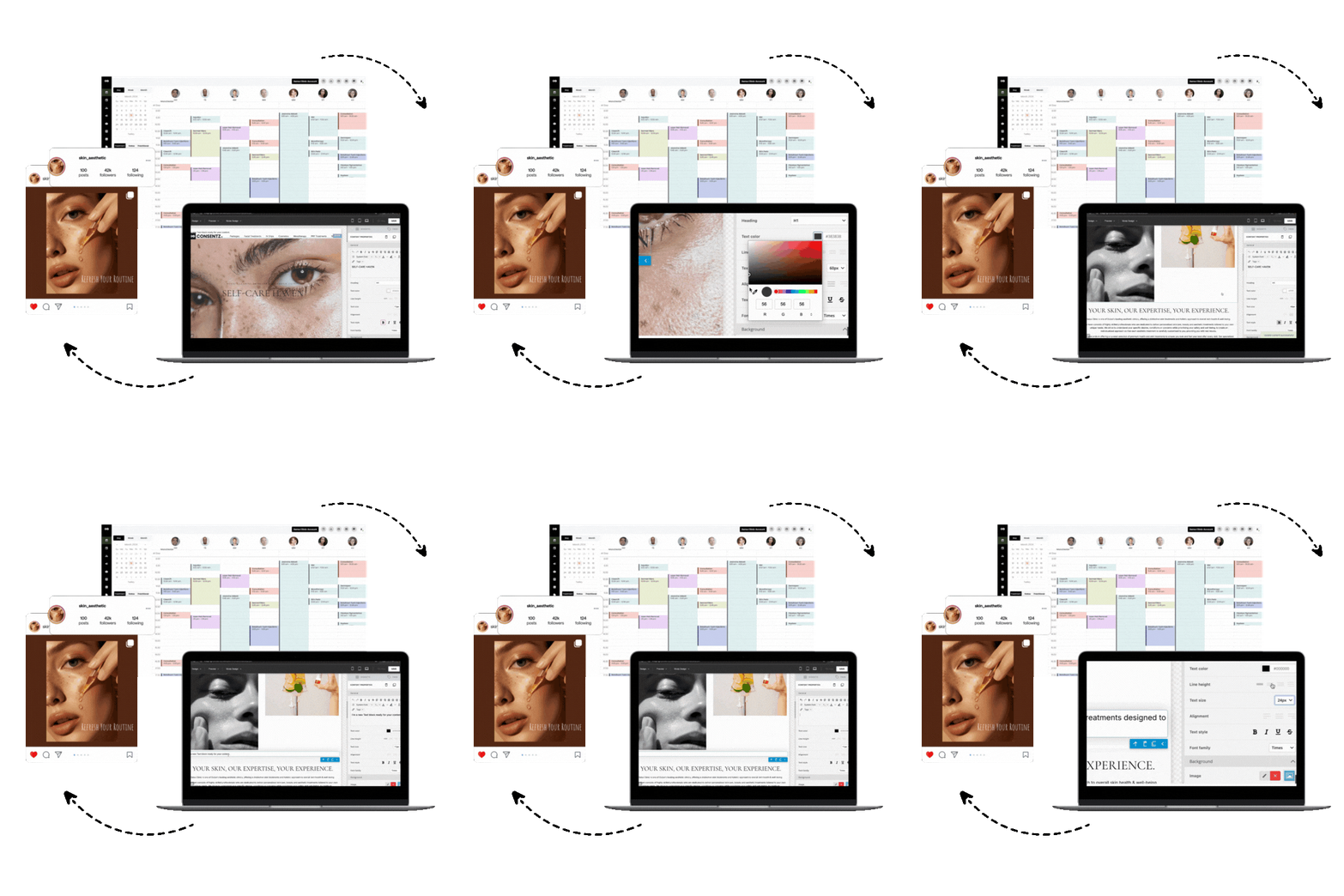
Running a successful aesthetic clinic involves more than just providing excellent treatments. It’s about building lasting patient relationships, ensuring seamless experiences, and keeping your schedule full. But manual follow ups, reminder calls, and chasing no shows can consume countless hours, pulling your team away from patient care. The solution is learning how to automate follow ups in aesthetic clinics.
Automating follow-ups involves using integrated clinic management software to map the patient journey and trigger timely, personalized messages via SMS and email. By setting up workflows for appointment reminders, post-treatment instructions, and re-engagement campaigns, you can recover lost revenue, reduce administrative burdens, and provide the kind of consistent, professional communication that makes patients feel valued. This guide explores everything you need to know to build a powerful automated follow up strategy for your practice.
Why Automating Follow-Ups is a Game Changer
Missed appointments are more than a minor inconvenience; they represent a massive drain on the healthcare system, costing over $150 billion annually in the U.S. alone. For an individual clinic, this means lost revenue, wasted staff time, and disruptions to patient care continuity.
Effective follow up communication directly combats this. In fact, one analysis showed that patients who did not receive timely reminders were 32% less likely to return to a provider within 18 months. Automating this process ensures no one falls through the cracks, freeing up your team to focus on what they do best: creating amazing patient outcomes.
Laying the Foundation for Successful Follow-Up Automation
Before launching into specific campaigns, it’s crucial to set up the right framework. A successful strategy for how to automate follow ups in aesthetic clinics starts with understanding your patient’s journey and having the right technology in place.
Start with Patient Journey Mapping
Patient journey mapping involves charting every single touchpoint a patient has with your clinic—including digital forms powered by patient intake software. This process starts from their initial inquiry and moves through booking, pre treatment education, the appointment itself, post procedure check ins, and long term re engagement. By visualizing this path, you can identify the perfect moments to communicate automatically, ensuring patients feel supported at every stage. A well mapped journey highlights communication gaps that could lead to a patient feeling forgotten or unsure about their next steps.
Integrate Your EHR or CRM
For automation to work its magic, your communication tools must be connected to your Electronic Health Record (EHR) or Customer Relationship Management (CRM) software. This integration allows patient actions to trigger follow ups automatically. For instance, when an appointment is marked as a “no show” in your EHR, the system can instantly send a rebooking message. Clinics using integrated systems achieve up to three times higher appointment confirmation rates compared to those using separate, disconnected tools. An all in one platform like Consentz builds this integration into its core, so your calendar, patient records, and messaging all work together seamlessly. If you’re comparing options, see our guide to the best CRM software for cosmetic clinics.
Use Patient Segmentation for Targeted Messaging
Not all patients are the same, so your follow ups shouldn’t be either. Patient segmentation is the practice of grouping your audience based on shared characteristics. You might create segments for:
New patients vs. returning patients
Patients interested in specific treatments (e.g., injectables, laser)
Patients who haven’t visited in over a year
Segmenting your list allows you to send highly relevant and personalized content, making your communication far more effective than generic blasts.
Core Strategies for How to Automate Follow-Ups in Aesthetic Clinics
With a solid foundation, you can begin implementing the most impactful types of automated follow ups. These are the workhorses that will fill your schedule and improve patient adherence.
Reduce No Shows with SMS and Email Reminders
Appointment reminders are the most fundamental and effective form of follow up, especially when paired with modern clinic scheduling software. A multi channel approach works best. While email is great for sending detailed information, it has a typical open rate of around 20% in healthcare. In contrast, SMS text messages boast a staggering 98% open rate, with most being read within minutes. Using both channels ensures your message gets through.
Never Lose a Lead: Automating Missed Appointment Follow Ups
When a patient misses an appointment, time is of the essence. Manually calling every no show is inefficient. Missed appointment follow up automation instantly detects a no show in your system and sends a message encouraging the patient to reschedule. A clinical trial found that sending a reminder within one business day of a missed appointment doubled the likelihood that the patient would re engage with the clinic. This simple automation helps recover revenue and maintains continuity of care.
Streamline Post Treatment with Automated Aftercare Instructions
Patients often forget a significant portion of the verbal information given to them during a visit, with studies showing that figure can be as high as 40 to 80%. Automating the delivery of aftercare instructions via email or text from electronic patient record (EPR) software ensures every patient receives clear, consistent, and written guidance. This improves treatment outcomes, reduces complication risks, and cuts down on follow up calls to your front desk.
Re-engage Past Patients with Automated Campaigns
Automated re engagement campaigns are perfect for bringing lapsed patients back to your clinic. You can set up a trigger to automatically send a friendly “We miss you!” message with a special offer to any patient who hasn’t booked an appointment in six or twelve months. This is a low effort, high reward way to boost your patient retention rate.
Gather Insights with Automated Surveys and Feedback
Want more five star reviews? Automate the process. A day or two after an appointment, you can send an automated message asking the patient about their experience. Positive responses can be directed to your Google or Yelp page, while neutral or negative feedback can be routed internally for your team to address personally.
Advanced Tactics and Best Practices
Once you’ve mastered the basics of how to automate follow ups in aesthetic clinics, you can layer in more sophisticated tactics to refine your strategy.
Master Timing and Triggers
Effective automation relies on setting up the right triggers (the “if”) and timing (the “when”). A trigger is an event, like a completed appointment, a cancellation, or a patient’s birthday. The system then performs a pre defined action, like sending a specific email or text message after a set delay. This level of control ensures messages are always relevant and timely.
Embrace a Multi Channel Follow Up Strategy
Relying on a single communication method is a mistake. A multi channel follow up strategy that uses a combination of SMS, email, and even phone calls can reduce missed appointments by 30 to 70%. Each channel has its strengths. SMS is for urgent, concise messages, email is for detailed information, and phone calls add a crucial personal touch when needed.
Personalize Your Message Content
Personalization goes beyond simply using a patient’s first name. A truly effective system pulls data from your EHR or CRM to include relevant details, such as the name of their last treatment, the practitioner they saw, or their next appointment date. This makes the communication feel personal and highly relevant.
Enable Two Way Messaging
Allowing patients to reply directly to your automated messages is a powerful feature. When a patient can simply text back “CONFIRM” or ask a question about their appointment, it dramatically increases engagement and reduces the burden on your front desk staff.
Win Back Revenue with Automated Rebooking and Waitlists
When a patient cancels, an automated rebooking system can immediately offer them a link to find a new time. Better yet, clinic appointment management systems with an automated waitlist can instantly notify patients who are waiting for an opening, potentially refilling 45 to 68% of canceled appointment slots with zero manual effort. If you want to learn more about how to automate follow ups in aesthetic clinics for maximum efficiency, this is a key feature to explore.
Get Proactive with Predictive Analytics for No Show Risk
Some advanced clinic operations software uses predictive analytics to identify patients who have a high probability of not showing up for their appointment based on past behavior. This allows your team to perform targeted, manual outreach to these specific patients, adding a human touch where it’s most needed.
Managing Your Automation System for Long Term Success
Automation isn’t a “set it and forget it” tool. It requires ongoing management and refinement to deliver the best results for your clinic.
Track Your Follow Up KPIs
To understand if your strategy is working, you must track Key Performance Indicators (KPIs). Important metrics include your no show rate, cancellation rate, confirmation rate, and rebooking rate. For visibility into A/R, prepaids, and reconciliation alongside follow-up KPIs, see our clinic billing software guide. A typical no show rate in healthcare can be 15 to 30%, but clinics with robust automation can drive that number down to under 5%. Tracking these numbers in a dashboard, like the one offered in the Consentz platform, allows you to measure your return on investment and make data driven decisions.
Avoid Over Messaging Your Patients
While automation makes it easy to communicate, it’s critical to respect your patients’ inboxes. Bombarding them with too many messages leads to “alert fatigue” and opt outs. Research shows that while most patients appreciate reminders, opt out rates jump significantly for those who receive a high volume of messages. Find the sweet spot that keeps patients engaged without feeling like spam.
Create a Human Escalation Workflow
Automation is brilliant for handling routine tasks, but it can’t replace human empathy. A human escalation workflow defines when the automated system should hand off a situation to a staff member. For example, if a patient doesn’t respond after two automated rebooking attempts or provides negative survey feedback, the system should flag it for a team member to make a personal phone call. This creates a safety net, ensuring complex or sensitive issues get the personal attention they deserve.
Don’t Forget Staff Training for Automation
Your team is a critical part of your automation strategy. Proper staff training is essential to ensure everyone understands how the system works, what messages are being sent, and how to manage the human escalation points. When your team is confident with the technology, they can leverage it to save time, with some clinics cutting front desk follow up work by an average of 15 hours per week.
Frequently Asked Questions about How to Automate Follow-Ups in Aesthetic Clinics
What is the most important follow up to automate first?
Appointment reminders are the best place to start. They provide the most immediate and significant impact by drastically reducing your no show rate, which directly protects your clinic’s revenue.
Will automation feel impersonal to my patients?
It doesn’t have to. When done correctly using patient segmentation and personalized message content, automated follow ups can feel even more attentive and professional than sporadic manual outreach. The key is to send relevant, timely information that helps the patient.
How much time can automation really save my clinic?
The time savings are substantial. By handling routine reminders, rebooking prompts, and aftercare instructions, automation can free up an average of 15 hours of administrative work per week, allowing your staff to focus on in clinic patient experience.
Can I automate follow ups without a special clinic management system?
While you can try to piece together separate tools for email and SMS, it’s highly inefficient and prone to error. An integrated, all in one system is the best way for how to automate follow ups in aesthetic clinics because it connects your schedule and patient records to your communications, ensuring accuracy and seamless workflows.
What is a good no show rate to aim for?
While industry averages can be as high as 30%, a well run aesthetic clinic with a strong automated follow up system should aim for a no show rate in the single digits. Achieving a rate below 5% is an excellent benchmark of success.