The weight loss industry in the United States is experiencing unprecedented growth, fueled by GLP-1 medications like semaglutide and tirzepatide, with over 40% of U.S. adults classified as obese according to the CDC. If you are a physician, nurse practitioner, or healthcare entrepreneur wondering how to start a weight loss clinic, the market window is wide open, but success depends on getting the legal, operational, and technology foundations right from day one.
This guide walks you through every step, from licensing and staffing to pricing models and clinic management software, so you can launch a profitable, compliant practice in 2026.
How to Start a Weight Loss Clinic
To start a weight loss clinic in the USA, follow these 10 core steps:
- Choose your business model (brick-and-mortar, telehealth, or hybrid)
- Select your legal entity (LLC or PLLC) and obtain an EIN
- Verify your state’s scope-of-practice rules and hire a medical director if required
- Obtain a medical practice license, DEA registration, and CLIA waiver (for in-house labs)
- Secure HIPAA-compliant infrastructure and malpractice insurance
- Partner with a PCAB-accredited compounding pharmacy for GLP-1 access
- Build your service menu and pricing around semaglutide, tirzepatide, and lifestyle programs
- Invest in a specialized clinic management software like Consentz to handle bookings, records, and marketing
- Launch your website with local SEO and a patient booking module
- Run targeted marketing campaigns on Google, Meta, and via referral partnerships
A weight loss clinic in the USA typically costs between $25,000 and $150,000 to launch, depending on whether you choose a telehealth-only model or a physical clinic. Most medical weight loss clinics break even within 6 to 12 months when they average 80 to 150 active patients on GLP-1 protocols.
Why Start a Weight Loss Clinic in 2026?
The U.S. medical weight loss market is one of the fastest-growing segments in healthcare. Here is why this is the right moment to enter:
- More than 42% of American adults are classified as obese (CDC)
- GLP-1 prescriptions grew over 700% between 2022 and 2025
- Self-pay GLP-1 programs now run $149 to $399 per month, creating cash-pay revenue
- Telehealth expansion allows operation across multiple states with minimal overhead
- Compounded semaglutide access through 503B-registered pharmacies has reduced barriers
- Patients are actively searching “weight loss doctor near me” and “Ozempic clinic” daily
The combination of chronic demand, high-margin cash-pay services, and favorable telehealth regulation makes medical weight loss one of the most profitable niches in outpatient care.
What Licenses Do You Need to Open a Weight Loss Clinic?
Operating a medical weight loss clinic requires multiple layers of licensing. Missing even one of these can shut down your practice or trigger penalties.
| License or Permit | Purpose | Who Needs It |
|---|---|---|
| Business License + EIN | Legal business operation and tax filing | All clinics |
| Medical Practice License (State) | Authority to operate a clinic in your state | MDs, DOs, NPs, PAs |
| DEA Registration | Prescribing controlled substances and certain GLP-1 protocols | All prescribing providers |
| CLIA Waiver | Performing on-site blood glucose, A1C, or lipid tests | Clinics offering in-house labs |
| HIPAA Compliance Certification | Protecting patient health data | Every clinic storing PHI |
| Malpractice Insurance | Legal protection against treatment claims | All medical staff |
| Medical Director Agreement | Required in most states for NP or PA-led clinics | Non-physician-owned clinics |
Nurse practitioners can independently own clinics in full-practice states like Arizona, Colorado, Washington, and Oregon, while states like California, Texas, and Florida require a collaborating or supervising physician. Always confirm state scope-of-practice rules with your state medical board before registering.
How Much Does It Cost to Start a Weight Loss Clinic?
Startup costs vary significantly based on your model. Here is a realistic breakdown for 2026.
| Expense Category | Telehealth Clinic | Brick-and-Mortar Clinic |
|---|---|---|
| Business registration & legal fees | $1,500 to $3,500 | $2,500 to $5,000 |
| Medical director retainer (annual) | $12,000 to $36,000 | $18,000 to $60,000 |
| Malpractice insurance | $2,500 to $6,000 | $4,000 to $10,000 |
| EHR and clinic management software | $1,200 to $4,800/year | $2,400 to $7,200/year |
| Website + local SEO setup | $3,000 to $10,000 | $3,000 to $10,000 |
| Lease and build-out | Not applicable | $15,000 to $50,000 |
| Medical equipment | $500 to $2,000 | $10,000 to $25,000 |
| Initial marketing budget | $3,000 to $8,000 | $5,000 to $15,000 |
| Estimated Total | $25,000 to $70,000 | $60,000 to $180,000 |
A pure telehealth model is the fastest path to profitability. You can serve patients across multiple licensed states, avoid real estate overhead, and scale revenue through asynchronous care workflows.
How to Choose Your Weight Loss Clinic Business Model
Picking the right model shapes every downstream decision. Here are the three dominant structures:
Telehealth-only model. Patients complete intake online, a licensed provider reviews eligibility, and compounded GLP-1 medications ship directly from a 503B pharmacy. Lowest overhead, fastest scale.
Brick-and-mortar model. In-person consultations, body composition analysis, B12/lipotropic injections, and hands-on follow-ups. Higher trust and referrals but heavier capex.
Hybrid model. Offers a physical base clinic plus telehealth for follow-ups and prescription refills. This is the dominant model for ambitious operators in 2026 because it captures both local SEO traffic and statewide telehealth revenue.
What Services Should a Weight Loss Clinic Offer?
A competitive medical weight loss clinic bundles medications with lifestyle and behavioral support. Here is the standard service stack:
- GLP-1 medication management: semaglutide, tirzepatide, liraglutide (brand-name and compounded)
- Lipotropic and B12 injections for metabolism support
- Medical consultations and ongoing dosing adjustments
- Body composition analysis (InBody, DEXA)
- Nutritional coaching and meal planning
- Behavioral therapy for emotional eating
- Lab work: A1C, lipid panel, TSH, comprehensive metabolic panel
- Maintenance programs for post-GLP-1 weight retention
Offering a structured program rather than a medication-only service improves retention, justifies premium pricing, and differentiates you from pure telehealth competitors.
GLP-1 Pricing Benchmarks for 2026
Pricing transparency wins patients in this market. Here is what competitors are charging in the USA:
| Medication Type | Monthly Self-Pay Price | Source |
|---|---|---|
| Brand-name Wegovy injection | $349 to $1,349 | Walgreens, NovoCare |
| Brand-name Zepbound | $349 to $1,059 | LillyDirect, Walmart |
| Wegovy oral pill | $149 to $349 | NovoCare |
| Compounded semaglutide | $149 to $299 | Eden, MEDVi, MyStart |
| Compounded tirzepatide | $249 to $499 | Hims, Eden |
| Program + medication bundle | $199 to $499 | Sesame, Noom, Body Good |
Most successful clinics in 2026 bundle compounded semaglutide with clinical oversight at a $249 to $399 monthly price point, which is competitive against national telehealth brands while preserving clinical quality.
How to Staff Your Weight Loss Clinic
The right team depends on your model and state requirements. A lean starter staffing plan looks like this:
- 1 Medical Director (MD/DO), often part-time or contracted
- 1 to 2 Nurse Practitioners or PAs as primary prescribers
- 1 Registered Dietitian or Nutritionist (full-time or per-patient)
- 1 Medical Assistant for intake, injections, and vitals
- 1 Patient Coordinator handling bookings, retention, and billing
For a telehealth-only launch, you can start with just a medical director, one NP, and a patient coordinator, then scale as caseload grows.
Why Clinic Management Software Is Non-Negotiable
Weight loss clinics deal with recurring medication refills, lab tracking, photo-based progress monitoring, consent documents, and compliance audits. Doing this on spreadsheets is how practices get fined or lose patients to better-organized competitors.
Consentz is a purpose-built clinic management software trusted by over 200 clinics, combining everything a medical weight loss operation needs in one platform:
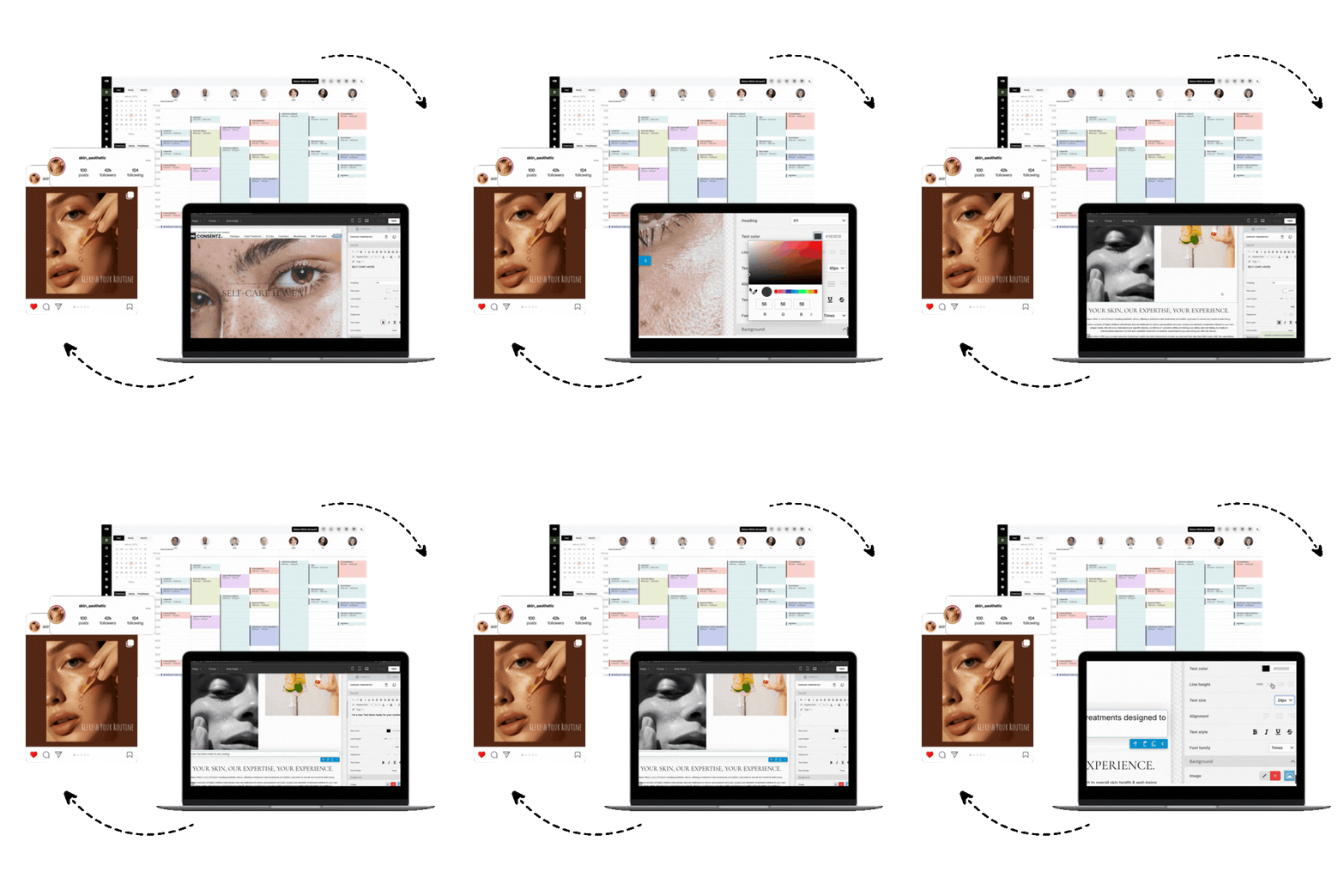
- Online booking and waitlist tools so patients book directly from your site or Instagram
- Secure patient records, progress photos, and consent forms with AES-256 encryption and HIPAA compliance
- Automated marketing pipelines through the healthcare marketing software module
- Stock and billing tracking for injectables, medications, and supplements via stock and billing tools
- Analytics dashboards to track patient outcomes and revenue through clinic analytics
- Patient engagement tools that reduce no-shows and boost retention via patient management software
If you want to see how Consentz compares to platforms like AestheticsPro, PatientNow, or Boulevard, Consentz offers deeper clinical workflows at a more predictable price point, with a free onboarding service for new practices.
How to Market Your Weight Loss Clinic
Marketing is where most new clinics fail. Here are the highest-ROI channels for 2026:
- Local SEO: optimize for “medical weight loss clinic near me,” “semaglutide clinic [city],” “weight loss doctor [city]”
- Google Business Profile: fully optimized with photos, reviews, and weekly posts
- Google Ads and Meta Ads: targeted at adults 30-60 with weight-related search intent
- Content marketing: blog posts answering “does semaglutide work,” “how much is Wegovy without insurance,” and similar high-intent queries
- Referral partnerships: primary care doctors, OB-GYNs, cardiologists, and gyms
- Email and SMS nurture sequences: convert consultations into paying patients and keep existing ones refilling
The Consentz marketing module automates email campaigns, Facebook/Google ad launches, and patient review generation, saving small clinics 10 to 15 hours a week.
Common Mistakes When Starting a Weight Loss Clinic
Avoid these costly missteps that sink new clinics:
- Skipping state scope-of-practice verification, leading to shutdown orders
- Sourcing GLP-1s from non-PCAB-accredited pharmacies, risking patient safety and FDA scrutiny
- Undercharging to compete with telehealth giants, destroying margins
- Ignoring HIPAA-compliant tech stack requirements, exposing PHI
- Relying on Instagram alone instead of investing in SEO and owned channels
- No retention system, causing patients to churn after their first 3-month GLP-1 cycle
Conclusion
Starting a weight loss clinic in the USA in 2026 is one of the most accessible, high-margin healthcare business opportunities available. The combination of GLP-1 medication demand, telehealth-friendly regulation, and cash-pay pricing creates a model where a well-run clinic can hit six-figure revenue within the first year.
The operators who win are the ones who get compliance right, price confidently, and use the right technology from day one. Clinic management software like Consentz handles bookings, records, marketing, and analytics in a single HIPAA-compliant platform, letting you focus on growing patients rather than fighting admin. If you are ready to launch, book a free demo with Consentz and get your clinic onboarded at no cost.
Frequently Asked Questions
1. Can a nurse practitioner start a weight loss clinic in the USA?
Yes. Nurse practitioners can independently own and operate weight loss clinics in full-practice authority states like Arizona, Colorado, Washington, Oregon, and New Mexico. In restricted states like California, Texas, and Florida, NPs must operate under a collaborating or supervising physician agreement. Always verify with your state medical board.
2. How much does it cost to start a weight loss clinic?
A telehealth-only weight loss clinic costs between $25,000 and $70,000 to launch, while a brick-and-mortar clinic typically requires $60,000 to $180,000. Ongoing monthly operating costs range from $8,000 to $25,000, depending on staffing and location.
3. Do I need a medical director to open a weight loss clinic?
In most U.S. states, yes. If you are a nurse practitioner in a restricted-practice state or a non-medical owner (such as a registered dietitian or entrepreneur), you are legally required to contract a medical director (MD or DO) to oversee clinical protocols and prescriptions.
4. How profitable is a medical weight loss clinic?
Medical weight loss clinics are among the most profitable outpatient niches, with gross margins of 50% to 70% on GLP-1 programs. A clinic serving 100 active patients at an average of $299 per month generates approximately $358,000 in annual revenue, with net margins of 25% to 40% after medication, staff, and operational costs.
5. What software do weight loss clinics use?
Modern weight loss clinics use integrated clinic management platforms that combine EHR, booking, billing, marketing, and analytics. Consentz is a leading option designed for medical and aesthetic practices, offering HIPAA-compliant records, automated marketing, online booking, and stock management in a single system trusted by 200+ clinics g