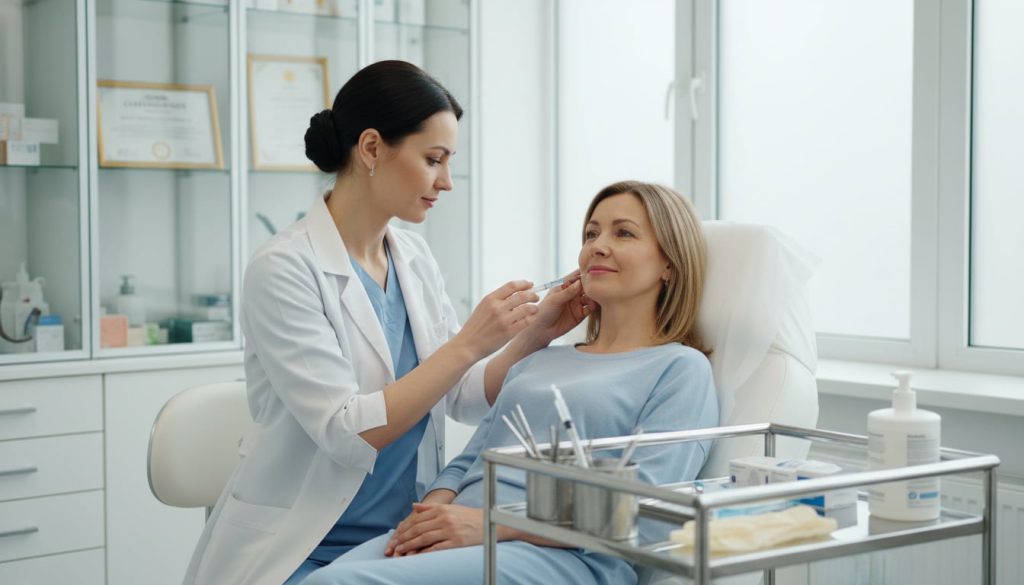
To become an aesthetic doctor in Canada, you must first be a licensed medical professional—such as a physician, nurse practitioner, or registered nurse—and then complete specialized training in aesthetic procedures. This journey requires getting your provincial license in good standing, undertaking comprehensive clinical training for treatments like injectables, and understanding the specific regulations in your province. It’s a rewarding path that blends medical science with artistry, helping people feel their best and most confident.
The demand for non-surgical cosmetic treatments is booming, making it an exciting time to enter the field. But the journey involves more than just learning to inject; it requires that solid foundation in medicine, sharp clinical skills, and a bit of business savvy. This guide will walk you through all the essential steps, from initial licensing to launching your own practice. Let’s dive into the complete roadmap for how to become an aesthetic doctor in Canada.
The Foundational Steps: Licensing and Regulations
Before you even think about picking up a syringe, you need to have your legal and professional qualifications in order. In Canada, this is managed at the provincial level.
Verifying Your Provincial Medical License
The very first step is ensuring you have a valid license to practice medicine in the province where you intend to work. In Canada, healthcare is regulated provincially, meaning a license in Ontario doesn’t automatically allow you to practice in British Columbia. You must be registered and in good standing with the provincial regulatory body, like the College of Physicians and Surgeons or the local nursing college.
This verification is a crucial step for patient safety, confirming you’ve met the necessary educational and ethical standards. If you’re moving provinces, you’ll need to transfer your license, a process that still requires you to obtain a local permit to practice.
Understanding Your Scope of Practice
Your “scope of practice” defines the procedures you are legally and competently allowed to perform under your license. This is vital in aesthetics because it dictates which treatments you can offer. These rules vary significantly between provinces and professions.
- Registered Nurses (RNs): An RN’s ability to perform injections often depends on provincial guidelines. In some jurisdictions, an RN can only inject Botox or fillers after a physician or nurse practitioner has assessed the patient and provided a specific order.
- Nurse Practitioners (NPs): NPs generally have a broader scope. For example, an NP in Ontario can prescribe and administer neuromodulators like Botox independently.
- Physicians: Physicians typically have the broadest scope of practice in aesthetics, but they are still expected to only perform procedures for which they have received adequate training.
Always consult your professional college’s guidelines. Stepping outside your scope can lead to serious legal and professional consequences.
Building Your Clinical Skills: Training and Education
Once your licensing is sorted, the real learning begins. Becoming a skilled aesthetic provider is a hands on journey that starts with observation and builds toward mastery.
Shadowing an Experienced Provider
Shadowing is like getting a backstage pass to the world of aesthetic medicine. You’ll observe an experienced practitioner, like a dermatologist or nurse injector, during their daily routine. It’s a pressure free way to see how they conduct consultations, assess facial anatomy, perform treatments, and manage patient expectations. You’ll witness a range of appointments in a single day, from initial consults to follow ups, which provides invaluable real world insight you can’t get from a textbook.
Foundational Training in Injectables
Your first formal step into practice is usually a foundational course in neuromodulators (like Botox) and dermal fillers. These beginner courses cover the core knowledge you need to start injecting safely. A comprehensive curriculum will include:
- Facial Anatomy: Understanding the muscles, nerves, and blood vessels is critical for safe and effective injections.
- Pharmacology: Learning how products work, including proper dosing and dilution.
- Injection Techniques: Supervised, hands on practice on live models for common areas like forehead lines and lips.
- Complication Management: Recognizing and managing potential adverse events, such as a droopy eyelid or a vascular occlusion.
In Quebec, for instance, practitioners must complete training approved by the Collège des médecins before they can perform any aesthetic treatments.
Hands On Clinical Training with Anatomy and Safety
After your foundational course, advanced hands on training is key. This often involves cadaver labs where you can dissect and visualize facial structures in three dimensions. This experience is invaluable for identifying “danger zones” and understanding the precise depth of arteries and nerves to avoid complications.
Why the intense focus on safety? While rare, serious complications can happen. A review of medical literature up to 2018 documented at least 190 cases of blindness associated with filler injections. In depth anatomical knowledge and hands on practice are your best tools to minimize these risks and inject with confidence.
Selecting the Right Accredited Course
With aesthetics booming, many training courses have appeared, but not all are created equal. Choosing an accredited program is essential for your credibility. An accredited course has been vetted by an authoritative body to ensure it meets high quality standards.
Watch out for red flags, such as programs promising to make you an expert injector in a single day. Real proficiency takes time, and a legitimate course will provide extensive, supervised practical training. In the UK, the Level 7 Diploma has become a gold standard, representing a comprehensive postgraduate qualification in injectables.
Advancing Your Career and Expertise
Your initial training is just the beginning. The most successful aesthetic practitioners are committed to lifelong learning and building a strong professional network.
The Power of Mentorship and Networking
A mentor, an experienced practitioner who guides you, can be one of your greatest assets. Studies have shown that mentored individuals are often more successful and productive in their careers. A good mentor can help you refine your technique, navigate business decisions, and avoid common pitfalls.
Networking is about building a broad web of industry contacts. Attending conferences and joining professional associations connects you with peers, industry leaders, and potential employers. This is how you stay informed about the latest trends and opportunities in the fast evolving world of aesthetics.
Pursuing Board Certifications and Diplomas
While aesthetic medicine isn’t a traditional board certified specialty, several organizations offer certifications and diplomas to demonstrate advanced expertise. Credentials from bodies like the Canadian Board of Aesthetic Medicine (CBAM) or the American Academy of Aesthetic Medicine (AAAM) signal that you have completed a structured, comprehensive training program. These credentials can boost your credibility with both patients and employers, and some academies even offer online registries to verify a practitioner’s certification status.
Continuing Education and Advanced Training
The aesthetics field changes constantly. To stay current, you must engage in ongoing continuing education. This could involve attending workshops on new products, learning advanced techniques like non surgical rhinoplasty, or taking courses on different treatment modalities like laser therapies or thread lifts. Provincial regulators in Canada expect practitioners to keep their skills up to date through continuing education to ensure they are delivering safe and effective treatments.
From Practitioner to Business Owner
Many skilled injectors eventually decide to open their own clinic. This transition requires a whole new set of skills focused on business and marketing. This is a critical point in the journey of how to become an aesthetic doctor in Canada.
Starting or Integrating Your Aesthetic Practice
Launching a new clinic or adding aesthetic services to an existing medical practice involves careful planning. If you need a blueprint, see this step-by-step guide to opening a med spa. You’ll need to conduct market research, create a business plan, and ensure you meet all legal and regulatory requirements for your facility. In Canada, each province has its own rules for medical aesthetic clinics, covering everything from infection control to record keeping.
Setting up your operations is a major task. You’ll need to find a suitable location, purchase equipment, and establish relationships with suppliers for Health Canada approved products. Managing scheduling, patient records, and inventory efficiently from the start is crucial for success. If you’re choosing a calendar system, this medical scheduling software buyer’s guide outlines what to look for. An all-in-one aesthetic clinic software in Canada can make a world of difference here. For example, a system like Consentz is designed specifically for aesthetic clinics, helping you manage appointments, digital consent forms, before and after photos, and stock all in one place.
Mastering Business and Marketing for Your Clinic
A great clinician with no patients is just a great clinician. Marketing is what brings clients through your door. For actionable tactics, check out these medical spa marketing ideas. A strong online presence is non negotiable, including a professional website and active social media profiles. Before and after photos are incredibly powerful for building trust, but always make sure you have documented patient consent. To help new patients find you, apply advanced local SEO strategies.
Focus on retaining clients as well. Since treatments like Botox are repeated every 3 to 4 months, building loyalty is key. Use email marketing to send reminders and educational content. A smart practice management system can automate much of this for you. Platforms like Consentz often include built in marketing tools to help you run email campaigns and gather patient reviews, freeing you up to focus on what you do best.
The Professional Realities: Jobs, Insurance, and Patient Safety
Before you can enjoy the rewards of an aesthetics career, you need to prepare for the practical realities of the job, from landing your first role to managing patient care impeccably.
Getting Hired: Job Search and Interview Prep
The aesthetics field is competitive, so your job search requires a polished approach. Tailor your resume to highlight your aesthetic training and any transferable skills. Prepare for interview questions that test both your technical knowledge (“Which muscle do you target for crow’s feet?”) and your soft skills (“How would you handle a patient who is unhappy with their results?”). Some clinics may even ask for a hands on demonstration of your injection technique.
Protecting Yourself with Professional Liability Insurance
Medical malpractice insurance is non negotiable in aesthetic medicine. It protects you from financial loss if a patient alleges injury or negligence. Standard medical malpractice policies often do not cover elective cosmetic procedures, so you will likely need a separate, specialized policy. In some provinces, like Quebec, carrying this insurance is a legal requirement to practice aesthetics. This is a critical safety net for you, your patients, and your business.
Mastering Patient Assessment and Complication Management
Patient safety is paramount. A huge part of your training will focus on how to properly assess patients to screen for contraindications and unrealistic expectations. It also prepares you to manage complications, from common issues like bruising to rare but serious events like vascular occlusion. Comprehensive training will drill you on emergency protocols, such as how to use hyaluronidase to dissolve filler in an emergency. This knowledge is what allows you to practice safely and confidently.
The First Step in Your Aesthetic Journey
Learning how to become an aesthetic doctor in Canada is a challenging yet deeply fulfilling pursuit. It demands a commitment to continuous learning, a passion for patient care, and a keen eye for detail. By following these steps and building a strong foundation of knowledge and skill, you can build a thriving and successful career in this dynamic field.
As you plan your practice, remember that efficiency is your friend. Streamlining your operations with the right tools can make a huge impact on your success. If you’re comparing systems, start with this clinic operations software roundup. To see how an all in one system can help manage every aspect of your new clinic, book a free demo of Consentz and start your journey on the right foot.
Frequently Asked Questions (FAQ)
How long does it take to become an aesthetic doctor in Canada?
The timeline varies. After completing medical or nursing school and getting licensed, you’ll need to complete foundational and advanced training courses in aesthetics. This can take anywhere from a few months to over a year, depending on the intensity and number of courses you take to feel confident and competent.
Can a registered nurse become an aesthetic injector in Canada?
Yes, registered nurses can and do become successful aesthetic nurse injectors. However, their scope of practice is determined by their provincial nursing college and may require physician oversight or collaboration. It is essential for nurses to check their local regulations.
What is the most important skill for an aesthetic practitioner?
While technical injection skill is crucial, a deep understanding of facial anatomy is arguably the most important skill for safety and achieving excellent results. Strong patient communication and assessment skills are also vital for managing expectations and ensuring satisfaction.
Is it difficult to find a job as a new aesthetic injector?
The field is competitive, but it is also growing rapidly. New injectors who have invested in accredited, high quality training, built a professional network, and can demonstrate both technical skill and excellent bedside manner will have the best chances of securing a great position.
Do I need a business degree to open an aesthetic clinic?
No, but you do need a solid business plan. Understanding the basics of marketing, finance, and operations is crucial. Many practitioners successfully learn these skills on the go, and using comprehensive clinic management software can help automate many business tasks, making it easier to run a successful practice.