Opening a medical spa is an exciting venture in a booming industry. With the U.S. med spa market generating $17.5 billion in annual revenue and growing rapidly, the opportunity is clear. However, success requires more than just clinical skill; it demands careful planning, legal diligence, and smart business strategy. Learning how to open a med spa involves four key phases: foundational planning, operational setup, a strategic launch, and ongoing management for long-term growth. This guide breaks down the process, covering everything from your initial idea to your grand opening and beyond. For a quick-start overview, see How to Start a Medspa.
Phase 1: Planning Your Med Spa Foundation
Before you even think about buying a laser or hiring an injector, you need a solid foundation. This initial phase is all about research, strategy, and legal groundwork.
1. Market Research and Competitive Analysis
First, you need to understand the landscape. Market research involves gathering data on your target customers, local demographics, and industry trends. The global medical spa market is projected to hit $47 billion by 2031, showing massive consumer demand. Competitive analysis means looking at other med spas in your area. What services do they offer? What are their prices? What do their online reviews say? This research is vital because, according to one analysis, 42% of startups fail simply because there is no market need for what they offer. Your research will help you find a unique angle or an underserved niche in your community.
2. Crafting Your Business Plan
A business plan is your roadmap. This document outlines your med spa’s goals and how you’ll achieve them. It should include your market research findings, service menu, marketing plan, management team details, and financial projections. Entrepreneurs who create a formal business plan are significantly more likely to succeed. Your plan is also crucial for securing funding, as lenders and investors will want to see you’ve done your homework on costs and revenue forecasts.
3. Securing Funding and Budgeting for Startup Costs
Opening a med spa requires significant capital. Your startup costs will include:
- Rent or property purchase
- Facility renovations and design
- Expensive medical equipment (lasers, body contouring devices)
- Initial inventory of supplies (injectables, skincare products)
- Licensing and legal fees
- Software and technology
- Marketing for your launch
Your business plan’s financial section should detail these costs and project your path to profitability. Many successful med spas see profit margins around 25% to 30%, a figure your plan can help you aim for.
4. Understanding Legal Requirements and Compliance
Med spas operate in a space between a traditional day spa and a medical clinic, which means they face a complex web of regulations. Compliance covers everything from business licensing and health codes to patient privacy laws like HIPAA. For a deeper dive into permits and credentials, see What License Do You Need to Open a Medical Spa. Failure to comply can result in huge fines, license suspension, or even the shutdown of your practice. Given the industry’s growth, regulators are increasing their scrutiny, making it essential to prioritize compliance from day one.
5. Choosing an Ownership Structure
How you structure your business legally has major implications. A key issue is the Corporate Practice of Medicine (CPM) doctrine, a legal rule in many states that prohibits non physicians from owning a medical practice. Since med spas provide medical treatments, this doctrine often applies.
- In strict CPM states like California and Texas, a med spa must be owned by a licensed physician or a physician led professional corporation.
- In more flexible states like Idaho or North Carolina, non physician ownership may be permitted under certain conditions.
It’s critical to research your state’s specific laws to choose a compliant structure, such as a sole proprietorship, LLC, or a professional corporation.
6. Considering a Management Services Organization (MSO)
For non physicians in states with strict CPM laws, the MSO model is a popular solution. This structure splits the business into two entities:
- A professional corporation (PC) owned by a licensed physician, which employs the clinical staff and provides all medical services.
- A Management Services Organization (MSO) owned by you (the entrepreneur or investor), which handles all non clinical functions like marketing, billing, scheduling, and facility management.
The MSO charges the PC a management fee for its services. This arrangement allows non physicians to be involved in the business without illegally “practicing medicine.”
Phase 2: Setting Up Your Med Spa Operations
With your plan in place, it’s time to build the operational framework of your clinic.
7. Obtaining All Necessary Licenses and Permits
You will need a variety of licenses to operate legally. These typically include a general business license from your city or county, and often a specific medical facility or clinic registration from your state’s health department. Additionally, every provider on your team must hold the appropriate, active professional license (e.g., MD, NP, RN, or esthetician) for the services they perform. Some equipment, like lasers, may also require special permits and a designated Laser Safety Officer.
8. Securing Malpractice and Liability Insurance
Insurance is non negotiable. You will need two primary types of coverage:
- Malpractice Insurance: Also known as professional liability, this covers claims of negligence or errors made by your practitioners during treatments.
- General Liability Insurance: This covers non medical risks, such as a client slipping and falling in your lobby.
With about 31% of U.S. physicians having faced a liability claim, robust insurance is a necessary investment to protect your business from potentially devastating lawsuits.
9. Location Selection and Facility Design
Your location should be accessible, visible, and align with your brand image. Look for areas with demographics that match your target client. The facility design should be both welcoming and functional, creating a serene, professional atmosphere. It needs to include private treatment rooms, a comfortable waiting area, a consultation space, and a sterile, compliant environment for performing procedures.
10. Purchasing Equipment and Supplies
Your equipment is one of your biggest investments. Start with devices that support the core services you plan to offer. Research reputable brands and consider leasing versus buying to manage upfront costs. You’ll also need a reliable supply chain for consumables like injectables, skincare products, and medical disposables. Always source products like Botox from licensed channels to avoid counterfeit products and legal trouble.
11. Defining Scope of Practice and Who Can Perform Treatments
Each state has specific laws defining the scope of practice for different licensed professionals. These rules dictate which procedures can be performed by a physician, nurse practitioner (NP), physician assistant (PA), registered nurse (RN), or licensed esthetician. It is illegal and dangerous for someone to perform a treatment outside their legal scope of practice.
12. Arranging Physician Supervision and Delegation
In nearly every state, medical procedures performed by non physician staff like RNs or PAs must be properly supervised by a physician. The level of supervision required (e.g., on site versus available by phone) varies by state and procedure. You must have clear delegation protocols in place that outline how tasks are assigned and overseen by your medical director.
13. Establishing a “Good Faith Exam” Protocol
Before any initial medical aesthetic treatment, a patient must receive a Good Faith Exam (GFE) from a physician, NP, or PA. This is a medical evaluation to ensure the patient is a suitable candidate for the desired procedure. This exam establishes the practitioner patient relationship and is a legal requirement in most states.
14. Hiring and Training Your Staff
Your team is the heart of your med spa. Hire licensed, experienced professionals who are not only clinically skilled but also have excellent communication and customer service skills. Provide comprehensive training on your specific protocols, equipment, and software systems to ensure consistent, high quality care.
15. Selecting Your Software and EMR
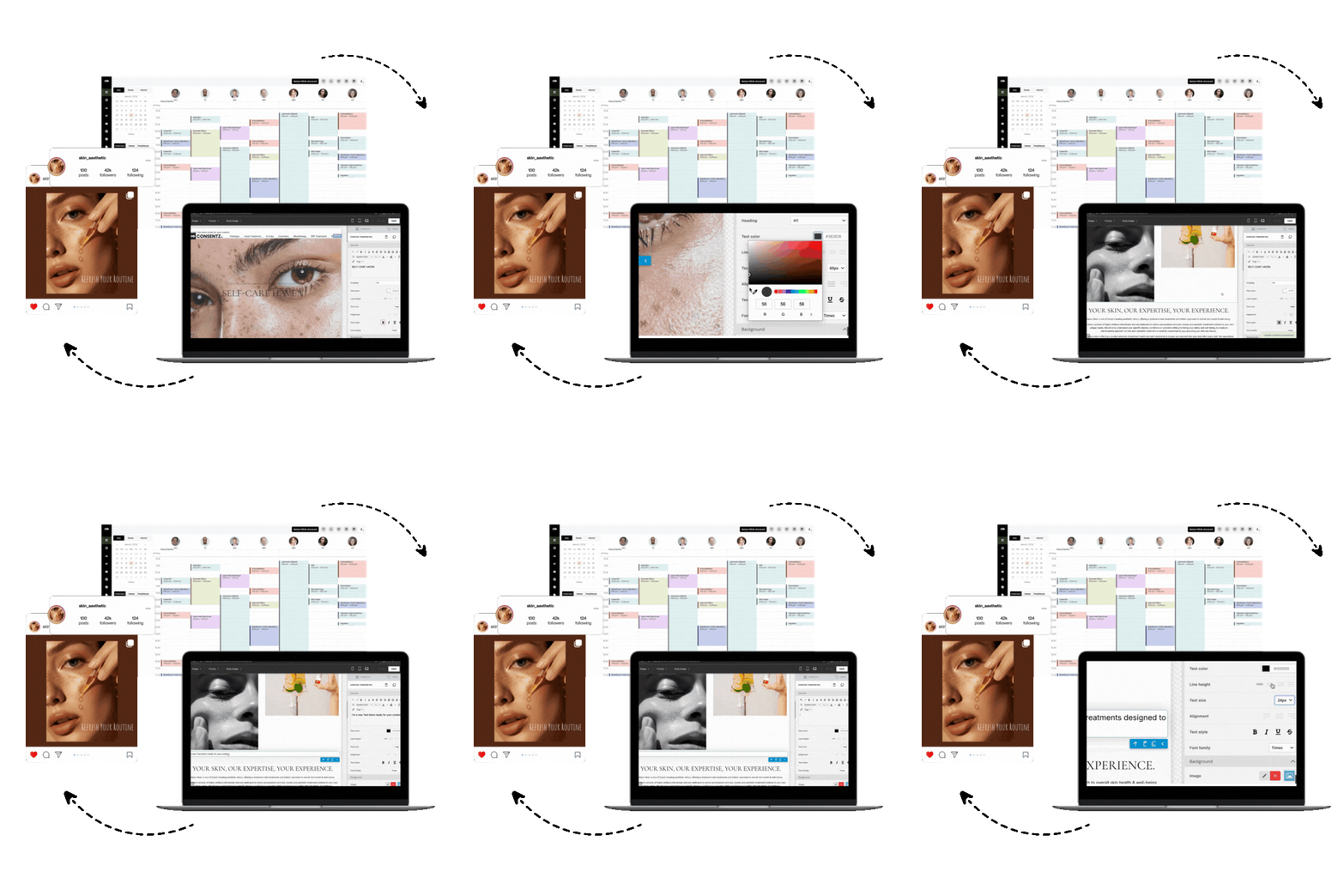
Modern med spas run on software. An all in one clinic management system is essential for handling scheduling, patient records (EMR or EHR), billing, and marketing. A platform like Consentz can streamline your entire operation, from digital consent forms on an iPad to inventory management and automated marketing campaigns. If you’re comparing options, our Medical Scheduling Software Buyer’s Guide explains features and pricing trade‑offs. This technology saves time, reduces errors, and helps you deliver a seamless patient experience. If you’re in the United States, explore medical spa software in the USA.
Phase 3: Launching and Growing Your Business
Once your clinic is set up, the focus shifts to attracting and retaining clients.
16. Creating Your Service Menu and Pricing Strategy
Your service menu should be based on your market research and the expertise of your staff. Start with popular, high demand treatments like neurotoxins, dermal fillers, and laser hair removal. Your pricing strategy should be competitive for your area but also reflect the quality of your services and expertise. Consider offering packages and memberships to encourage repeat business.
17. Developing Your Branding and Marketing Strategy
Your brand is your med spa’s personality. It’s your name, logo, and the overall feeling clients get when they interact with your business. Your marketing strategy should be a multi channel approach designed to reach your target audience. This includes a mix of digital and traditional tactics to build awareness and drive bookings.
18. Building Your Website and Online Presence
Your website is your digital storefront. It needs to be professional, mobile friendly, and easy to navigate. Consider using medical website templates to speed this up. It should clearly showcase your services, introduce your team, and provide an easy way for clients to book appointments. Optimizing your site for search engines (SEO) will help potential clients find you when they search for services you offer. For tactics that work, see advanced local SEO strategies for medical spas.
19. Leveraging Social Media Marketing
Platforms like Instagram and Facebook are incredibly powerful for med spas. Use them to showcase your work with high quality before and after photos, educate your followers about treatments, and run targeted ads to reach potential clients in your area. Social media helps you build a community and connect with your audience in a personal way. If you’re looking for an integrated approach, a great clinic management software can help you manage leads from your social media ads.
20. Creating Referral, Membership, and Retention Programs
It’s much more cost effective to retain an existing client than to acquire a new one. Implement programs to encourage loyalty.
- Referral Programs: Reward clients for sending their friends your way.
- Membership Programs: Offer monthly memberships that include specific treatments or discounts, providing you with recurring revenue.
- Loyalty Programs: Reward clients for their continued business with points or special offers.
21. Planning Your Grand Opening and Launch
A well planned grand opening can create a lot of buzz. Host an event, offer introductory specials, and collaborate with local influencers or businesses to spread the word. This is your chance to make a strong first impression on the community and start building your client base.
Phase 4: Managing and Optimizing for Long Term Success
Opening the doors is just the beginning. Efficient management is key to long term growth.
22. Adhering to Telemedicine Policies for Good Faith Exams
Many states now allow the initial Good Faith Exam to be conducted via telemedicine (a video call). This offers convenience for patients and can streamline your intake process. However, you must ensure your telemedicine platform and procedures are HIPAA compliant and meet your state’s specific requirements for virtual medical consultations.
23. Implementing Documentation and Renewal Tracking
Meticulous record keeping is a legal and medical necessity. Here’s why your clinic’s records must be bulletproof. Use your EMR system to maintain detailed patient charts, treatment notes, and signed consent forms. You also need a system to track important renewals for business licenses, professional licenses, insurance policies, and equipment certifications to ensure you remain compliant.
24. Tracking KPIs and Performance
You can’t improve what you don’t measure. Regularly track Key Performance Indicators (KPIs) to monitor the health of your business. Important KPIs for a med spa include:
- Revenue per hour
- Client retention rate
- Average client spend
- No show rate
- Marketing ROI
Platforms designed for aesthetics, such as Consentz, often have built in analytics dashboards to make tracking these metrics simple.
25. Committing to Ongoing State Specific Regulation Research
Laws and regulations in the medical aesthetics industry can change. It is your responsibility as a business owner to stay informed about any updates from your state’s medical and cosmetology boards. Join industry associations, consult with a healthcare attorney, and make ongoing education a priority. This proactive approach to compliance is a cornerstone of learning how to open a med spa successfully.
Frequently Asked Questions
How much does it cost to open a med spa?
The cost can vary dramatically based on location, size, and the services you offer, but you can generally expect startup costs to range from $500,000 to over $1,000,000. This includes expenses for equipment, rent, renovations, licensing, and initial marketing.
Can a registered nurse or an esthetician open a med spa?
This depends entirely on state law. In states with strict Corporate Practice of Medicine laws, a med spa must be owned by a physician. In other states, a nurse or even a non clinician may be able to own the business, often by using an MSO structure and hiring a physician as a medical director.
What are the most profitable med spa treatments?
Injectables like Botox and dermal fillers consistently rank as some of the most profitable and in demand services due to their high margins and the need for repeat treatments. Other highly profitable services often include laser treatments (like hair removal and skin resurfacing) and body contouring.
How do I find a medical director for my med spa?
You can find a medical director by networking with local physicians, using medical job boards, or working with a healthcare recruiting agency. The ideal candidate is often a physician in a core aesthetic field (like dermatology or plastic surgery) who is interested in the business and understands the industry’s compliance requirements.