In June 2025, the NMC (Nursing and Midwifery Council) introduced a requirement for NMC-registered nurse and midwife prescribers to conduct a face-to-face consultation before prescribing cosmetic injectables. This was a significant regulatory change — and it increased the documentation burden on aesthetic clinics, because every prescribing decision now needs to be evidenced.
Prescription management in aesthetics has always been a compliance-sensitive area. Now it is more so. This guide covers what records need to be kept, who keeps what, how long records are retained, and how your clinic software can make this manageable without creating a parallel admin system.
The two different prescription records in an aesthetic clinic
This distinction confuses many clinics: the prescriber’s record and the clinic’s treatment record are two separate documentation requirements, with different owners and different contents.
The prescriber’s record
The independent prescriber — whether a nurse, pharmacist, or doctor — is personally responsible for maintaining a record of their prescribing decisions. Their record for each prescription should include:
- Patient’s name, date of birth, and contact details
- Date of the face-to-face consultation (post-June 2025, this is mandatory for NMC registrants prescribing cosmetic injectables)
- Clinical assessment — indication for treatment, any contraindications considered, patient history relevant to the prescription
- The prescription: product name, dose, quantity, and route of administration
- Batch number of the product prescribed (for traceability)
- Review plan — when to reassess, any follow-up required
- Prescriber’s signature (electronic or handwritten)
The clinic’s treatment record
The clinic’s patient file — which sits in the clinic management system rather than the prescriber’s personal records — should contain:
- Which product was prescribed and administered, and by whom
- The batch number and expiry date of the product used
- The treatment area, dose, and technique (captured in clinical notes)
- Before and after photographs linked to the treatment record
- The signed consent form for this treatment and date signed
- Any adverse events or complications noted during or after treatment
These two records are related but separate. The prescriber’s record is their legal and professional accountability. The clinic’s record is the clinical and operational history of the patient’s treatment. Both need to exist, and both need to be retrievable quickly.
The batch number appears in both records — which is how, in the event of a product recall, you can link the prescriber’s prescribing record to the patients treated and the clinic’s stock. See our full guide on injectable stock management and batch tracking for the stock side of this picture.
Bookings, consent forms, patient records, payments, marketing — Consentz is the aesthetic clinic software that puts it all in one place so you can focus on your patients, not paperwork.
The June 2025 NMC change and what it means for records
From June 2025, NMC-registered nurse and midwife prescribers are required to conduct a face-to-face consultation before prescribing any cosmetic injectable — including repeat prescriptions for established patients.
The practical implication for records: you now need to document not just the prescription but the face-to-face consultation that preceded it. This means:
- A consultation note with the date of the face-to-face appointment
- Evidence that the consultation was in-person (not telephone or video — the requirement specifies face-to-face)
- The prescribing decision and rationale documented after the consultation
For clinics where the prescriber and the treating practitioner are different people — for example, a non-prescribing aesthetic nurse who works under a prescribing collaborator — the consultation and prescribing record needs to cover both parties’ roles clearly. Who saw the patient? Who prescribed? Who administered? All three need to be in the record.
For a broader overview of what CQC inspectors expect around prescribing documentation, see the CQC compliance documentation toolkit for aesthetic clinics and our guide on CQC compliance automation.
Managing prescriptions across multiple prescribers
Multi-prescriber clinics — where several practitioners have independent prescribing authority, or where a prescribing collaborator prescribes for multiple non-prescribing practitioners — have additional complexity:
- Each prescriber’s records must be individually attributable: the record for a prescribing decision must be linked to the specific prescriber who made it, not to “the clinic”
- Prescribing must be patient-specific: a prescriber cannot issue a standing prescription for a category of patients. Each prescription must relate to a specific patient, for a specific treatment, at a specific point in time
- The prescriber must have had clinical oversight: the 2025 NMC requirement means a prescribing collaborator who prescribes remotely for a non-prescribing nurse’s patients without a face-to-face consultation is now in breach of NMC standards
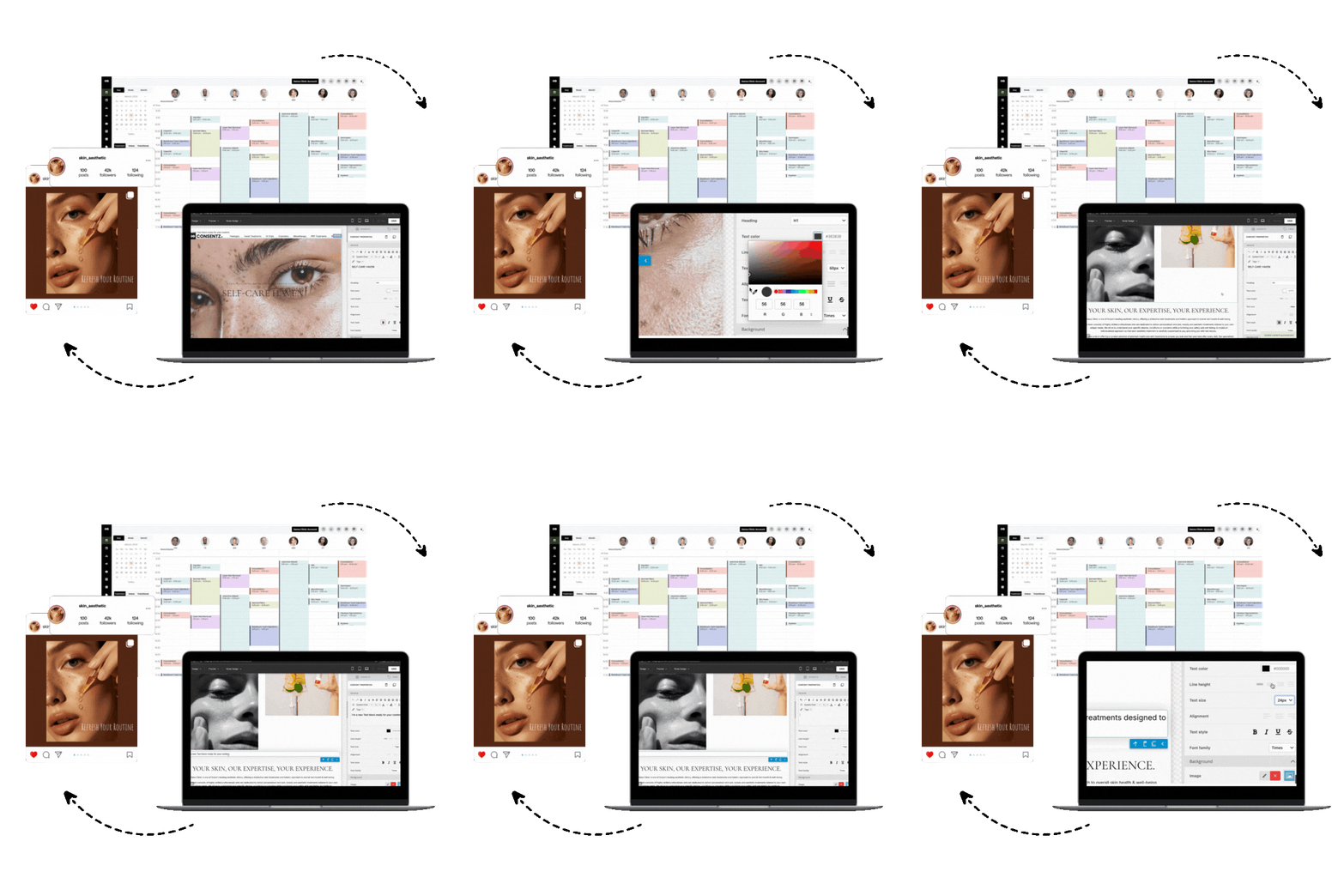
Consentz’s prescriptions module tracks prescriptions per prescriber and links them to specific patient records and treatment notes — so in a multi-prescriber clinic, each prescriber’s activity is separately recorded and separately retrievable for their own professional accountability.
How long to keep prescription records
In the UK:
- Clinical records (including prescribing records) must be kept for a minimum of eight years from the last treatment date for adult patients
- For patients who were under 18 at the time of treatment: until their 25th birthday, or eight years from the last treatment, whichever is later
- For deceased patients: eight years from the date of death
The MHRA also specifies that records relating to medicines — including batch numbers, purchase records, and administration records — should be kept for a minimum of five years. Where this conflicts with the eight-year clinical record retention requirement, the longer period applies.
Digital records managed in a compliant clinic system are significantly easier to retain and retrieve at these timescales than paper records. A treatment record from seven years ago is instantly searchable in a digital system; in a paper filing system, it requires knowing where to look and hoping the file is still legible.
How clinic software handles prescription management
Consentz’s Prescriptions module is built into the stock and clinical record system — not as a separate tool. This means:
- Every prescription is linked to a specific patient record and treatment note
- The prescribing practitioner is recorded against each entry, so a multi-prescriber clinic has a per-prescriber audit trail
- The batch number connects to the stock module, so the product traceability runs from goods received → prescription → patient treatment → batch balance
- Records are stored securely in the cloud with access controls — prescribers can see their own prescribing records, clinic managers can see across all prescribers, practitioners can see only patient records relevant to their own patients
For aesthetic nurses looking to understand their full record-keeping obligations, our guide on how to become an aesthetic nurse practitioner covers the regulatory landscape in detail.
Frequently asked questions
1. What records do I need to keep as a prescribing aesthetic nurse?
As an independent prescriber, you are personally responsible for maintaining records of your prescribing decisions — separate from, but linked to, the clinic’s patient record. Your prescribing record needs to include: the face-to-face consultation date (post-June 2025), your clinical assessment, the prescription details (product, dose, batch number), and your review plan. These records are your professional accountability and may be requested by the NMC in the event of a fitness-to-practise concern, independently of whatever the clinic’s records contain.
2. How should I link prescriptions to patient treatment notes?
Ideally in the same system, not two separate records. The most defensible documentation has the prescription linked directly to the treatment note for the session in which it was used — so an inspector or regulator can trace from the prescription decision to the product batch to the patient treatment without reconstructing a paper trail. Clinic software that integrates prescribing records with treatment notes (as Consentz does) makes this automatic.
3. What is the difference between what the prescriber records and what the clinic records?
The prescriber’s record covers their clinical decision — why they prescribed, what they prescribed, and for whom. It is their professional accountability document. The clinic’s record covers the treatment experience — what was administered, how, to what area, with what result, with what photograph evidence. Both are needed, but they serve different purposes and may be requested by different regulators. The prescriber’s record belongs to the prescriber; the clinic’s record belongs to the patient (and the clinic).
4. Is there a legal requirement for how long prescription records are kept?
Yes. UK clinical records must be retained for a minimum of eight years from the last treatment date (or until age 25 for patients treated as minors, whichever is later). MHRA medicines records must be kept for at least five years. The longer period applies where they conflict. Practically, this means keeping records for eight years is the safe standard across all record types in an aesthetic clinic.
5. How do I manage prescriptions across multiple prescribers?
Each prescriber’s records must be individually attributable — you cannot have a generic clinic prescription record that is not linked to a specific prescriber. In Consentz, the prescriptions module records the prescribing practitioner against each entry, so in a multi-prescriber setup each person’s prescribing activity is separately tracked. This matters for NMC registrant accountability, for CQC inspection, and for professional indemnity insurance purposes.