Managing an aesthetic clinic is a delicate balance. You’re focused on delivering exceptional patient care and beautiful results, but behind the scenes, you’re also running a business. Juggling appointments, inventory, clinical notes, and payments can quickly become overwhelming, especially with outdated or disconnected systems. Learning how to streamline billing in aesthetic clinics isn’t just an administrative goal, it’s a strategic move that directly impacts your profitability, staff morale, and the patient experience.
When your billing process is clunky, you lose time and money. Staff spend hours on manual data entry, chasing payments, and fixing errors, while revenue gets tied up in unpaid claims and patient balances. A streamlined, modern approach solves these problems by integrating and automating the entire financial workflow, from the moment a patient books an appointment to the final payment. This guide explores the key strategies and tools that show you exactly how to streamline billing in aesthetic clinics, creating a more efficient and profitable practice.
The Core of a Streamlined System: Integration
The secret to a truly efficient billing process is integration. Instead of using separate, disconnected tools for different tasks, an integrated system ensures that all your clinical and financial data lives in one place and flows seamlessly between workflows.
Integrated Billing, EHR, and Digital Consent
An integrated system connects your Electronic Health Records (EHR) with your billing software. If you’re weighing terminology, this EMR vs EHR guide explains the difference. When a provider documents a treatment in the patient’s chart, the corresponding charges are automatically created for billing. This single point of data entry eliminates the tedious and error prone task of manually transferring information. This process is strengthened with digital consent. When a patient signs a consent form on a tablet for a specific procedure, that action confirms the service and can automatically add the correct charges to their invoice, ensuring nothing is missed.
Seamless Clinician to Biller Communication
Integration fosters clear communication between clinicians and administrative staff. When a practitioner completes a treatment, all the necessary details, including services rendered and products used, are logged in the shared system. This gives the billing team immediate access to accurate information without needing to chase down clinicians for clarification. This direct line of sight reduces billing delays, improves coding accuracy, and creates a more collaborative and efficient internal workflow.
Accounting and Inventory Integration
A streamlined system doesn’t stop with clinical data. Top tier practice management platforms also offer:
- Accounting Integration: Your billing software should connect directly to your accounting platform, like Xero. When you process a payment or send an invoice, the transaction is automatically recorded in your general ledger. This eliminates double entry, ensures your financial reports are always accurate, and saves your bookkeeper hours of work.
- Inventory Billing Integration: For aesthetic clinics, this is a game changer. When you use a product like a vial of Botox or a skincare item, an integrated system automatically deducts it from your inventory and adds the charge to the patient’s bill. This prevents missed charges, a common source of revenue leakage, and ensures you’re billing for every single product used.
Automating the Patient Journey from Booking to Check In
Efficiency begins the moment a patient interacts with your clinic. A major part of learning how to streamline billing in aesthetic clinics is automating the front end processes to ensure you have accurate information from the start.
Automated Scheduling and Reminders
Missed appointments are a significant source of lost revenue, costing the U.S. healthcare system an estimated $150 billion annually. Automated appointment scheduling and reminder systems are your first line of defense, especially with dedicated spa booking and appointment scheduling software (USA). Patients can book online, and the system automatically sends confirmation and reminder messages via email or SMS. This simple automation can dramatically cut no show rates, keeping your schedule full and your revenue stream consistent.
Automated Intake and Data Verification
Instead of handing patients a clipboard, modern clinics use pre check in and automated intake. Patients receive a secure link to fill out their medical history and demographic information online before their visit. This data flows directly into their electronic medical record (EMR), which has two huge benefits:
- It saves time: The check in process becomes a quick verification step instead of a lengthy data entry task.
- It improves accuracy: Patients are more likely to enter their own information correctly. This is crucial for avoiding claim denials caused by simple data entry errors.
Before the appointment, your system should also perform an insurance eligibility verification. This automated check confirms the patient’s coverage is active, preventing you from rendering services that won’t be paid for. Catching these issues upfront avoids surprise bills for the patient and denied claims for you.
Making Payments Painless for Everyone
Collecting payments promptly is essential for healthy cash flow. The key is to make the process as convenient and transparent as possible for your patients. This is a central piece of the puzzle of how to streamline billing in aesthetic clinics.
Automation and Patient Portals
Instead of manually printing and mailing invoices, payment and invoicing automation uses software to generate and send digital bills. An automated system can also send polite payment reminders, freeing your staff from making awkward phone calls.
A patient payment portal empowers patients to manage their bills themselves. If you operate in the U.S., see how our medical spa software in the USA streamlines portals, card on file, and payment plans. Through a secure online portal, they can view statements, see their balance, and make payments 24/7 using a credit card or bank transfer. The convenience is clear, and with a strong majority of patients preferring to pay medical bills online, adoption is growing quickly.
Card on File and POS Integration
For in person payments, a system with POS integration connects your card reader directly to your billing software. When a card is swiped, the payment is instantly recorded in the patient’s account.
Furthermore, a card on file policy allows you to securely store a patient’s payment information (as an encrypted token) with their consent. This makes checkout instant and enables you to easily set up automated payment plans. Platforms like Consentz integrate with payment processors like Stripe to make both in clinic and card on file payments seamless and secure.
Finally, none of this works without clear patient financial communication. Being transparent about costs upfront and discussing payment options builds trust and reduces the likelihood of unpaid bills.
Mastering the Back Office to Get Paid Faster
Once a service is rendered, the back office team takes over. An optimized workflow here is fundamental to getting paid correctly and on time. Knowing how to streamline billing in aesthetic clinics means mastering these crucial behind the scenes steps.
Ensuring Clean Claims from the Start
- Medical Coding Accuracy: Your claims must use the correct diagnostic and procedural codes to reflect the services you provided.
- Charge Scrubbing: Before submitting a claim, automated software can “scrub” it for errors. This process checks for common mistakes like mismatched codes or missing information, drastically increasing the chance of the claim being paid on the first submission.
- Electronic Claim Submission: Submitting claims electronically is standard practice for a reason. It’s faster, more secure, and cheaper than paper claims.
Proactive Denial and A/R Management
Even with a perfect process, some claims will be denied. A strong denial management strategy involves identifying the reason for each denial, correcting the issue, and appealing the decision. This is especially critical given that the administrative cost to rework a single denied claim averages around $25. This is part of a larger accounts receivable (A/R) management process. Modern software enhances this with A/R workqueue management. Instead of just looking at a long list of outstanding balances, the system intelligently prioritizes accounts for follow up and assigns tasks to specific staff members. This ensures the most critical and oldest accounts get attention first, improving collection rates and cash flow.
Payer Adjudication Monitoring
After a claim is submitted, the work isn’t over. Payer adjudication monitoring is the process of actively tracking the status of your claims with the insurance company. An integrated system can provide real time updates, showing you when a claim has been received, is under review, or has been processed. This visibility allows your team to spot and address potential issues, like a stalled claim, long before they result in a denial, shortening the payment cycle.
Using Technology for Growth and Security
The final components of a streamlined billing system are the tools that give you oversight and peace of mind.
RCM Reporting and HIPAA Compliant Security
RCM reporting and analytics provide a dashboard view of your clinic’s financial health. You can track key metrics like your denial rate, collection rate, and patient acquisition costs. These insights allow you to spot trends, fix bottlenecks, and make data driven decisions to grow your practice.
Of course, all this data must be protected. As we outline in why your clinic’s records must be bulletproof, HIPAA compliant data security is non negotiable. For U.S. based clinics, this means your software provider must be willing to sign a Business Associate Agreement (BAA). A BAA is a legal contract that obligates the vendor to protect patient health information according to HIPAA standards. A reputable practice management system will use strong encryption and secure cloud hosting to protect sensitive data from breaches, ensuring you meet your legal obligations.
Adopting the Right RCM Tools
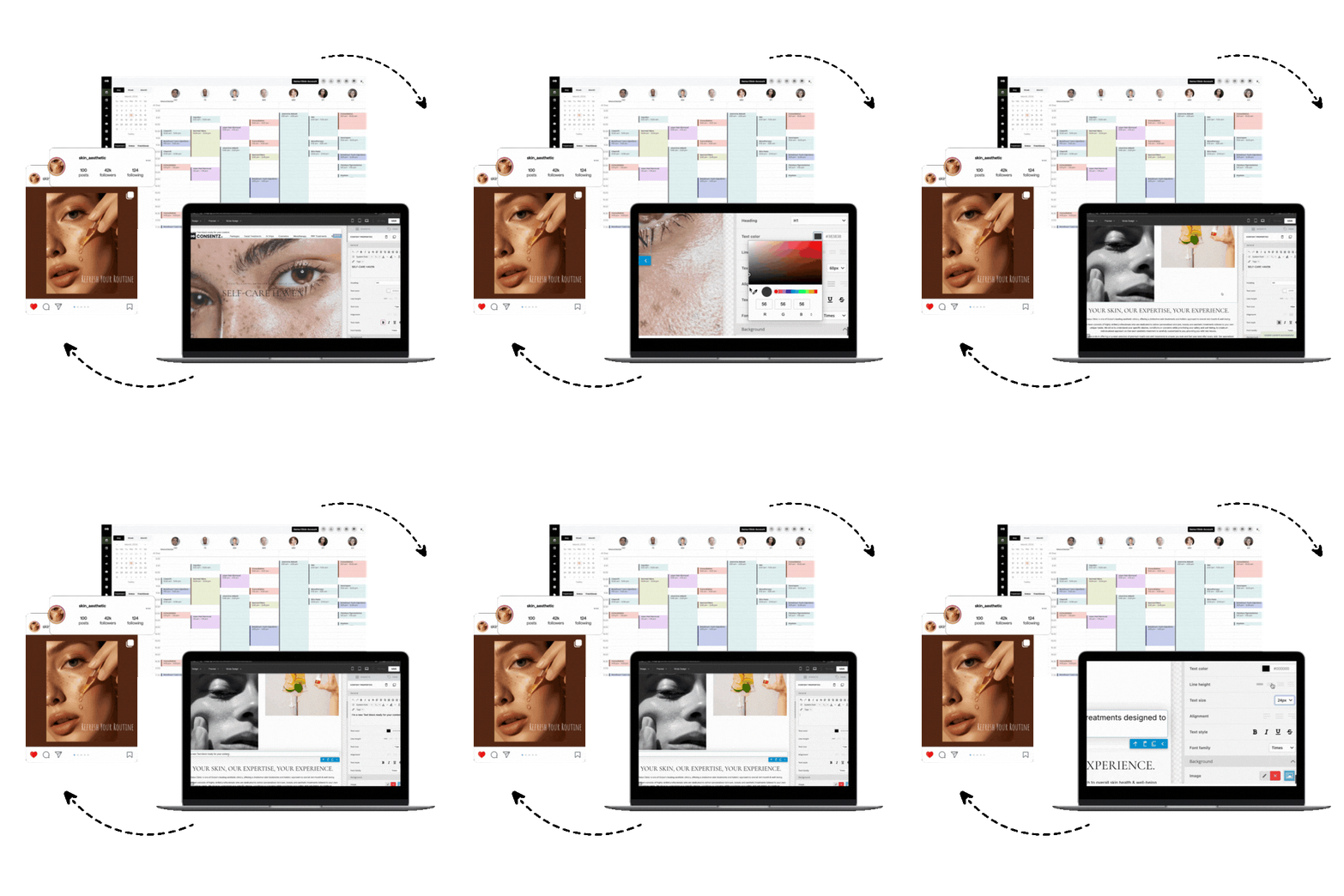
Ultimately, learning how to streamline billing in aesthetic clinics comes down to RCM tool adoption. Choosing an all in one aesthetic clinic software in the USA can replace a dozen disconnected spreadsheets and software programs. It unifies your scheduling, clinical records, inventory, aesthetic clinic marketing, and billing into a single, efficient workflow.
Systems like Consentz are built specifically to solve the challenges aesthetic clinics face, providing the integrated tools you need to reduce administrative work and focus on what you do best, which is treating patients.
Frequently Asked Questions About How to Streamline Billing in Aesthetic Clinics
What is the first step to streamline billing in an aesthetic clinic?
The most impactful first step is to adopt an all in one practice management system with integrated billing. This creates a single source of truth for all clinical and financial data, eliminating the errors and inefficiencies caused by using separate, disconnected tools.
How can automation reduce billing errors?
Automation reduces errors primarily by eliminating manual data entry. When patient information from intake forms, treatment details from the EHR, and product usage from inventory flow automatically into the billing system, the risk of typos, incorrect codes, or missed charges drops significantly.
Why is a patient portal important for billing?
A patient portal offers convenience and self service. It allows patients to view their statements and pay their bills online 24/7, which typically leads to faster payments. It also reduces the administrative burden on your staff, who spend less time mailing paper statements and answering basic billing questions.
What is a common cause of claim denials?
One of the most common and preventable causes of claim denials is simple clerical errors. Things like a misspelled name, an incorrect date of birth, or a wrong policy number account for a surprisingly high number of rejections. This is why automated patient intake and data verification are so crucial.
How does streamlining billing improve the patient experience?
A streamlined process creates a better patient experience through transparency, convenience, and professionalism. When patients can easily schedule online, complete forms at home, understand their costs upfront, and pay their bills through a simple portal, it removes friction and financial anxiety, building trust in your clinic.
What should I look for in billing software for an aesthetics clinic?
Look for an integrated, all in one platform built specifically for aesthetics. Key features should include EHR integration, digital consent, automated reminders, a patient payment portal, and robust inventory to billing integration. Ensure any U.S. vendor provides a Business Associate Agreement (BAA) for HIPAA compliance. If you’re in California, explore our aesthetic clinic software in California guide.