Thinking about a cosmetic procedure is a big decision. One of the biggest questions on anyone’s mind is, “What will I actually look like?” For years, the best you could do was look at photos of other people. But today, technology has changed the game. Welcome to the world of plastic surgery software before and after simulations, where you can see a preview of your potential results on your own face or body before making a commitment.
This technology is transforming patient consultations from simple conversations into interactive, visual planning sessions. From 3D simulators to augmented reality apps, these tools help align expectations, improve communication, and empower you to make more confident decisions. Let’s dive into the key concepts behind the plastic surgery software before and after experience.
The Core Technology: How Visualization Works
At the heart of modern aesthetic consultations are a few key technologies that create these stunningly realistic previews. They range from simple photo edits to complex 3D models.
Virtual Try On Plastic Surgery Apps
A virtual try on plastic surgery app is software that lets you digitally “try on” cosmetic procedures. Using your phone’s camera or an uploaded photo, these apps use augmented reality (AR) or photo manipulation to simulate changes. You can see what you might look like with a different nose or fuller lips in real time. This tech has become a major force in patient education, and some clinics report conversion rates jumping significantly after integrating it. These apps are especially popular with younger, tech savvy patients who are more likely to engage with AR try on features.
3D Aesthetic Simulators
A 3D aesthetic simulator takes things a step further. Instead of just editing a flat photo, this system creates a three dimensional model of your face or body. This lifelike model can be rotated and viewed from any angle, giving you a much more holistic and realistic sense of your potential post surgery appearance. While early systems were clunky and expensive, modern cloud based simulators can now generate 3D models from a few standard photos, making the technology far more accessible for clinics.
3D Face Scan Capture
So how do you create that 3D model? The process is called 3D face scan capture. It’s the first step in creating a “digital twin” of the patient that can be modified. In the past, this required bulky camera equipment. Today, it can be done in seconds using an iPad or smartphone with depth sensors, or through clever software that reconstructs a 3D image from several 2D photos. In some clinical studies, the entire process of capturing and creating a 3D simulated image took only about 90 seconds on average.
Seeing is Believing: Simulators for Popular Procedures
Different cosmetic procedures require different simulation approaches. Here’s a look at how plastic surgery software before and after tools are tailored for some of the most common treatments.
Rhinoplasty Simulator
A rhinoplasty simulator is a specialized tool designed to show potential outcomes of a nose reshaping surgery. Since rhinoplasty is one of the top five cosmetic surgeries globally, these simulators are crucial for communication. A surgeon can digitally adjust the bridge, tip, and width of the nose on your photo or 3D model, helping you both agree on a shared surgical goal. Research confirms this is vital for happiness; studies have found that the closer a patient’s actual result matched the 3D simulation, the higher their satisfaction with the outcome was.
Breast Augmentation Simulation
Breast augmentation is consistently one of the most popular cosmetic procedures worldwide. A breast augmentation simulation helps answer the common question, “What will I look like with this implant size?” Using 3D imaging or AR, the software shows how different implant volumes, shapes, and profiles would look on your body. In a study of an AR based simulation tool, patients reported high satisfaction with the simulation and the final breast size they selected, rating the realism impressively high.
Liposuction Simulation
With millions of procedures performed annually, it’s no surprise that liposuction simulations are in high demand. This plastic surgery software before and after tool provides a digital preview of how your body could look after fat removal. The software can digitally slim targeted areas like the abdomen, flanks, or thighs on a photo or 3D model, showing you how fat reduction would alter your overall body contour.
Facial Feature Editing
Facial feature editing is a broad term for digitally modifying any facial attribute, from lip volume and jawline contour to skin texture. In a clinical setting, this is used to simulate the effects of procedures like fillers, chin implants, or a Botox brow lift. A practitioner can make precise, anatomically respectful adjustments to your photo to visualize a potential outcome. This professional grade editing is a far cry from social media filters, which can sometimes create unrealistic expectations.
A Better Consultation: Interactive and Collaborative Tools
Modern plastic surgery software before and after tools are about more than just seeing a final image. They make the entire consultation process more engaging, transparent, and collaborative.
Informed Decision Making with 3D Simulation
The greatest benefit of 3D simulation is its power to foster truly informed decision making. By viewing a rotatable 3D model of their own body or face, patients gain a deeper understanding of the proposed changes from all angles. This process helps demystify the surgical plan, allowing patients to ask more specific questions and provide clearer feedback. This collaborative visualization ensures both the patient and surgeon have a shared, realistic understanding of the goals, which is a key factor in achieving high patient satisfaction.
Photo Annotation in Consultation
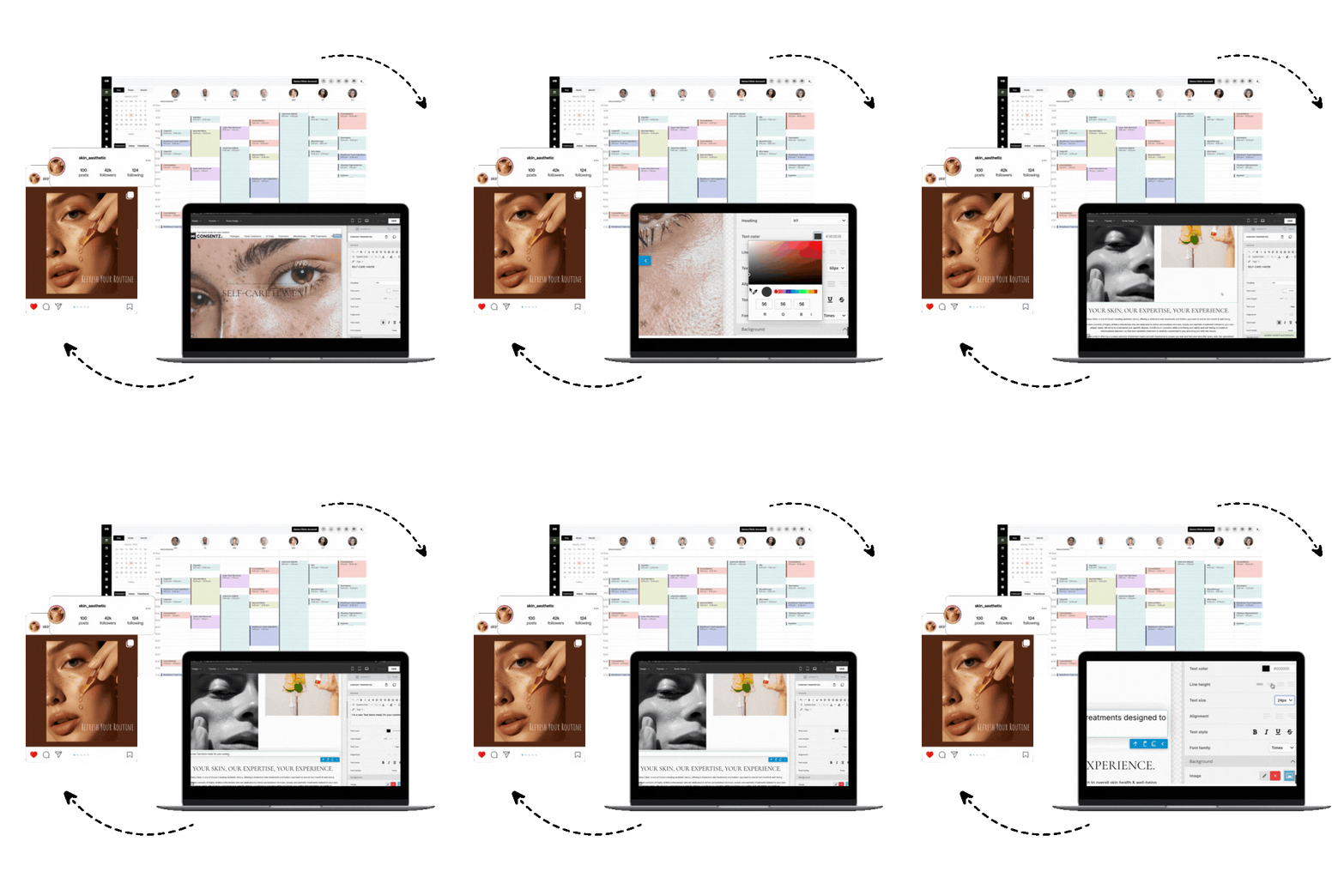
Photo annotation is a simple yet powerful tool where a practitioner draws directly on your clinical photo during a consultation. They might circle an area for filler, sketch a potential incision line, or highlight asymmetries. This makes the treatment plan crystal clear. Modern clinic management systems, like the iPad app from Consentz, have built in drawing tools that allow providers to do this digitally, saving the annotated images directly to your patient file for future reference. For US based practices, see aesthetic clinic software in the USA to explore secure photo annotation and patient records in one place.
Patient Engagement via Visualization
When patients can see potential outcomes, they become more active participants in their own care. This is the core of patient engagement via visualization. Instead of just listening to a surgeon’s explanation, you can provide direct feedback on a simulation, fostering a two way conversation. Clinics that integrate visualization tools on their websites or in their waiting rooms often see more consultation requests because patients have already had a chance to explore the possibilities. Pairing this with online booking and appointment scheduling software helps convert that interest into confirmed consultations.
Interactive Comparison Tools
Several features make the comparison process more dynamic and clear for patients:
- Intensity Adjustment Slider An interactive feature that lets you control the degree of a simulated change. For example, you can use a slider to gradually increase lip volume from subtle to dramatic, stopping at the exact point that looks best to you.
- Split Face Comparison A technique where an image is divided in half, showing the “before” on one side and the “after” on the other. This allows for an immediate, direct comparison that makes it easy to see the impact of a treatment.
- Before and After Comparison The classic comparison remains the foundation of aesthetic education. High quality, standardized photos showing real patient results are crucial. Consistency in lighting, background, and patient positioning is key to providing a true representation of the surgical outcome.
The Big Picture: Trust, Safety, and Marketing
Beyond the consultation room, visualization software has broader implications for how patients choose providers and how clinics build trust and grow their practice.
Provider Vetting with Before and After Photos
For most prospective patients, a provider’s before and after photo gallery is the first and most important piece of research. These images serve as proof of a surgeon’s skill and aesthetic style. Patients scrutinize these galleries to find examples of results they admire on people with similar features. A robust and authentic portfolio is often the deciding factor when choosing a practitioner.
Expectation Management for Simulated Results
While powerful, it’s crucial to remember that a simulation is an educated approximation, not a guarantee. Expectation management is the process where a provider ensures you understand this. They’ll explain that factors like your individual anatomy and healing process can cause the final result to vary slightly from the digital preview. A good simulation is a guide for the journey, not a contractual promise.
Ethical Considerations for AI Generated Images
The use of AI in creating before and after simulations comes with significant ethical responsibilities. Practitioners must ensure that the generated images are realistic and achievable, serving as an educational tool rather than a misleading marketing gimmick. The goal is to manage expectations, not to create an idealized or unattainable result that could disappoint the patient post procedure. This commitment to ethical imaging helps build a foundation of trust between the patient and the clinic.
Patient Privacy and Consent in the Age of AI
Handling patient photos, especially for use in AI driven tools, requires the utmost care and security. Patients must provide explicit and informed consent, understanding not only the procedure itself but also how their images will be captured, stored, and used for simulations. Using personal smartphones or non secure apps creates significant privacy risks. Professional practices must use secure, compliant systems for storing and sharing these sensitive images. Platforms like Consentz are built with security at their core, using high level encryption and compliant hosting to protect patient data, giving both the clinic and the patient peace of mind.
Website Integration and Marketing
Integrating visualization tools directly into a clinic’s website is a savvy marketing strategy. A “virtual try on” widget can turn a passive website visit into an engaging experience, generating qualified leads. Beyond widgets, compelling before and after images and simulation videos make for fantastic social media content that attracts new followers. This positions the practice as modern, transparent, and technologically advanced. For more ways to turn traffic into bookings, see our aesthetic clinic marketing guide.
Frequently Asked Questions
What is the best plastic surgery software before and after app?
There isn’t a single “best” app, as some are for patient entertainment while others are professional clinical tools. Popular options used in clinics include Crisalix, AEDIT, and others. The most important factor is the discussion you have with a qualified surgeon who uses these tools to guide your consultation. Clinics in major metros like New York often choose aesthetic clinic software in New York that combines imaging with EMR, consent, and marketing.
Are plastic surgery simulations accurate?
Modern 3D simulators can be very accurate in predicting changes in shape and volume. Studies have shown a strong correlation between simulation accuracy and patient satisfaction. However, they are still a simulation. They cannot perfectly predict factors like skin healing, swelling, or scarring. They are best used as a collaborative planning tool.
Can I see a simulation of a nose job online for free?
Yes, several websites and apps offer free basic rhinoplasty simulators. These can be a fun way to explore possibilities, but they lack the precision and expert guidance you would receive from a professional 3D simulation during a consultation with a plastic surgeon.
How do doctors ensure before and after photos are honest?
Reputable practitioners follow strict protocols for clinical photography. This includes using a consistent background, standardized lighting, and identical patient poses and camera angles for both the before and after shots. This ensures the comparison is as accurate and honest as possible.
Is it safe to upload my photo to a plastic surgery simulator?
If you are using a tool on a reputable clinic’s website or during a consultation, it should be safe. Professional clinics use secure, HIPAA compliant platforms; if you’re new to these systems, learn what electronic medical records (EMR) are. Be cautious with standalone consumer apps and always review their privacy policy.
The evolution of plastic surgery software before and after technology has created a more transparent, collaborative, and satisfying journey for patients. By harnessing these tools, clinics can provide an exceptional experience built on clear communication and trust.
For aesthetic practices looking to bring all these elements together, an all in one system is essential. A platform that manages secure photography, digital consent, patient engagement, and marketing in one place can streamline workflows and elevate patient care. If you run a one person practice, our spa software for solo practitioners shows how to deliver this without enterprise overhead. If your clinic is ready to embrace the future of aesthetic medicine, you can book a free demo of Consentz to see how an integrated solution can transform your practice.