Navigating the path to becoming a licensed esthetician can feel complex, but the rules in the Centennial State are straightforward. The primary aesthetic license requirements in Colorado involve completing 600 hours of training, passing state-administered written and practical exams, and renewing your license biennially. This guide breaks down each of these steps, from initial training to maintaining your license, in a clear and simple way. If you’re comparing requirements across the country, see our aesthetic license requirements in the USA.
The Foundation: Training Hours and School Approval
Before you can even think about exams, your journey starts with education. Colorado has specific standards for the training you must receive to ensure you are prepared for a professional career.
Meeting the 600 Hour Training Requirement
To qualify for an esthetician license in Colorado, you must complete 600 hours of training (or 20 semester credit hours) at an approved school. This 600 hour benchmark is a common standard in many states, designed to provide a comprehensive foundation in skincare theory and hands on practice. Most students attending a program full time can complete these hours in about four to six months. This ensures every aspiring professional gains essential knowledge before they are eligible for licensure.
Why Approved Programs and School Approval Matter
The state’s licensing board will only recognize your hard earned training hours if they come from a board approved school. An “approved program” is an esthetics or cosmetology course that has been vetted and authorized by the state. These schools must meet strict curriculum standards, employ qualified instructors, and maintain proper facilities. Attending a non approved school means your hours will not count toward your license, so it’s vital to verify a school’s status with the Colorado Office of Barber and Cosmetology Licensure before you enroll.
A Look at the Esthetics Curriculum
So, what do you learn during those 600 hours? The curriculum is carefully structured to cover all key areas of the profession. While the exact hourly breakdown can vary slightly between schools, the aesthetic license requirements in Colorado mandate coverage of specific topics. A typical program includes:
- Science Fundamentals: Anatomy, physiology, bacteriology, and infection control.
- Skincare Practices: A significant portion of your time is spent on hands on techniques like facials, skin analysis, exfoliation, massage, and using equipment.
- Hair Removal: Training in waxing, tweezing, and other methods of temporary hair removal.
- Makeup Artistry: This includes color theory, application techniques, and cosmetic product knowledge.
- Business and Safety: Professional ethics, salon management, and Colorado state laws and sanitation regulations, plus HIPAA requirements for a med spa.
The Path to Licensure: Exams and Endorsement
Once your training is complete, the next step is to prove your knowledge and skills through the official examination process. There are also pathways for licensed professionals moving to the state.
Licensure by Examination
For new graduates, licensure by examination is the standard route. This means you must pass the state board exams after completing your 600 hours of training. This process ensures every new esthetician meets a minimum standard of competency before they can practice professionally on the public.
Written and Practical Exam Requirements
The Colorado esthetician licensing process involves two key exams:
- Written (Theory) Exam: A computer based, multiple choice test covering topics like skin science, safety and infection control, treatment procedures, and state regulations.
- Practical (Hands On) Exam: A skills based test where you must demonstrate core esthetics services on a mannequin. This could include a basic facial, hair removal, and makeup application, with evaluators scoring you on technique, safety, and sanitation.
Passing both exams is a mandatory part of the aesthetic license requirements in Colorado.
How to Schedule Your Exam via PSI
Colorado contracts with a third party testing company, PSI, to administer its cosmetology and esthetics exams. After your school confirms your eligibility, you will receive an Authorization to Test. From there, you can visit the PSI website to select a testing center, choose a date, and pay the exam fees. On exam day, be sure to bring your admission notice and a valid photo ID.
License by Endorsement (For Out of State Estheticians)
If you are already a licensed esthetician in another state and are moving to Colorado, you can apply for a license by endorsement. This process, sometimes called reciprocity, allows the state to recognize your existing license if your home state’s requirements were substantially equivalent to Colorado’s (e.g., 600 training hours and passing a practical exam). You will need to provide verification of your current license and training to bypass re taking the exams.
What About Foreign Credential Evaluation?
For estheticians trained outside of the United States, the process involves having your education evaluated by a board approved credentialing service. This service will review your foreign transcripts and diplomas to determine if your training is equivalent to the aesthetic license requirements in Colorado. If there are gaps, the board may require you to complete additional training hours before you can sit for the exams.
Maintaining Your Professional License
Getting your license is a huge accomplishment, but the work doesn’t stop there. To continue practicing legally, you must keep your license active and adhere to professional standards.
License Renewal and Expiration Dates
In Colorado, an esthetician license must be renewed every two years. The expiration date is March 31st of either an even or odd numbered year, depending on when your license was issued. It is your professional responsibility to keep track of this date, although the state board typically sends out a renewal notice as a courtesy.
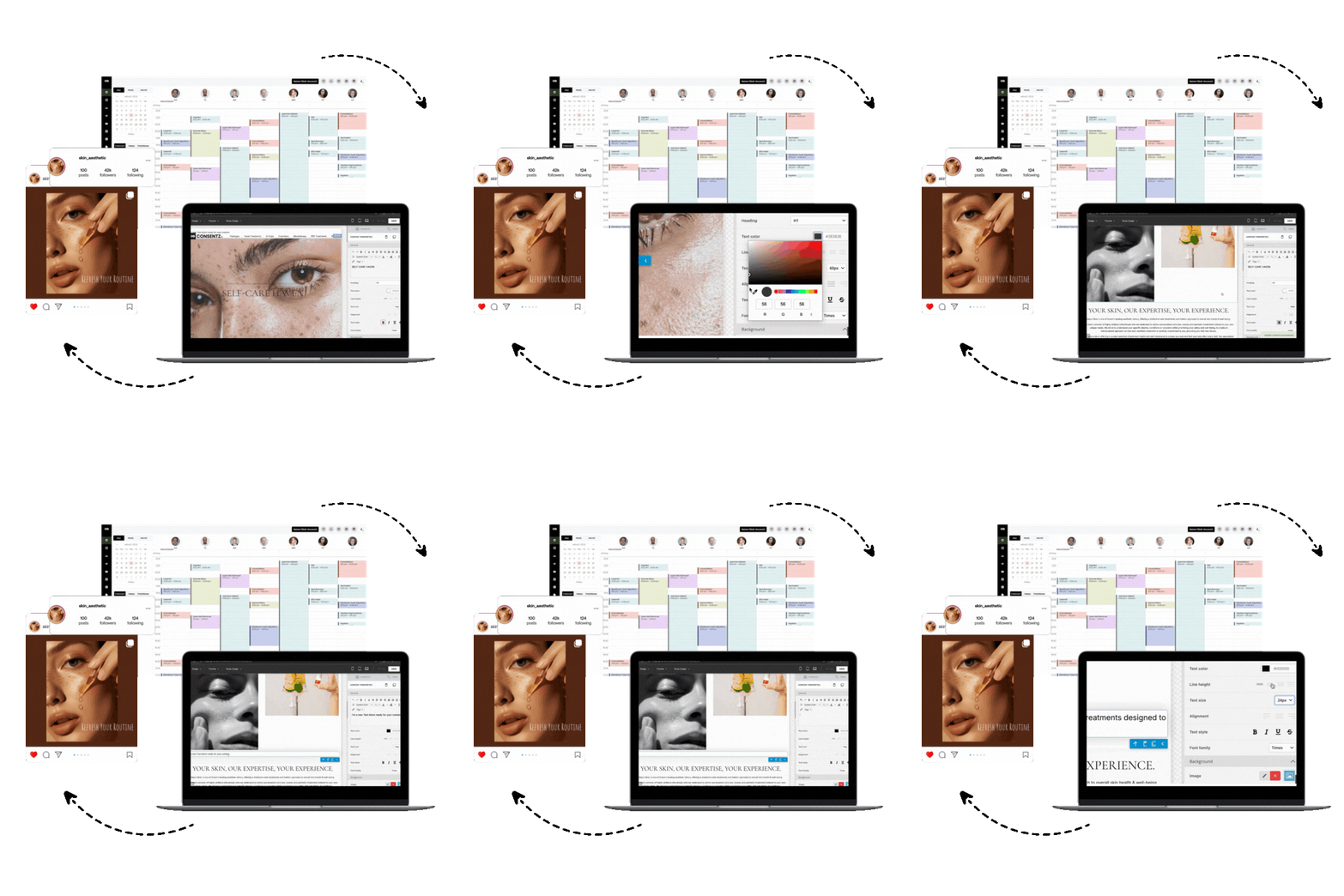
For clinic owners, managing multiple staff licenses can be a challenge. Ensuring every provider’s credentials are up to date is essential for compliance. A comprehensive platform like Consentz can help by allowing managers to log staff license details and receive alerts before they expire, avoiding any disruption in service. Once you’re licensed, keeping a full diary is easier with clinic scheduling software for aesthetics that automates reminders to reduce no-shows.
Understanding the Renewal Grace Period
If you miss your renewal deadline, Colorado offers a 60 day grace period. During this window, your license is technically expired, but you can still renew it by submitting the application and paying a late fee. It is important to note that you cannot legally work as an esthetician until your renewal is fully processed.
What Happens If Your License Lapses? Reinstatement
If you fail to renew your license within the 60 day grace period, it will become inactive. To restore it, you must apply for license reinstatement. This process typically involves a more extensive application, higher fees, and potentially additional requirements to prove your ongoing competency, especially if the license has been expired for several years.
Your Scope of Practice and Advanced Training
Your license gives you the legal authority to perform specific services. Understanding these boundaries is critical for client safety and legal compliance.
The Official Esthetician Scope of Practice
In Colorado, a licensed esthetician is permitted to provide cosmetic services for the health and beautification of the skin. This generally includes:
- Facials, cleansing, and massaging
- Superficial chemical exfoliation
- Extractions of blemishes
- Temporary hair removal like waxing and tweezing
- Makeup application and eyelash extensions
Services that are considered medical, such as Botox injections, deep chemical peels, and laser treatments, fall outside the standard esthetician scope of practice and must be performed by a qualified medical professional. Staying within your scope is not just a rule; it’s a core professional responsibility. Clinic management software can help by allowing you to tie service menus to specific provider credentials, ensuring treatments are only performed by qualified staff. To strengthen your audit trail and reduce risk, review our clinical documentation improvement software guide. Discover how Consentz can support your practice with compliance features.
Additional Training for Advanced Services
Many estheticians choose to specialize in advanced treatments. While Colorado’s regulations are specific, pursuing extra certification is always a good idea. As you expand into advanced procedures, set up medspa EMR software early to streamline consents, before/after photos, and inventory.
- Chemical Peels (Exfoliation): To perform stronger chemical peels that go beyond the most superficial layer, advanced training is essential. Many professionals complete specialized courses, sometimes around 24 hours, covering advanced skin chemistry and safety protocols.
- Microdermabrasion: Similarly, offering professional grade microdermabrasion often requires additional certification. A typical course might be around 14 hours and covers equipment use, technique, and client safety.
- Permanent Makeup: This service, including microblading, is considered a form of cosmetic tattooing. It is not covered by an esthetician license. To perform permanent makeup in Colorado, you must obtain a separate body art license from the local public health agency, which requires extensive, specialized training.
Provisions for Military Spouses
Colorado supports military families by offering temporary practice provisions for military spouses. If you are an esthetician married to an active duty service member and relocate to Colorado on military orders, you may be eligible for an expedited temporary license. This allows you to work while you complete the process of obtaining a full Colorado license by endorsement, making the transition much smoother. If you’re a nurse planning to launch a med spa in Colorado, review our med spa guide for nurses.
Frequently Asked Questions
1. How long does it take to meet the aesthetic license requirements in Colorado?
Most full time students complete the required 600 hours of training in four to six months. After that, you need to schedule and pass both the written and practical exams, which can add a few more weeks to the timeline.
2. Can I perform microneedling with a Colorado esthetician license?
The regulations around microneedling can be complex. In Colorado, it is generally considered a medical procedure that falls outside the standard esthetician scope of practice unless performed under the supervision of a licensed medical doctor.
3. What are the fees to get an esthetician license in Colorado?
Fees are subject to change, but you can expect to pay for the application itself as well as separate fees for the written and practical exams administered by PSI. It is best to check the official DORA and PSI websites for the most current fee schedule. For broader budgeting and packaging of your services, explore our aesthetic clinic pricing models guide.
4. How can I verify if an esthetician’s license is active in Colorado?
You can verify a professional license through the Colorado Department of Regulatory Agencies (DORA) online license lookup portal. This is a public resource that shows the status of any license.
5. Do I need continuing education to renew my esthetician license in Colorado?
Currently, Colorado does not require estheticians to complete continuing education credits for license renewal. However, pursuing ongoing education is always recommended to stay current with industry trends and techniques.
Understanding the aesthetic license requirements in Colorado is the key to building a compliant and thriving practice. By managing your education, exams, and renewals properly, you can focus on what you do best: helping clients achieve beautiful, healthy skin. If your next step is launching a business, follow our step‑by‑step guide to starting a medspa.
Ready to streamline your clinic’s operations and ensure compliance is always under control? Book a free demo of Consentz today and see how our all in one platform can support your growth.