The medical spa industry is booming. Valued at over $18 billion in 2022, it’s projected to soar past $45 billion by 2030. This incredible growth makes opening a med spa an exciting venture. But turning that vision into a successful reality requires careful planning, legal know how, and a solid operational strategy.
If you’re wondering how to open a med spa in USA, the process involves creating a detailed business plan, navigating complex state-specific medical regulations, securing a location and equipment, hiring licensed professionals, and launching a targeted marketing campaign. This comprehensive guide walks you through every essential step, from initial concept to scaling your business.
Phase 1: Creating Your Business Blueprint
Before you purchase a single laser or welcome your first client, you need a rock solid plan. This initial phase is all about research, strategy, and getting your legal ducks in a row.
1. Understand the Med Spa Industry
A med spa blends medical aesthetic treatments (like Botox and laser hair removal) with a relaxing spa experience. These facilities operate under the supervision of licensed medical professionals, offering a safe and clinical yet comfortable environment. With over 8,800 med spas in the U.S. as of 2022, it’s a competitive field, but one with incredibly high demand.
2. Conduct Market Research and Competitor Analysis
Market research is your first critical task. It involves analyzing your local market to understand customer demographics, what services are popular, and who your competitors are. For example, research shows that Botox and fillers drive about 55% of all U.S. med spa revenue.
Competitor analysis involves identifying the top 3 to 5 med spas in your area and studying their service menus, pricing, and customer reviews. This helps you find gaps in the market and create a unique value proposition. Failing to understand the market is a top reason startups fail, so this step is non negotiable.
3. Define Your Vision and Target Market
Your vision statement is your med spa’s guiding star. It’s an aspirational sentence that defines your purpose, for example, “To be the top destination for natural looking results and personalized care in our community.” A clear vision helps guide every decision.
Your target market is the specific group you want to serve. The typical med spa client is a woman aged 35 to 55 with disposable income, but your niche could be different. Perhaps you’ll focus on anti aging treatments for professionals or acne solutions for a younger demographic. Aligning your services and marketing with a specific audience is key to success.
4. Create a Med Spa Business Plan
A formal business plan is your roadmap. It outlines your company description, market analysis, services, pricing, marketing strategy, operations plan, and financial projections. Entrepreneurs with a business plan are 16% more likely to build a viable business. More importantly, it’s essential for securing funding from banks or investors.
5. Plan Financial Projections and Startup Costs
This is where your business plan gets real. You’ll need to forecast your revenue, expenses, and profitability for the first 3 to 5 years. Startup cost planning involves calculating every expense needed to open your doors.
The average cost to open a medical spa in the U.S. ranges from $134,000 to $417,000. For line‑item estimates and budgeting tips, see our detailed breakdown of med spa startup costs. These costs typically include:
- Leasehold Improvements: $10,000 to $50,000
- Medical Equipment: $80,000 to $250,000
- Initial Inventory: $5,000 to $10,000
- Working Capital: To cover salaries and marketing for the first few months.
Running out of cash is a primary reason businesses fail, so detailed financial planning is crucial.
6. Choose a Legal Structure (LLC, Corporation, or PC)
You need to decide how your business will be legally structured. The most common options for a med spa are:
- Limited Liability Company (LLC): This is a popular and flexible choice that protects owners from personal liability. An LLC can be owned by non physicians in many states, making it a versatile option.
- Corporation (Inc.): A more complex structure often used if you plan to seek outside investment or issue stock.
- Professional Corporation (PC): In many states, medical practices must be formed as a PC or PLLC (Professional LLC), which requires owners to be licensed professionals.
The right choice depends on your state’s laws and ownership structure.
7. Understand the Corporate Practice of Medicine (CPOM)
The Corporate Practice of Medicine (CPOM) doctrine is a critical legal hurdle. In many states, this rule prohibits non physicians from owning a medical practice or employing doctors. This means if you are not a physician, you cannot simply open and own a med spa on your own.
CPOM rules vary significantly:
- Strict States (like California, New York, Texas): Require a med spa to be 100% physician owned (see California med spa licensing requirements).
- Moderate States: May allow partial ownership by other licensed professionals like Nurse Practitioners (NPs) or Physician Assistants (PAs).
- Lenient States: A few states have relaxed rules or allow NPs with full practice authority to own a med spa independently.
Violating CPOM can lead to severe penalties, including fines and practice closure. Understanding the rules in your state is a vital part of learning how to open a med spa in USA.
8. Use the Management Services Organization (MSO) Model
For non physician entrepreneurs in states with strict CPOM laws, the MSO model is the solution. This legal structure separates the business into two entities:
- A Professional Corporation (PC): Owned by a licensed physician, this entity provides all clinical services and employs the medical staff.
- A Management Services Organization (MSO): Owned by the entrepreneur, this entity handles all non clinical operations, like marketing, billing, and facility management.
The MSO provides services to the PC for a fee, allowing the non physician owner to participate in the business’s success without illegally practicing medicine.
Phase 2: Ensuring Full Compliance
With your business structure defined, the next phase focuses on licenses, permits, and the rules of clinical practice.
1. Navigate State Licensing and Regulatory Compliance
Compliance means following all state specific laws governing who can own a med spa, who can perform treatments, and how the facility must operate. Each state’s medical, nursing, and cosmetology boards have their own rules. You’ll need to ensure the facility is licensed, every practitioner holds a current license, and you adhere to healthcare regulations like proper infection control. For a deeper overview of requirements, see what license you need to open a medical spa.
2. Obtain a Business License and Health Permit
A business license is a basic permit from your city or county that allows you to operate legally. Nearly every med spa will need one. A health permit may also be required by your local health department, especially if you offer services like microblading or permanent makeup, which are often regulated as body art.
3. Conduct a Good Faith Exam
A “good faith exam” is a medical evaluation that a physician, NP, or PA must perform before a patient receives their first medical aesthetic treatment. This exam establishes a formal provider patient relationship, confirms the patient is a suitable candidate for the procedure, and creates a documented treatment plan. It’s a non negotiable step for medical procedures like injectables and laser treatments.
4. Follow Delegation and Supervision Rules
In a med spa, physicians or NPs often delegate tasks like injections or laser treatments to registered nurses (RNs) or other qualified staff. State laws dictate what can be delegated and the required level of supervision. Supervision can be direct (the physician is on site) or indirect (the physician is available by phone). You must have clear, written protocols outlining these delegation and supervision relationships to remain compliant.
5. Maintain HIPAA Compliance
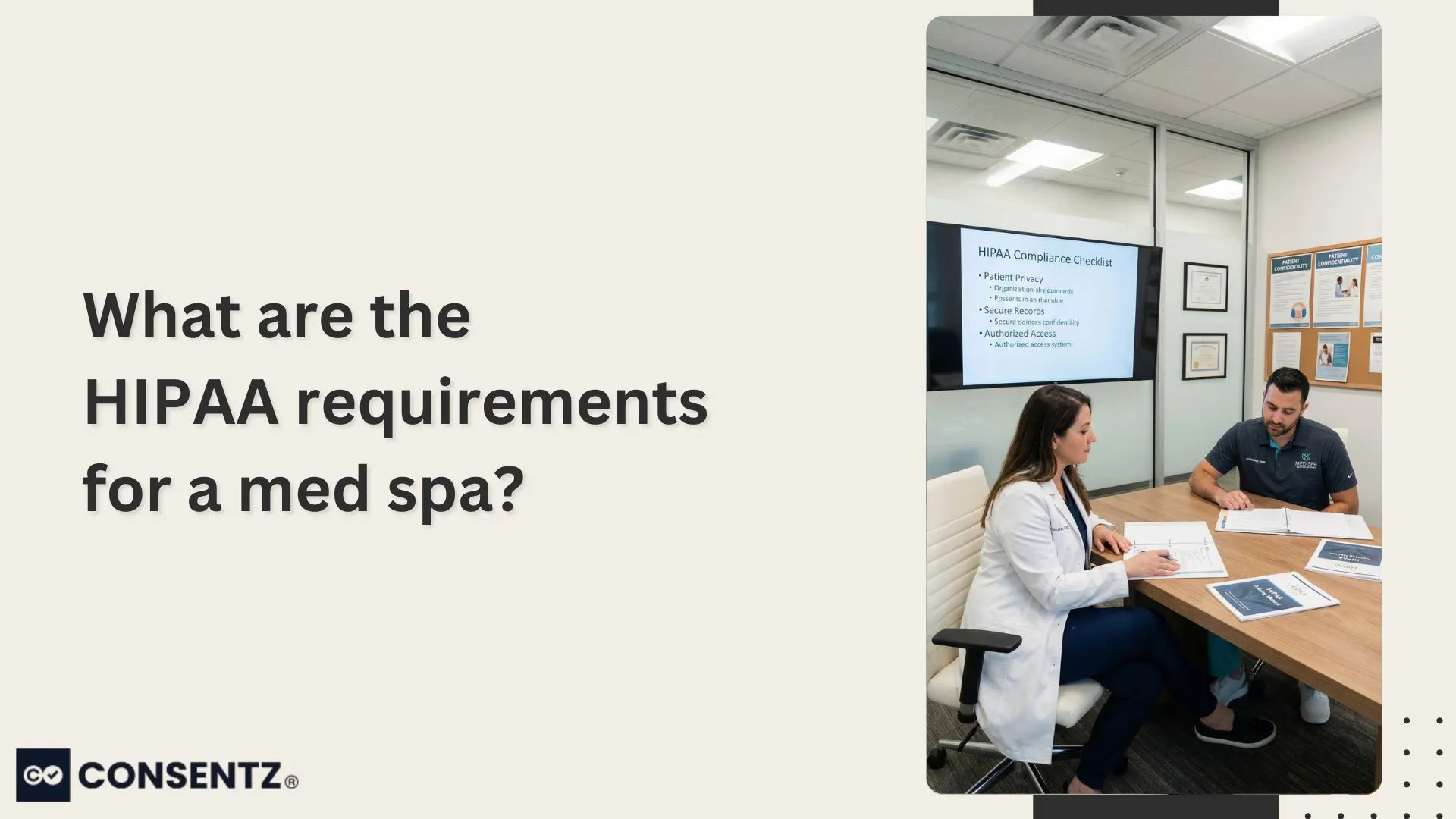
The Health Insurance Portability and Accountability Act (HIPAA) requires you to protect patients’ private health information (PHI). For a med spa, this means securing everything from medical history forms to before and after photos. Compliance involves using secure software, training staff on privacy practices, and having policies for data breaches. If you’re new to HIPAA in aesthetics, review our guide to HIPAA requirements for a med spa.
6. Ensure OSHA Compliance and Workplace Safety
The Occupational Safety and Health Administration (OSHA) sets workplace safety standards. For a med spa, this primarily involves the Bloodborne Pathogens Standard (protecting staff from needle sticks and bodily fluids) and the Hazard Communication Standard (safely handling chemicals). Compliance includes providing protective gear, offering Hepatitis B vaccinations, and maintaining safety data sheets for all chemicals.
7. Secure Malpractice, General Liability, and Property Insurance
Insurance is your financial safety net. You’ll need three core types:
- Malpractice Insurance: Covers claims related to professional negligence or injury from a treatment.
- General Liability Insurance: Covers non medical accidents, like a client slipping and falling in your lobby.
- Property Insurance: Protects your expensive equipment and facility from events like fire, theft, or water damage.
Phase 3: Building Your Physical and Digital Space
Your environment, both physical and virtual, defines the client experience. This phase covers everything from finding the perfect location to procuring state of the art equipment.
1. Select a Location and Design Your Facility
Your location should be accessible and visible to your target market, often in an upscale retail area or a professional medical complex. Ample parking is a must. The facility itself, typically 1,500 to 3,000 square feet, should have a welcoming reception area, private consultation and treatment rooms, and an atmosphere that reflects your brand: clean, calming, and professional.
2. Guarantee ADA Accessibility Compliance
The Americans with Disabilities Act (ADA) requires your med spa to be accessible to people with disabilities. This includes having a wheelchair accessible entrance, wide doorways and hallways, and compliant restrooms. Ensuring accessibility is not only a legal requirement but also an ethical one that welcomes all potential clients.
3. Procure Equipment and Medical Devices
Your equipment is one of your biggest investments, often totaling between $80,000 and $250,000. Your service menu will determine what you need, from laser platforms and body contouring machines to injectable supplies. You can buy new, purchase refurbished equipment, or lease to conserve capital. Always choose FDA cleared devices and ensure the vendor provides comprehensive training and support.
4. Implement EHR and Client Management Software
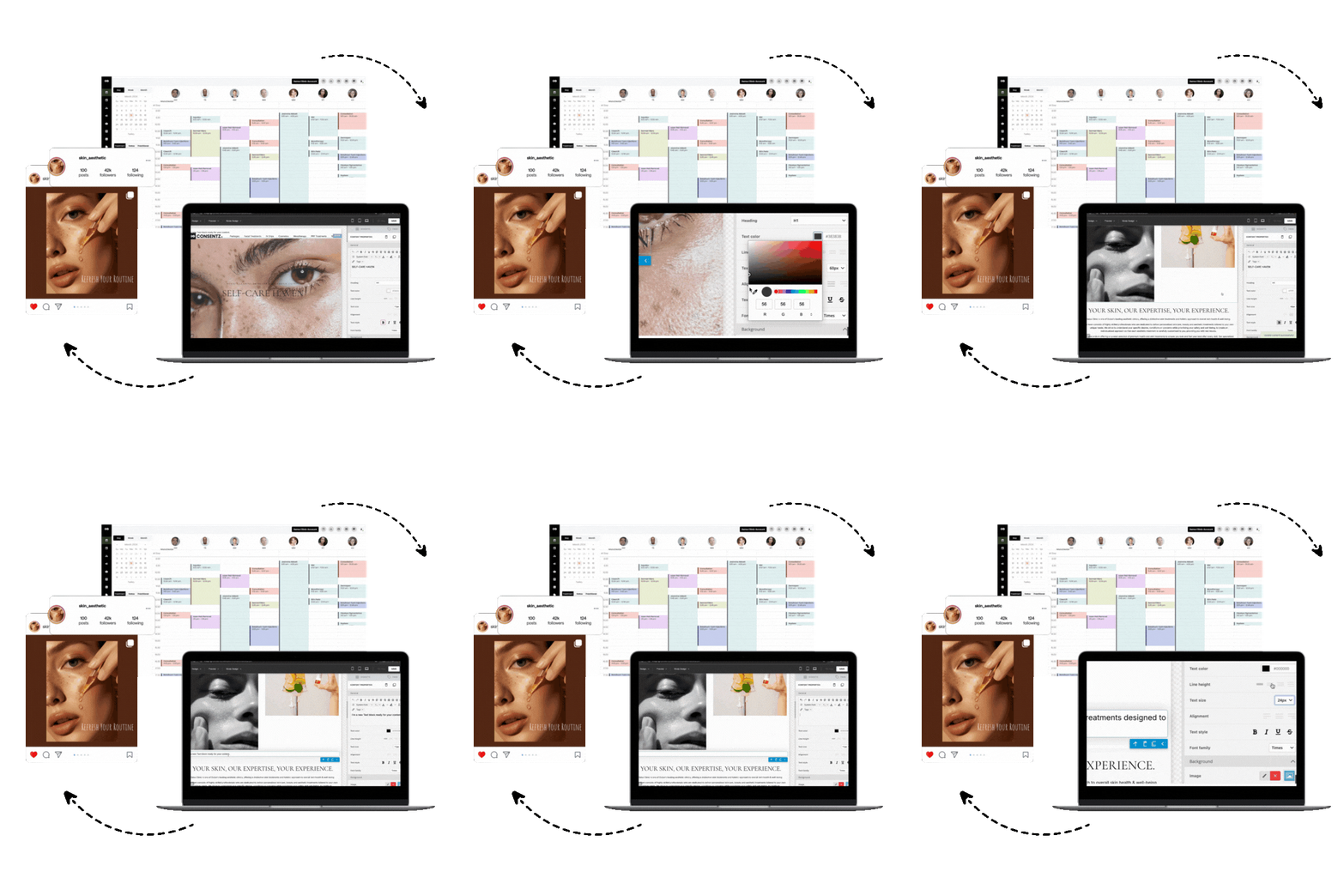
In today’s market, an Electronic Health Record (EHR) and client management system is essential. If you’re comparing systems, here’s an overview of medspa EMR software. This software is the digital backbone of your business, handling everything from scheduling and patient charting to billing and inventory. An all in one platform streamlines operations and ensures you remain organized and compliant. For practices wondering how to open a med spa in USA efficiently, adopting the right technology from day one is key. A purpose built system like Consentz can manage your entire clinic, from paperless patient intake on an iPad to automating marketing campaigns.
Phase 4: Assembling Your Dream Team
Your staff is the heart of your med spa. Hiring skilled, professional, and personable individuals is what will truly set your practice apart.
1. Hire and Train Key Staff Roles
A successful med spa requires a mix of clinical and administrative talent. Key roles include:
- Medical Director (Physician): Oversees all medical protocols and ensures compliance. About 83% of U.S. med spas operate under a medical director. If you’re budgeting, here’s a guide on how much to pay a medical director.
- NP or PA: Advanced providers who perform consultations and a wide range of medical treatments.
- Registered Nurse (RN): Often performs injectables and laser treatments under a provider’s supervision.
- Licensed Esthetician: Handles non medical services like facials, superficial peels, and skincare consultations.
- Front Desk / Patient Coordinator: The face of your spa, managing scheduling, check in, and customer service.
2. Verify Credentials and Scope of Practice
Before hiring, you must verify that every professional has a valid, active license with no disciplinary actions. You must also ensure that each team member operates strictly within their legal scope of practice. For example, an esthetician cannot perform medical injections, and an RN must have a provider’s order to administer a treatment. This protects your patients and your business from serious legal risk.
Phase 5: Attracting and Delighting Clients
With your facility and team in place, it’s time to develop your brand, define your services, and create a marketing engine to bring clients through the door.
1. Develop Your Service Offerings and Pricing Strategy
Your service menu should include a profitable mix of treatments. Injectables are often the top revenue drivers, but laser treatments, body contouring, and facials are also popular. Your pricing strategy should cover your costs, be competitive with the local market, and reflect the value you provide. Many med spas use package deals and memberships to encourage client commitment and create recurring revenue.
2. Build Your Brand Identity and Website
Your brand is your med spa’s personality. It includes your logo, colors, and the overall feeling clients get when they interact with your business. A professional website is your digital storefront and is absolutely critical for establishing credibility. Your site should clearly list your services, introduce your team, showcase before and after photos, and make it easy for visitors to book a consultation.
3. Master Local SEO, Social Media, and Content Marketing
Digital marketing is how new clients will find you.
- Local SEO: Optimizing your Google My Business profile and website helps you appear in local search results when people Google “Botox near me.” Start with this practical guide to Local SEO for aesthetic clinics.
- Social Media: Platforms like Instagram are perfect for showcasing your work visually, engaging with your community, and running targeted ads. When you’re ready to launch campaigns, see our deep dive on Facebook ads for aesthetics clinics.
- Content Marketing: Writing blog posts or creating videos on topics your clients care about establishes you as an expert and improves your search engine ranking.
4. Launch Referral, Membership, and Loyalty Programs
These programs are designed to maximize client retention.
- Referral Programs: Reward existing clients for sending new customers your way.
- Membership Programs: Offer monthly perks for a recurring fee, creating predictable revenue.
- Loyalty Programs: Give clients points for their spending, which they can redeem for discounts or free services.
Phase 6: Optimizing for Long Term Growth
Opening is just the beginning. The final phase focuses on creating efficient systems, tracking your success, and planning for the future.
1. Establish Standard Operating Procedures (SOPs) and Policies
SOPs are detailed, written instructions for every routine task in your spa, from clinical treatment protocols to front desk check in procedures. Policies are the rules that guide your operation. Together, they ensure consistency, safety, and quality, turning your business into a well oiled machine.
2. Drive Operational Efficiency and Automation
Efficiency means maximizing productivity while minimizing waste. Automation uses technology to handle repetitive tasks. A powerful practice management system is the key to both. It can automate appointment reminders, inventory alerts, and marketing follow ups, freeing your staff to focus on patient care. An integrated platform is the best way to tackle the operational challenges of how to open a med spa in USA. For example, the Consentz platform combines scheduling, clinical records, and marketing automation into a single, efficient workflow.
3. Implement KPI Tracking and Performance Monitoring
Key Performance Indicators (KPIs) are the vital signs of your business. You should regularly track metrics like monthly revenue, client retention rate, cost per new client, and average client spend. Monitoring these numbers helps you make data driven decisions and spot opportunities for improvement.
4. Plan Your Grand Opening Strategy
A grand opening is your chance to make a big splash. Your strategy should include pre launch hype on social media, an open house event with live demos and exclusive promotions, and community outreach. The goal is to generate buzz, attract your first wave of clients, and start building momentum from day one.
5. Focus on Client Retention and Review Management
It costs far more to acquire a new client than to keep an existing one. Client retention is about providing exceptional service and building relationships so clients return again and again. Review management involves encouraging happy clients to leave positive online reviews and responding professionally to all feedback. A strong online reputation is one of your most valuable marketing assets.
6. Create a Scaling and Expansion Plan
Once your first location is thriving, it’s time to think about growth. A scaling plan outlines how you’ll increase revenue, whether by adding new services, hiring more providers, or opening a second location. This strategic roadmap ensures your growth is sustainable and profitable.
Frequently Asked Questions
1. How much does it cost to open a med spa in the USA?
The average startup cost for a med spa in the USA typically ranges from $134,000 to $417,000. This wide range depends on factors like location, size of the facility, the cost of medical equipment, and initial marketing expenses.
2. Can a registered nurse open a med spa in the USA?
It depends on the state. Due to the Corporate Practice of Medicine (CPOM) doctrine, many states require a med spa to be owned by a physician. In these states, a nurse can partner with a physician or use a Management Services Organization (MSO) model. A few states with more lenient laws or full practice authority for Nurse Practitioners may allow a nurse to own a med spa independently.
3. What are the most profitable med spa services?
Generally, injectable treatments like Botox and dermal fillers are the most profitable, accounting for over half of all med spa revenue. Other high revenue services include laser hair removal, body contouring, and advanced facial treatments like RF microneedling.
4. What is the biggest legal challenge when figuring out how to open a med spa in USA?
The biggest legal challenge is navigating the state specific Corporate Practice of Medicine (CPOM) laws and the associated rules for supervision and delegation. Ensuring your ownership structure is compliant and that all procedures are performed by appropriately licensed and supervised individuals is paramount to avoiding legal trouble.
5. How long does it take to open a med spa?
The timeline can vary greatly, but it typically takes anywhere from 6 to 18 months from initial planning to grand opening. This includes time for writing a business plan, securing funding, finding a location, renovations, licensing, purchasing equipment, and hiring staff.
6. Do I need special software to run a med spa?
Yes, using software specifically designed for medical aesthetics is highly recommended. An all in one platform helps manage scheduling, electronic health records (EHR), consent forms, inventory, billing, and marketing. Using the right tool can dramatically improve efficiency and help you stay compliant. Systems like Consentz are built to handle the unique workflows of a modern med spa.
7. How do I market a new med spa?
A multi channel approach is best. Start with a professional website and a strong local SEO strategy to appear in Google searches. Use social media, especially Instagram, to visually showcase your results. Content marketing, referral programs, and a well planned grand opening event are also effective strategies to attract your first clients.
8. Is owning a med spa profitable?
Yes, owning a med spa can be very profitable. With high demand for aesthetic treatments and opportunities for recurring revenue through memberships and repeat clients, a well managed med spa can achieve healthy profit margins. Success depends on a solid business plan, excellent client care, and efficient operations.