Laser and IPL clinics have a booking problem that most other aesthetic practices do not: the treatment cannot happen at the first appointment. Every laser treatment protocol requires a patch test — a separate visit, typically 48–72 hours before the first session — to assess skin reaction before full treatment proceeds. Managing that two-visit workflow in a standard booking system is clunky at best and creates compliance gaps at worst.
Beyond the patch test, laser clinics deal with multi-session treatment packages (laser hair removal typically runs six to eight sessions), Fitzpatrick skin tone documentation that must be linked to each treatment record, treatment-specific consent forms with risks specific to the device and wavelength being used, and — for clinics operating Class 3B or Class 4 laser devices — potential CQC regulatory requirements. A generic booking tool handles exactly none of this.
The patch test workflow — the booking problem laser clinics all share
The patch test creates a two-appointment dependency that most booking systems cannot enforce:
- Appointment 1: patch test — a short appointment, typically 15–30 minutes, where the device is applied to a small test area
- Waiting period: 48–72 hours for any adverse reaction to present
- Appointment 2: treatment — only bookable once the patch test is complete and documented with no contraindicated reaction
In practice, what happens without the right software: the patch test and first treatment get booked as two separate appointments with nothing linking them, the treatment gets booked before the patch test result is documented, or — most commonly — the booking system cannot enforce the dependency at all, so staff have to manually manage it.
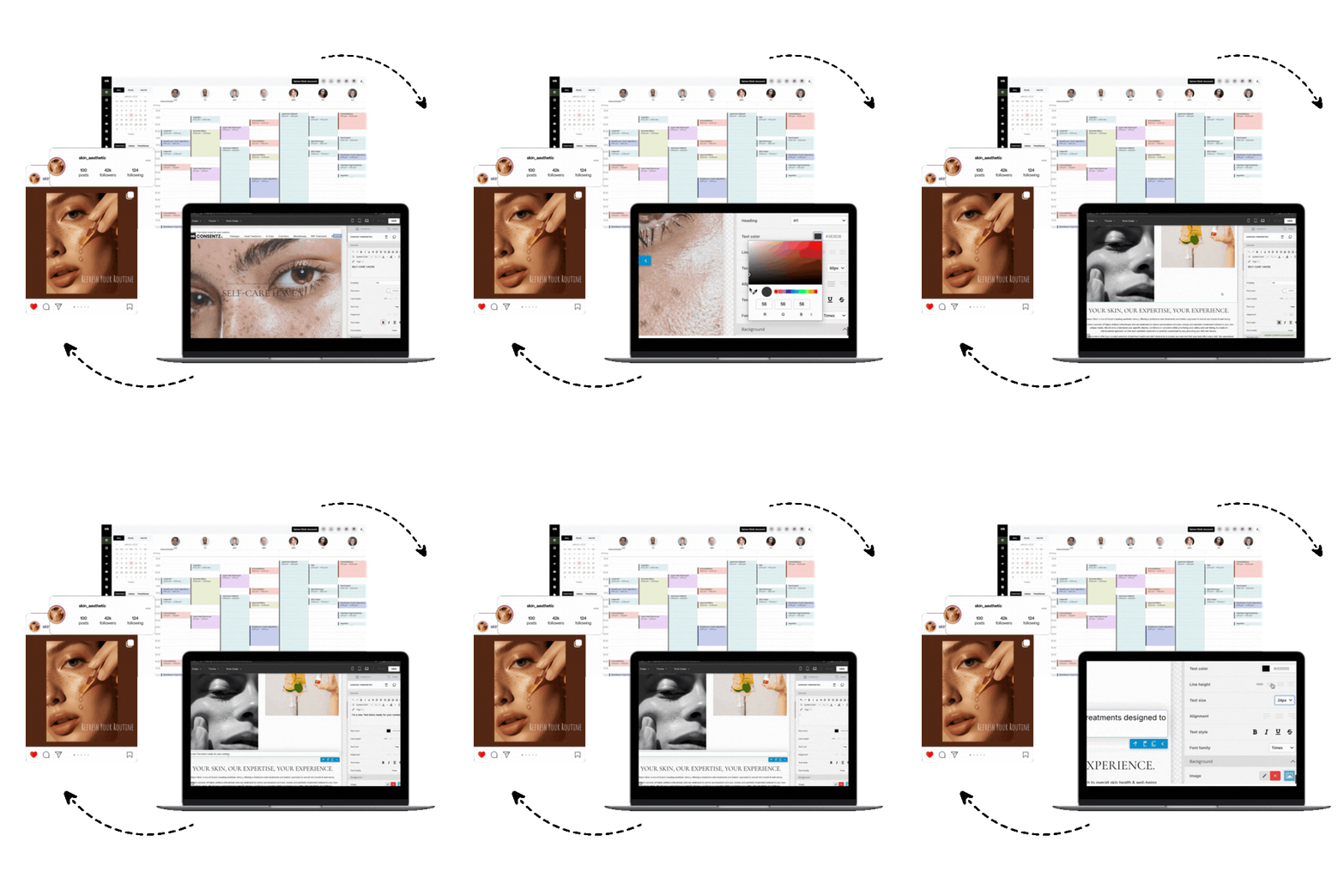
Consentz’s online booking module lets you configure treatment-specific booking rules — so a laser treatment session can only be booked once a patch test has been completed and recorded for that patient. This rule applies across both staff-placed and patient-facing online bookings.
Bookings, consent forms, patient records, payments, marketing — Consentz is the aesthetic clinic software that puts it all in one place so you can focus on your patients, not paperwork.
Fitzpatrick scale documentation — linking skin tone to every treatment record
The Fitzpatrick scale (Types I–VI) measures skin tone and its predicted response to UV radiation and laser energy. In a laser clinic, documenting the patient’s Fitzpatrick type is not an administrative nicety — it is a clinical safety requirement. The wrong laser settings for a patient’s skin type can cause permanent hyperpigmentation, burns, or scarring.
Fitzpatrick documentation needs to appear in:
- The initial intake/consultation form, completed by the patient and confirmed by the treating practitioner
- The treatment record for every session — because a patient’s skin tone can change seasonally (tanning, post-summer)
- The patch test record — the test area and device settings used should reference the documented Fitzpatrick type
A clinical intake form system that captures Fitzpatrick data at intake and surfaces it at every subsequent appointment means practitioners are never relying on memory or searching through previous notes to find this critical parameter.
Laser-specific consent — not the same as standard aesthetic consent
The risks of laser treatment are different from the risks of injectable treatments, and the consent document needs to reflect this. A laser consent form should specifically address:
- The type of device and wavelength being used
- Risks specific to the patient’s Fitzpatrick type and the treatment area
- The patch test requirement and what a positive reaction means
- Sun exposure restrictions before and after treatment
- Contraindications: medications (particularly isotretinoin, photosensitising drugs), recent tanning, pregnancy
- Realistic expected outcomes for this patient’s skin type and the treatment being performed
Using a generic aesthetic consent form for laser treatment is a risk that laser clinics should not be taking. Consentz’s consent library includes device-type-specific templates that can be customised for your specific equipment — and each digital consent form is sent before the appointment, signed electronically, and stored with an unalterable audit trail.
Multi-session package management
Laser hair removal is almost always sold as a package of six to eight sessions. Managing pre-paid packages creates an accounting and patient experience challenge: the payment is taken upfront, but the sessions are delivered over months. Your software needs to:
- Record the package purchase against the patient account
- Deduct sessions from the balance as they are delivered
- Show the remaining session balance at every appointment so practitioners are not asking patients ‘how many sessions have you had?’
- Alert the team when a patient has one session remaining — so the upsell or maintenance conversation happens at the right moment
- Automatically trigger a recall message when a session is due, based on the recommended inter-session interval
CQC registration — does your laser clinic need it?
The CQC regulatory position on laser clinics depends on the device class and the nature of treatments. Class 3B and Class 4 laser devices — the type used for laser hair removal, resurfacing, and pigmentation treatments — are regulated as medical devices under MHRA guidance. Whether this triggers a CQC registration requirement depends on whether the treatment constitutes a ‘regulated activity’ under the Health and Social Care Act 2008.
Currently, most cosmetic laser treatments do not constitute CQC-regulated activities in their own right. However, laser clinics that also offer other regulated services (such as prescription-based skin treatments), operate on medical premises, or work with medically supervised practitioners may be within CQC scope. If you are uncertain, the prudent approach is to run your documentation to CQC compliance standards regardless — the documentation required for good clinical governance is substantially the same.
Before and after photography in laser clinics
For skin rejuvenation, pigmentation, and acne scar laser treatments, before-and-after photography is both the clinical measure of outcome and the marketing asset. Both purposes require proper management. Clinical photography consent must be separate from treatment consent, with a specific opt-in for any marketing use. Clinical images need to be stored in an encrypted system with GDPR-compliant access controls — not in a shared drive or personal photo library.
Frequently asked questions
1. What documentation is required before performing laser treatments?
A Fitzpatrick skin tone assessment documented in the patient record, a patch test record confirming the test was performed and the result, laser-specific consent (separate from any injectable consent) covering the device type and treatment risks, confirmation of contraindications checked (medications, tanning, pregnancy), and the patient’s signed acknowledgement of realistic expected outcomes. All of this should exist in the patient record before the first treatment session begins.
2. How do I record Fitzpatrick scale assessments alongside bookings?
Consentz’s intake form system captures the Fitzpatrick assessment at the initial consultation and surfaces the recorded type in the treatment record for every subsequent appointment. Practitioners can update the documented Fitzpatrick type at any appointment — important for patients whose skin tone changes seasonally — and the record shows the type documented at each session, not just the initial assessment.
3. Do laser treatments need specific consent forms — or can I use a general aesthetic consent?
Laser treatments need treatment-specific consent forms that address the risks of the specific device and wavelength being used, the patch test requirement, the Fitzpatrick-specific risks, and the medication and sun exposure contraindications. A general aesthetic consent form does not cover these adequately. Using a generic form for laser treatments is a liability exposure that your professional indemnity insurer would not look favourably upon in a claim.
4. How do I manage the patch test workflow — patient comes in twice before treatment starts?
Configure your booking system to enforce the patch test as a prerequisite for the first treatment session. In Consentz, treatment-specific booking rules allow you to require that a patch test appointment is completed and documented before a treatment booking is confirmed. This applies to both staff-placed bookings and patient-facing online bookings — so the dependency cannot be accidentally bypassed.
5. Are laser clinics required to have CQC registration?
Most standalone cosmetic laser clinics do not currently require CQC registration for laser hair removal and skin treatments alone. Registration becomes a requirement when the clinic also offers regulated activities (prescription treatments, IV therapy, thread lifts) or when laser treatments are performed as part of a regulated medical service. The safe approach is to maintain CQC-quality documentation regardless of registration status — if your documentation already meets CQC standards, registration (if it becomes required) does not require a documentation overhaul.