Thinking about starting a career or opening a clinic in Australia’s booming aesthetics industry? It’s an exciting field, but navigating the rules can feel like a maze. A common point of confusion is the search for official aesthetic license requirements in Australia. The truth is, it’s not as simple as getting a single certificate.
Australia’s system is a unique blend of national qualifications, state specific health laws, and local council rules. This guide will walk you through everything you need to know, from basic beauty qualifications to the strict regulations for advanced cosmetic procedures.
The Big Question: Is There One National License?
Let’s clear this up first. Unlike some countries, Australia does not have a single, nationwide cosmetology license or a federal board that you must register with for general beauty services. Instead, the industry relies on a combination of formal qualifications, insurance coverage, and local government regulations to ensure practitioners are competent and safe.
This approach to aesthetic license requirements in Australia means that what you need depends heavily on the treatments you offer and where your clinic is located.
Foundational Qualifications for Beauty Professionals
While there isn’t a federal license, your qualifications are your passport to practicing legally and safely. The industry standard is to hold a nationally recognized vocational certificate or diploma from a Registered Training Organisation (RTO).
Beauty Therapist Credentials
These are the core qualifications that prove your expertise:
Certificate III in Beauty Services (SHB30121): This is your entry point, covering foundational skills like makeup application, waxing, and basic nail services.
Certificate IV in Beauty Therapy (SHB40121): An intermediate qualification that builds on the basics with training in facials, body treatments, and essential infection control practices.
Diploma of Beauty Therapy (SHB50121): This is widely considered the industry benchmark for a senior beauty therapist. It covers advanced treatments like microdermabrasion, electrical facials, and often includes the fundamentals of laser and IPL, which is a prerequisite in some states.
Holding one of these qualifications is effectively the minimum requirement for getting insurance and finding employment in a reputable clinic.
Recognition for Overseas Qualifications
If you’re an experienced practitioner from overseas, your skills are valuable, but your license won’t automatically transfer. You’ll need to get your qualifications formally assessed to meet Australian standards. Two common pathways are:
VETASSESS Skills Assessment: This is a formal evaluation that compares your overseas training and work history against the Australian Qualifications Framework. A positive assessment is often needed for skilled migration visas.
Recognition of Prior Learning (RPL): You can apply to an RTO to have your existing experience and training recognized. Through RPL, you can gain an Australian qualification like a Diploma of Beauty Therapy without having to study everything from scratch.
The Rules of the Game: Skin Penetration and Hygiene
When your services break the skin, even minimally, a completely different set of rules applies. This is where aesthetic license requirements in Australia become much stricter and are enforced at the state and local level.
Essential Infection Control Training
For any “skin penetration” services (think cosmetic tattooing, microneedling, or even some forms of waxing), standard qualifications are not enough. You must complete specialized infection control training. The key certification to look for is HLTINF005 Maintain Infection Prevention for Skin Penetration Treatments. This unit is mandatory in many jurisdictions, like Queensland, for anyone performing higher risk personal appearance services.
Registering Your Clinic with the Local Council
Any business offering skin penetration procedures must register its premises with the local city or shire council. This isn’t just paperwork; it’s a public health requirement. The process usually involves:
Submitting an application detailing the services you’ll offer.
Providing proof of your HLTINF005 infection control certification.
Passing a physical inspection of your clinic to ensure it meets hygiene standards (e.g., proper sinks, sterilization equipment, and cleanable surfaces).
Operating without this registration is illegal and can lead to fines or clinic closure.
Complying with State Laws and Codes of Practice
Beyond the council, every state and territory has its own public health legislation that governs skin penetration. These laws are often accompanied by a detailed Skin Penetration Code of Practice. This document is your rulebook, outlining the specific standards you must follow for everything from sterilizing equipment with an autoclave to safely disposing of needles. Adhering to your state’s code is not optional; it’s a legal requirement to protect your clients from blood borne infections and other health risks.
Advanced Procedures: Lasers, IPL, and Injectables
As we move into more advanced treatments, the aesthetic license requirements in Australia shift from the beauty framework to a medical one, involving even more stringent oversight. If you’re a medical practitioner considering this pathway, see our guide to become an aesthetic doctor in Australia.
Laser and IPL Regulations
The rules for using cosmetic lasers and Intense Pulsed Light (IPL) devices vary significantly between states. There is no single national laser license.
In Queensland and Tasmania, cosmetic lasers are regulated as radiation emitting devices. Practitioners in these states must obtain a specific use license to operate them.
In other states like New South Wales and Victoria, there is no state level license, but operators are still expected to have extensive training. A Diploma of Beauty Therapy is often seen as the minimum starting point, supplemented by a specialized Laser Safety Officer certificate.
Improper use of these powerful devices can cause severe burns and eye damage, which is why regulators demand highly educated operators.
Why Cosmetic Injectables Are Medically Regulated
Cosmetic injectables like botulinum toxin (Botox) and dermal fillers are not considered beauty treatments in Australia. They are medical procedures. The products themselves are Schedule 4 prescription only medications. This means they can only be prescribed by a qualified medical professional, such as a doctor or a nurse practitioner.
This restriction is in place for public safety. Only a registered health practitioner has the training to assess a patient’s medical suitability, understand the risks, and manage any potential complications.
The Strict Rules for Prescribing Injectables
The Medical Board of Australia has clear rules for prescribing cosmetic injectables to prevent unsafe practices. A key rule is that a doctor or nurse practitioner must conduct a consultation either in person or via a real time video call before issuing a prescription.
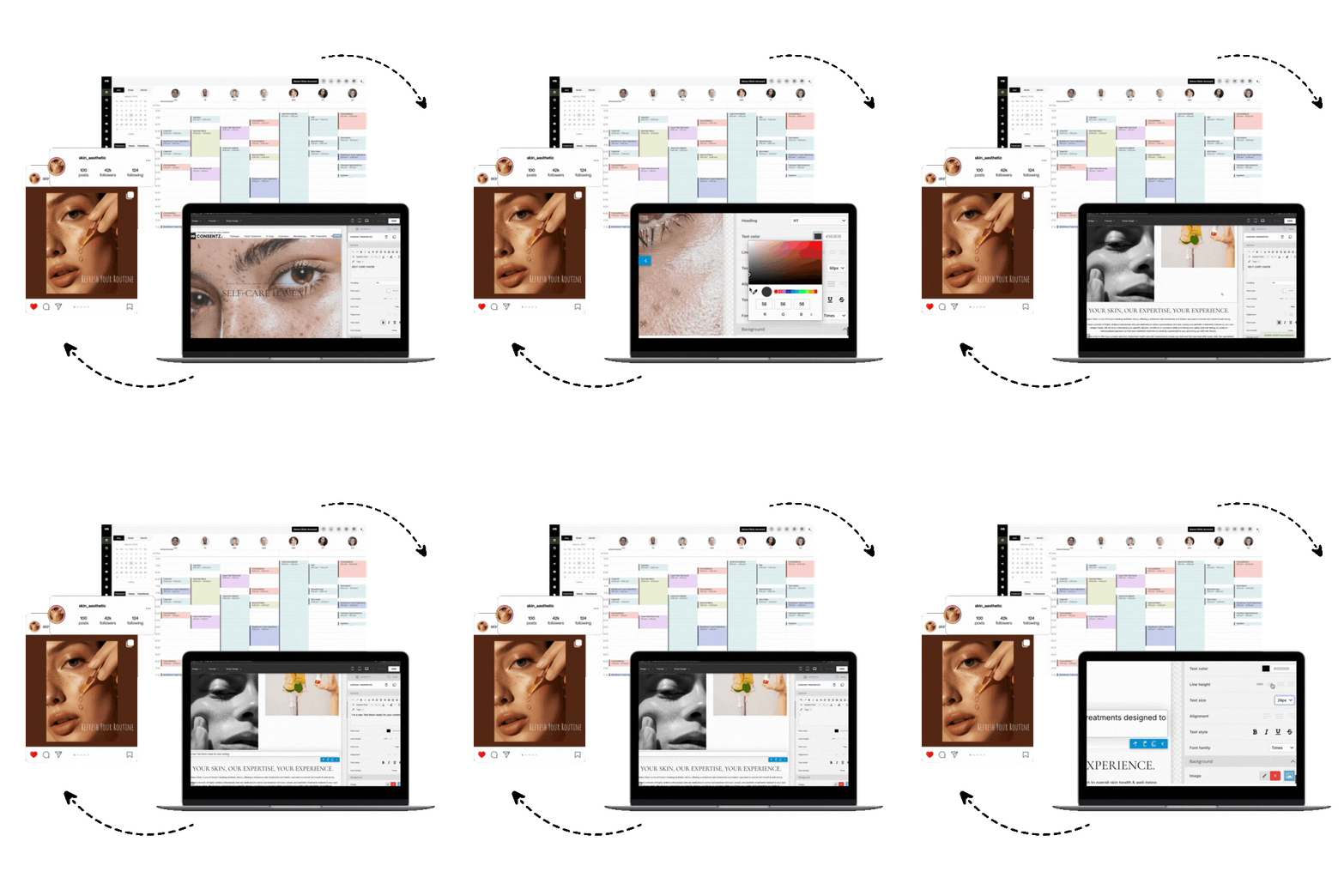
Pre-filled online forms or phone calls without video are not permitted. The prescription must also be for a specific, named patient. You cannot have a “standing order” for injectables at your clinic. Every treatment requires an individual consultation and prescription, creating a clear chain of accountability. Staying on top of this documentation is critical, and many clinics use management software like Consentz to create a clear, auditable trail from consultation to treatment. For a broader overview of how software supports safe prescribing and record‑keeping workflows, see our practice management and EHR guide.
The Role of Nurses in Australian Aesthetics
Registered Nurses (RNs) and Enrolled Nurses (ENs) play a huge role in the industry, but they are also subject to specific professional standards and evolving aesthetic license requirements in Australia.
New Experience Mandates for Registered Nurses
Regulators have introduced new guidelines to enhance safety in the cosmetic sector. As of 2025, a Registered Nurse must have at least one year of general clinical experience before they can practice in cosmetics. For the full pathway, credentials, and scope, see our guide to becoming an aesthetic nurse practitioner in Australia. This ensures nurses build foundational skills in a broader healthcare setting before specializing in aesthetics. A fast track path from university graduate to cosmetic injector is no longer an option.
Limitations for Enrolled Nurses
Enrolled Nurses (ENs) practice under the supervision of an RN or doctor and have a more limited scope. In cosmetics, this means they cannot practice independently. While they can assist with procedures, an EN is generally not permitted to administer cosmetic injectables themselves. They are also expected to have significant clinical experience (e.g., one year of general practice plus two years in a related field like dermatology) before they can even assist in cosmetic medical procedures.
Staying Compliant Without the Headache
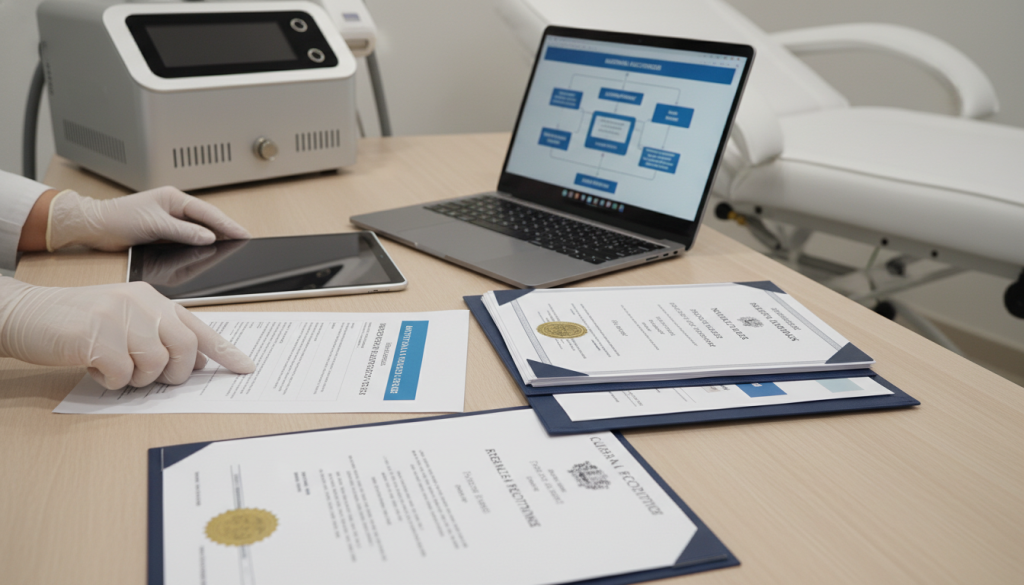
Keeping track of qualifications, council permits, state health regulations, and strict prescribing rules can be overwhelming. The complexity of aesthetic license requirements in Australia demands meticulous record keeping. You need to document staff credentials, patient consultations, consent forms, treatment details, and product batch numbers with precision. Operationally, automated diary management helps keep compliance on track. Our medical scheduling software buyer’s guide outlines features like waitlists and reminder workflows to consider.
This is where technology can be a lifesaver. An all‑in‑one clinic management platform designed for medical aesthetics can simplify your compliance burden. If you’re comparing systems, start with our medspa EHR software guide. For example, systems like Consentz help you maintain a secure, digital audit trail for every patient interaction, from the initial consultation and consent to the final treatment notes, ensuring you’re always prepared for an audit.
Frequently Asked Questions about Aesthetic License Requirements in Australia
1. Do I need a license for basic beauty services like makeup or manicures?
For general beauty services that don’t break the skin, no official government license is required in most of Australia. However, you are expected to have relevant qualifications (like a Certificate III) and adhere to general health and safety standards.
2. Can a beauty therapist with a Diploma perform laser hair removal?
It depends on the state. In Queensland and Tasmania, they would need a specific use license. In other states, a Diploma of Beauty Therapy is often the minimum qualification required, but it should be supplemented with specialized laser safety training.
3. What is the most important certification for offering microneedling?
The HLTINF005 (Maintain Infection Prevention for Skin Penetration Treatments) unit is crucial. This, along with registering your premises with the local council, is a key legal requirement for any skin penetration service.
4. Can a Registered Nurse open their own cosmetic injectables clinic?
Yes, but they must work with a prescribing doctor or nurse practitioner. The RN can perform the injections, but a prescriber must first conduct a consultation and issue a prescription for each patient. The RN cannot prescribe the Schedule 4 medications themselves.
5. How do I find out the specific rules for my local area?
The best place to start is your state or territory’s Department of Health website and your local council’s public health unit. They will have the specific regulations and Skin Penetration Code of Practice that apply to you. Understanding these local aesthetic license requirements in Australia is vital.
Conclusion
Navigating the aesthetic license requirements in Australia is about more than just ticking boxes; it’s about committing to the highest standards of client safety and professional excellence. While there’s no single license, the framework of national qualifications, strict hygiene laws, and medical oversight ensures that practitioners are skilled and accountable.
By investing in proper training, understanding your local obligations, and using smart tools to manage your documentation, you can build a reputable and successful aesthetics practice. To evaluate tools that streamline day‑to‑day work, explore our guide to clinic operations software.
If you’re ready to streamline your clinic’s operations and ensure your compliance is always on point, discover how Consentz can support your business. Once your compliance foundation is set, focus on growth with our medical spa marketing ideas to boost bookings.