Most Botox and filler clinic owners assume HIPAA doesn’t apply to them. The treatments are elective. Patients pay out of pocket. Insurance is rarely involved. So why worry about healthcare privacy laws?
Because HIPAA compliance has nothing to do with how patients pay. It applies the moment your clinic collects, stores, or transmits patient health information electronically. And nearly every Botox and filler clinic does exactly that.
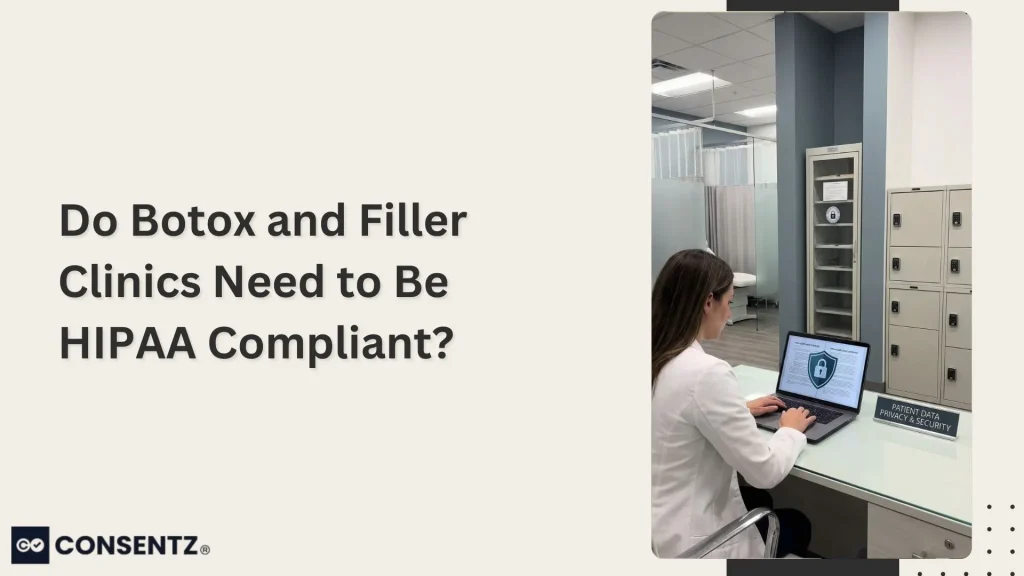
Do Botox and Filler Clinics Need to Be HIPAA Compliant?
Yes. If your Botox or filler clinic collects patient names, medical histories, treatment notes, before-and-after photos, or stores any health information digitally, you are required to comply with HIPAA. This applies regardless of whether you bill insurance or operate on a cash-only basis. Botox and fillers are prescription-only medical procedures that require medical oversight, informed consent, and documented records. The moment that data is stored or transmitted electronically, your clinic qualifies as a covered entity under federal law.
HIPAA (the Health Insurance Portability and Accountability Act) is a federal law that protects sensitive patient health information. It applies to covered entities, which include healthcare providers, health plans, and healthcare clearinghouses, along with any vendors or partners who handle patient data on their behalf.
Botox and fillers are prescription-only medical procedures. They require medical oversight, informed consent, and documented treatment records. If your clinic uses digital intake forms, EMR software, electronic appointment reminders, or stores patient photos on any digital system, you are handling Protected Health Information (PHI). That makes you a covered entity under HIPAA.
Bookings, consent forms, patient records, payments, marketing — Consentz is the aesthetic clinic software that puts it all in one place so you can focus on your patients, not paperwork.
What Counts as PHI in Your Clinic
PHI is broader than most clinic owners realise. In an aesthetic setting, it includes patient names, dates of birth, and contact details. It also covers medical histories, allergy questionnaires, treatment notes (products used, dosage, injection sites), before-and-after photographs, consent forms, appointment records, and payment information linked to treatments. Even images with identifiable features like faces, scars, or tattoos qualify as PHI.
This matters especially for clinics that rely on before-and-after photos for marketing. Using patient images without signed, written consent is a HIPAA violation, even if the photos are blurred or cropped. Having a proper photo and records management system in place ensures your documentation stays secure and compliant from day one.
Real Penalties for Non-Compliance
HIPAA enforcement is increasing. In 2024, the HHS Office for Civil Rights resolved 22 investigations resulting in penalties or settlements, including against small and mid-sized providers. Fines start at $141 per violation and can exceed $2.1 million per year for willful neglect. Criminal violations carry fines up to $250,000 and prison sentences up to 10 years. Your clinic’s name also gets permanently listed on the HHS public breach portal.
This isn’t just a big hospital problem. Small clinics and medical spas are equally at risk when compliance gaps exist. If you’re starting a medspa or scaling an existing one, building HIPAA compliance into your foundation is far cheaper than dealing with violations later.
Where Aesthetic Clinics Commonly Fail
Aesthetic clinics face unique HIPAA risks that traditional practices don’t. The most common failures include:
- Posting before-and-after photos on social media without written patient consent
- Acknowledging someone as a patient in social media comments or reviews
- Storing patient photos on personal phones or unsecured cloud storage
- Sending appointment reminders that reference specific procedures like “your Botox appointment”
- Using consumer video tools like FaceTime for virtual consultations instead of HIPAA-compliant telehealth platforms
- Running open floor plans where patient conversations can be overheard
- Skipping staff training on how to handle PHI and respond to reviews
Many of these issues stem from not having the right systems in place. Clinics that still rely on paper medical records or generic booking tools are especially vulnerable. Switching to a purpose-built HIPAA-compliant medical spa software eliminates most of these risks by design.
Steps to Get Compliant
HIPAA compliance is achievable with the right approach. Here is what to prioritise:
- Run a security risk assessment to identify where patient data is stored and where vulnerabilities exist. This is the number one gap cited in enforcement actions.
- Use HIPAA-compliant clinic management software with encrypted data storage, digital consent forms, and audit trails.
- Train every team member on HIPAA requirements, from front desk staff to injectors. Document the training.
- Secure all patient photos using compliant documentation systems. Never store images on personal devices.
- Get signed Business Associate Agreements (BAAs) from every third-party vendor that accesses patient data, including software providers and marketing platforms.
- Encrypt all patient communications, including emails, text messages, and telehealth sessions.
- Create a breach response plan so your clinic knows exactly how to respond if a data incident occurs.
- Set clear social media policies for your team. Never confirm patient status or share identifiable images without consent.
Investing in streamlined billing and appointment management systems that are built with HIPAA in mind also reduces the number of compliance touchpoints your team has to manage manually.
The Bottom Line
If your Botox and filler clinic collects patient information, stores treatment records, or uses any digital system to manage patient data, HIPAA compliance is required by law. The “we don’t bill insurance” excuse does not hold up. Enforcement is increasing, penalties are steep, and even a single complaint can trigger an investigation.
Clinics that invest in compliant systems and processes early don’t just avoid fines. They build real trust with patients who care about how their personal data is handled. Start with a risk assessment, get the right aesthetic clinic software in place, and train your team. That’s the foundation of a clinic that’s built to last.