Marketing for clinics is the process of using digital channels, local SEO, content, paid advertising, and patient engagement systems to attract new patients and retain existing ones across competitive healthcare markets. Unlike generic business marketing, clinic marketing must balance trust-building with strict regulatory compliance in every country you operate in.
Whether you run a dental practice in New York, a physiotherapy centre in London, a mental health clinic in Toronto, or a GP surgery in Dublin, these 10 strategies will help you grow your patient base in wealthy, English-speaking markets where patients have more choices than ever before.
Marketing for Clinics: Why Does It Require a Different Approach?
Clinic marketing differs from standard business marketing for three key reasons:
- Trust is the currency. Patients are making decisions about their health. They need to trust you before they book, and that trust starts long before they walk through your door.
- Regulations vary by country. In the USA, the FTC and state medical boards regulate claims, while HIPAA governs patient data. In the UK, the ASA and CQC set standards. In Dubai, the DHA requires pre-approval for healthcare ads. Canada, Ireland, and Australia each enforce their own frameworks.
- The stakes are personal. A misstep does not just lose a sale. It can result in fines, licence reviews, or harm to a patient who received misleading information.
Clinics that handle patient data in their marketing workflows should use HIPAA-compliant systems to stay protected. The upside of these higher barriers? Most local competitors still rely on word of mouth alone, which means clinics willing to invest in compliant marketing gain a significant competitive edge.
Bookings, consent forms, patient records, payments, marketing — Consentz is the aesthetic clinic software that puts it all in one place so you can focus on your patients, not paperwork.
1. How Do You Build a High-Converting Clinic Website?
Your website is the foundation of every marketing strategy. In every premium market, the patient journey starts with a search engine and ends on your site. If your website does not convert visitors into booked appointments, every other effort is undermined.
What makes a clinic website convert?
- Speed: Load in under three seconds on mobile. The majority of health-related searches happen on smartphones, and every extra second increases bounce rates.
- Clear calls to action: Every page needs a visible “Book a Consultation,” “Call Now,” or “Request a Callback” button. Patients should never hunt for the next step.
- Trust signals: Display practitioner qualifications, professional body memberships, patient testimonials, and accreditations prominently.
- Seamless booking: Patients in high-income markets expect to book online, complete intake forms digitally, and receive automated confirmations and reminders.
Clinics still relying on phone-only booking are losing patients to competitors who offer a smoother digital experience. Investing in a robust clinic management platform ties scheduling, records, and communications together. If you are evaluating scheduling tools specifically, this guide to the best clinic scheduling software breaks down the top options.
2. How Can Clinics Dominate Local SEO?
For clinics, nearly every high-value search has local intent: “dentist near me,” “physiotherapy clinic Dublin,” “GP accepting new patients Vancouver.” Local SEO is the single highest-ROI marketing activity for most clinics.
Google Business Profile optimisation checklist
- Complete every field: name, address, phone number, hours, services, insurance accepted
- Upload high-quality photos of your clinic, team, and treatment rooms
- Post weekly updates about services, health tips, or community involvement
- Actively collect and respond to patient reviews (review signals are among the strongest local ranking factors)
- Keep your name, address, and phone number identical across every online listing
Reducing no-shows also plays a role in maintaining strong local visibility and consistent patient flow. These strategies for reducing patient no-shows apply across all clinic types.
Which directories matter in each market?
| Market | Key Directories |
|---|---|
| USA | Healthgrades, Zocdoc, WebMD, Yelp |
| UK | Doctify, Top Doctors, NHS directories, Yell |
| Canada | RateMDs, HealthChoices, YellowPages.ca |
| Dubai/UAE | Practo, Bayut Health |
| Ireland | WhatClinic, DoctorLink |
| Australia | HealthEngine, HotDoc |
If you serve patients in multiple countries, create dedicated landing pages for each market addressing local pricing, insurance or NHS coverage, and booking norms.
3. How Does Content Marketing Help Clinics Attract Patients?
Content marketing helps clinics attract patients by answering the specific health questions people are typing into Google, positioning your practice as the trusted authority in your specialty and market.
What type of blog content works best for clinics?
Write posts targeting the exact questions your ideal patients search for:
- Dental clinic examples: “How Much Do Dental Implants Cost in the UK,” “What to Expect During a Root Canal: A Patient’s Guide”
- Physiotherapy examples: “Best Exercises After ACL Surgery,” “How to Choose a Physiotherapist in Toronto”
- Mental health examples: “CBT vs DBT: Which Therapy Is Right for You,” “How to Know When to See a Therapist”
The key is specificity. Generic content disappears in search results. Content that answers a precise question for a specific audience in a specific market ranks and converts.
How do lead magnets work for clinics?
Create downloadable resources like pre-appointment checklists, condition management guides, or post-treatment care instructions. These capture email addresses and feed into nurture workflows. Clinics using a dedicated patient management system can automate follow-up sequences, delivering the right content to the right patient at the right time.
4. Why Should Clinics Invest in Video Marketing?
Video builds trust faster than any other medium. Patients want to see the face of the person who will treat them before they walk through your door.
What types of video content work for clinics?
- Practitioner introductions: Put a face to the name. This alone reduces appointment anxiety significantly.
- Clinic tours: Show the reception, treatment rooms, and team. Familiarity breeds comfort.
- Treatment explainers: Walk patients through what happens during a procedure, step by step.
- Patient stories (with consent): Real experiences from real people build trust more effectively than any ad.
YouTube is the second largest search engine globally. Embedding videos on your website improves engagement metrics. Short-form video on Instagram Reels and TikTok reaches younger demographics effectively, especially in the USA, UK, and Dubai.
Video does not need to be expensive. A well-lit smartphone recording of a practitioner answering a common question often outperforms polished corporate productions. Authenticity matters more than production value.
5. How Should Clinics Run Paid Advertising?
Paid advertising gives clinics immediate visibility in competitive markets. The key is choosing the right channels and staying compliant with healthcare advertising policies.
Google Ads for clinics
Google Ads is the highest-intent paid channel. When someone searches “emergency dentist near me” or “physiotherapy appointment [city],” they are ready to book now.
- Focus budget on treatment-specific and location-specific keywords
- Use call extensions, location extensions, and sitelink extensions
- Review Google’s healthcare advertising policies for each target country before launching
Meta Ads (Facebook and Instagram) for clinics
- Use video ads featuring practitioners and carousel ads showcasing your clinic
- Deploy lead generation forms that capture consultation requests without leaving the platform
- Retarget website visitors who viewed service pages but did not book
- Build audiences around demographics, location, and interests (Meta prohibits targeting by health conditions)
Other paid channels worth considering
- TikTok: Massive organic and paid reach for younger demographics in the USA, UK, and Dubai
- LinkedIn: Valuable for clinics offering corporate wellness, occupational health, or executive screenings
- YouTube pre-roll: Effective for building brand awareness in specific geographic areas
Consentz has published a useful guide on clinic operations platforms that helps clinics streamline workflows alongside paid campaigns.
6. How Do You Build a Review Collection System for Your Clinic?
Online reviews are among the top three factors patients consider when choosing a clinic in every market covered in this guide. A strong review profile does more for your conversion rate than almost any other activity.
Step-by-step review collection process
- Ask every satisfied patient for a review within 24 hours of their visit
- Send a direct link via SMS or email to make it effortless
- Respond to every review (positive and negative) with professionalism and empathy
- Monitor reputation across the platforms that matter in your market
- Set up Google Alerts for your clinic name and check review sites weekly
How you handle a critical review often matters more to prospective patients than your star rating. Clinics that actively manage online reputation consistently outperform competitors who ignore this channel.
7. Why Is Patient Retention More Important Than Acquisition?
Acquiring a new patient costs five to seven times more than retaining an existing one. Email marketing is the most cost-effective tool for keeping patients engaged, encouraging return visits, and reactivating lapsed patients.
What email sequences should clinics automate?
- Welcome emails after a first visit
- Post-treatment follow-ups with care instructions
- Appointment reminders and periodic check-up nudges
- Birthday or anniversary messages
- Reactivation campaigns for patients who have not visited in six months or more
For practical strategies on keeping patients returning, this guide on how to increase patient retention covers the essentials.
How does segmentation improve clinic email marketing?
Segment your list by treatment type, location, and engagement level. A dental patient who came in for a cleaning does not need the same emails as a physiotherapy patient completing a rehab programme. The more relevant your communications, the higher your open rates and rebooking rates.
Clinics with proper record management can pull patient data directly into their marketing platforms. This guide on why your clinic’s records must be bulletproof explains how solid documentation underpins both compliance and marketing effectiveness.
8. What Social Media Strategy Works Best for Clinics?
Social media is where patients discover clinics, build trust in practitioners, and decide whether your practice feels right for them.
Which platforms work best for each clinic type?
| Platform | Best For | Key Markets |
|---|---|---|
| All clinic types. Behind-the-scenes content, practitioner intros, health tips, educational carousels | USA, UK, Dubai, Australia | |
| Reaching patients over 35. Community groups, targeted ads, event promotion | USA, UK, Canada, Ireland | |
| Corporate wellness, occupational health, executive screening, referral partnerships | All markets | |
| TikTok | Short, authentic educational content targeting younger patients | USA, UK, Dubai |
The most important principle across all platforms: consistency beats virality. Posting valuable, educational content three times per week will outperform one viral post every few months.
9. How Do Clinic Marketing Regulations Differ Across Countries?
If you are marketing your clinic in multiple countries, understanding each market’s regulatory landscape is non-negotiable. Here is a summary:
USA
- FTC regulates advertising claims
- HIPAA governs patient data privacy in all marketing activities
- State medical boards may impose additional restrictions
UK
- ASA sets advertising standards
- CQC regulates healthcare providers
- Claims must be evidence-based and not misleading
Canada
- Health Canada and provincial regulatory colleges govern advertising
- Some provinces restrict patient testimonials
- Quebec has French language requirements
- Clinics in Canada should explore practice management tools built for the Canadian market
Dubai and the UAE
- DHA requires pre-approval for healthcare advertisements
- Social media content promoting treatments may need clearance
- Pricing transparency is expected
Ireland
- Medical Council and ASAI regulate healthcare advertising
- Strict rules on outcome claims and patient imagery
Australia
- AHPRA and TGA enforce some of the strictest rules globally
- Patient testimonials are banned for regulated health services
- All claims must be backed by evidence
10. How Does Technology Connect Clinic Marketing and Operations?
The clinics that win in competitive markets are the ones where marketing and operations work as one connected system. When a patient sees your ad, visits your site, books an appointment, completes intake forms, receives treatment, and gets a follow-up email, every touchpoint should feel seamless.
What technology does a modern clinic need?
- Online booking synced with the clinic calendar
- Digital consent and intake forms that reduce admin time
- Automated patient communications (pre and post appointment)
- Comprehensive records management that keeps you compliant across jurisdictions
- Billing and invoicing integrated with patient records
If you are still weighing whether to go digital, this comparison of EMR vs paper medical records makes the case clearly.
How does Consentz help clinics connect marketing and operations?
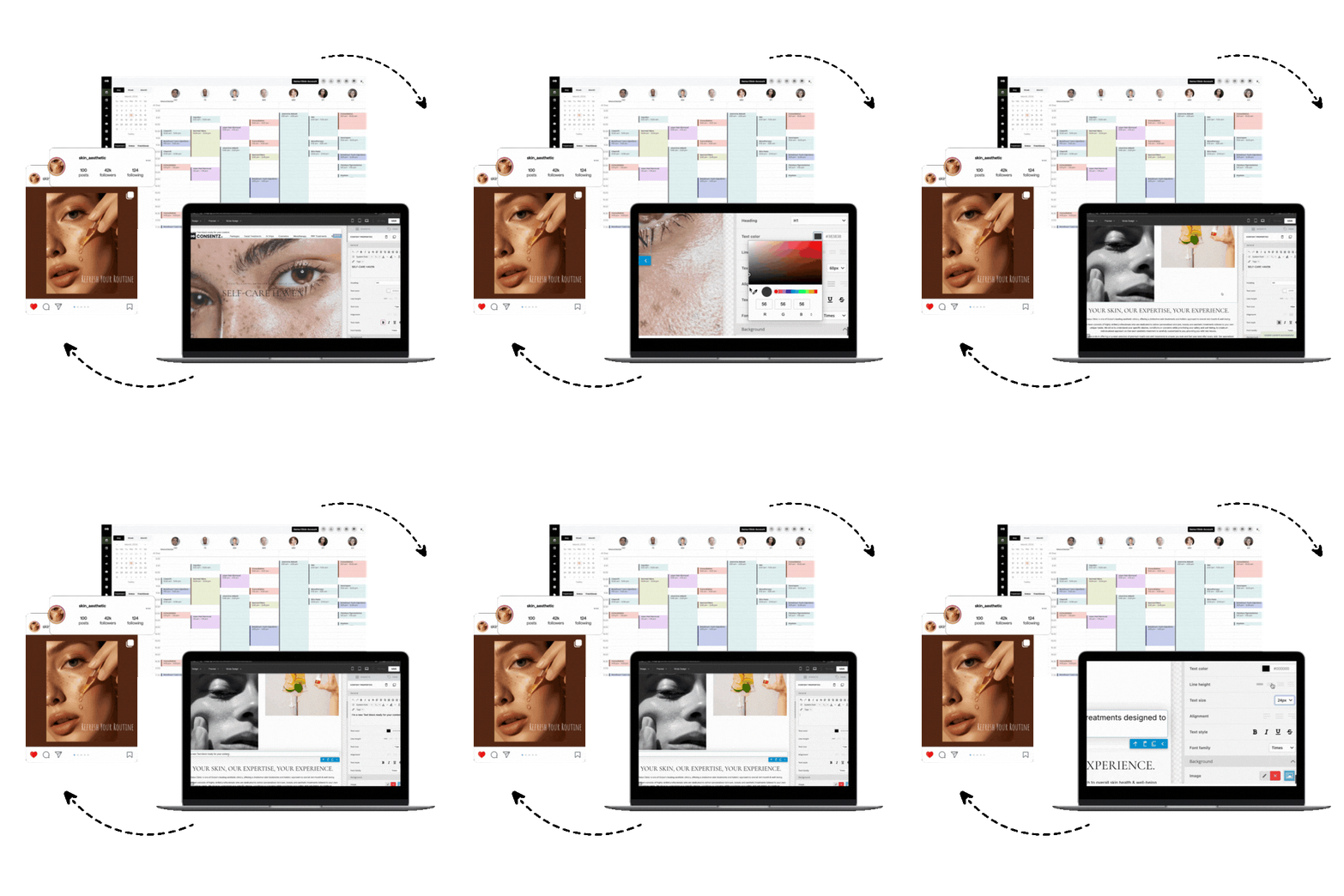
Consentz brings together appointment scheduling, digital consent forms, patient records, online booking, and compliance tools into one platform. Whether you need EHR and practice management capabilities, clinic billing tools, or a comprehensive electronic patient record system, a single platform that handles multi-market compliance while delivering a smooth patient experience gives you a real edge.
Understanding the difference between practice management systems and EMR helps you make the right technology decisions for your clinic’s size and specialty.
Your 90-Day Clinic Marketing Action Plan
Days 1 to 30: Build the Foundation
- Audit your website for speed, mobile experience, and conversion paths
- Claim and optimise your Google Business Profile in every market you serve
- Clean up or create directory listings on relevant platforms
- Implement a digital appointment scheduling system
- Get your clinic EHR software in order
Days 31 to 60: Create Visibility
- Launch a content calendar targeting high-intent keywords per market
- Publish your first batch of blog posts and service pages
- Start Google Ads campaigns for your highest-value services
- Begin systematic review collection from current patients
Days 61 to 90: Scale and Optimise
- Launch social media advertising on Meta and relevant platforms
- Set up email marketing automation for patient nurture and retention
- Analyse your first round of performance data
- Double down on what works, cut what does not
- Refine your strategy market by market
Frequently Asked Questions
What is the most effective marketing strategy for clinics?
Local SEO combined with a high-converting website is the most effective foundation. When patients search for healthcare services, they almost always use location-based queries. Clinics that rank in the local map pack and have a polished website with online booking convert significantly more patients than those relying on word of mouth alone.
How much should a clinic spend on marketing?
Most successful clinics allocate between 5% and 10% of gross revenue to marketing. New clinics or those entering competitive markets like the USA or Dubai may need to invest closer to 10% to 15% during the first year to build visibility. The key is tracking cost per lead and patient acquisition cost so you can measure ROI across every channel.
Is social media marketing effective for healthcare clinics?
Yes, but effectiveness depends on choosing the right platform for your patient demographic. Instagram and TikTok work well for clinics targeting patients under 45. Facebook remains strong for reaching patients over 35, especially in the USA, UK, and Ireland. LinkedIn is effective for clinics offering corporate or occupational health services.
How do clinics stay HIPAA-compliant in their marketing?
Never use patient data in marketing without explicit consent. Avoid sharing identifiable patient information in testimonials, social media posts, or email campaigns. Use HIPAA-compliant software for any workflow that touches patient data, including email marketing, booking systems, and CRM platforms. Train every team member on data privacy requirements.
Can one marketing strategy work across multiple countries?
The core principles of clinic marketing (strong website, local SEO, quality content, patient retention) apply universally. However, execution must be localised for each market. Advertising regulations, patient expectations, pricing norms, and platform preferences all vary by country. Create market-specific landing pages and tailor your messaging while keeping your overall strategy consistent.
Final Thoughts
Marketing a clinic in competitive international markets is about building a connected system where your website, content, paid ads, social media, email marketing, and patient management tools all work together. The clinics that grow consistently in the USA, UK, Canada, Dubai, Ireland, and Australia are the ones that invest in both their marketing and their operational infrastructure.
When your marketing brings patients through the door and your systems deliver a seamless experience from booking to follow-up, growth becomes inevitable. Start with the fundamentals, stay compliant, and never stop optimising.