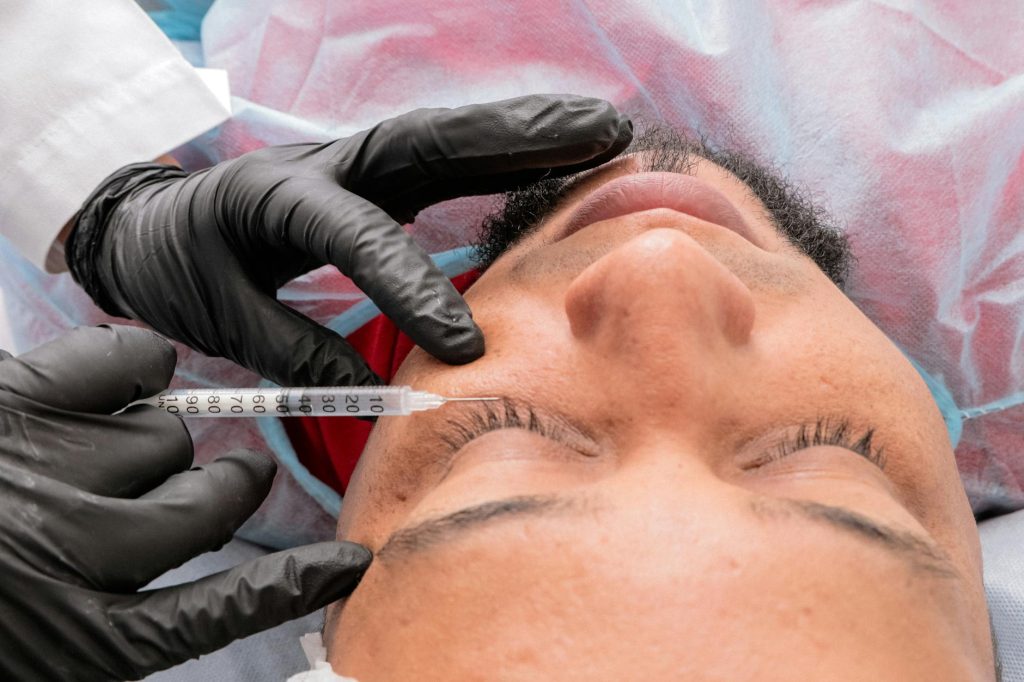
So, you’re interested in the world of aesthetic medicine, a rapidly growing field where medicine meets artistry. If you’re wondering how to become an aesthetic doctor in Ireland, the most respected path involves a comprehensive postgraduate journey. In short, it requires completing a two-year Core Surgical Training program, passing the MRCS exam, undertaking about six years of Higher Specialist Training in plastic surgery, and successfully passing the final FRCS(Plast) exit exam.
This guide will walk you through each step of this official, accredited pathway to becoming a specialist plastic, reconstructive, and aesthetic surgeon in Ireland. This is the gold standard route that ensures you have the comprehensive skills and knowledge to practice safely and effectively.
The Gold Standard: The Plastic Surgery Training Pathway
The most respected path to practicing aesthetic surgery is by completing the national Plastic, Reconstructive, and Aesthetic Surgery Training Pathway. This isn’t a weekend course, it’s a long and highly structured postgraduate journey that spans about eight years after you’ve already completed medical school and your internship.
The entire process is designed to build your skills layer by layer, starting with a broad surgical foundation and gradually narrowing into the fine art of aesthetic and reconstructive procedures.
The Foundation: Core Surgical Training (ST1 to ST2)
Your surgical journey begins with a two year period known as Core Surgical Training, or CST. This is the common starting block for all aspiring surgeons in Ireland, covering Specialist Training years one and two (ST1 and ST2).
During these foundational two years, you won’t just be focused on plastics. You will rotate through various surgical specialties like general surgery, orthopaedics, and plastic surgery. This gives you a wide range of experience and teaches you the fundamental principles that every surgeon needs, from pre operative planning to post operative care.
The First Major Hurdle: Passing the MRCS Exam
Towards the end of your Core Surgical Training, you’ll face your first major academic challenge: the Membership of the Royal College of Surgeons (MRCS) exam. This is a critical milestone.
The MRCS is an intercollegiate exam, meaning it’s the same test across the UK and Ireland. It’s broken into two parts:
- Part A: A written paper testing your knowledge of applied basic sciences and surgical principles.
- Part B: A practical clinical exam (an OSCE) that assesses your clinical, communication, and procedural skills.
Passing the MRCS is mandatory to progress to the next stage. It’s known for being tough, in one recent session, the pass rate for the written Part A exam was only 37.7%. This exam ensures that only doctors with a solid grasp of surgical fundamentals can move on to specialist training.
The Specialisation Phase: Higher Specialist Training (ST3 to ST8)
Once you’ve completed core training and passed the MRCS, you can apply for the next, highly competitive phase: Higher Specialist Training (HST). This is where you truly begin your journey in how to become an aesthetic doctor in Ireland.
Also known as Specialty Training, this period lasts for approximately six years (from ST3 to ST8). During this time, you will focus exclusively on plastic, reconstructive, and aesthetic surgery. You’ll work as a Specialist Registrar, rotating through accredited hospital units and gaining hands on experience in all areas of the specialty, including:
- Aesthetic surgery
- Hand surgery
- Microsurgery
- Burn management
- Craniofacial surgery
Staying on Track: Curriculum and Assessments
Your progress throughout these six years is anything but casual. It’s meticulously tracked against a formal curriculum and through regular assessments to ensure you are meeting the highest standards.
The ISCP Surgical Curriculum: Your Training Blueprint
All surgical training in Ireland and the UK is governed by the Intercollegiate Surgical Curriculum Programme (ISCP). This is an online curriculum and e-portfolio system that outlines every competency a trainee must achieve. It’s your roadmap, detailing the knowledge, skills, and professional behaviours required at each stage of training. You’ll use the ISCP platform to log your operations, assessments, and reflective learning, creating a complete digital record of your progress.
CAPA: Proving Your Competence
To ensure you’re keeping up with the curriculum, you’ll undergo regular reviews called the Competency Assessment and Performance Appraisal (CAPA). This is a formal meeting where supervisors review your portfolio, logbook, and feedback to assess whether you are developing as expected. A satisfactory CAPA outcome is required to move on to the next year of training, providing a crucial quality control checkpoint on your path.
The Final Exam: The Intercollegiate Fellowship (FRCS Plast)
As you approach the end of your Higher Specialist Training, you’ll prepare for the final and most comprehensive examination: the Intercollegiate Fellowship Exam, commonly known as the FRCS (Plast). This is the “exit exam” that certifies you have the knowledge and competence of a consultant plastic surgeon.
The qualification you earn is the Intercollegiate Fellowship in Plastic and Reconstructive Surgery. Like the MRCS, this exam is a two part process:
- Section 1: A written exam of multiple choice questions covering the entire plastic surgery curriculum.
- Section 2: A rigorous clinical and oral exam held over two days, where you’re tested on real patient cases and complex clinical scenarios.
While challenging, trainees in accredited programs are well prepared. Pass rates for those on the formal training pathway are often above 70% or 80%, reflecting the quality of the education they receive.
Graduation Day: Earning Your CCST
After successfully passing the FRCS (Plast) and completing all requirements of the ISCP curriculum, you are awarded the Certificate of Completion of Surgical Training (CCST). This certificate is the official “graduation” document. It confirms that you have finished the entire accredited training program and are competent to practice independently as a consultant specialist.
Becoming Official: Irish Medical Council Registration
The CCST is your key to unlocking the final step in your qualification journey: specialist registration. All doctors in Ireland must be registered with the Irish Medical Council (IMC) to practice. The IMC maintains several divisions of its register:
- General Register: For doctors who have completed their internship but have not yet specialised.
- Trainee Specialist Division: For doctors currently enrolled in a formal training program like HST.
- Specialist Register: For doctors who have completed their training and earned a CCST.
Being on the Specialist Register for Plastic, Reconstructive and Aesthetic Surgery is the ultimate confirmation of your expertise. It is a legal requirement to hold a consultant post, and it’s the clearest sign to patients that you are a fully qualified and accredited specialist.
Beyond Formal Training: Subspecialty Fellowships
For many, the learning doesn’t stop with the CCST. After completing the formal pathway, many surgeons choose to undertake further subspecialty fellowships, often abroad. This allows them to develop world class expertise in a niche area like cosmetic facial surgery, microsurgical breast reconstruction, or complex hand surgery, further enhancing their skills.
The Broader Picture: Regulation in the Irish Aesthetics Industry
Understanding how to become an aesthetic doctor in Ireland also means understanding the regulatory landscape, which has some important nuances.
Who Regulates Aesthetic Surgery in Ireland?
Crucially, while individual doctors are regulated by the Irish Medical Council, there is no separate government body that specifically regulates private cosmetic surgery clinics or the aesthetics industry as a whole. This means that legally, any registered medical doctor can perform cosmetic procedures.
This is why “accredited training” via the pathway described above is so important. Titles like “cosmetic surgeon” are not legally protected, but a surgeon on the IMC’s Specialist Register has proven, certified expertise.
Rules for Prescription Medicines Like Botox
Many aesthetic treatments involve Prescription Only Medicines (POMs), such as Botulinum Toxin (Botox). The rules here are strict. A POM must be prescribed by a qualified prescriber (a doctor or dentist) for a specific patient after a consultation. It is illegal to supply or administer these medicines without a valid prescription.
The Mandatory Face to Face Consultation
To ensure patient safety, regulators and professional bodies are clear: remote prescribing for injectable cosmetics is not acceptable. Before receiving a treatment like Botox for the first time, a patient must have a face to face, in person consultation with the prescribing doctor or dentist. This allows for a proper physical assessment, a discussion of risks, and ensures the treatment is genuinely appropriate for the patient—while maintaining a clear digital trail via clinical data management software.
Managing Your Practice After Qualification
After more than a decade of training and exams, you finally become a consultant. This is when the focus shifts from learning the craft to running a practice, including marketing your clinic. The same rigour and meticulous documentation you learned during training are essential for success and safety in independent practice. Managing patient records, consent forms, appointment scheduling, and billing can quickly become overwhelming.
This is where an all in one clinic management system becomes invaluable. A platform like Consentz is designed specifically for the needs of aesthetic clinics, helping you translate your clinical excellence into a seamless patient experience—especially when paired with professionally designed medical website templates. By digitising your records and automating administrative tasks, you can focus on what you do best: providing exceptional patient care.
With features that support everything from detailed clinical notes and secure photo management to compliant prescription workflows, you can ensure your practice meets the highest standards. To see how you can streamline your operations from day one, you can book a demo of Consentz here.
FAQ: How to Become an Aesthetic Doctor in Ireland
1. How long does it take to become a fully qualified aesthetic surgeon in Ireland?
After completing a medical degree (5 to 6 years) and internship (1 year), the specialist surgical training pathway takes an additional 8 years on average. The total time from starting medical school is around 15 years.
2. What’s the difference between an “aesthetic doctor” and a “plastic surgeon”?
A “Plastic Surgeon” on the Irish Medical Council’s Specialist Register has completed the full 8 year accredited surgical training program and passed the FRCS (Plast) exam. The term “aesthetic doctor” is not a protected title and could be used by any medical doctor offering cosmetic treatments, even without specialist surgical training.
3. Can a GP perform cosmetic procedures like Botox injections?
Yes, any registered doctor can legally prescribe and administer treatments like Botox, provided they do so competently and follow all regulations, including the requirement for a face to face consultation. However, they do not have the same depth of surgical and anatomical training as a specialist plastic surgeon.
4. What is the most important qualification to look for in a surgeon?
Look for a surgeon who is on the Specialist Register for Plastic, Reconstructive and Aesthetic Surgery with the Irish Medical Council. This is the only official confirmation that they have completed the accredited training pathway in Ireland.
5. What is the first step on the journey of how to become an aesthetic doctor in Ireland?
The very first step is to get into medical school and earn a primary medical degree. From there, you must complete your internship and then apply for a place on the Core Surgical Training programme.
6. Do I have to complete the full surgical pathway to offer non surgical treatments?
No, you do not need to be a surgeon to offer non surgical treatments like injectables. However, the comprehensive anatomical and physiological knowledge gained during the surgical training pathway is considered the gold standard for understanding facial aesthetics and managing potential complications safely.
The road to becoming a fully qualified aesthetic surgeon in Ireland is long and demanding, but it provides a level of expertise that is second to none. This commitment to rigorous, accredited training is the bedrock of patient safety in the aesthetics field. For those who complete the journey, it offers a deeply rewarding career at the forefront of medical innovation. And once you’re ready to build your own practice, having the right appointment management systems in place can make all the difference. Learn more about how Consentz supports top aesthetic professionals in delivering outstanding care.